Revisiting Medieval Civilization

I read and loved this book about 15 years ago. In a rare act of courage and rationality, I decided to sell it, a proclamation of shelf reclamation. Because, you know, when would I actually read these 624 pages again? Just opening the book and noting my penciled responses ushered in delight and rediscovery, then gnawing regret. I knew I had to pull some long nights and re-read it one last time. And get as much in my commonplace book before the deadline to mail it.

Rereading Civilization brought back all the best parts of home schooling and banished from memory the days of despair, inadequacy, frustration, exhaustion. What I loved was learning history, reading literature, connecting dots — the enlivening of a formerly dead subject.
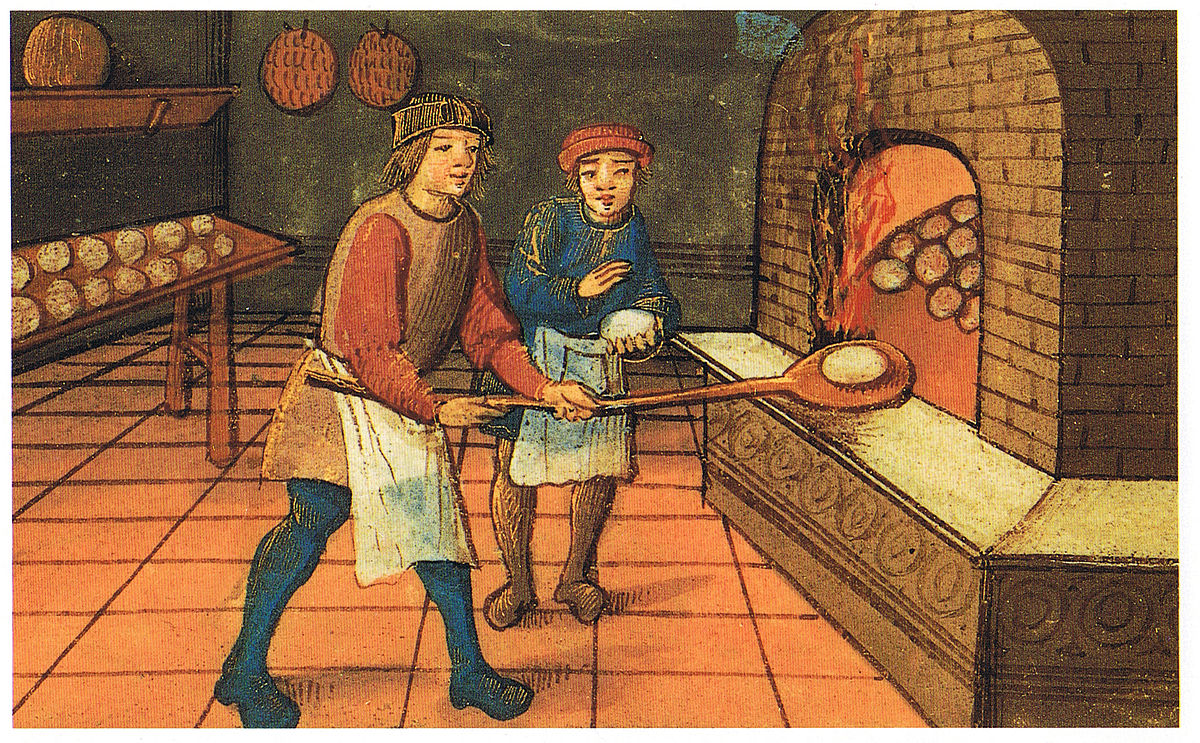
Medieval_baker

Cantor, a Jewish historian from Winnipeg (Winnipeg is a delectable collection of syllables you have to repeat aloud ten times), is a winsome writer. The Civilization of the Middle Ages has been a bestseller for decades because his writing is both interesting and accessible.

I got a sense of the wide sweep of history, but reveled in descriptions like this:

Despite his scholarly achievements, Augustine was no armchair theologian. As a priest and as bishop of Hippo (a fairly poor, undistinguished, and remote town in North Africa), he was deeply involved in the lives and the problems of his flock. What Augustine said about people and God came not only from his multicultural background but from his profound commitment to the needs and troubles of people. This is a rare combination at any time, particularly within the church, whose scholars have usually been cloistered from the life of the community.

One other quote, fodder for thought:

One can posit this rule: The more important your family as the shaper of your life, the more medieval the nature of a society.

There is a bonus in the back. Ten movies that portray the Middle Ages. And *you* can access this list, including his commentary, free! Here’s how: click on the link above, which will take you to Amazon. Click on “Look Inside!” In the box under “Search Inside This Book” type in *film* (don’t type the asterisks). Click on page 567. Or you could check out my previous blog post on Medieval Movies.

Ironically, writing this review made me want more Cantor. I just ordered In the Wake of the Plague: The Black Death and the World It Made and I’ve added Inventing Norman Cantor: Confessions of a Medievalist to my wish list!

::     ::     ::     ::     ::

The book is chock full of fun facts. Here are some that made it into my journal.

10th century technological advances:
the horse collar,
the stirrup,
water mills,
saw mills
and lateen sails.

The average 11th century knight was 5’3″.

Vassal comes from the Celtic word for ‘boy’.

Three power blocks:
Byzantine
European
Islamic

Both Constantine and Justinian I came from Balkan peasant stock.

The year 400 – at least 80% of the population
never moved more than ten miles from where they were born.
Year 1050 — 80% didn’t move more than
twenty miles from their birthplace.

Photo credit: Wikimedia Commons
Besotted

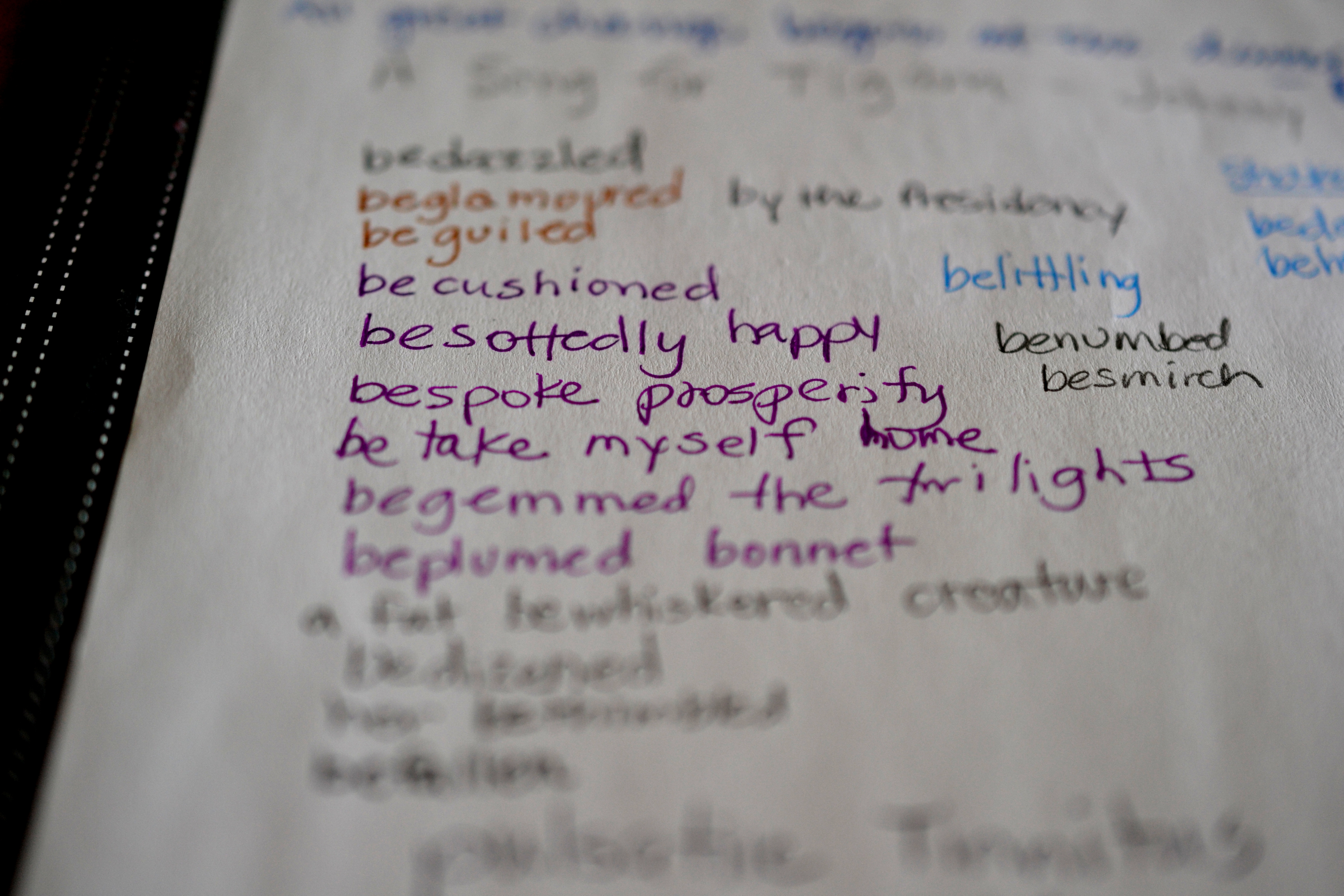
DSC_8169-001Besotted: adj. strongly infatuated.

I do this odd thing for the sheer joy of it. I collect be-prefix words.
All year long, while I read, I stop and copy words to the front
page of my journal. When the journal is full, I look at my
beribboned and bejeweled treasury.

Just in case there is someone else like me, I try to use be-words
in my writing, to bestow on them the joy I’ve betaken.
On an especially good day, I might make up a new be- word.

Now, I am fond of other prefixes.
Enfold, endear, enlivened, encourage…
I might start a new page in the back for en- words.

What does the “be-” do?
It means thoroughly, completely, to make.
It adds intensity.

When I looked it up, I discovered a new be- word:
bethwacked, “to thrash soundly.”
(imagine my hands and fingers flying in excitement)

Two be-prefix words are so common, we almost don’t see them.
Beloved. Greatly loved. More loved than loved.
Become. More than come; to come to be.

What about betray?
Add be- to the Latin tradere,
from trans – “across” + dare – “to give.”

Last year I was beguiled by —
behither (George Herbert)
befogged (Nora Waln)
bedraggled (D.E. Stevenson)

benumbed (Kathleen Norris)
beholden (Anthropologie line)
betokened (L.M. Montgomery)
bespectacled (Leo Marks)

bedecking (Jan Karon)
becalmed (Stewart O’Nan)
setbacks which bedevil modern life (Alain deBotton)
unbeknownst (Joanna Cannan)

bewail (Wendell Berry)
courageous and befitting (?)
bewigged (Elizabeth Goudge)
becalmed (Arabian Nights)

One of my favorites:
befriend, to cause to be friends.

Patterns in 2014 Reading

Serre_cactees_JdPSo much about the reading life delights me, but the interconnectedness, the synchronicity, of reading bedazzles me. Much could be written (perhaps later) about the thrill of recognition.

It happens when we watch movies and see an actor we know from a previous movie. As I ended the year listening to All the Light We Cannot See, a private knowledge bubbled inside me. The story begins at Le Jardin des Plantes—a botanical garden— in Paris. I practically own Le Jardin! No, but I know it, a primary location in my 2010 read, Zarafa: A Giraffe’s True Story, from Deep in Africa to the Heart of Paris. The thrill of recognition, indeed!

I love knowing what feeds folks’ reading lists. Sometimes a book is a random choice: a compelling cover, a familiar author, a recommendation. I love the patterns. Because every compelling book I read ends up adding more books to my TBR list. So here are some groupings of books read in 2014

Southern Literature  Always a meaning-to category, I finally made some progress.

Music  Romance on 3 Legs put me into a month-long Glenn Gould fixation

Adams, Eisenhowers, Nixons  two groups I put together

Poetry some gems in this pattern

World War II  the stories keep coming

Books that Stuck with Me Long After I Finished (not listed elsewhere)
• The Approaching Storm, by Nora Waln (Amazon has no image)

Science  My weakest area. I now know the term neuroplasticity! YES!

I am an Amazon Associate: buying a book through these links won’t cost you any extra money, but will add a few pennies to my Amazon account. Thanks!

Saying Thank You Before Opening Gifts

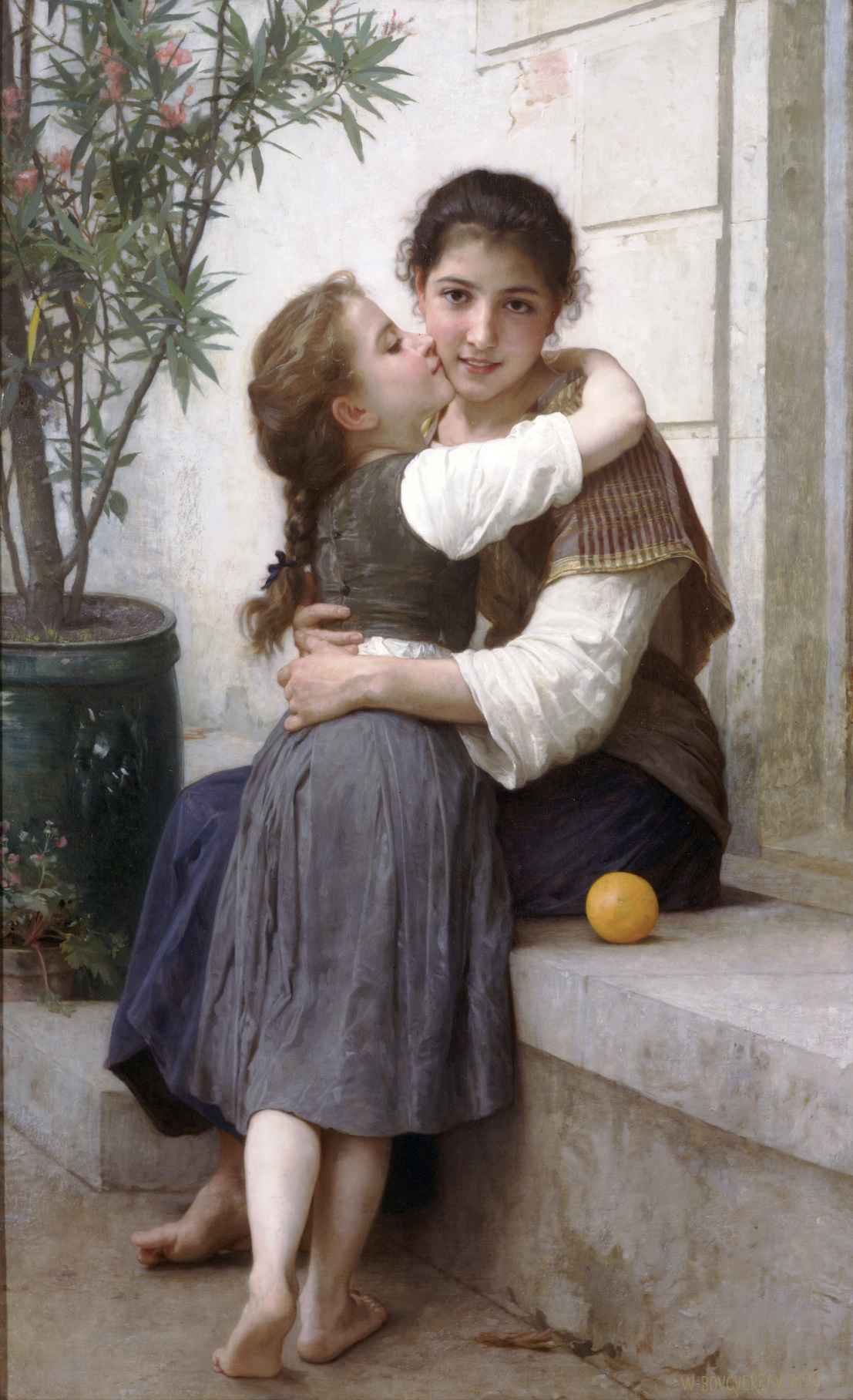
William-Adolphe_Bouguereau_(1825-1905)_-_A_Little_Coaxing_(1890)I read a passage from The Approaching Storm in September which has taken up residence in my thoughts. It describes a Czech Christmas in 1937.

This was a feudal Christmas. Castle and estate people joined in its celebration, as has always been the custom here. They were all Czech. They came to the tree gorgeously dressed in silk and satin of lovely colors, finely embroidered. The men and boys were as handsomely garbed as the girls and women. There was no servility in these people. I liked their quiet self-assurance.

The celebrations were opened by the children going up to their parents and thanking them for their love and care since last Christmas. The eldest, a son of fifteen, spoke first. He was followed by his brother and sister. This is an annual custom.  […] Then we had the presents.

My first instinct on reading this was to clap my hands together and plan a new custom in our family. Then I paused. This Czech annual custom was rooted in generations of thankful attitudes. Can we turn that around with a simple prelude to opening gifts? No, I debate myself, that is not the way to change a culture. Just another band aid fix.  It’s hard enough to get some of our kiddos to say “thank you” after they’ve opened gifts!

I’ve mulled this over. Thankfulness has to be inculcated in kids from the get go. I’ve seen parents teach thankful habits in tiny tots using Baby Sign Language. Long before they can talk, they sign “Please” and “Thank you”, the cornerstones of good manners.
I’m still pondering, still admiring this custom. Wanting the heart felt version, not the formulaic one. Thoughts, anyone?

My Thanksgivings

DSC_2423I’m thankful for the gloaming,
old hymns in minor keys,
For Reepicheep the Valiant
and our comfortable Jeep.

Forgiveness for besetting sins;
wood that crackles while it heats,
Bach’s glorious Passacaglia,
fresh mint in my smoothie.

For long long-distance phone calls,
long interlibrary loans,
long BBC programmes,
long tables set with love.

I’m grateful for grandsons, boisterous and brave,
for solo granddaughter’s exuberant cheers,
for garlic in olive oil, for book-lined walls,
for Welsh men’s voices, giving me thrills.

Pumpkin soup, spicy cauliflower,
Billy Collins’ poems, a good red,
Jack Johnson on a Friday night,
and uninterrupted sleep.

Truth, beauty and goodness,
goodness and mercy —
a life bejeweled in mercy.

For bedtime laughter,
down comforters,
freedom from debt.

I praise God for reconciliation,
John Rutter and
friends who want my books.

For the long lens,
Hand-painted cards,
alliteration and articulation.

For the befluttering be-prefix,
Besotted am I—beguiled—,
Bespectacled, bestowed,
Beholden, begladdened,
Beloved.

Extended family, a wedding in Maine, lingering memories.
Gathering from distant corners,
beauty bedecked with generosity.

Reunions:
Finding new friendship with old friends,
Finding old friendship with new friends,
kinship renewed, connections rekindled.

For a sister who suffers
Yet bears it with grace,
choosing silence
When tempted to complain.

Pesto, bubble wrap, a man and guitar on a stage,
Asparagus, steam, good water from the tap.

Sons who move in with their elderly mothers,
Daughters-in-law who joyfully rearrange life.

I’m thankful for the death of death,
for mingled tears, for clean grief.
For new widows who’ve discovered joy (!)
in the suburbs of sorrow.

Asian noodle salad, cilantro, Athanasius.
I will always be grateful for Athanasius.

I give thanks for comfy sweaters, for jeans that fit,
Direct communication and southern windows.

For a working esophagus, for toenails and elbows,
For friends who travel and post pictures,
Different cultures, different customs,
same humanity.

Countless gifts of love.

Learning about Leptin

Take a toddler with a room stuffed with toys. She shows no interest in a toy until another toddler picks it up and plays with it. This is how I am with books. I didn’t get very far with Mastering Leptinwhen my friend gave it to me. I listed it on Trade Books for Free - PaperBack Swap. and the minute someone wanted it I had an overwhelming need to read it. I’m glad I did. The book has the feel of a self-published book—especially in layout and graphics—a hurdle to overcome when you care about such things.

Just what is leptin? First discovered in 1994,

Leptin is the hormone secreted by fat cells contained in white adipose tissue. It is the most significant hormone there is in understanding the function of the human body. p.4

Most overweight and fatigued people suffer from leptin resistance, a condition where the brain doesn’t receive the signal leptin sends to reduce the appetite. So this person feels hungry, particularly after dinner. Compulsive sweet cravings indicate leptin resistance.

DSC_2017Hormone management is complex because you can’t balance one in isolation from the others. With leptin resistance the brain can’t tell the pancreas to stop making insulin. Insulin stimulates leptin production. When a person is leptin resistant, he is probably insulin resistant and adrenaline resistant — when the fat cells can’t receive the signal to stimulate metabolism. Enter fatigue.

Expensive tests are not needed to prove there is a problem [of leptin resistance]. A person just has to look in the mirror and then take note of their level of energy. p.47

This book was never destined to be a best seller because there are no quick fixes, no pills that magically correct the metabolism. It comes back to those three ubiquitous words: diet and exercise.

Five Rules of Eating (The Leptin Diet)

1. Never eat after dinner.

2. Eat three meals a day.
3. Do not eat large meals.

4. Eat a high protein breakfast

5. Reduce the amount of carbohydrates.

Common sense, right? The most controversial is no snacking, making meals five to six hours apart. Richards maintains that frequent eating clogs the liver’s fuel system, that not eating between meals is good exercise for the liver. He likens frequent snacking to a repetitive strain injury to the pancreas.

Consistent exercise is the most important action I can take to correct leptin resistance.

Six Important Reasons to Exercise

1. Improve natural rhythm and pattern of fuel utilization.

2. Increase the parasympathetic tone of the nervous system.

3. Keep leptin food cravings and out-of-control behavior in check.

4. Enhance strength to stabilize leptin and insulin.

5. Improve muscle use of fatty acids so weight loss is easier.

6. Ensure adequate body heat, an important foundation for body rhythms and patterns.

Richards recommends a few supplements: Omega 3 oils, GLA, CLA, pantethine, and calcium. I’m not a big fan of supplements. I prefer to eat real food that contains what I need.

I plan to follow the five rules for at least six months and see what’s what. If you are interested in more information check out Wellness Resources.

The Approaching Storm

german-wine_2492047kNora Waln’s book, The Approaching Storm: One Woman’s Story of Germany, 1934-1938 is a portrait of a culture. I read it to get insight into the Nazification of Germany from a ground level view. Waln, a Quaker pacifist, and her husband moved to Germany for his musical studies. They had extended visits throughout Germany, Austria and Czechoslovakia.

Much about the culture was winsome. Here, regarding music:

It was usual to see people whose hands were callous with toil playing musical instruments. No gathering was without its song. They scattered music over their great river, over their wine-clad hills, and along their forest ways. (p.53)

About books:

I had entered Germany with the feeling that these people had no money for luxuries, and I had not yet learned that among vast numbers of them a book is not counted a luxury. I had never heard anyone express surprise on learning that a person had gone without meals or material things to buy a book. (p.118)

By far, my favorites passages were about the vineyards. If you’ve read Wendell Berry you will appreciate this. There were pages about tending vines, cultivating soil:

A vineyard keeper worthy of his title has his wood lot for poles, his field for potatoes, his orchard of fruit trees, his stabled cows, his dwelling house, and his vines. He eats bread of his wife’s making which is baked in the village oven, and the fire is banked over Sunday. His laundry is rubbed clean at home, rinsed in the clear waters of the Ahr, and bleached on the grass. He walks without arrogance but with self-respecting dignity. And, Protestant or Catholic, he brings his children up to earn their keep, pay their debts, revere God, and love the Fatherland. (p.151)

Beautiful roads:

The Germans build well. The roads are not ugly scars across their land they are things of beauty, exciting in their charm. They are invisible a short distance off; then one comes on them—silver ribbons. No telegraph poles, advertisements, rows of refreshment stands, gasoline stations, or ugly houses line their banks. (p.138)

I needed the review of the Reichs:
First Reich (Deutsche) the Holy Roman Empire established by Otto the First 962-1806  Second Reich (Second) Otto von Bismark, Hohenzollern Kings of Prussia 1862-1918
Third Reich (Drittle) National Socialist government, the Nazis

Wien_-_Stephansdom_(1)I learned about a cathedral to Saint Stephan in Vienna, the “Stefansdom”.

The Stefansdom has been raised in the same way [as Mongolian prayer mounds]. It is a heap of gifts to God. Each generation has made its offering in the fashion of the time—Romanesque, Gothic, baroque, and nineteenth century. Each piece is beautiful. (p.263)

But then she describes Hitler’s rule. It was impossible for a young boy to escape being in Hitler’s Youth. While they were often given extra latitude (Hitler had read and enjoyed a previous book Waln wrote) they saw the troubles their friends experienced. Soldiers were optimistic and accepted injustices to themselves with a spirited defense of the army.

One story about a Christmas dinner captured me. The hosts guests included  Christians of Jewish descent. The maid and butler made a brouhaha, refused to serve the Jews, and quit in the middle of service. The hosts refused to let their friends leave and carried on amidst their own embarrassment.
Waln said that she was so traumatized in 1938 that she was unable to write.

I’m glad I read this book. Most of my questions weren’t answered, but one thing was clear. Most citizens were in denial as they gave up freedoms one by one.

Back Home Again

DSC_2117 October was a friendship-saturated month.

DSC_2151When I had an empty day in a city far from home, I contacted Faith,
an online friend. We picked up as if we had known
each other forever, drinking pots of tea and talking nonstop.

DSC_2213A week of solitude meant garden clean-up, reading, walking,
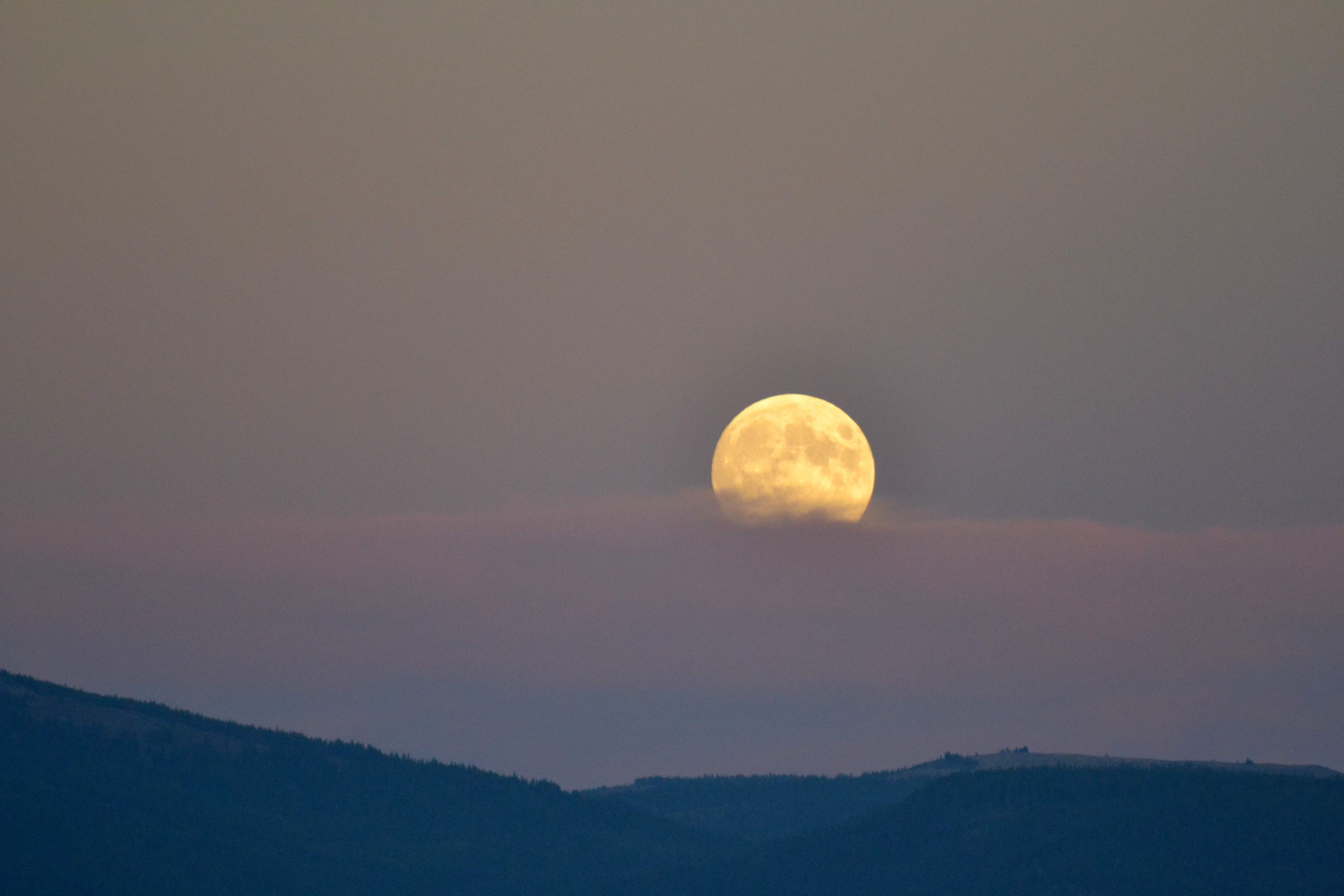
and a trip to the wildlife refuge to feast on the Harvest Moon.

DSC_2268My husband and I had a few days in the middle
where our schedules synced. The joy of reuniting, ah!

DSC_2281I met two year old Max and his mom on a flight to Minneapolis.
When he got antsy, I snapped a photo and let him see.
Take another, he urged. He drew in my journal with many colors;
years from now his drawing will remind me of our brief friendship.

DSC_2287A fire is a great conversation accessory. On my cousin’s
back deck we not only caught up on our 17 years apart,
but I—thanks to her transparency—got a tutorial
on life as a new widow.

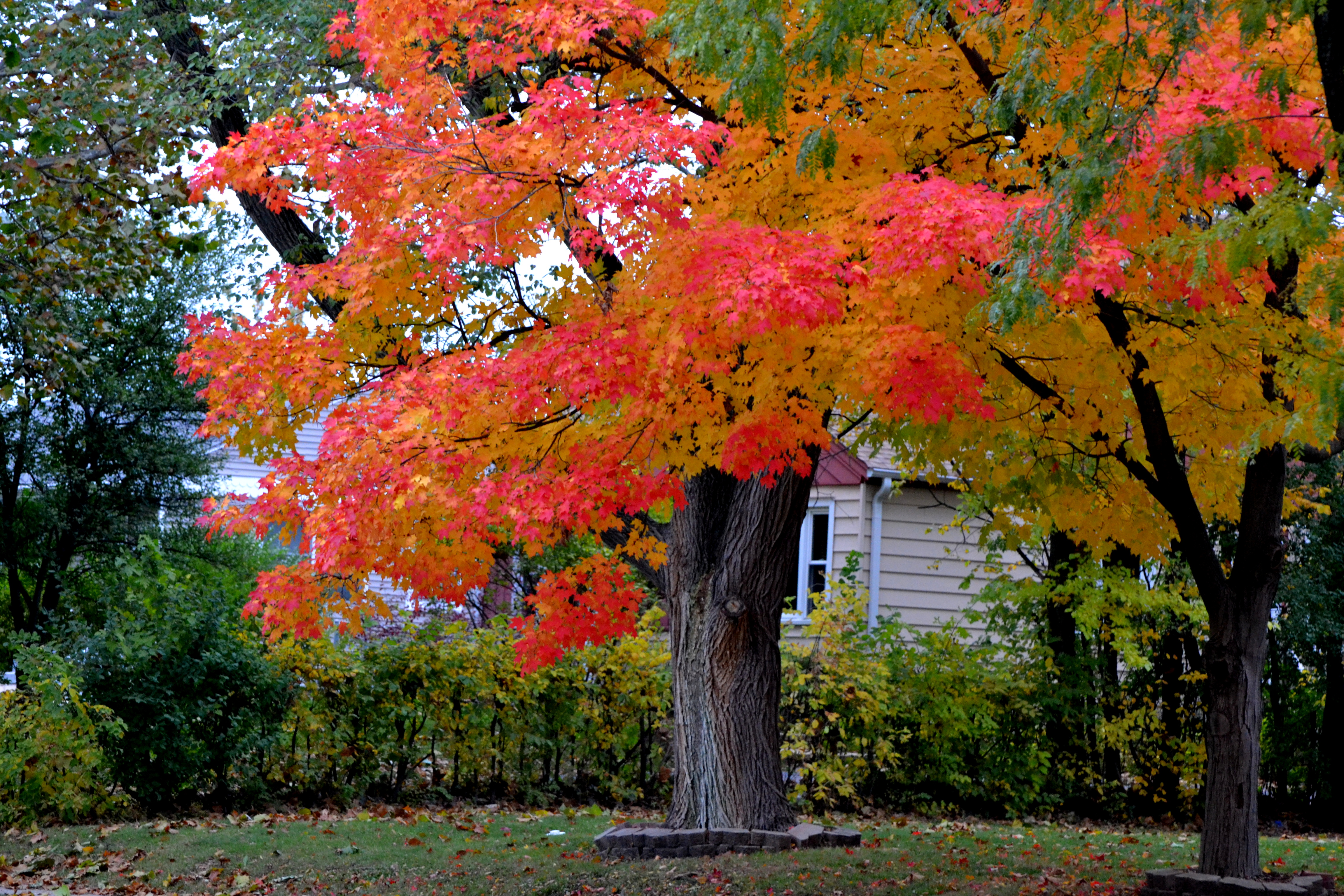
DSC_2299We gloried in fall colors.
DSC_2347Our dads were brothers. We talked through our
family history, all those quirks we recognize.

DSC_2371And we laughed.

October 2014Then to Chicago for my annual visit.
I enjoy studying each my sister Dorothy’s dozen grandchildren:
their gifts, what motivates and aggravates them,
their unique personalities.

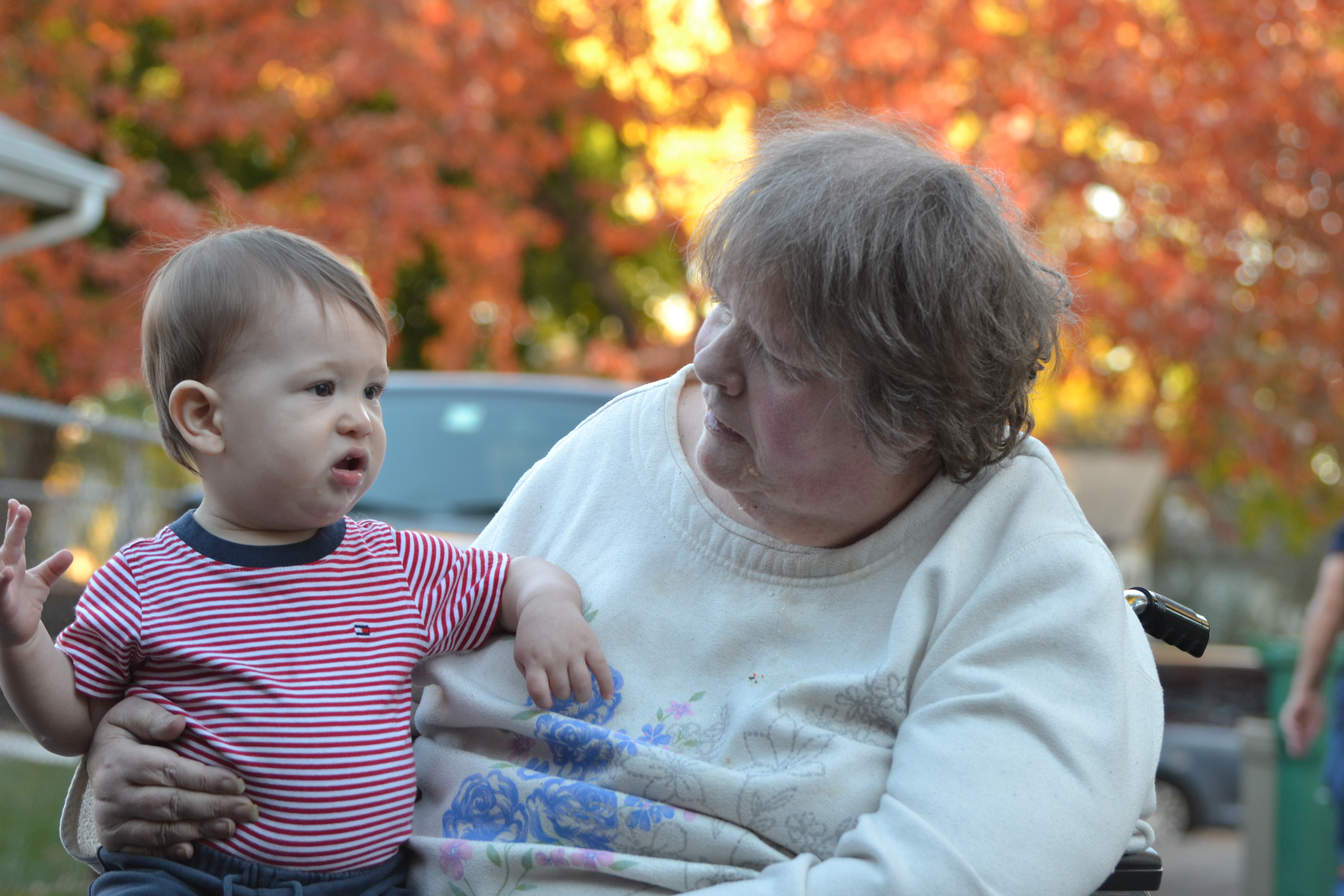
DSC_2525My sister Margaret soldiers through many infirmities.
Cancer and a stroke have attacked but can’t quench her spirit.
Through the pain I never hear her complain.

DSC_2625Several other friends blessed me with time and attention,
a precious gift. Our friendships span the years.
Stories jogged memories.

DSC_2423Tender mercies, all.

Emma’s Wedding

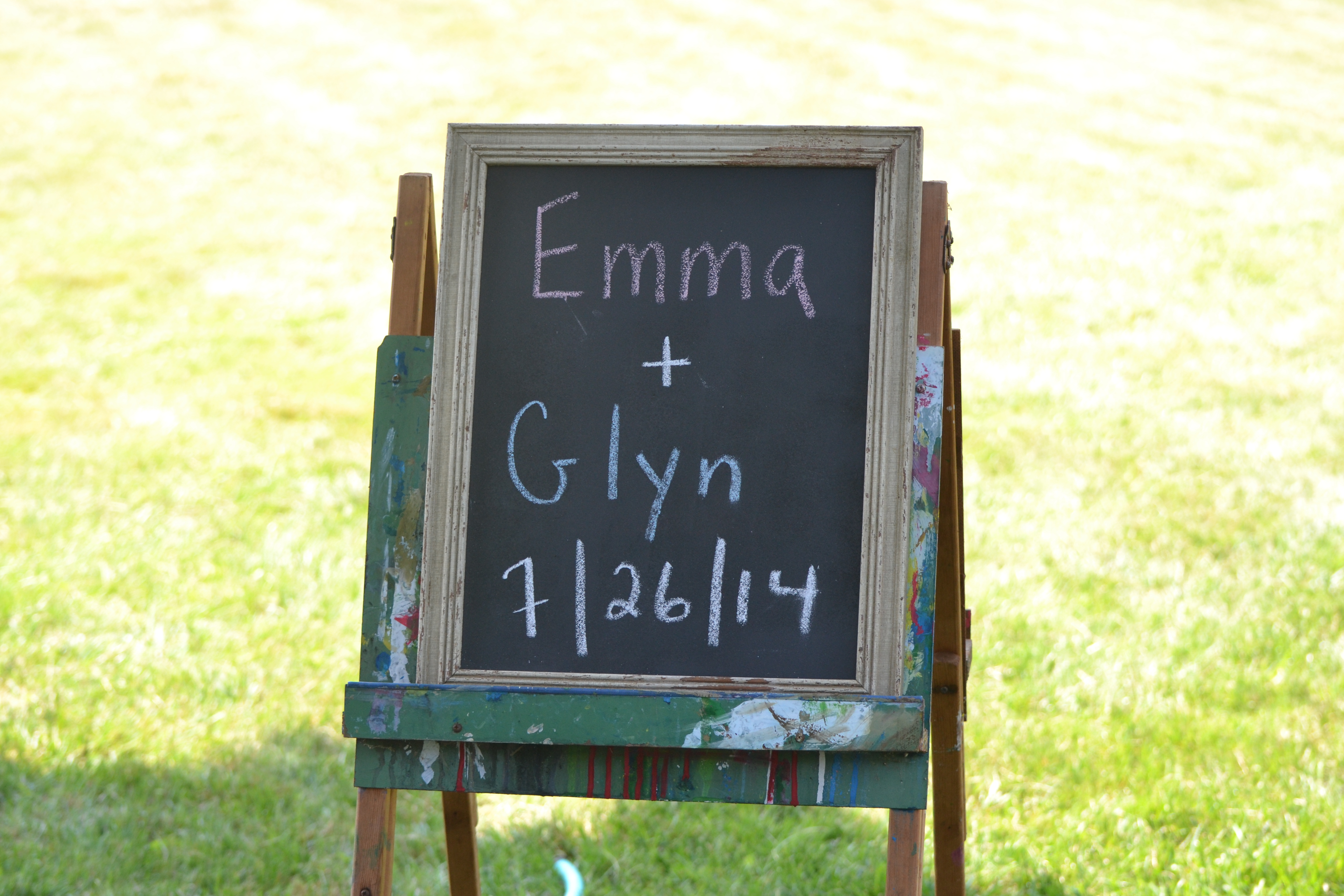
DSC_0991Today, it’s been two months since my niece Emma married Glyn. In my life, the big things aren’t cemented until I’ve written them. From writing this wedding I have cowered, knowing my word hoard hasn’t the depth or width required. I refuse to use ‘epic’ and ‘awesome’, yet I’m still searching for the best words.

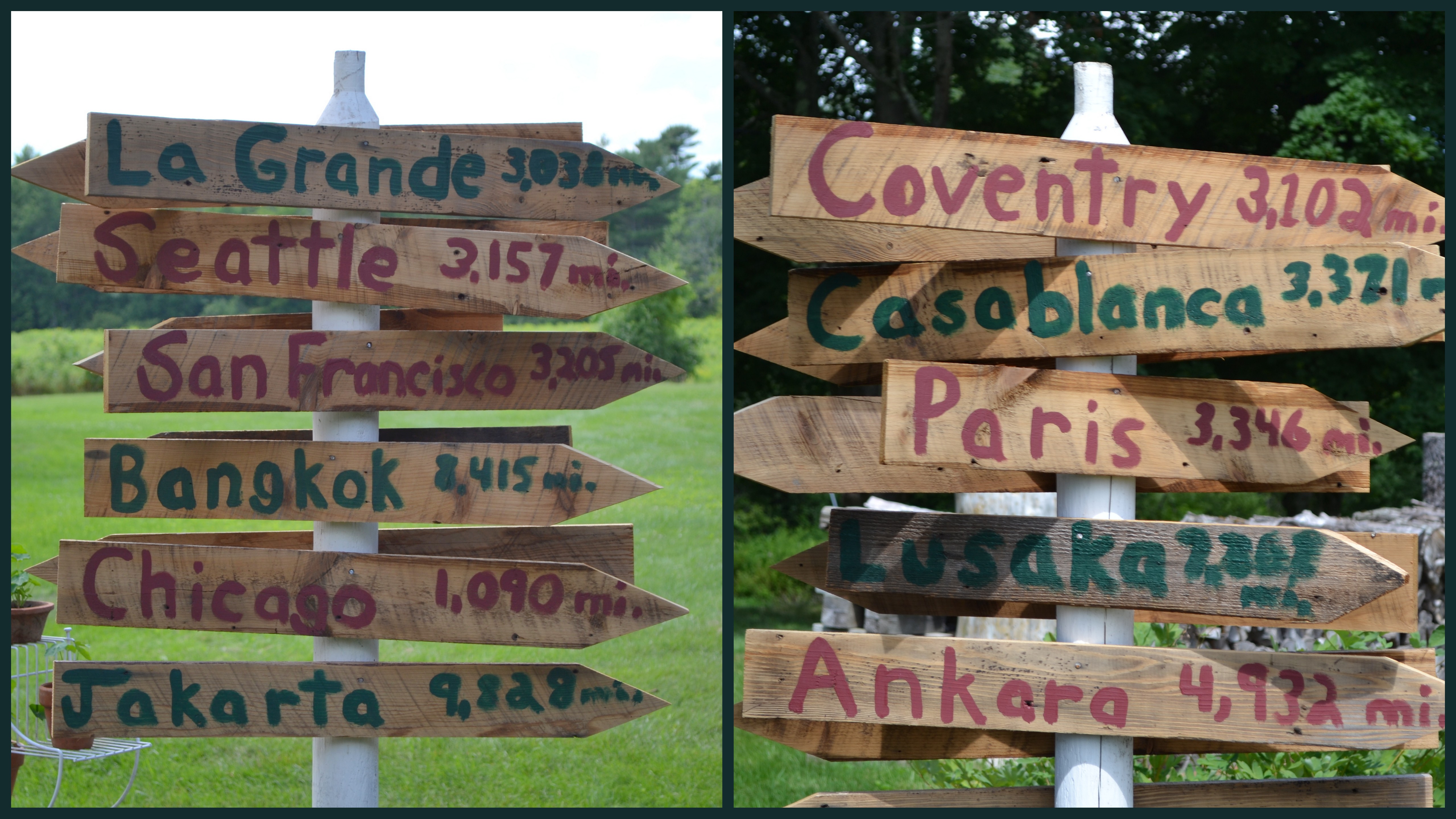
July 20142It was a grand Coming Together. Emma is American. Glyn is British. They live in Turkey. Their friends live all over the world. Each mileage sign represents someone who came to the wedding.  The only continents not represented were South America, Australia, and Antarctica.

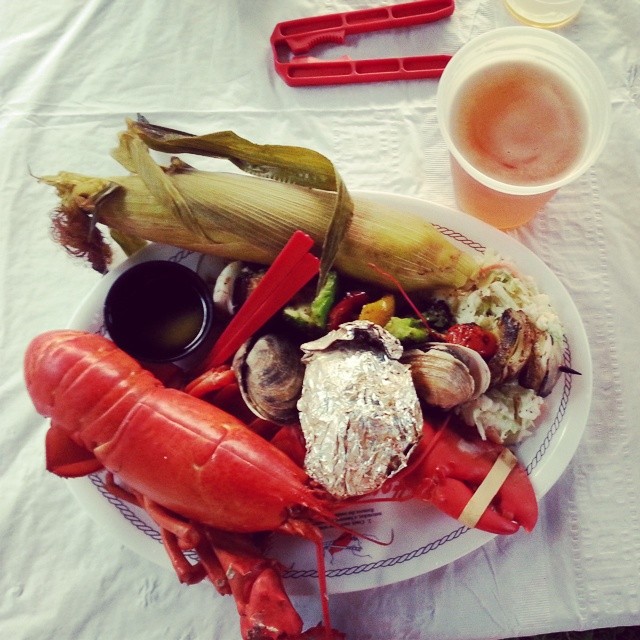
lobsterfeedThis wedding occupied three days. Everyone was invited to the rehearsal dinner aka Lobster Feed, the wedding the next day, and a brunch the day after the wedding. It resembled the medieval feasts that I read about in my books.

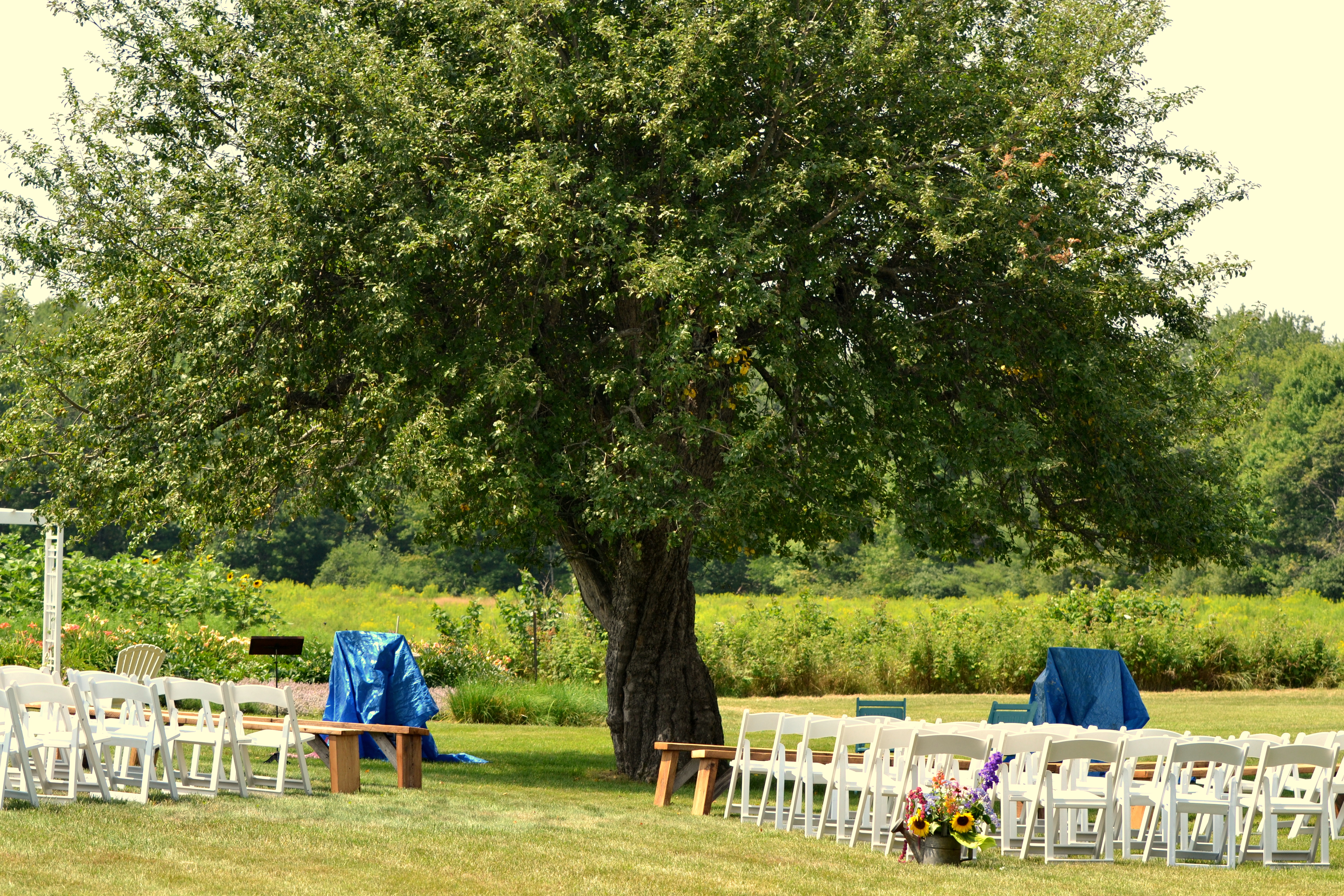
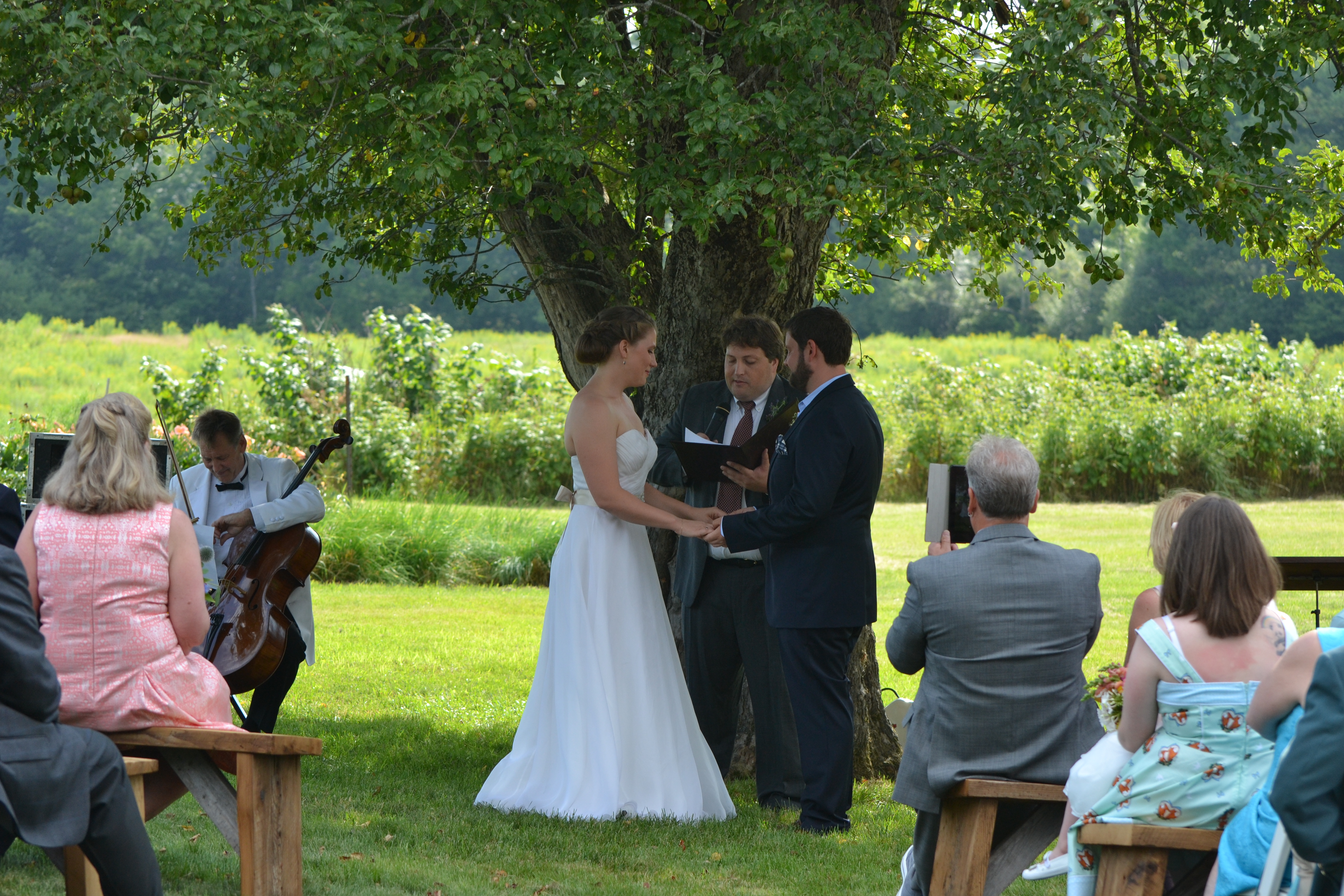
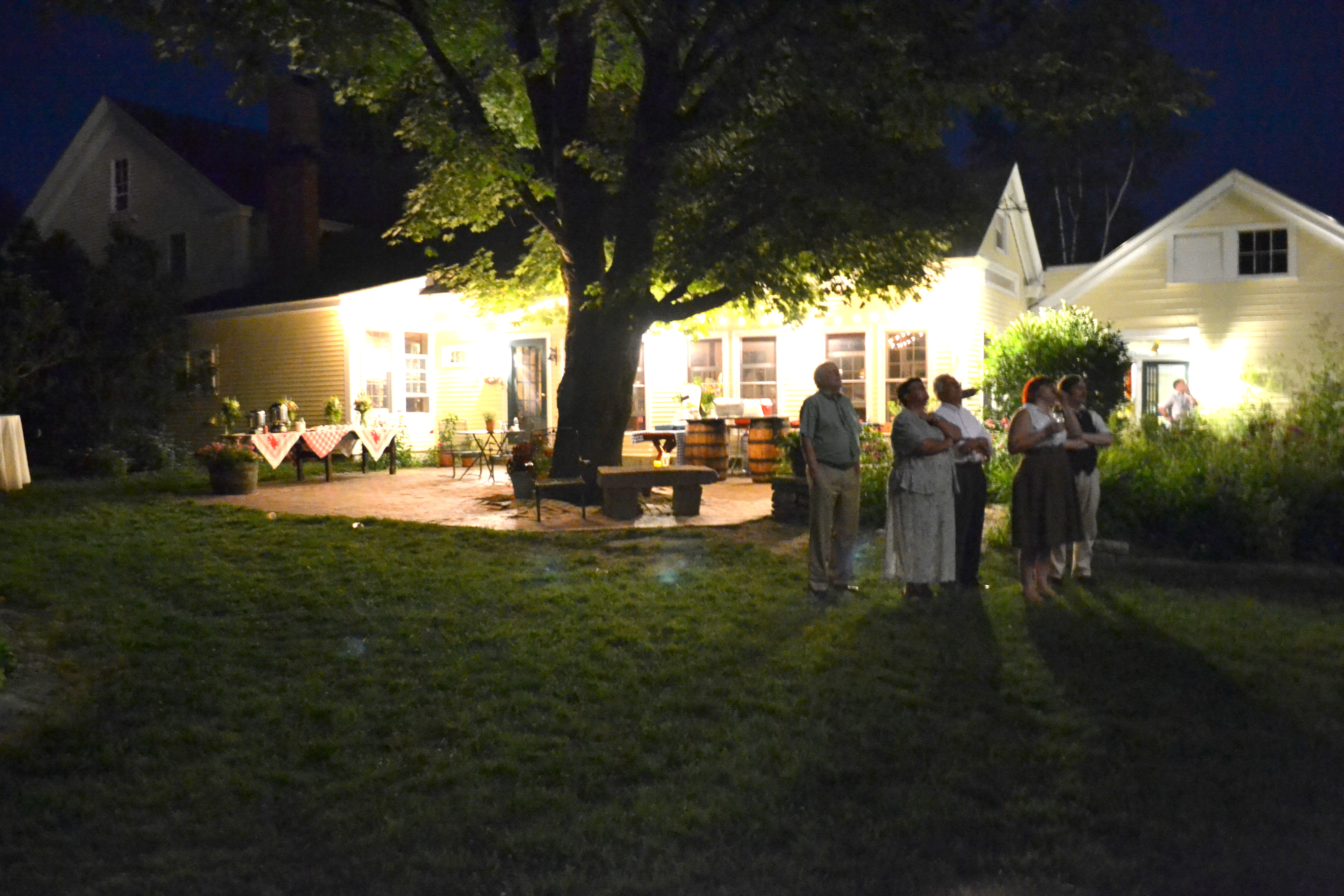
DSC_0860The ceremony was held under the ancient apple tree.

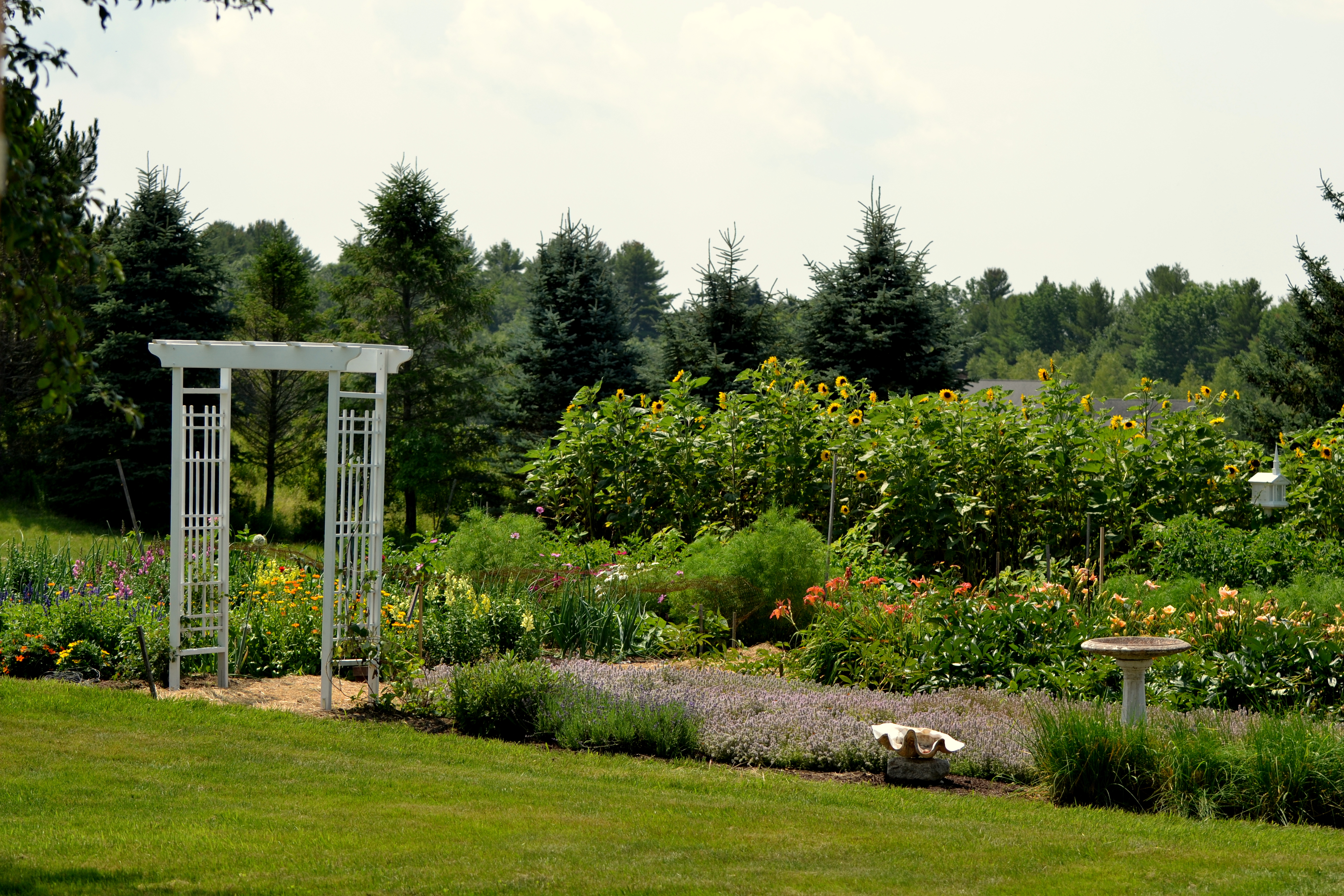
DSC_0877The background was my sister-in-law’s glorious garden.

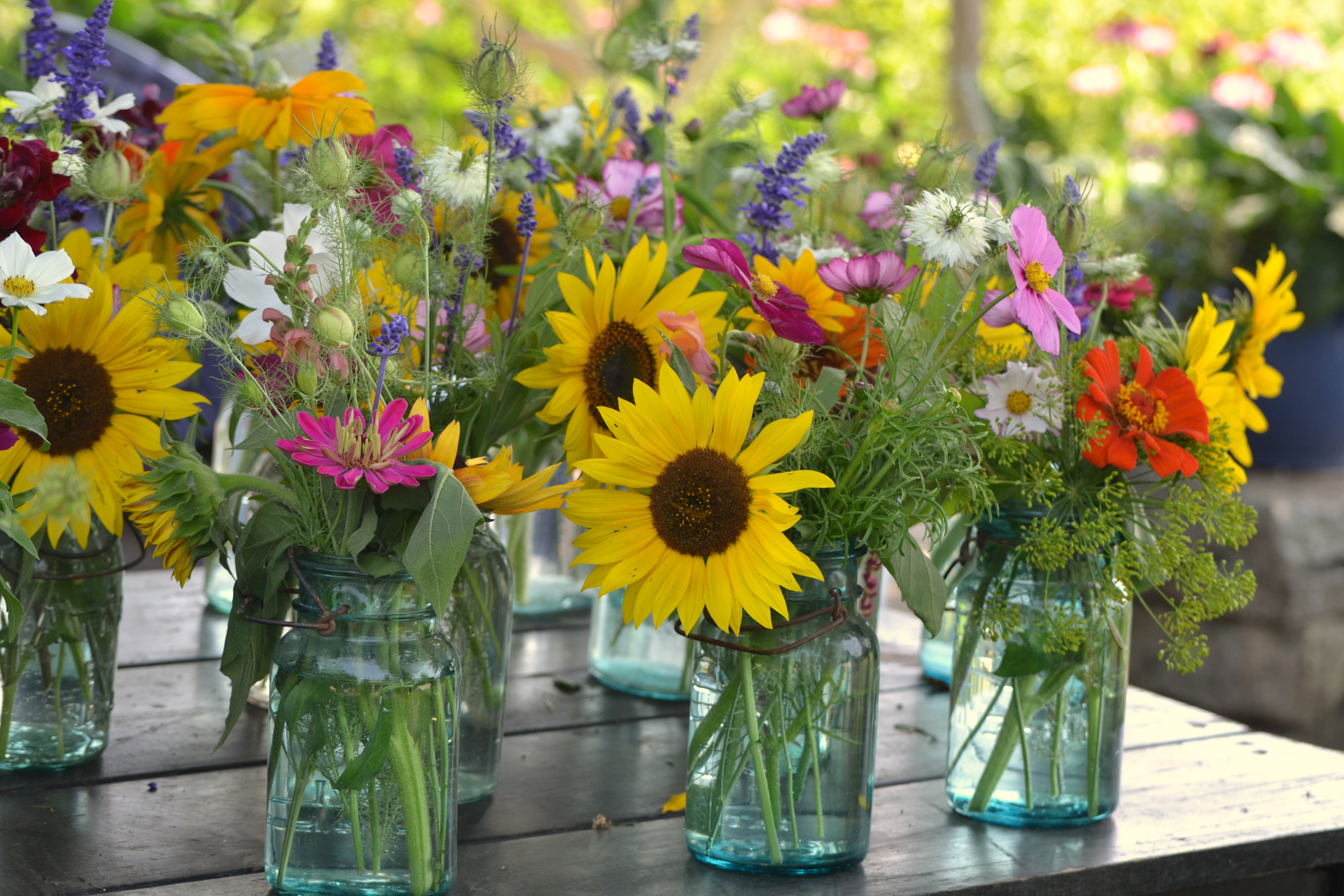
DSC_0763She grew almost all the flowers for the wedding.

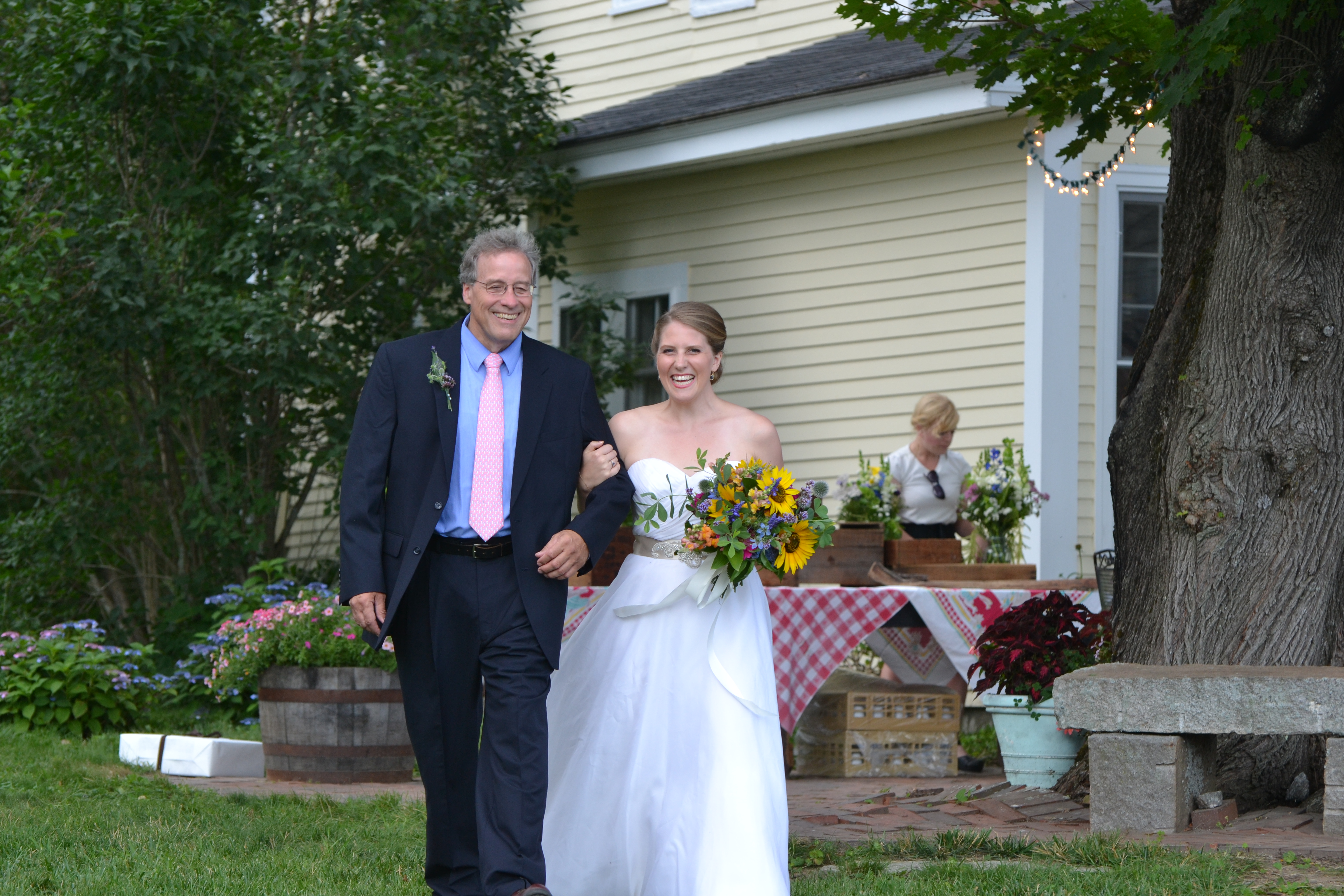
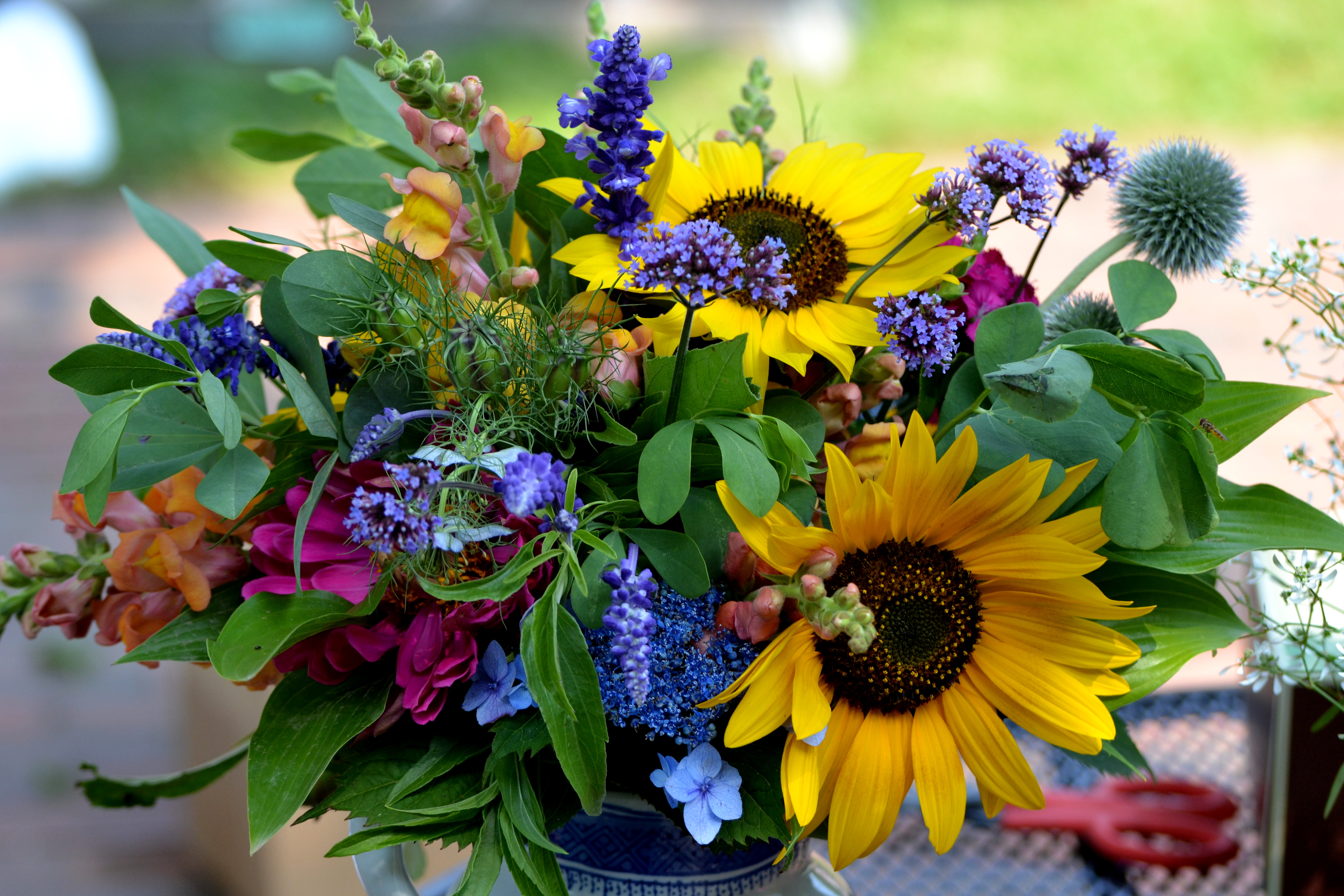
DSC_0653My daughter-in-law made the bride’s bouquet.

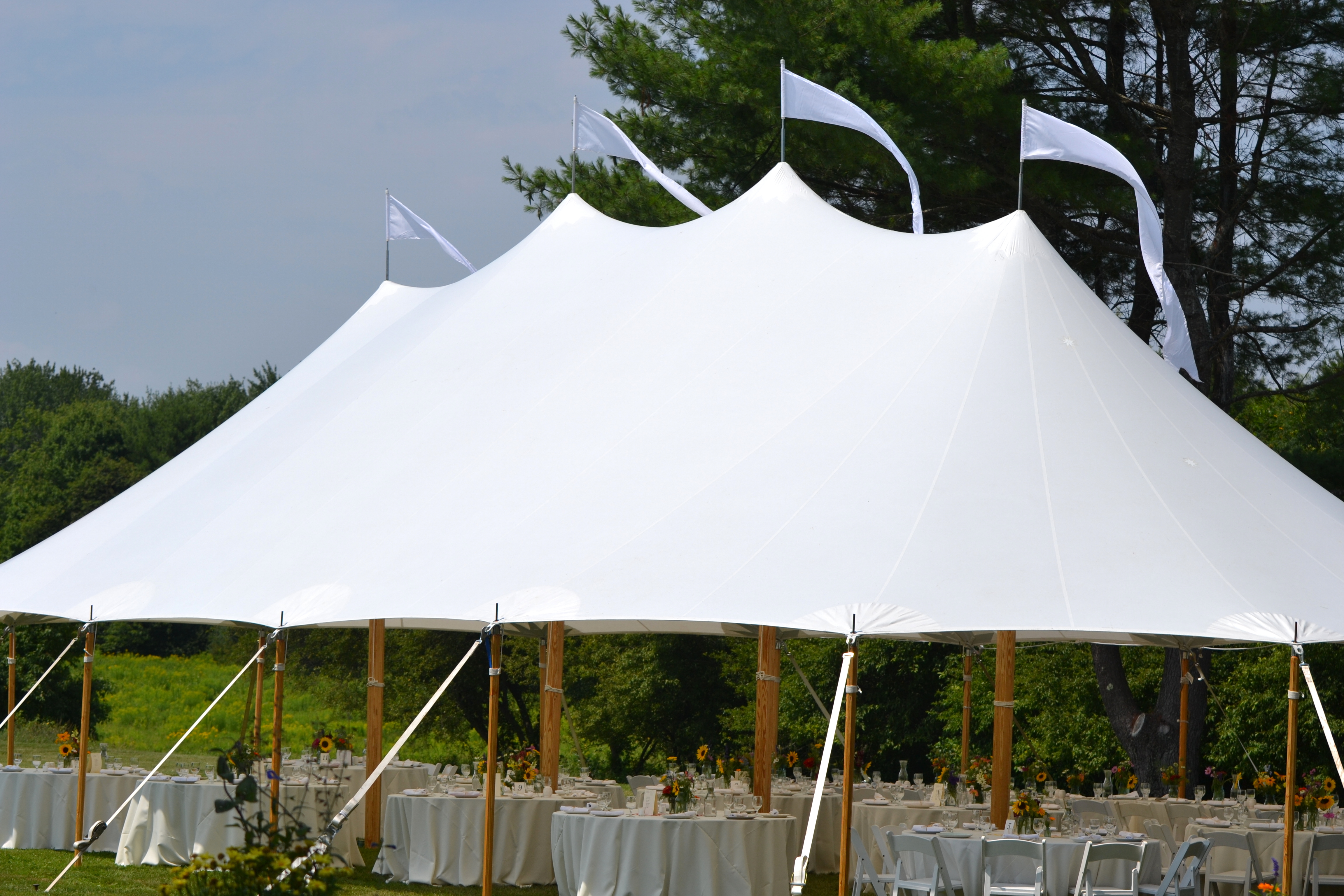
DSC_0857A sail cloth tent hovered over the festivities.
My grandson said, “Nana, it looks like Narnia.”

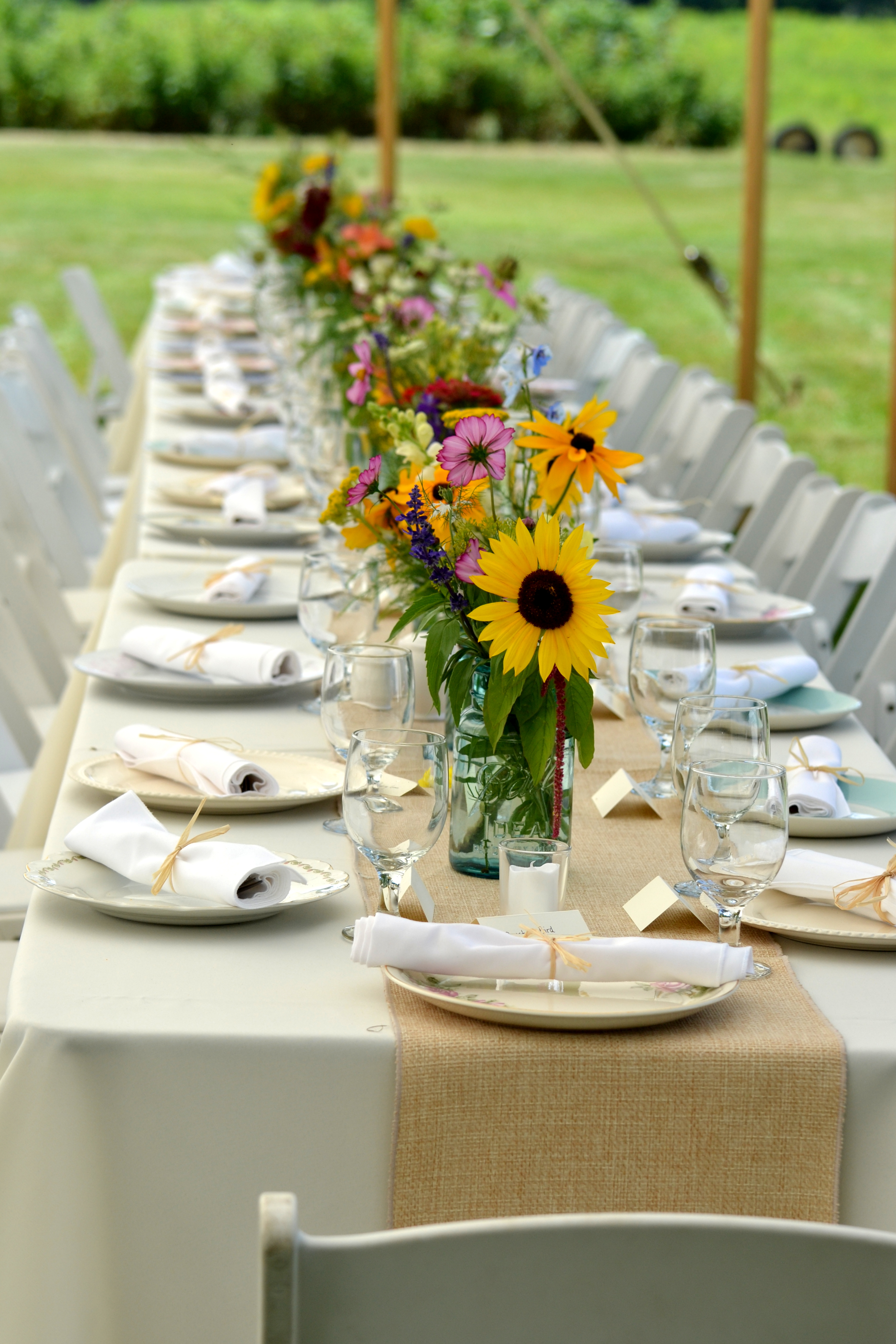
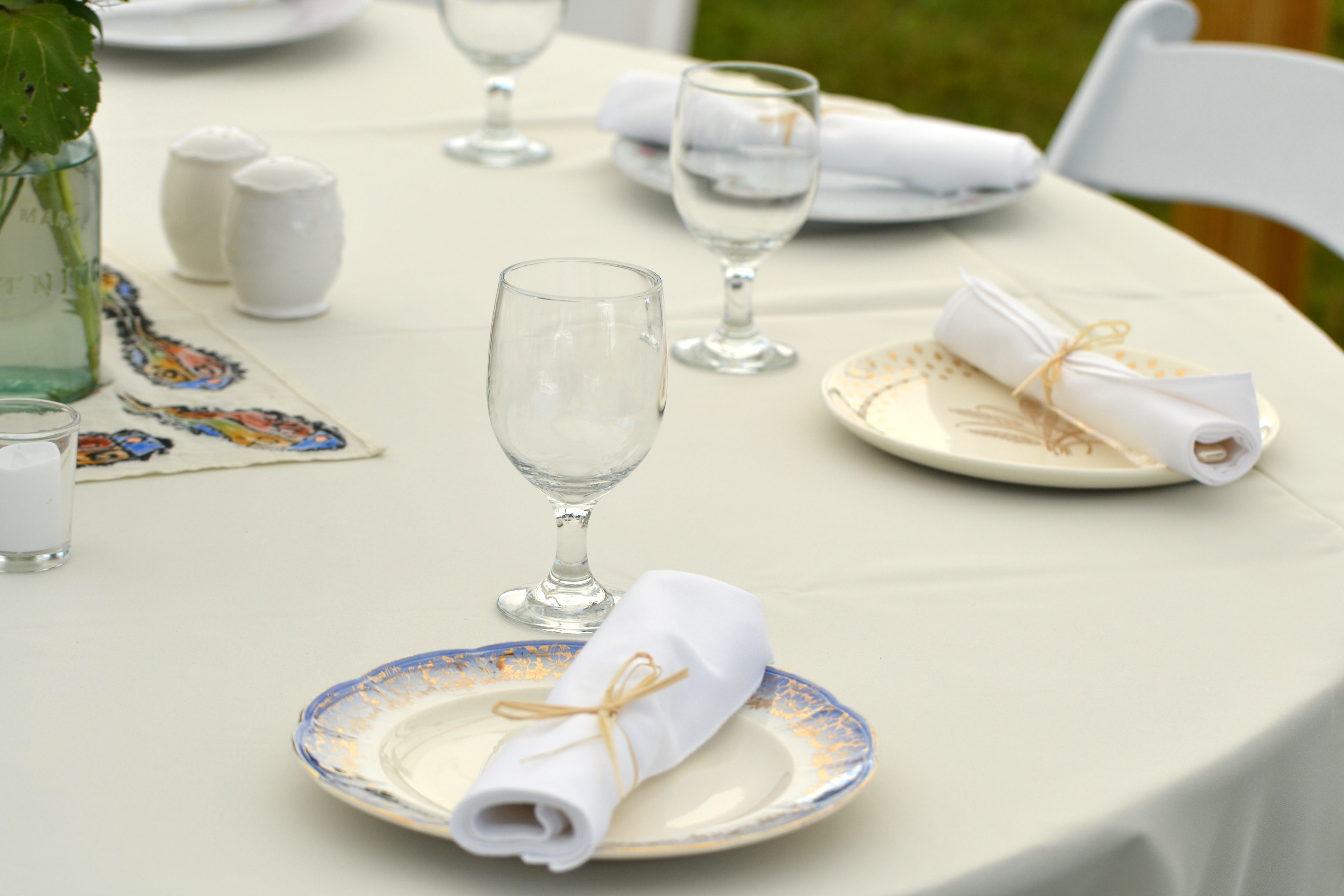
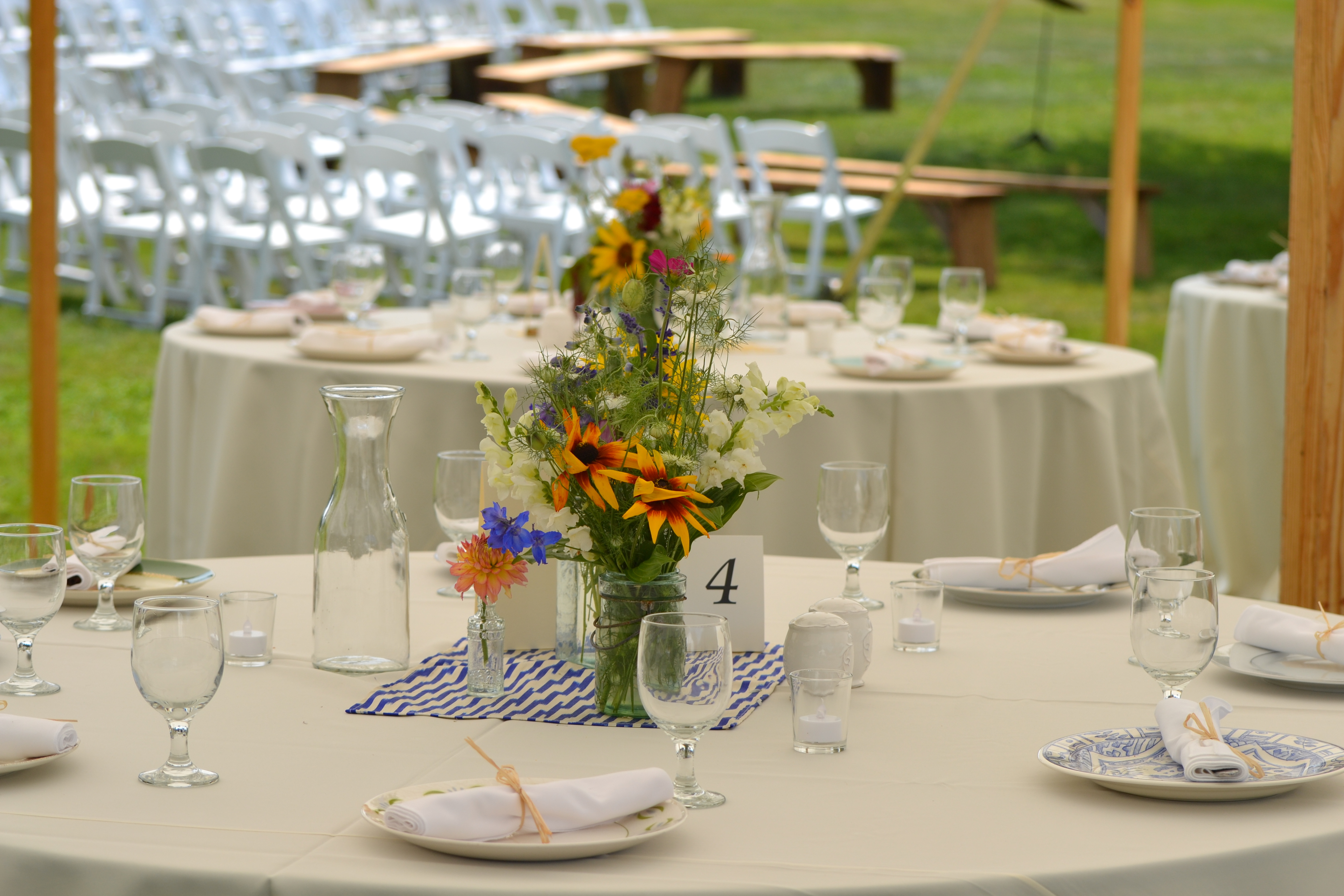
DSC_0909The tables were set.

DSC_0910Mismatched china completely charmed me.
‘Elegant simplicity’ set the tone.

DSC_0915All the cloths under the flowers were purchased
at the bazaar in Istanbul.

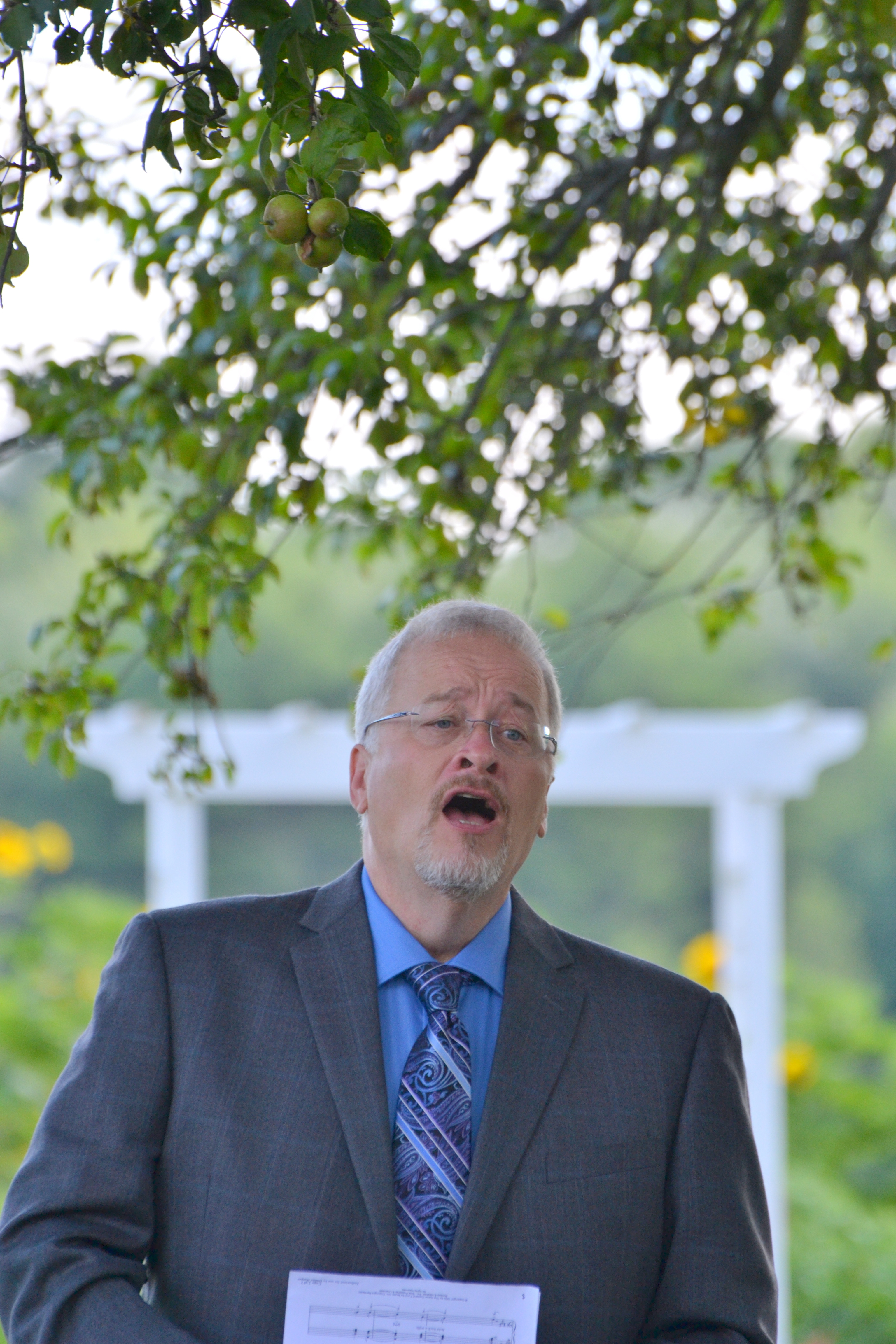
DSC_1021My brother, the tenor, sang Simple Gifts, a song
that he sang at the wedding of Emma’s parents.

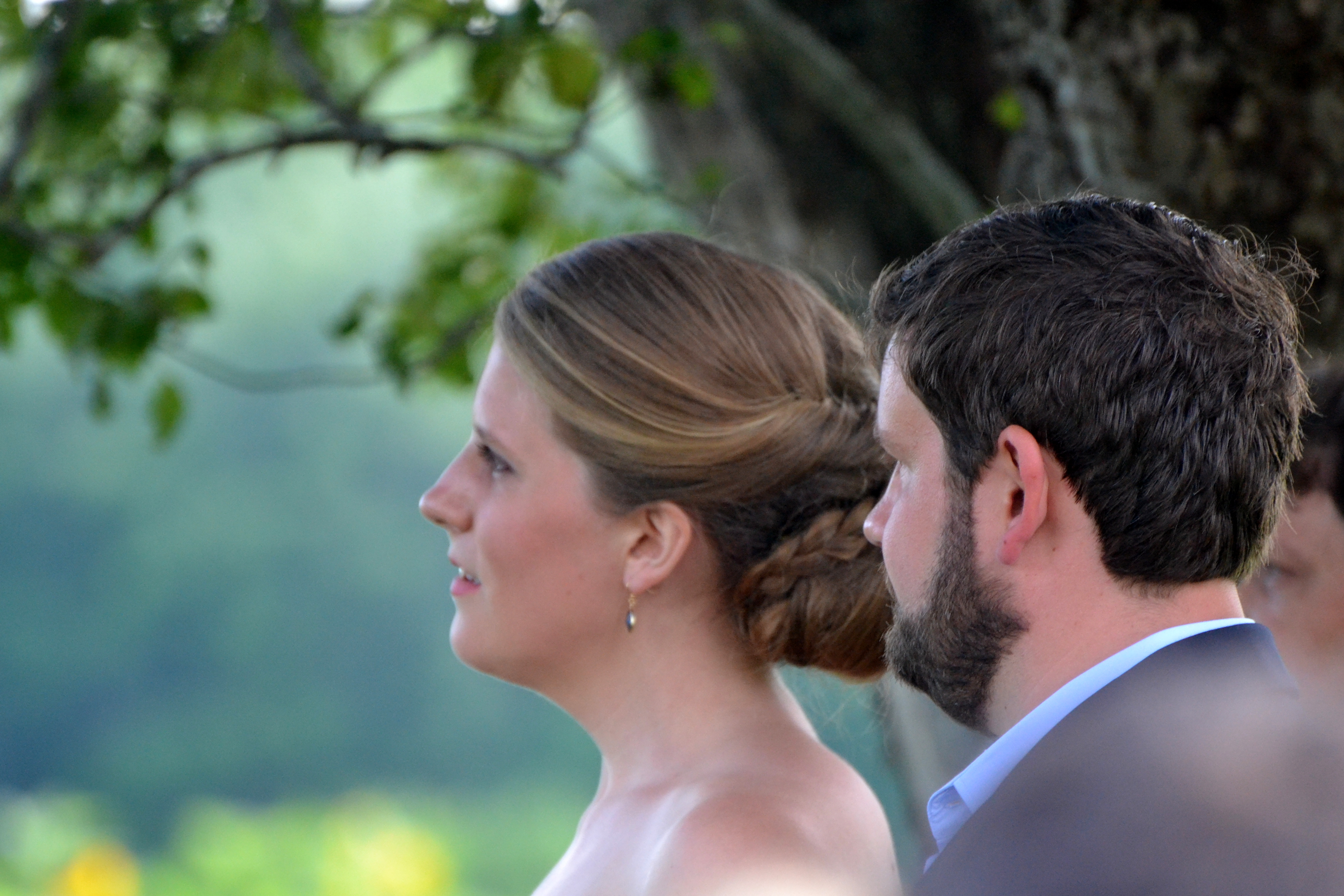
DSC_1022Emma and Glyn listen.

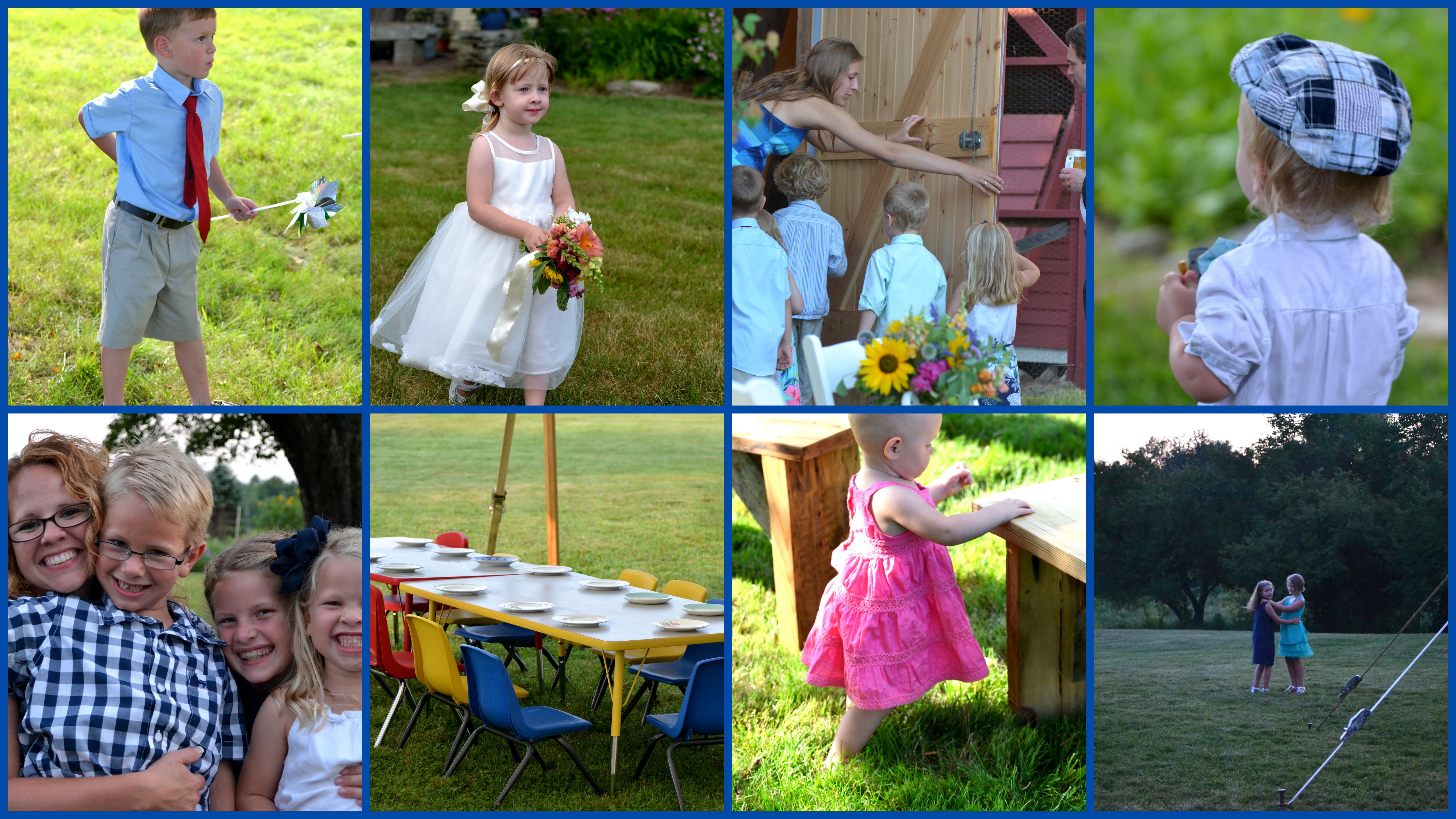
July 20143Kids were welcomed with open arms.
Not often does one hear, “I’m so glad you brought all your kids!

July 20144We’ve always loved Emma; it was easy to see why she loved Glyn.
They are both strong, generous, compassionate, and fun.
Not to mention smart. They have our deep respect.

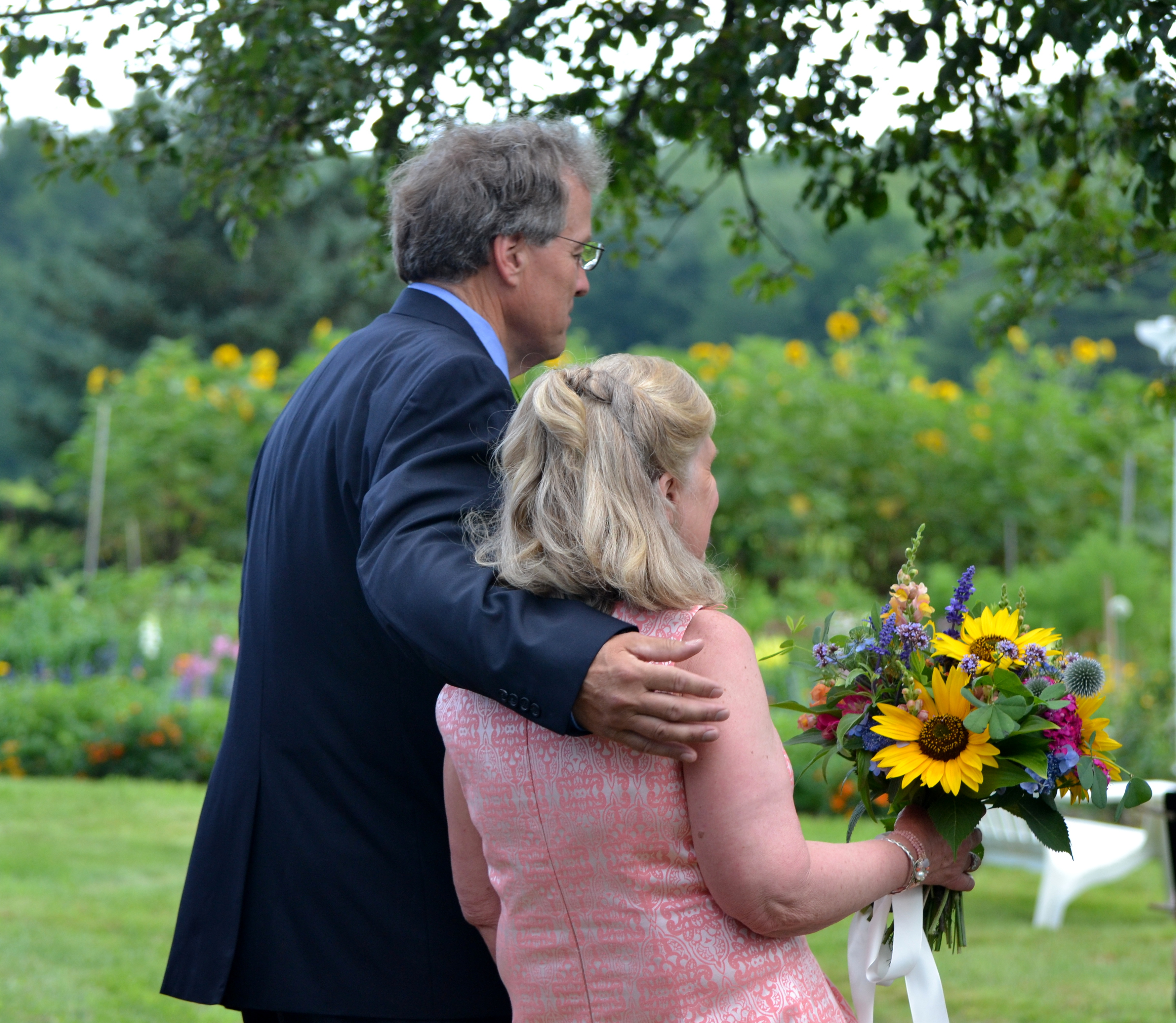
DSC_1000As long as I’m giving honor, let me say that my brother Jim
and my sister-by-marriage Kathleen were stellar. This event was
the culmination of a lifetime of love invested in their family, work on
their homestead, their habits of beauty, blessing, and hospitality.

DSC_1016Emma’s older brother Will—best friend of bride
and groom—officiated. This was his first gig. We called
him—tongue in cheek—”Brother Will.”

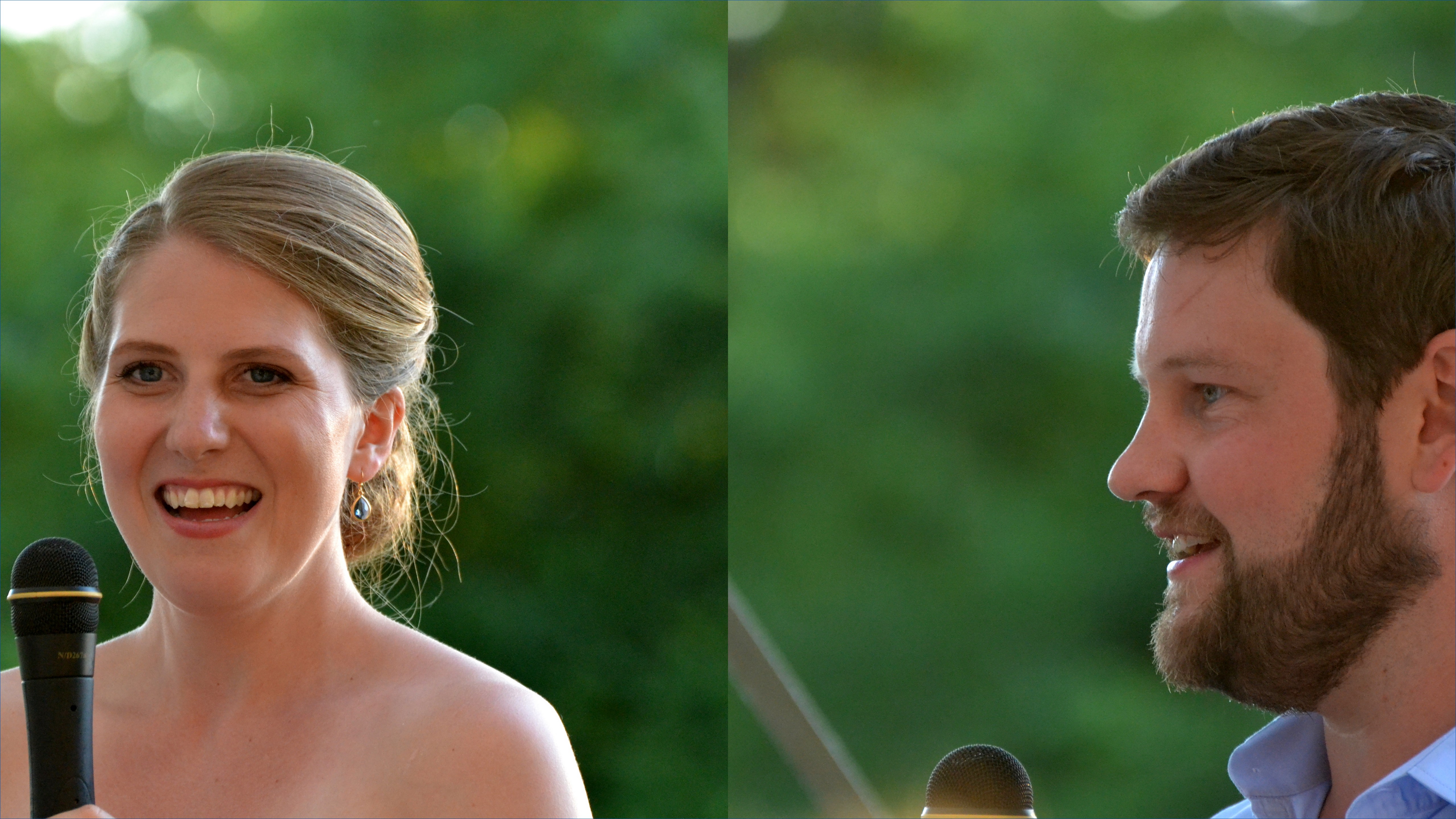
DSC_1163There were some great toasts: sweet, witty, heartfelt.
But at the end of the day, what everyone remembered
and remarked on was Jim’s toast to his daughter.

DSC_0887Then we took the party to the barn.

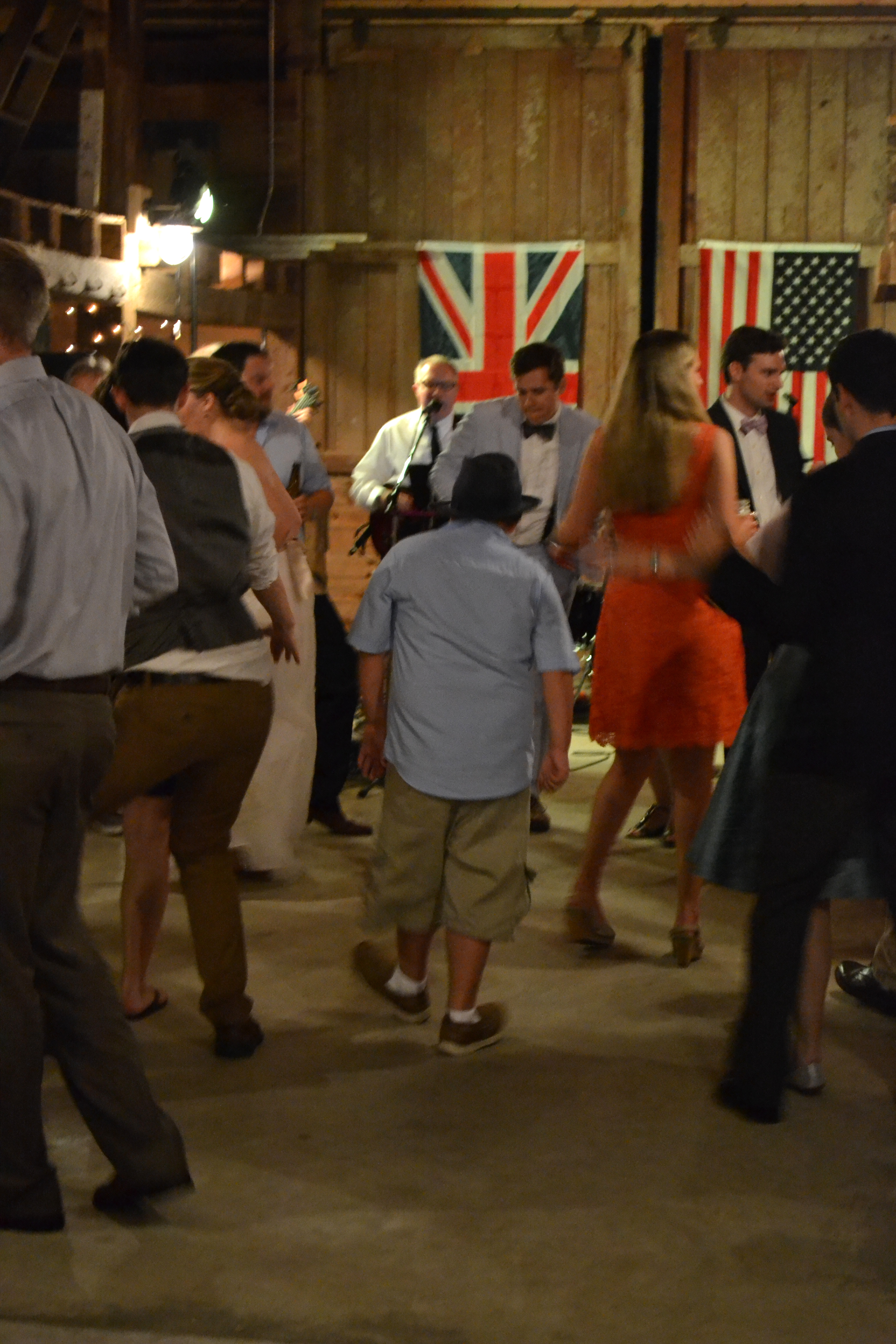
DSC_1188My grandson (with the hat) rocked the reception
with his unique style of dance.

DSC_1224It is a Turkish custom to have fireworks at a wedding.

DSC_1219It was a magical evening.

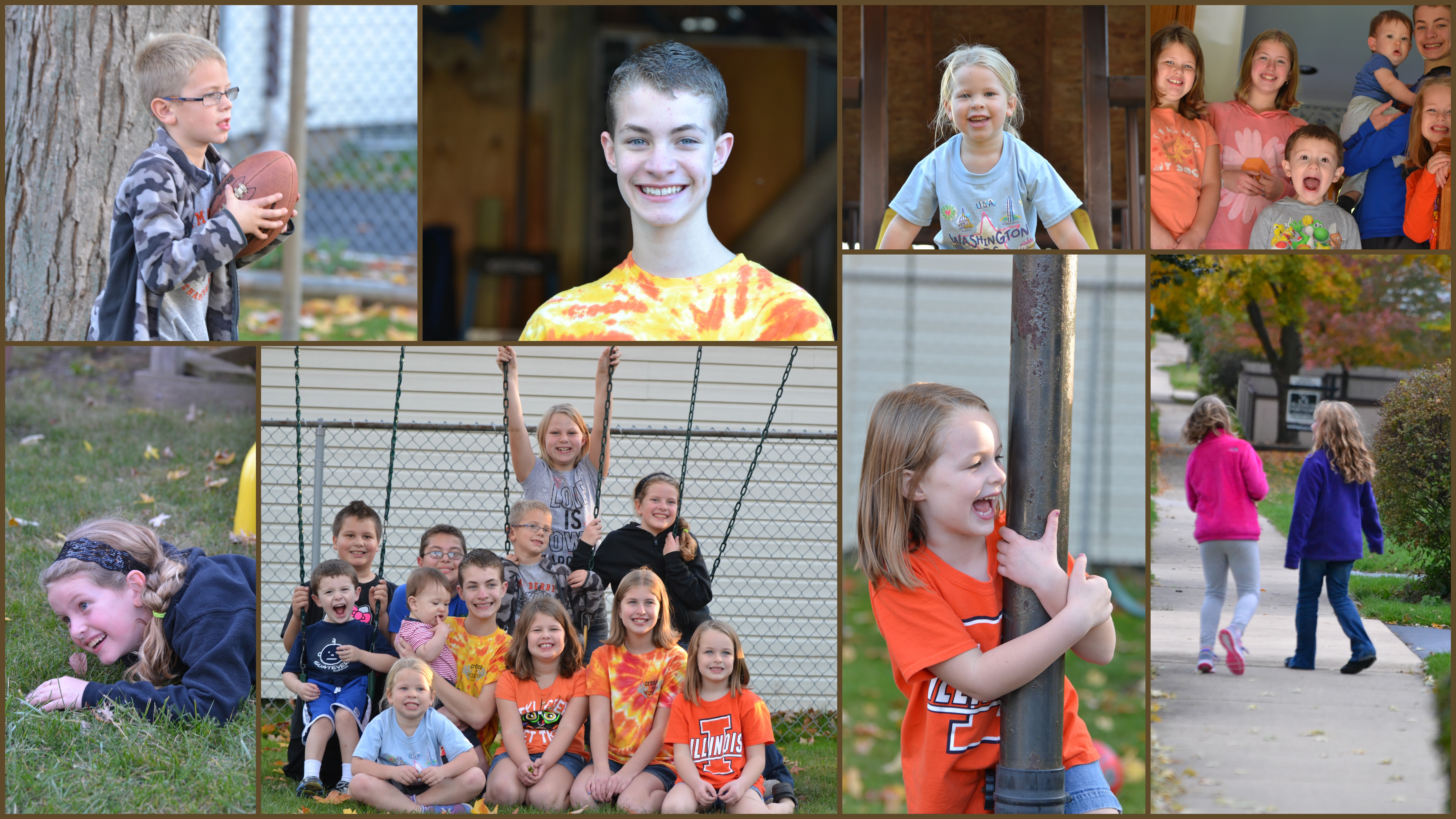
BakkerfamilysanscollinThis is our family (missing our son Collin).
The extended tribe (my siblings and their descendants)
present numbered 39. There were gaps here and there.
We cherish time together and relished the gift.

With the help of Facebook and texting, my kids and their cousins
are much closer than my generation was with ours.
It is a delight to see their friendships deepen.

DSC_07052014 will forever be the summer of Emma’s wedding.

My photographer brother’s photos.

Link to the magnificent photographer’s pictures.
(She shoots film.)

Remembering Glenn Gould

375px-Glenn_Gould_1

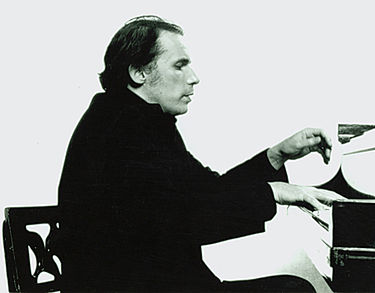
My new latest ‘thing’ is Glenn Gould. My friend Terri recommended A Romance on Three Legs, I watched this video of the author discussing it, and my mind told myself, “Let the fascination begin!”

I’ve watched videos, listened to CDs, read Hafner’s book and I continue to be mesmerized. The best film so far has been the 2010 documentary, Genius Within . Gould’s music accompanies me while I chop veggies, sweep the floor, write blog posts.

Who was Glenn Gould? He was a Canadian pianist whose ability, style, precision, musicality, phrasing, was simply in a galaxy all his own. Many stories have been told about folks who, having never once listened to classical music, were stunned and converted by some piece they inadvertently listened to on the radio. His playing grabs you.

“You are one of the few authentic geniuses recording today. If you wanted to record the complete works of Alban Berg on a kazoo, I’d gladly do it.”  RCA executive to GG

Katie Hafner’s book focuses on the piano that Glenn Gould played, a Steinway CD 318. It’s a great introduction to Gould, but also a great introduction to Verne Edquist, the blind man who was Gould’s principal tuner. In the video linked above, someone has a question, Hafner can’t answer. She calls Edquist in the middle of Q and A and finds out. The Steinways, a German family who emigrated to America to build pianos, provide an engaging back story.

Gould had many eccentricities, and his life story is ultimately a sad one, leading me to the question, “Is there such a thing as a balanced genius?” He died days after his 50th birthday from a stroke. One ‘tic’ he had was humming whenever he played the piano. I remember attending a concert in 1989 with a pianist who shared this quirk. At the social hour afterwards, I remarked to some bystander what a shame it was that someone in the audience insisted on humming along. “Oh, my dear,” the lady said, “That was our own dear [insert pianist’s name]. She can’t help herself.”

I suppose it can be said that I’m an absent-minded driver. It’s true that I’ve driven through a number of red lights on occasion, but on the other hand I’ve stopped at a lot of green ones but have never gotten credit for it.  — Glenn Gould

Once in a while I try to figure out why Glenn Gould fascinates me. What keeps me looking for more to read, more to watch, more to listen? He is an enigma – charming, yet reclusive, gifted but abhorred performing, confident but lost.  I haven’t come up with an answer yet. But I know I’m not alone. His magnetic pull continues thirty-two years after his death.

The critic Tim Page said that in his last decade, Gould was “no longer just an arrogant, albeit sweet-tempered genius. He became a sweet-tempered melancholy genius.” Today, September 25th, is the anniversary of his birth. Give yourself a gift by listening to Glenn Gould. Bach’s Goldberg Variations is a good place to start.