The Best Book of 2014

I told myself I’d go slow. No big gulps. Savor the words. Take my time. Reflect. Enjoy.

And I did…the first 36 hours. But last night I had three hours open and three hours left of reading. Turn the light off at 10:00? C’est impossible!

Somewhere Safe with Somebody Good, dear reader, is the best book Jan Karon has written. Like a master chef with discerning taste, Karon has adjusted the flavor of her writing so it is not too sweet, not too bitter, not too peppery, not too bright; but the perfect combination of spices, textures, and taste. There are overtones, undertones, aromas, and the kind of finish that both satisfies and makes you yearn for more.

Laughter plays peek-a-boo throughout the text. Last night I read a section to my husband that required a working knowledge of both The Cat in the Hat and Poe’s The Raven to fully understand the rich humor. When Curt roared at the punchline, I loved him more than I had the minute before. There is humor on the surface, too: the spray tan provides more than a few guffaws.

There are three scenes that sing to the deep recesses of my soul. They, alone, are why I know I will be reading this book again and again. And, perhaps, again.

Jan Karon nourishes. Literary quotes to ponder, authors and titles to explore, music to review, idioms to delight in. And a bookstore—Happy Endings—that  plays a big part in the plot. There are also problems that can’t be fixed, people that fail, people that never fail to irritate.

If you’ve read certain kinds of Christian fiction, you are familiar with what I call the two-dimensional didactic. The pasted-on-the-end moral message, the perfect hero and wicked villain, the thin patina of plot splashed on the important main point. Gag. No. Thank. You.

When you read  Somewhere Safe with Somebody Good, you learn without any awareness that you are being taught. The subjects are wide ranging: diabetes, exercise, how to help the bereaved (be there), how to say ‘no’, how to cope with retirement, how to give and receive grace.

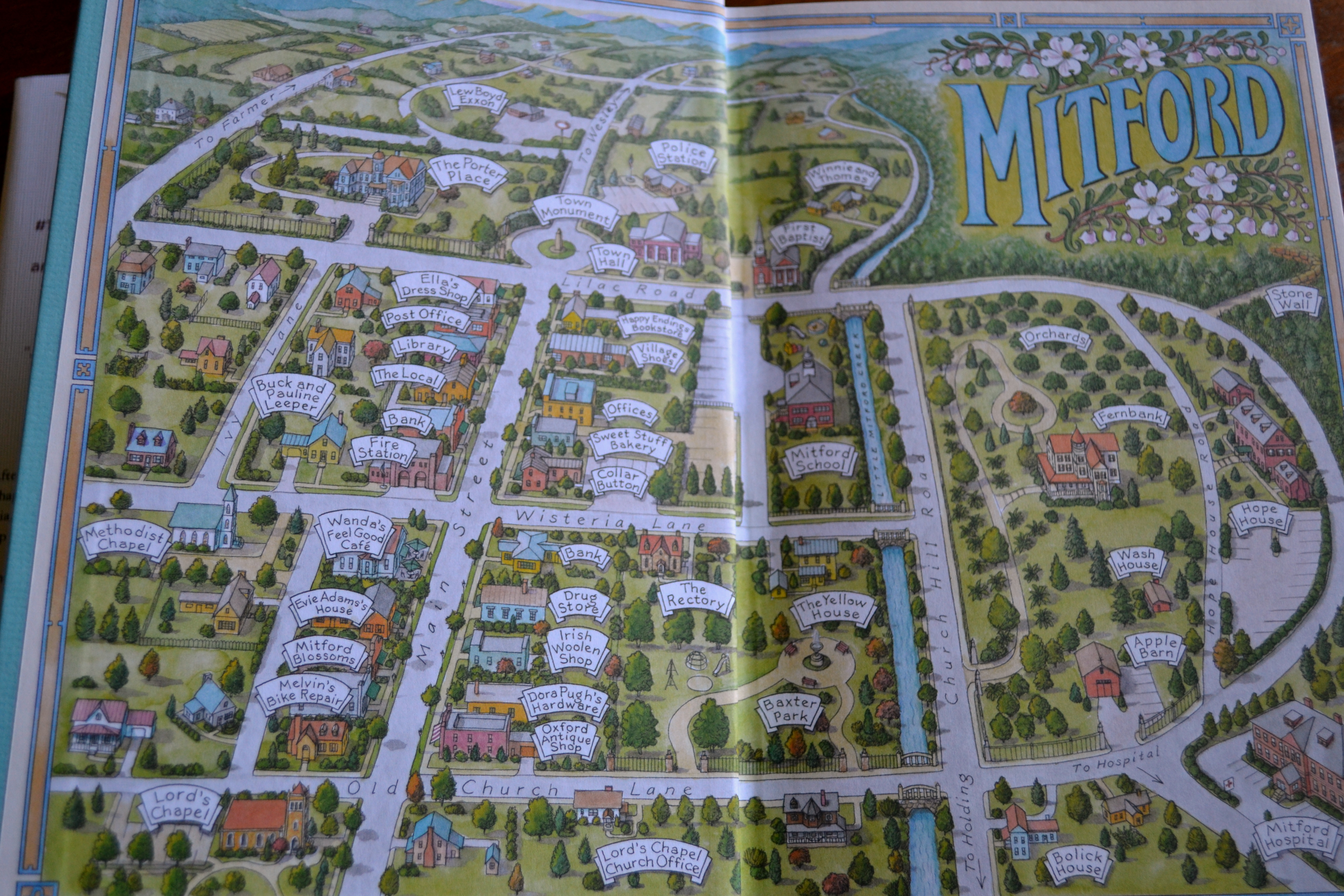
DSC_1740I love the map of Mitford. I love these phrases:

the benediction of her father’s deep tenderness /
a selfish view that masquerades as noble /
that they would be shielded in their joy /
his favorite tryst for plain talk /
under the stairs, a good place to have a cry /

My favorite phrase describes this book: a plenitude of grace.

The Education of Henry Adams

Henry_Adams_seated_at_desk_in_dark_coat,_writing,_photograph_by_Marian_Hooper_Adams,_1883What one knows is, in youth, of little moment;
they know enough, who know how to learn.”

The reader is subject to serial passions. One series is a fascination with the Adams family. After reading about John Adams, Abigail Adams, John and Abigail’s marriage, John Quincy Adams — the reader took up The Education of Henry Adams.  This was not her first attempt, but she was determined to see it through to the end. It took great determination; at the end of Disc 16, she let out a whoop of relief.

Henry Adams was a lifetime learner, an attribute that caused a small measure of affinity between the reader and the subject of the book. (The reader shall be named Lifetime Learner Carol, or LLC.) Adams scorned his formal education in Quincy and at Harvard College, claiming he learned more through travel, studies abroad, friends and mentors. He called this learning “an accidental education.”

Some parts interested LLC: the view of the War Between the States from England; his perspective on Henry Cabot Lodge and Teddy Roosevelt; his opinion of politics, the extensive travels. Other parts,  e.g. conflict between Lord Palmerston and Earl Russell, were snoozers. LLC lacked the mental agility to follow the philosophy of the Unity and the Multiplicity. How a man who was a Darwinian for fun, inclined towards anarchy, became enamored with the Virgin Mary…that confused LLC. The distance in thought between John Adams and his great-grandson Henry Adams — more confusion.

Henry Adams omits twenty years of his education, the most painful span of his life. In those decades he married his wife Clover; twelve years later she, in a bout of depression, committed suicide. Some are aghast that Adams does not mention his wife, but LLC believes the omission is consistent the clinical tone of the book.

Adams closes the book, writing about 1905, “For the first time in fifteen hundred years a true Roman pax was in sight…”  Tragically, the twentieth century was the least peaceful period of history.

One element is memorable: Henry Adams writes his autobiography in the third person. LLC decided to mimic Henry in this review. If one wants to glean the pithy quotes, one does not need to read 505 pages or listen to 16 discs; look here or here or here.

LLC finds that one book completed yields two books to finish: Henry Adams’ Mont Saint-Michel and Chartres (and then it is good-bye Henry!) and David McCullough’s The Greater Journey, Americans in Paris (but McCullough is always a hello!).


(photograph of her husband taken by Marian “Clover” Hooper Adams, 1883)

A Wreath for Emmett Till

emmetttillThis squeezed all the breath out of my soul. Horror. Sorrow from Emmett’s lynching. Beauty—so sharp it stings—of the words woven so we remember Emmett Till.

Emmett Louis Till (1941-1955) was a Chicago boy visiting relatives in Mississippi. Believing that he whistled at a white woman, two men took him from his uncle’s house and murdered him. Mutilated him. The alleged murderers were found ‘not guilty’  but those ‘innocent’ men openly explained how they killed Emmett months after the trial. Emmett’s mother, Mamie, became an activist for civil rights.

Marilyn Nelson’s poem is a heroic crown of sonnets. A sonnet is a fourteen-line rhyming poem. A crown of sonnets links each sonnet together: the last line of the preceding sonnet is the first line of the next sonnet. A heroic crown has fourteen sonnets followed by a fifteenth, made up of the first lines of the first fourteen. This for a boy whose years were fourteen.

Nelson writes:

The strict form became a kind of insulation, a way of protecting myself from the intense pain of the subject matter, and a way to allow the Muse to determine what the poem would say.

The poem is a masterpiece of form, a crown that circles around to the beginning. It is a gruesome subject, but we must bear witness to atrocity. Notes in the back explain what Nelson had in mind with each sonnet, pointing out allusions. This, dear reader, is not obscure poetry. Here is the final sonnet, an acrostic collection of fourteen first lines.

Rosemary for remembrance, Shakespeare wrote.
If I could forget, believe me, I would.
Pierced by the screams of a shortened childhood,

Emmett Till’s name still catches in my throat.
Mamie’s one child, a body thrown to bloat,
Mutilated boy martyr. If I could
Erase the memory of Emmett’s victimhood,
The memory of monsters … That bleak thought
Tears through the patchwork drapery of dreams.
Let me gather spring flowers for a wreath:
Trillium, apple blossoms, Queen Anne’s lace,
Indian pipe, bloodroot, white as moonbeams,
Like the full moon, which smiled calmly on his death,
Like his gouged eye, which watched boots kick his face.

There is an idea, an ancient idea, that flowers represent ideas. If you’ve read or seen Hamlet, you’ll remember Ophelia’s line, “There’s rosemary, that’s for remembrance.” My sister-in-law and I were talking about this last month; she told me that she often puts some rosemary in a note of condolence. The wreath is woven not only with words, but with flowers as tropes.

Someone—bless you!—recommended Marilyn Nelson’s book, Carver: a life in poems, which I got from the library. I read a third of the way through, stopped and bought the book. The same with Emmett Till: a library book on my Kindle, but I needed to own it. I now anticipate reading all Nelson’s books. Along with Wendell Berry and Billy Collins, Marilyn Nelson is in my list of favorite living poets.

Ruth Reichl’s Mom

“I am so sorry I didn’t pursue a career. In the end it is meaningful work—serving people—that matters most. It is what we are made for.”         — Miriam B. Reichl

I stumbled onto Ruth Reichl (RYE-shell) browsing the stacks at my local library. Her voice captured me, her stories engaged me. One by one, I read her memoirs, trying a few recipes tucked in at chapter ends. You could say that she opened the door and welcomed me into the foodie world. I’m still standing in the vestibule, not sure if I belong here, but it is fun looking around.

August and September are months when I listen to audio books by the dozen while I put up food from the garden. I was delighted to rediscover Ruth Reichl and quickly downloaded Not Becoming My Mother: and Other Things She Taught Me Along the Way . (The title changed to For You Mom, Finally when it was issued in paperback.)

Reichl interprets her mother’s life through the lens of family letters and private notes found after her mom’s death. Miriam (“Mim”) was remarkable: got a PhD in music from Paris when she was nineteen, opened a bookshop in her twenties, formed friendships with famous authors, critics, musicians. Thwarted from becoming a physician, told that she was too homely to attract a husband, bereaved of her sister, a disappointment to her parents, she carries an “unhappiness that is palpable”, sits through years of psychotherapy, tries pharmacotherapy, alienates her kids, spirals into deep depression.

RUTH-REICH-MEMOIR-COVER-TITLE-NOT-BECOMING-MY-MOTHMim’s misery, Reichl insists, stems from the fact that she lacked a career. In the fifties she was one of the smart, competent women twiddling their thumbs. She hated housework, was a dangerous cook, lived in chaos. Out of her extraordinary generosity, the best gift she gave her daughter was permission to defy her. Well, now.

While the sadness clings, I just don’t buy the message. My opinion? Mim was miserable. If she had had a career she still would have been an unhappy career woman.

I applaud when Ruth Reichl in another context says “I don’t think there’s one thing more important you can do for your kids than have family dinner.”  But she strikes out with this book.

Where Did English Really Come From?

Have you ever stumbled upon one side of an internet debate about a subject which seems obscure to you but is consuming the person writing?  That’s what it was like reading John McWhorter’s contrarian book, Our Magnificent Bastard Tongue.

The essence of the argument is this:

The real story of English is about what happened when Old English was battered by the Vikings and bastardized by Celts. The real story of English shows us how English is genuinely weird—miscegenated, abbreviated.

[Miscegenation = sexual relations between people of two different races, from Latin miscere (to mix) + genus (race)] There is a Celtic impact on English, McWhorter says, especially from the Welsh and Cornish languages. This Celticness of English has not been acknowledged, so McWhorter is jumping up and down, flinging evidence around to convince the reader, sure, ’tis so.

The first chapter is The Welshness of English.  Sigh... I want to visit Wales.

The first chapter is The Welshness of English. Sigh… I want to visit Wales.

Only language-lovers should read this book of strange focus. Follow the arguments, raise your eyebrow, smile at the coincidences. Just keep reading to scoop up the pearls.

My heap of gems includes:

• Albanian is about 60 percent Greek, Latin, Romanian, Turkish, Serbian, and Macedonian. (My girlfriend has learned Albanian in the last five years: kudos to her!)

• Basque is a language related to no other. (HOW did that happen?)

• English’s closest relative if Frisian, a Dutch relative spoken in the Netherlands.

• This quote made me fizzy with excitement. It still does!

To strike an archaic note, in English we start popping off hithers and thithers. Come hither, go thither, but stay here or stay there. Hither, thither, and whither were the “moving” versions of here, there, and where in earlier English.

• If you’ve read C.S. Lewis’ Surprised by Joy, you know ‘Balder the beautiful is dead.’  The Phoenician-German connection made me say Aha!

And then, the Phoenicians were also given to referring to Baal as Baal Addir (“God great”) — that is, Great God. Sometimes they would write it as one word, Baliddir, or even a shorter version Baldir. And there in that Old High German document is a god called Balder.

I went through the index counting languages which are referenced. Seventy!
I can’t say I was fascinated reading this book, but I can say it was fun reading!

The Blue Castle

DSC_7838My first response to The Blue Castle was to draw back from the despair. Lucy Maud! How can you? Because, you see, Anne, the Green Gables girl, had a tough beginning in life and Emily, the New Moon girl, was hurt by horrible aunts and uncles; *but* both Anne and Emily knew she was cherished by her late mother and father.


Valancy Stirling has a mother—alive and kicking—who is overbearing, suffocating, domineering, disrespectful, and mean. We meet Valancy on her 29th birthday, shamed and teased because she hasn’t married. Life has no flavor, living is a grim prospect.

All her life she had been afraid of something…
Afraid of her mother’s sulky fits—
afraid of offending Uncle Benjamin—
afraid of becoming a target for Aunt Wellington’s contempt—
afraid of Aunt Isabel’s biting comments—
afraid of Uncle James’ disapproval—
afraid of offending the whole clan’s opinions and prejudices—
afraid of not keeping up appearances—
afraid to say what she really thought of anything—
afraid of poverty in her old age.

Valancy escapes her horrid little life by fantasizing about living in a Blue Castle in Spain, where beauty adorns her, women admire her and men adore her.

Valance becomes aware of a piece of information, a secret from the family; she throws off her bondage and inhibitions and forthwith says and does what she desires. Her family is shocked—shocked!—and thinks Valancy might suffer from mental illness.

BlueCastleThe plot takes some twists and turns, and Valancy ends up living her life of paradise on an island on a lake. L.M. Montgomery includes her hallmark descriptions of the seasons.

They went for long tramps through the exquisite reticence of winter woods and the silver jungles of frosted trees, and found loveliness everywhere.

I am torn by this book. I can’t help but holler hallelujah! when she leaves her loveless family. Happy Independence Day! The happiness she finds is, however, very private, very insular. I doubt that life can be so fulfilling when lived without community. I’m not a fan of what Valancy says about living life to please herself…whoo, boy, that’s a recipe for misery. But I love the compassion she shows to a single mother shunned by society.

I laughed aloud at the imitation swearing comment. A reference that made me snort but will only be caught by those who know old hymns. Maud surely knows how to make fun.

…had her moles removed by electrolysis—which Aunt Mildred thought was a wicked evasion of the puposes of God.

“There are things worse than death,” said Uncle James, believing that it was the first time in the world that such statement had been made.

Valancy lived with me for many days after I finished the book, a sign of a good read.

The Saturday Big Tent Wedding Party

Public_transport_in_Gaborone(Public transportation in Gaborone, Botswana – photo Wikimedia Commons)

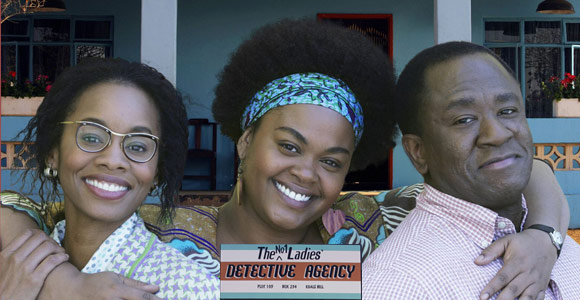
Alexander McCall Smith did a good thing when he crafted the character of Mma Precious Ramotswe. In each book, she is consistently the kind, traditional, perceptive, tender-hearted, contented woman I’ve come to regard as my friend.

And yet, he doesn’t filter out all the unsavory aspects of Botswana life. In this 12th book of the No. 1 Ladies Detective series, we see a young mother who treats her children with utter indifference, cattle killed, a menacing man and a cowed woman.

I recently finished The Saturday Big Tent Wedding Party, the twelfth book. I’m reading them out of order, according to library availability.
The title of the first chapter is The Memory of Lost Things; could it be an allusion to Proust?

As with every book in this series, I care about Mma Ramotswe’s culture ten times more than whatever mystery needs to be solved. There’s a dig at mobile phones, complainers, fathers who don’t take responsibility for their children. On the plus side is Mma’s abiding love for her late father and for her ‘late’ tiny white van, her compassion for those who suffer, the poetry of night sounds, her gratitude for Mr. J.L.B. Matekoni, her encouragement to an undeserving recipient, and the joy of an abundant wedding feast.

There is a tender moment between two bereaved women. I have a late baby, Mma. It is a long time ago. ~ I have a late child too, Mma. McCall Smith understands the permanence of grief. Almost every book has a small reference to the baby Mma Ramotswe lost.

In the end Grace Makutsi marries Phuti Radiphuti, which means she will never have to ride in public transportation again, and she can indulge her love of loud shoes. The wedding doesn’t have the prominence that the title gives it, but that’s OK.

Here is a quote to whet your appetite.

Nowadays, people are always thinking of getting somewhere—they travelled around far more, rushing from here to there and then back again. She would never let her life go that way; she would always take the time to drink tea, to look at the sky, and to talk. What else was there to do? Make money? Why? Did money bring any greater happiness than that furnished by a well-made cup of red bush tea and a moment or two with a good friend? She thought not. 230


The Minor Adjustment Beauty Salon

mma1When I first read The No. 1 Ladies’ Detective Agency, I chirped with evangelistic fervor about the series. But, a few disappointing books cooled that impulse to the point that I quit reading the last three books in this series.

A library hold came available so I read the books out of order. But the 14th book The Minor Adjustment Beauty Salon has rekindled my love for the traditionally built Mma Ramotswe and and her quirky assistant, Mma Makutsi. This book might appear to be about a newborn baby, but on every level it is about friendship, about rearranging a relationship that expands from business to personal. Mma Ramotswe and Mma Makutsi remind me of Marilla Cuthbert and Rachel Lynde in Anne of Green Gables.

Any book by Alexander McCall Smith will have his trademark humor. There were three snort-and-holler moments in this book. I don’t want to give them away, but prepare yourself for horse laughs.

Only to the extent that they reveal human nature do I care about the solving of mysteries in this book. No. I read for the gentle wisdom, the poignant words of Mma Ramotswe. She thinks, she ponders, she reflects. Death, sunlight, music, change, marriage, the pace of life, beauty, differences between men and women. And she truly loves Botswana. It’s so refreshing.

I don’t like Mr. J.L.B. Matekoni’s two mechanic apprentices: Charlie and Fanwell. Their characters are a waste of print. But I was surprised at Charlie’s response to the baby. He admires it, he wants to hold it; his cooing amuses and puzzles the women.

I want to highlight two passages whose beauty astonished me. One is a foot washing scene. Mma Ramotswe visits Mma Makutsi at her new home (she married Phuti Radiphuti) after a heavy rain. Her car gets stuck; she exits the car barefoot and walks through the mud to the front door.

Sidenote: only once have I participated in a foot washing ceremony. It was at a church retreat. The women gathered in a room and each one washed the feet of the person next to them. I felt humble shyness, willing to wash someone else’s feet but reluctant to have a friend wash my feet. It was emotional. It was potent. It was unforgettable.

“Let me wash them, Mma,” she said. “You sit there, I’ll wash your feet for you.”
Mma Ramotswe felt the warm embrace of the water and the slippery caress of the soap. The intimacy of the situation impressed itself upon her; that an old friend—and that was how she looked at Mma Makutsi—should do this for you was strangely moving.

And this short note on reconciliation:

And with that, she felt that most exquisite, and regrettably rare, of pleasures—that of welcoming back one who has left your life. We cannot do that with late people, Mma Ramotswe thought, much as we would love to be able to do so, but we can do it with the living.

Five solid stars and kudos to Alexander McCall Smith.

An Exaltation of Larks

     Photo Credit: Dan  Harper (my brother!)

In flight, a group of geese is a SKEIN. On water, a GAGGLE of geese.  Photo Credit: Dan Harper

Initially, I misjudged James Lipton’s quirky and curious book, An Exaltation of Larks, missing the playful and fanciful element. When I read that a group of elk is called a gang, I felt only unalloyed disgust. Perhaps among flabby academicians, elk are referred to as gangs. But, I live among muscular mountain men who would laugh in derision at that term. Or fix you with a questioning stare. We sometimes take ourselves too seriously, precious.

This book didn’t grab me until I started from the beginning.

The dedication: For my mother, Betty Lipton, who showed me the way to words. (Swoon. I want my kids to say that some day.)

A CLUSTER of housecats.

A CLUSTER of housecats. Photo Credit: Dan Harper

I loved the Preface best, packed with collectable, copy-worthy quotes.

The heart and soul of this book is the concern that our language, one of our most precious natural resources, is also a dwindling one that deserves at least as much protection as our woodlands, wetlands and whooping cranes.

And this from Elizabeth Drew:

Language is like soil. However rich, it is subject to erosion, and its fertility is constantly threatened by uses that exhaust its vitality. It needs constant re-invigoration if it is not to become arid and sterile. Poetry is one great source of the maintenance and renewal of language.

This is the sort of book that fits well in a bathroom. Read a page, put it down.

Photo Credit: Dan Harper

A TRIP of goats — from Icelandic thrypa, “flock,”? or a corruption of tribe? Photo: Dan Harper

Lipton encourages the reader to join a game, coming up with new collective nouns. The groups that tickled my fancy the most were the medical professions (a joint of osteopaths) and music (a pound of pianists, a bridge of lyricists). Not to mention a load of diapers or a twaddle of public speakers.

Some terms are so familiar we don’t see them as collective terms, as in Shakespeare’s a comedy of errors and a sea of troubles (from Hamlet). The book of Hebrews gives us cloud of witnesses. Does that joggle you linguistically like it does me?

The greatest challenge facing me is that of identification. Before I learn the collective terms [murmuration, charm, exaltation, murder, unkindness and dule] I need to learn to distinguish starlings, finches, larks, crows, ravens and doves.

A GIGGLE of girls

A GIGGLE of girls

Sister Monica Joan’s Books

sistermonicajoan

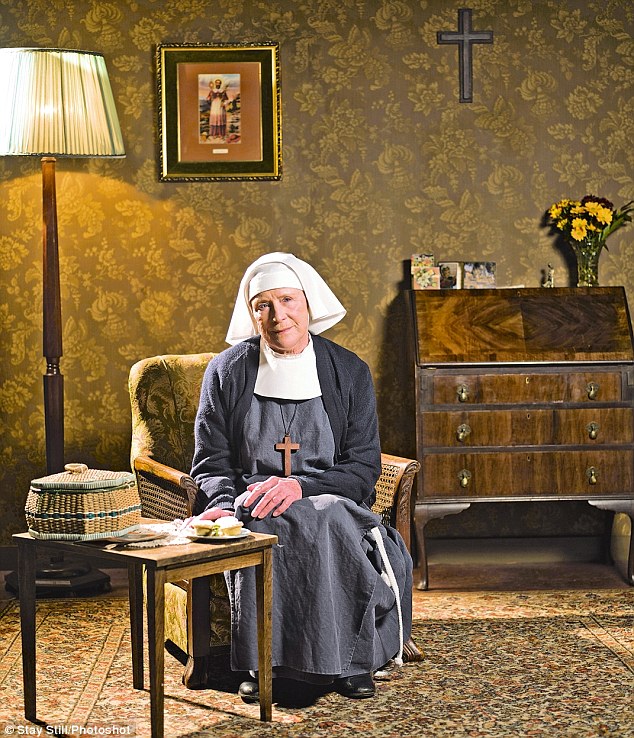
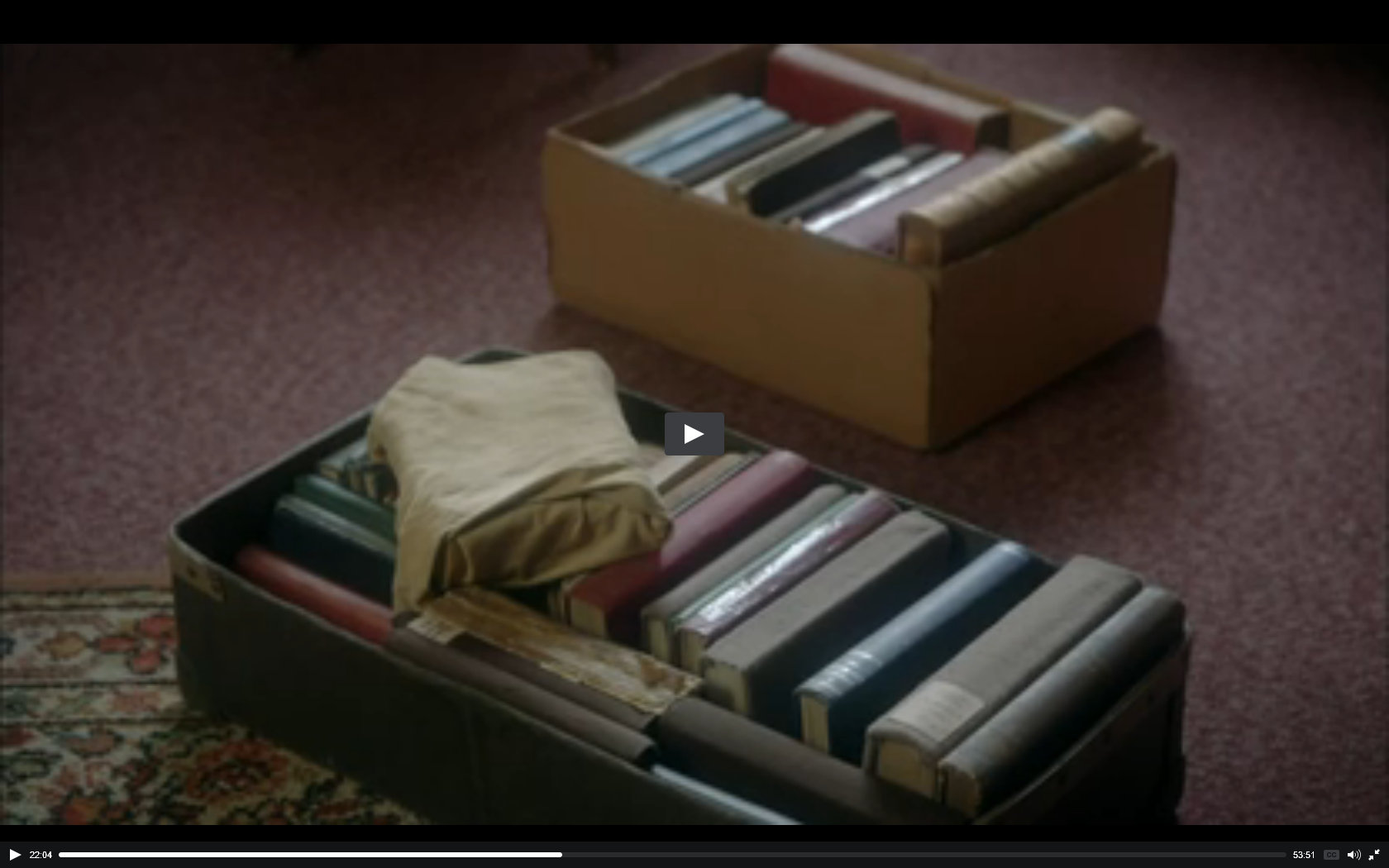
Catching up on the new season of Call the Midwife, I was captured by Sister Monica Joan’s compulsion to get her books in order. The Nonnatus House moves to a new location; she is fixated on her boxes of hardbound books, her board and brick shelves. And I watch with abounding empathy.  I. get. her.

I snort when she says, “I have put Plato here, next to Mr. Freud, so they can be companions in their ignorance.”

Like Violet, the Dowager Countess of Downton Abbey, Sister Monica Joan gets the best lines. The community of Nonnatus House are patient and proprietary as SMJ toggles between dementia and a sound mind.

In a moment full of poignancy, Sister Monica Joan admits, “Sister, I cannot deny that my memory is in need of — — refreshment.”

Fullscreen capture 4242014 61237 PMThis exchange had me talking aloud to the computer screen:

Sister Monica Joan: I am not brought down now!
I am well….and filled with purpose.
[
Yes, I cheer. Yes! Yes! Yes! Organizing bookshelves is replete with purpose!]

Sister Evangelina: I can see that.
Never been a reader, always a doer.
Books passed me by when I was young
.
[It’s not too late, I plead with a character on a TV show.
I know I could find a good book for you to read.]

Sister Monica Joan: Oh, books have been my friends!
I do not intend to forget what they have taught me
.
[No, I nod, we can’t forget. Well, we try hard not to forget.]

Fullscreen capture 4242014 61455 PMSister Monica Joan, I love you.

(I conducted a long and fruitless search for pictures from that scene, and settled on a few screen shots.)

The most economical deal I found ($5.87) on the books (which we—the royal we—must read) is Tales from a Midwife: True Stories of the East End in the 1950s, which binds the three books (992 pages!) by Jennifer Worth about midwifery together. I purchased mine from a UK seller and received it in seven days.

I’m highly interested in Jennifer Worth’s book about end-of-life care.