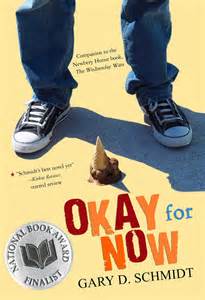
Okay for Now

okay for now

I enjoy persuading adult readers to read well-written young adult books. Gary Schmidt’s  book is one I recommend, perhaps even more for older readers than for a middle schooler. It made me snort with laughter and it turned me into a sobbing, sniffing mess.

Doug Swieteck has a lying, blustering, bullying, abusive father. His mom tries to compensate, neutralizing her husband’s venom to the best of her ability within the strictures of 1960’s mores. Doug’s older brothers are plain mean.

I tried to talk to my father about it. But it was a wrong day. Most days are wrong days.

So convincing is Doug’s voice that I could hear it. “Terrific.” “I hate stupid Marysville.” “You know how that felt?” and Doug’s trademark phrase, “I’m not lying.”

Perhaps we’ve all grown up with someone like Doug, a mixture of bravado and vulnerable. Someone outside the family takes an interest and tries to pull that kid up above his/her circumstances. Doug had his share of tormentors, but also four mentors who invested in him.

There are some things in this world that we cannot fix, and they happen, and it is not our fault, though we still might have to deal with them. There are other things that happen in this world that we can fix. And that is what good teachers like me are for.  — Miss Cowper, English teacher

A few things seduced me. One brother is only identified as “my jerk brother.” He is changed by a horrific situation — converted (not religious) — and Doug begins calling him by his name. It is a subtle but significant clue. The smile motif captured me. Pay attention to the smiles.

I listened to the audio version (5 stars for Lincoln Hoppe’s narration–except he mispronounced  Cowper— it’s Cooper), but was compelled to read the words.

And see the pictures. Doug Swieteck’s doorway to a better life comes through John James Audubon’s bird pictures. (The hefty Birds of America was the first gift I gave my husband after we married.) Each chapter is named after an Audubon bird; the audio experienced is diminished without seeing the prints.

There is a broad ranged of interests represented in this book: Audubon, Apollo 11, the Vietnam War, Jane Eyre, Periodic Table, baseball, and Aaron Copland. There is drama, devastation, and unexpected grace. I loved the book. Would a young teen love it?
Reclaiming Conversation

DSC_4015

Sherry Turkle’s Reclaiming Conversation was one of the most important books I read in 2015. Her book distilled to three sentences:

This is our paradox.
When we are apart: hypervigilance.
When we are together: inattention.

I believe it. Sherry’d make a point and I was a one-woman gospel choir, swaying and amening. “Solitude is important,” she calls and my response is Yes, sister. “Support unitasking and deep reading.” Deeeeeep reading, I sing. “Continuous partial attention is the new normal.” Say it isn’t so, I moan. “Make sacred spaces where no devices intrude.”  Not in the kitchen, not in the bedroom, not even in the car, I harmonize.

What Ms. Turkle did not say, however, has reverberated through my brain. She never framed it this way, but I think we are simply selfish. We have zero tolerance for boredom, for discomfort, for anything unpleasant. We now have devices that we can take refuge in rather than discipline ourselves to wait through the boring bits.

Last May, my niece graduated from a large university in California. I’ve been to a handful of college graduations recently, but I’ve never seen the rudeness that I witnessed that morning. Rudeness I participated in.

A thousand names were called and a thousand graduates walked across the stage to shake the Dean’s hand. People pulled out their phones; some teachers graded papers. I, cough cough, tried to get my seating on Southwest Airlines, even while part of me looked upon myself in astonishment.  My husband assumed the tilted coffin pose and took a nap. This wouldn’t have happened ten years ago.

Conversations take work. Conversations take energy. Conversation require me to reveal myself to my friend.

Some of the wealthiest moments of my life have been three recent reunions with childhood girlfriends. We spend a weekend practically device-free. We don’t watch movies. We talk. We listen. We experience deep, focused conversation. (Once, a friend apologized for keeping her phone nearby. She hadn’t heard from her daughter who was living across the world in a country buffeted by a typhoon!) The time and attention is a treasure, all the more so because of its rarity.

Turkle has two time-honored commands to help us out of this murky mess.

Use your words. (what she told her young daughter)
Look at me when you speak to me. (what Grandma always said)

Come Rain or Come Shine, The Book

I once prayed, Lord, please let Jan Karon live long enough to get Dooley and Lace married. The answer to that prayer was a whelming flood; I started crying on page 32 and sniffed and sobbed my way—punctuated by laughs—to the final page. Redemption, benediction, healing, holy amazement, connection. Reading this brings the satisfaction of resolution, the “two bits” after the “shave and a haircut”.

Weddings are my thing. Joyful solemnity, giving, sharing, joining, celebrating, laughing, crying, hugging, singing, dancing, rejoicing, thanksgiving. I love a good wedding and I’ve been to a few profoundly remarkable ones.

There was joy in the air; you could sniff it as plain as new-cut hay.

The focus of Come Rain or Come Shineis on the month before and the day of The Big Knot. Dooley and Lace want a small, intimate ceremony at Meadowgate Farm. Karon enjoys poking fun at the myth of a ‘simple country wedding.’  There are obstacles and annoyances. There are secrets and surprises. There is the unrelenting pressure of diminishing time to get the place wedding-ready.


DSC_0964The main character is Lace Harper. Her journals reveal her heart, her hopes, her fears, her loves. She wants to find a wedding dress for under $100; she is thankful for the callouses which document her hard work. She wants to get it—this whole starting a new family—right. I appreciated the ways Dooley and Lace honor the memory of Sadie Baxter (benefactor) and Russell Jacks (Dooley’s grandpa) in their wedding. Fun stuff: there is a Pinterest page for Lace Harper’s wedding!

Jan Karon and Wendell Berry are both skilled at portraying a community where giving, helping, and reciprocating are the norm. In their novels they don’t cover up the hurts, the anger, the tensions, the troubles. Weddings can be awkward with family drama. Karon handles the presence of Dooley’s birth mom, Pauline Leeper, in the same room as his siblings with utmost care. There is no easy resolution, no instant reconciliation, just baby steps, tiny beginnings towards the on-ramp to healing.

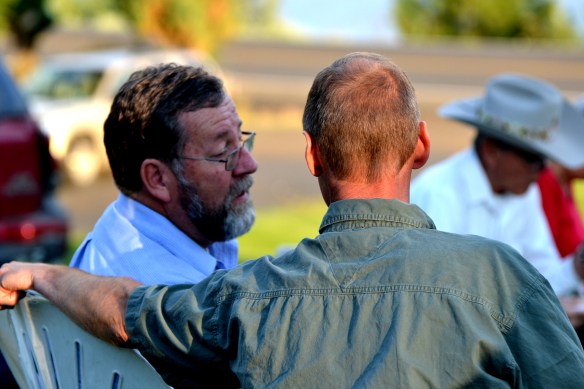
I connected with this book in many ways. This summer we went to a small, simple country wedding (see picture above) in a pasture. My son and daughter-in-law have a wind storm and fallen trees in their wedding story, too. I know what it is to be gob-smacked by blessings, reduced to silent tears of joy. Live music is the best for dancing the night away. I love the song in the title.

‘Why can’t life always be lived under the stars,’ she said, ‘with great music and family and friends?’

♪♫♪ Come Rain or Come Shine ♪♫♪ is a standard (music by Harold Arlen, lyrics Johnny Mercer) that has been covered by scores of recording artists. I used it ten years ago when I made a PowerPoint slideshow for Curt’s folks’ 50th wedding anniversary. In the course of my work, I listened to B.B. King and Eric Clapton on endless repetition. And I can honestly say, I never tired of it. But there are so many recordings of this song, that I put my listening of them in this post.

This book.

I finished it last night. I started it again this morning.

A Lamentation of Abandonment

DSC_0375I’ve no background. I’ve been peeled off my background.
I’ve been attached to another background like a cut-out.

I had never heard of Operation Pedro Pan — 14,000 unaccompanied minors were flown out of Cuba to Miami in 1960-62, dispatched by their parents in order to escape life under a dictator, creating a Cuban Diaspora. Carlos Eire, one of the children, writes about it in his memoir, quoted above, Waiting for Snow in Havana.

I had never heard the phrase “Raj Orphan” — English children born in the outer edges of the British Empire and shipped to England for education around the age of five years—before I read Old Filth.

The displaced orphan, a stock character in literature. One boy raised in Cuba until he was exiled in American at eleven; the other fictional boy, Eddie Feathers (FILTH = Failed in London Try Hong Kong), was born in Malaya—his mother died at his birth—, raised by an native family until he was five, then sent to North Wales to a couple who fostered on the cheap.

Both are compelling stories that snagged me like barbed wire. Both are a lamentation of abandonment. This will sound strange, but negligence of one’s children in order to serve a higher cause is a theme that holds my attention.

DSC_0368Midway through the second chapter of Waiting for SnowI needed to know who constructed such delectable sentences. Ta dah! He is a professor of History and Religious Studies at Yale, specializing in late medieval and early modern Europe. Phrases like the tropical sun knifed through the gaps in the wooden shutters; a Mariana Trench of the soul; and a suit as wrinkled as his soul stirred my appreciation. And this:

I have always inhaled with abandon. The world is so full of wonderful smells. Roasted peanuts. Olives. Popcorn. Bus exhaust. Turpentine. Kerosene. Talcum powder. Gasoline. New tires. Glue. Shoe polish. Bubblegum wrappers. Gunpowder. Thinly sliced potatoes and hot dogs frying in olive oil. When I matured, the strangest things began to emit pleasing fumes too. Freshly baked bread. Single-malt Scotch whiskey. Cigars. Roses. Bordeaux wines. New wallets. New cars. The back of a woman’s knee after a hot bath. Fumes are the fifth dimension, I’m convinced.

He tells the story of going to a boy’s birthday party. The parents, owners of a sugar plantation, put on a lavish extravaganza. Carlos brought a last-minute birthday gift, something taken from the house and quickly wrapped.

A foretaste, I hope, of The Final Judgment, the ultimate party, when we show up bearing crappy gifts and, instead of being tossed out on our ear, to wail and gnash our teeth, are instead overwhelmed with superabundant largesse, with eternal gifts beyond our wildest dreams.

I’ve never been to a Catholic confession, but I confess the same pride:

What a neat little list of sins I had. But I don’t think pride was anywhere on that list, not even in disguise. Just the opposite, in fact: I was so, so proud of the list.

Carlos Eire became my focus. I ordered the second memoir he wrote, Learning to Die in Miami: Confessions of a Refugee Boy. I typed “Carlos Eire” into YouTube and started marathon listening. I added him to my mental list of authors I would unhesitatingly invite over for dinner and conversation. I started to care about Cuba.


Old Filthcarried the weight of sadness, but I viewed it from a distance. There were a few narrative elements that made me grimace and quickly turn the page. Gardam deftly encapsulates the abandonment in one short paragraph when Eddie is five.

“Take this. It was your mother’s.”
“Does Ada [the native girl that raised him] say I can?”
“I say you can. I am your father.”
“You can’t be,” said Edward.
Silence fell and Auntie May’s hands began to shake.
The servants were listening.
“And why not?”
“Because you’ve been here all the time without me.”

Eddie spends his holidays with Jack, a boarding school friend, and is considered a member of Jack’s family; but when they face a crisis their circle closes and Eddie is again excluded.

It turns out that Rudyard Kipling was a Raj Orphan. Now I want to read a RY biography with that perspective in mind. I may or may not read the other two books of Jane Gardam’s Old Filth trilogy.


*the well-loved boy in my photo is not orphaned; used with parents’ permission

What’s on Your Nightstand, March 24

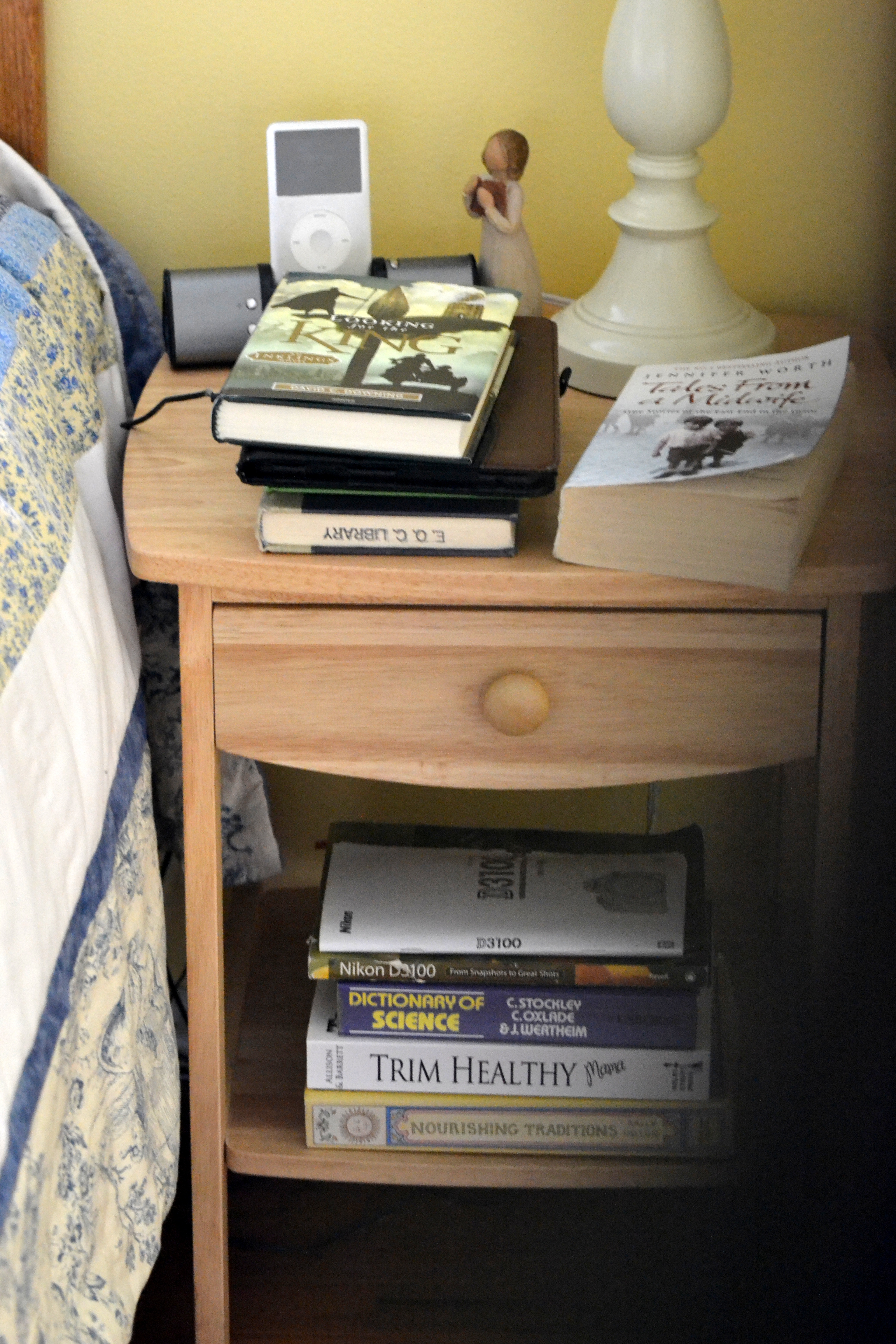
DSC_3970Although I love the concept of What’s on Your Nightstand, a monthly overview of one’s reading, I have only participated a few times. In a rare and wonderful synchronicity, I  deep cleaned my nightstand area yesterday.

My husband had surgery two weeks ago (he’s fine, thank you) that allowed me seven hours of reading in the waiting room. There was a huge flat-screen TV that looped through Travels in Europe with Rick Steves for 4.5 hours. Eventually, a penguin documentary came on. Occasionally I glanced up, but it wasn’t bad background sound.

Keeping my mind occupied was A Pianist’s Landscape, a book of essays about playing, learning, performing and teaching the piano. This was a book sale find. The cover and title drew me in. Carol Montparker is a Steinway Artist; her essays have been in the New York Times. Delightful!

I’m working on consistently reading poetry. It’s one of those things that takes an effort, but offers rich rewards. I found Wis£awa Szymborska (w sounds like /v/, £ sounds like /w/; thus, Vees WAH vah shin BORE skuh) funny, dark, random, full of irony, beauty and profundity. Many poems didn’t strike a chord in me. But some did. When asked why she didn’t write more poems, her answer was “because I have a trash can at home.” I kept forgetting that these poems had been translated from Polish. The translations are magnificent!

“Disappointing” — two historical novels. Widow of the South centers on the Carnton Plantation near Franklin, TN. I didn’t like that a major part of the plot centered on a contrived and fictitious relationship between Carrie McGavock and one soldier/patient. It was a weird Jayber Crow-ish intimacy.

A Separate Country tells the story of defeated Confederate General John Bell Hood’s life after the war in New Orleans. He marries Anna Maria Hennen, a young society belle, and they have 11 children in 10 years, including three sets of twins. The author uses a scaffolding of facts but most of the story is fanciful. The tone and language is a bit salty for my taste.

I made small progress on my goal to read through Shakespeare’s canon with Henry IV, Part 1 and Part 2. Before I read these, I had thought Falstaff was witty and clever. No, sirrah! His self-aggrandizing, manipulative, lying behavior erased any gladsome thoughts of this main Shakespearean character.

My Kindle read – did you know if you have Amazon Prime you can borrow a book a month on your Kindle? I’m a junkie for books on how to write. To say I have dozens would be only a minor stretch. I love to read them, to re-read them, and to promise myself that someday I will do what they say.

I was reminded to slash away at adverbs and adjectives. Yes. But I really enjoyed Rosenblatt’s comments on education: “Teaching takes a lot of wheedling and grappling but basically it is the art of seduction. Observing a teacher who is lost in the mystery of the material can be oddly seductive.”

Audiobook  This long audio book was mostly tedious, but I was so glad I finished this life of Anna Leonowens. I was reminded how powerful a teacher can be. Prince Chulalongkorn attributed to Anna the decision he made to abolish slavery (without war!) in Siam (Thailand).

For Fun   I love Jane Austen, but I don’t consider myself a Janeite. Among the Janeites was an entertaining read. What struck me was how many ways there are to read Austen. People see virtue, wisdom, feminism, eroticism, autism, therapy, and more in her books.

DSC_3968Reading in preparation for Easter: Silence, by Shushaku Endo and Nikki Grime’s At Jerusalem’s Gate, Poems of Easter.

Learning about Leptin

Take a toddler with a room stuffed with toys. She shows no interest in a toy until another toddler picks it up and plays with it. This is how I am with books. I didn’t get very far with Mastering Leptinwhen my friend gave it to me. I listed it on Trade Books for Free - PaperBack Swap. and the minute someone wanted it I had an overwhelming need to read it. I’m glad I did. The book has the feel of a self-published book—especially in layout and graphics—a hurdle to overcome when you care about such things.

Just what is leptin? First discovered in 1994,

Leptin is the hormone secreted by fat cells contained in white adipose tissue. It is the most significant hormone there is in understanding the function of the human body. p.4

Most overweight and fatigued people suffer from leptin resistance, a condition where the brain doesn’t receive the signal leptin sends to reduce the appetite. So this person feels hungry, particularly after dinner. Compulsive sweet cravings indicate leptin resistance.

DSC_2017Hormone management is complex because you can’t balance one in isolation from the others. With leptin resistance the brain can’t tell the pancreas to stop making insulin. Insulin stimulates leptin production. When a person is leptin resistant, he is probably insulin resistant and adrenaline resistant — when the fat cells can’t receive the signal to stimulate metabolism. Enter fatigue.

Expensive tests are not needed to prove there is a problem [of leptin resistance]. A person just has to look in the mirror and then take note of their level of energy. p.47

This book was never destined to be a best seller because there are no quick fixes, no pills that magically correct the metabolism. It comes back to those three ubiquitous words: diet and exercise.

Five Rules of Eating (The Leptin Diet)

1. Never eat after dinner.

2. Eat three meals a day.
3. Do not eat large meals.

4. Eat a high protein breakfast

5. Reduce the amount of carbohydrates.

Common sense, right? The most controversial is no snacking, making meals five to six hours apart. Richards maintains that frequent eating clogs the liver’s fuel system, that not eating between meals is good exercise for the liver. He likens frequent snacking to a repetitive strain injury to the pancreas.

Consistent exercise is the most important action I can take to correct leptin resistance.

Six Important Reasons to Exercise

1. Improve natural rhythm and pattern of fuel utilization.

2. Increase the parasympathetic tone of the nervous system.

3. Keep leptin food cravings and out-of-control behavior in check.

4. Enhance strength to stabilize leptin and insulin.

5. Improve muscle use of fatty acids so weight loss is easier.

6. Ensure adequate body heat, an important foundation for body rhythms and patterns.

Richards recommends a few supplements: Omega 3 oils, GLA, CLA, pantethine, and calcium. I’m not a big fan of supplements. I prefer to eat real food that contains what I need.

I plan to follow the five rules for at least six months and see what’s what. If you are interested in more information check out Wellness Resources.

The Approaching Storm

german-wine_2492047kNora Waln’s book, The Approaching Storm: One Woman’s Story of Germany, 1934-1938 is a portrait of a culture. I read it to get insight into the Nazification of Germany from a ground level view. Waln, a Quaker pacifist, and her husband moved to Germany for his musical studies. They had extended visits throughout Germany, Austria and Czechoslovakia.
Much about the culture was winsome. Here, regarding music:

It was usual to see people whose hands were callous with toil playing musical instruments. No gathering was without its song. They scattered music over their great river, over their wine-clad hills, and along their forest ways. (p.53)

About books:

I had entered Germany with the feeling that these people had no money for luxuries, and I had not yet learned that among vast numbers of them a book is not counted a luxury. I had never heard anyone express surprise on learning that a person had gone without meals or material things to buy a book. (p.118)

By far, my favorites passages were about the vineyards. If you’ve read Wendell Berry you will appreciate this. There were pages about tending vines, cultivating soil:

A vineyard keeper worthy of his title has his wood lot for poles, his field for potatoes, his orchard of fruit trees, his stabled cows, his dwelling house, and his vines. He eats bread of his wife’s making which is baked in the village oven, and the fire is banked over Sunday. His laundry is rubbed clean at home, rinsed in the clear waters of the Ahr, and bleached on the grass. He walks without arrogance but with self-respecting dignity. And, Protestant or Catholic, he brings his children up to earn their keep, pay their debts, revere God, and love the Fatherland. (p.151)

Beautiful roads:

The Germans build well. The roads are not ugly scars across their land they are things of beauty, exciting in their charm. They are invisible a short distance off; then one comes on them—silver ribbons. No telegraph poles, advertisements, rows of refreshment stands, gasoline stations, or ugly houses line their banks. (p.138)

I needed the review of the Reichs:
First Reich (Deutsche) the Holy Roman Empire established by Otto the First 962-1806  Second Reich (Second) Otto von Bismark, Hohenzollern Kings of Prussia 1862-1918
Third Reich (Drittle) National Socialist government, the Nazis

Wien_-_Stephansdom_(1)I learned about a cathedral to Saint Stephan in Vienna, the “Stefansdom”.

The Stefansdom has been raised in the same way [as Mongolian prayer mounds]. It is a heap of gifts to God. Each generation has made its offering in the fashion of the time—Romanesque, Gothic, baroque, and nineteenth century. Each piece is beautiful. (p.263)

But then she describes Hitler’s rule. It was impossible for a young boy to escape being in Hitler’s Youth. While they were often given extra latitude (Hitler had read and enjoyed a previous book Waln wrote) they saw the troubles their friends experienced. Soldiers were optimistic and accepted injustices to themselves with a spirited defense of the army.

One story about a Christmas dinner captured me. The hosts guests included  Christians of Jewish descent. The maid and butler made a brouhaha, refused to serve the Jews, and quit in the middle of service. The hosts refused to let their friends leave and carried on amidst their own embarrassment.
Waln said that she was so traumatized in 1938 that she was unable to write.

I’m glad I read this book. Most of my questions weren’t answered, but one thing was clear. Most citizens were in denial as they gave up freedoms one by one.

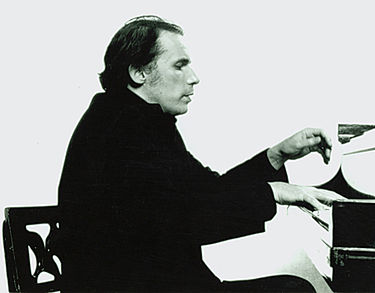
Remembering Glenn Gould

375px-Glenn_Gould_1

My new latest ‘thing’ is Glenn Gould. My friend Terri recommended A Romance on Three Legs, I watched this video of the author discussing it, and my mind told myself, “Let the fascination begin!”

I’ve watched videos, listened to CDs, read Hafner’s book and I continue to be mesmerized. The best film so far has been the 2010 documentary, Genius Within . Gould’s music accompanies me while I chop veggies, sweep the floor, write blog posts.

Who was Glenn Gould? He was a Canadian pianist whose ability, style, precision, musicality, phrasing, was simply in a galaxy all his own. Many stories have been told about folks who, having never once listened to classical music, were stunned and converted by some piece they inadvertently listened to on the radio. His playing grabs you.

“You are one of the few authentic geniuses recording today. If you wanted to record the complete works of Alban Berg on a kazoo, I’d gladly do it.”  RCA executive to GG

Katie Hafner’s book focuses on the piano that Glenn Gould played, a Steinway CD 318. It’s a great introduction to Gould, but also a great introduction to Verne Edquist, the blind man who was Gould’s principal tuner. In the video linked above, someone has a question, Hafner can’t answer. She calls Edquist in the middle of Q and A and finds out. The Steinways, a German family who emigrated to America to build pianos, provide an engaging back story.

Gould had many eccentricities, and his life story is ultimately a sad one, leading me to the question, “Is there such a thing as a balanced genius?” He died days after his 50th birthday from a stroke. One ‘tic’ he had was humming whenever he played the piano. I remember attending a concert in 1989 with a pianist who shared this quirk. At the social hour afterwards, I remarked to some bystander what a shame it was that someone in the audience insisted on humming along. “Oh, my dear,” the lady said, “That was our own dear [insert pianist’s name]. She can’t help herself.”

I suppose it can be said that I’m an absent-minded driver. It’s true that I’ve driven through a number of red lights on occasion, but on the other hand I’ve stopped at a lot of green ones but have never gotten credit for it.  — Glenn Gould

Once in a while I try to figure out why Glenn Gould fascinates me. What keeps me looking for more to read, more to watch, more to listen? He is an enigma – charming, yet reclusive, gifted but abhorred performing, confident but lost.  I haven’t come up with an answer yet. But I know I’m not alone. His magnetic pull continues thirty-two years after his death.

The critic Tim Page said that in his last decade, Gould was “no longer just an arrogant, albeit sweet-tempered genius. He became a sweet-tempered melancholy genius.” Today, September 25th, is the anniversary of his birth. Give yourself a gift by listening to Glenn Gould. Bach’s Goldberg Variations is a good place to start.


The Walls of Windy Troy

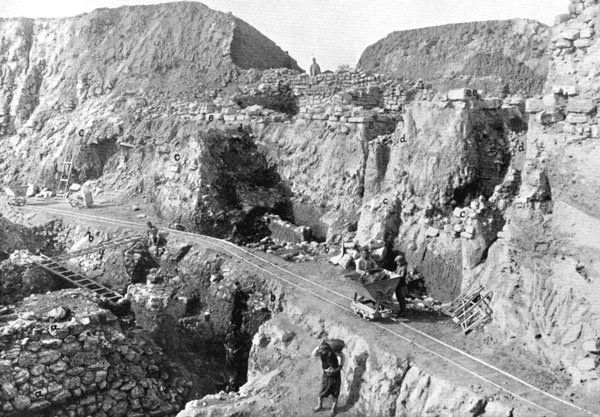
schliemannsexcavationI’m digging through my shelves, reading children’s books that I never got to when my children were, you know, children. One of them is Marjorie Braymer’s biography of Heinrich Schliemann, The Walls of Windy Troy.

This is a story of the rewards and risks of being an autodidact (self-taught scholar). Schliemann, the son of a German pastor, was nineteen, injured and destitute. He embarked on a ship to Venezuela, survived a shipwreck, and landed in Amsterdam.
Ever since he first heard Homer—music with the cadence and swing of the sea in it, language like the beat of armies surging across grassy plains—he was fired up with a burning desire: to find Troy. When told that Troy wasn’t real, just a story, his resolve hardened.

He needed to make money to fulfill his dream. To be a master of men, one has to master their languages. He picked up Dutch by immersion in the culture, then taught himself Spanish, English, French and Russian.

Soon he was reading English novels, always aloud, always in full voice, without stopping to translate. He had discovered this to be a more efficient system than studying grammar. Words and sounds and meanings made connections in his head, and he gradually got the sense of what he was reading. (emphasis mine)

When he struggled with Russian, he made progress by hiring a Dutch student (who knew no Russian) to listen to him read. That busts me up, but he actually learned enough Russian to move to and work in St. Petersburg. He wanted above all to learn classical Greek, but disciplined himself to learn languages that helped him in business first. After he garnered Greek, he added Italian, Portuguese, Swedish, Polish, Arabic and Turkish. That accomplishment is dizzying!

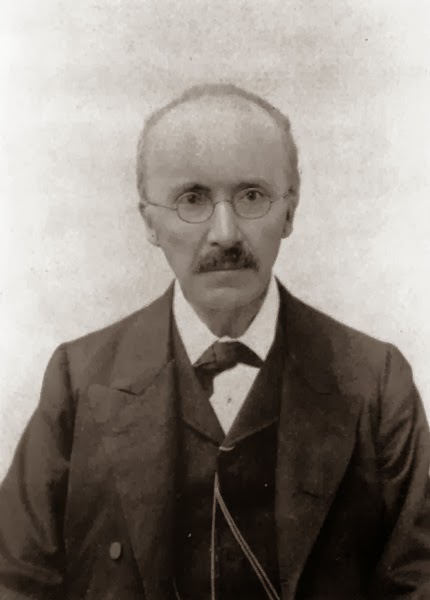
002_Schliemann 1890His wealth and international prestige grew to the point that he could travel to Turkey and start digging. Believing in the exactness of Homer’s word, Schliemann chose to ignore received wisdom and broke ground at a site he felt more closely matched Homer’s words.

And, lo, he made epoch discoveries. Did he discover Troy? It’s hard to say. He found layers of civilizations. Initially he made sweeping claims. The science of archeology hadn’t yet been developed; Schliemann’s work destroyed some valuable layers as he dug deeper for Troy. There was not an established protocol for the ownership of the artifacts dug up. He had to learn humility by acknowledging his own errors and asking for help from other scholars. Clearly, his work has added to our knowledge of ancient cultures.

This is an instance where I greatly enjoyed reading a biography written for young adults. For me, this is enough. There are a handful of books by Schliemann and an armload about him, but, in the vernacular of friends declining an offer, ‘I’m good.’

Riding a Bike around Ireland

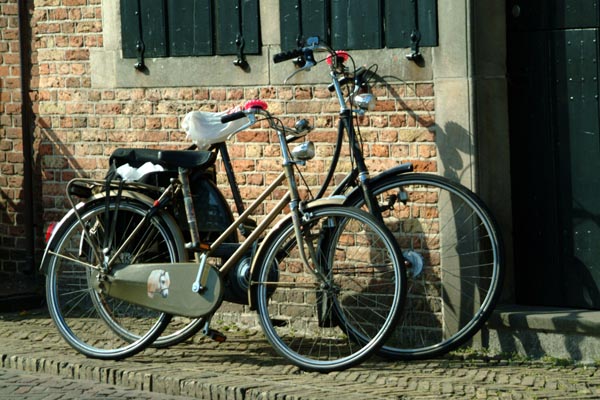
bikeagainstwallThe whole pattern of my life, with occasional flurries of enthusiasm for health and exercise against the general background of ageing, slackening and fattening, betrays a slothful indulgent core, more interested in pleasure than in work, happiest when work is enjoyable.

Malachi O’Doherty’s memoir of biking himself back into shape, On My Own Two Wheels: Back in the Saddle at 60, caught my eye when I was researching another author. I enjoy memoirs; I adore Ireland; I fight a family history of diabetes; and sixty is suddenly not such an ethereal concept. It was a soft sell.

What I found was an honest depiction of how he arrived at diabetes, and what he did to change his life. O’Doherty preaches peckishness, one of my new favorite words. [It means hunger.] In short: Love peckishness and trust it to go away.

Temptation had to be treated with contempt and abruptly. When Satan, masquerading as my own thoughts, said things like, ‘One more spud is hardly going to hurt you,’ I had to cast him from me, into the fiery pit. I needed my inner voice to be a disciplinarian, a real tub-thumper, fine-tuned to condemn sugar.

O’Doherty returned to bicycling. He had cycled around Ireland in his younger days as well as a means of commute, and just fell out of the habit. His trips aid in his fitness and bring out the philosopher in him. I followed along à la Google, reveling in the beauty of Achill Island, Kylemore Abbey, the tiny village of Doolin, and Donegal Bay. After some intense trips, he settles into tootling—relaxed cycling for the joy of it. Rain or no rain.

If you let the weather stop you, you’ll do nothing.

I enjoyed the story; I like most Irish literary voices, and this one was winsome with that self-deprecating charm.

Further discoveries: First, O’Doherty has an audio blog (archived, the last entry is in 2011) called Arts Talk that has two readings by Seamus Heaney. Ahhhh. Also, O’Doherty mentions an Irish traveller, Manchán Magan. I watched four episodes of a television show with the boyish-faced Magan about his quest to consume and use only Irish products. He explores transportation, food, clothing and entertainment. Most of the dialogue is in Irish with English subtitles. It wasn’t earth-shattering, but it amused me.