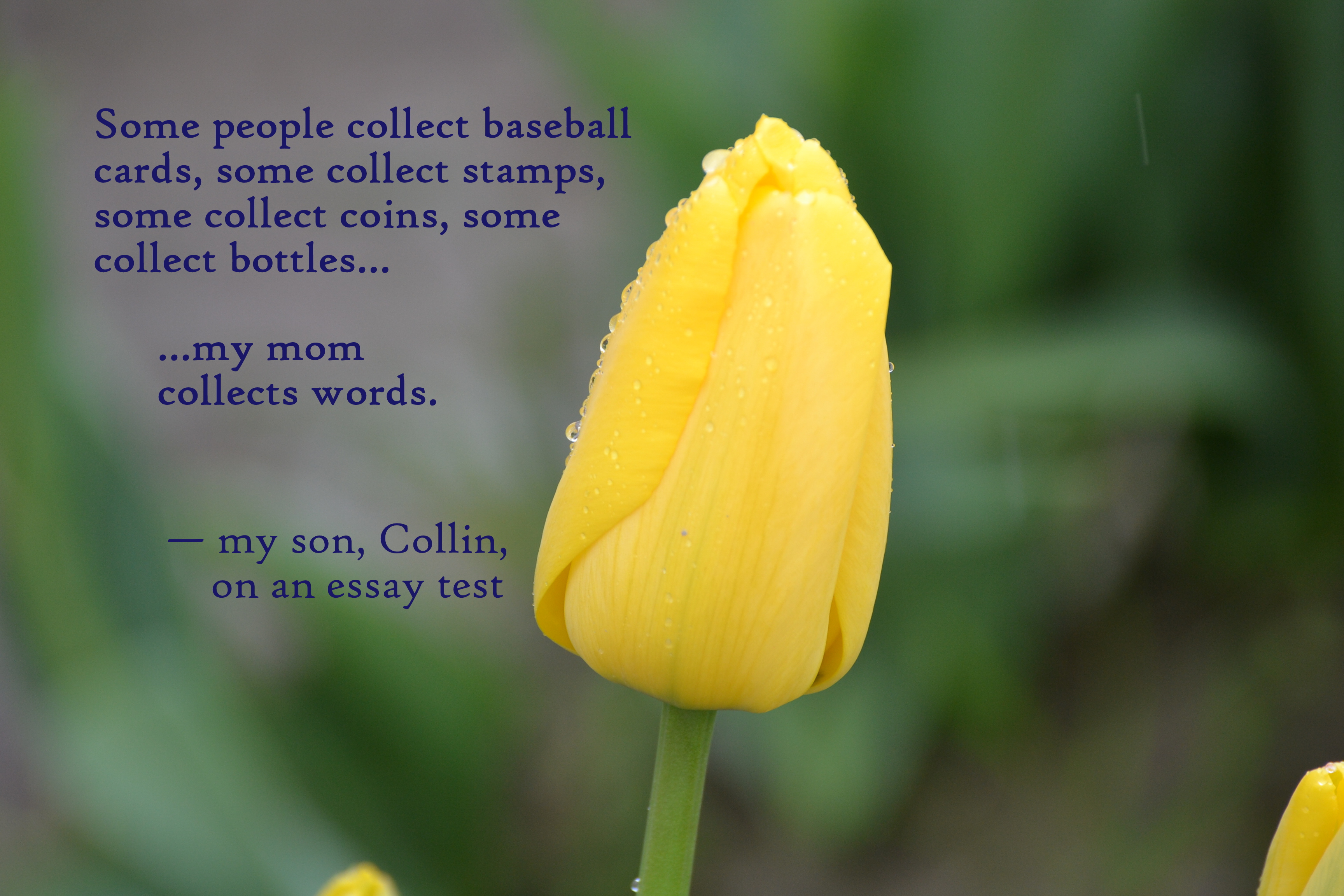
A Wreath for Emmett Till

emmetttillThis squeezed all the breath out of my soul. Horror. Sorrow from Emmett’s lynching. Beauty—so sharp it stings—of the words woven so we remember Emmett Till.

Emmett Louis Till (1941-1955) was a Chicago boy visiting relatives in Mississippi. Believing that he whistled at a white woman, two men took him from his uncle’s house and murdered him. Mutilated him. The alleged murderers were found ‘not guilty’  but those ‘innocent’ men openly explained how they killed Emmett months after the trial. Emmett’s mother, Mamie, became an activist for civil rights.

Marilyn Nelson’s poem is a heroic crown of sonnets. A sonnet is a fourteen-line rhyming poem. A crown of sonnets links each sonnet together: the last line of the preceding sonnet is the first line of the next sonnet. A heroic crown has fourteen sonnets followed by a fifteenth, made up of the first lines of the first fourteen. This for a boy whose years were fourteen.

Nelson writes:

The strict form became a kind of insulation, a way of protecting myself from the intense pain of the subject matter, and a way to allow the Muse to determine what the poem would say.

The poem is a masterpiece of form, a crown that circles around to the beginning. It is a gruesome subject, but we must bear witness to atrocity. Notes in the back explain what Nelson had in mind with each sonnet, pointing out allusions. This, dear reader, is not obscure poetry. Here is the final sonnet, an acrostic collection of fourteen first lines.

Rosemary for remembrance, Shakespeare wrote.
If I could forget, believe me, I would.
Pierced by the screams of a shortened childhood,

Emmett Till’s name still catches in my throat.
Mamie’s one child, a body thrown to bloat,
Mutilated boy martyr. If I could
Erase the memory of Emmett’s victimhood,
The memory of monsters … That bleak thought
Tears through the patchwork drapery of dreams.
Let me gather spring flowers for a wreath:
Trillium, apple blossoms, Queen Anne’s lace,
Indian pipe, bloodroot, white as moonbeams,
Like the full moon, which smiled calmly on his death,
Like his gouged eye, which watched boots kick his face.

There is an idea, an ancient idea, that flowers represent ideas. If you’ve read or seen Hamlet, you’ll remember Ophelia’s line, “There’s rosemary, that’s for remembrance.” My sister-in-law and I were talking about this last month; she told me that she often puts some rosemary in a note of condolence. The wreath is woven not only with words, but with flowers as tropes.

Someone—bless you!—recommended Marilyn Nelson’s book, Carver: a life in poems, which I got from the library. I read a third of the way through, stopped and bought the book. The same with Emmett Till: a library book on my Kindle, but I needed to own it. I now anticipate reading all Nelson’s books. Along with Wendell Berry and Billy Collins, Marilyn Nelson is in my list of favorite living poets.

Between Silk and Cyanide, A Codemaker’s War

“Put down on a half a sheet of paper what difference silk codes would make to our agents.”
“Half a sheet at most!” echoed Davies.
‘I think it could be done in a phrase, sir!’
‘Oh?’ said Courtauld. ‘We’d be interested to hear it.’
‘It’s between silk and cyanide.’

“This book is not a casual read,” I thought, as I waited for my tire to be repaired. A gargantuan TV, three feet away from me, was blaring the Country Music Awards; I was mouth-breathing, an inefficacious strategy to ignore the overwhelming smell of rubber, and reading three times a paragraph on coded message, attempting to comprehend it. After failed attempts at deciphering acronyms, I made my own code on the inside cover with their meanings.

84-charing-cross-road Knowing the author, Leo Marks, was the son of the owner of the bookshop made famous in Helene Hanff’s 84, Charing Cross Roadwas a big draw to this book. There are many references to the bookshop; it would be helpful, but not essential to have read it first. Although Hanff’s story is set after the war, knowing it provides a fun context.

At twenty Marks begins fighting the Fuhrer with his cryptography skills. He trained agents headed for enemy territory to send and receive messages in a code based on a famous poem the agent had memorized. The problem with poem-codes is that the enemy cryptographers could break the code if they figured out which poem was used. If an agent was captured, he or she would swallow cyanide to keep from telling secrets under torture. The enemy would often continue sending and receiving messages, concealing the knowledge of the capture.

Even as an understudy, Marks understands the the system’s vulnerability. He begins writing original poems for use, a few of which have become famous. Over time he threads together a remarkable innovation to use a one-time, disposable code printed on silk, easily burned after use. This book is the story of his failure and success to spin his silk idea to his superiors.

Marks’ agility with language delights.
→ As a boy he studied the mating habits of the alphabet.
→ A superior officer had a knack for switching on silence as if it were air conditioning.
→ He writes about a desk so small, it was like keeping vigil on a splinter.
Could we have a quick word? He was a verbal weight-watcher.

Marks relates the story of his intelligence with self-deprecating jabs.

The need to justify and its sister frailty, the need to boast, were lethal weaknesses in SOE, and the shock discovery that I was prone to both started me worrying about the coders of Grendon.

While his acute concern and the initiatives he made to protect the safety of the agents shows remarkable maturity for a young twenty to twenty-three year man, the bawdiness that occasionally pops up reminds the reader that he was indeed still close to adolescence.

The story of the code-war fascinated me. I enjoyed the book more after I stopped trying to be an agent in training, when I kept going after I read the explanation without understanding. <grin>

On Christmas Eve, 1943, Leo Marks got word that his girlfriend Ruth had been killed in a plane crash in Canada. He wrote this short poem, which he later gave to an agent Violet Szabo. Wikipedia tells me this poem was read at Chelsea Clinton’s wedding.

The life that I have
Is all that I have
And the life that I have
Is yours.

The love that I have
Of the life that I have
Is your and yours and yours.

A sleep I shall have
A rest I shall have
Yet death will be but a pause.

For the peace of my years
In the long green grass
Will be yours and yours and yours.

Where Did English Really Come From?

Have you ever stumbled upon one side of an internet debate about a subject which seems obscure to you but is consuming the person writing?  That’s what it was like reading John McWhorter’s contrarian book, Our Magnificent Bastard Tongue.

The essence of the argument is this:

The real story of English is about what happened when Old English was battered by the Vikings and bastardized by Celts. The real story of English shows us how English is genuinely weird—miscegenated, abbreviated.

[Miscegenation = sexual relations between people of two different races, from Latin miscere (to mix) + genus (race)] There is a Celtic impact on English, McWhorter says, especially from the Welsh and Cornish languages. This Celticness of English has not been acknowledged, so McWhorter is jumping up and down, flinging evidence around to convince the reader, sure, ’tis so.

The first chapter is The Welshness of English.  Sigh... I want to visit Wales.

The first chapter is The Welshness of English. Sigh… I want to visit Wales.

Only language-lovers should read this book of strange focus. Follow the arguments, raise your eyebrow, smile at the coincidences. Just keep reading to scoop up the pearls.

My heap of gems includes:

• Albanian is about 60 percent Greek, Latin, Romanian, Turkish, Serbian, and Macedonian. (My girlfriend has learned Albanian in the last five years: kudos to her!)

• Basque is a language related to no other. (HOW did that happen?)

• English’s closest relative if Frisian, a Dutch relative spoken in the Netherlands.

• This quote made me fizzy with excitement. It still does!

To strike an archaic note, in English we start popping off hithers and thithers. Come hither, go thither, but stay here or stay there. Hither, thither, and whither were the “moving” versions of here, there, and where in earlier English.

• If you’ve read C.S. Lewis’ Surprised by Joy, you know ‘Balder the beautiful is dead.’  The Phoenician-German connection made me say Aha!

And then, the Phoenicians were also given to referring to Baal as Baal Addir (“God great”) — that is, Great God. Sometimes they would write it as one word, Baliddir, or even a shorter version Baldir. And there in that Old High German document is a god called Balder.

I went through the index counting languages which are referenced. Seventy!
I can’t say I was fascinated reading this book, but I can say it was fun reading!

The Double Comfort Safari Club

DSC_8889The Double Comfort Safari Club is, I believe, a superb summer read. There’s a little mystery, several chuckles, a few snorts, a large dollop of satisfaction, a sob of grief, and beautiful words like quietude. When is the last time you’ve read quietude? It’s light reading that nourishes and feeds.

There is a moment that capsizes me. It’s when I read a phrase or paragraph that so perfectly captures what I’ve always known, but rediscover as though it is a new truth through the author’s description. That click makes me say Yes!, Of course!, or How did you know?

Here’s what I’m talking about:

Some kind people may not look kind. They may look severe, or strict, or even bossy, as Mma Potokwane sometimes did. But inside them there was a big dam of kindness, as there is inside so many people, like the great dam to the south of Gabarone, ready to release its healing waters.

And this:

…this woman, moved by some private sorrow as much as by the words being spoken, cried almost silently, unobserved by others, apart from Mma Ramotswe, who stretched out her hand and laid it on her shoulder. Do not cry, Mma, she began to whisper, but changed her words even as she uttered them, and said quietly, Yes, you can cry, Mma. We should not tell people not to weep—we do it because of our sympathy for them—but we should really tell them that their tears are justified and entirely right.

What makes me love Precious Ramotswe? The way she thinks of and remembers her late father; her sense of justice and putting things to right; her gratitude for the life she’s been given; her directness when dealing with difficult questions; her acceptance of the imperfections of life; her musings on the changes in Botswana, her unswerving hospitality; her patience with the impetuous Mma Makutsi. In a word, she is kind.

An Exaltation of Larks

     Photo Credit: Dan  Harper (my brother!)

In flight, a group of geese is a SKEIN. On water, a GAGGLE of geese.  Photo Credit: Dan Harper

Initially, I misjudged James Lipton’s quirky and curious book, An Exaltation of Larks, missing the playful and fanciful element. When I read that a group of elk is called a gang, I felt only unalloyed disgust. Perhaps among flabby academicians, elk are referred to as gangs. But, I live among muscular mountain men who would laugh in derision at that term. Or fix you with a questioning stare. We sometimes take ourselves too seriously, precious.

This book didn’t grab me until I started from the beginning.

The dedication: For my mother, Betty Lipton, who showed me the way to words. (Swoon. I want my kids to say that some day.)

A CLUSTER of housecats.

A CLUSTER of housecats. Photo Credit: Dan Harper

I loved the Preface best, packed with collectable, copy-worthy quotes.

The heart and soul of this book is the concern that our language, one of our most precious natural resources, is also a dwindling one that deserves at least as much protection as our woodlands, wetlands and whooping cranes.

And this from Elizabeth Drew:

Language is like soil. However rich, it is subject to erosion, and its fertility is constantly threatened by uses that exhaust its vitality. It needs constant re-invigoration if it is not to become arid and sterile. Poetry is one great source of the maintenance and renewal of language.

This is the sort of book that fits well in a bathroom. Read a page, put it down.

Photo Credit: Dan Harper

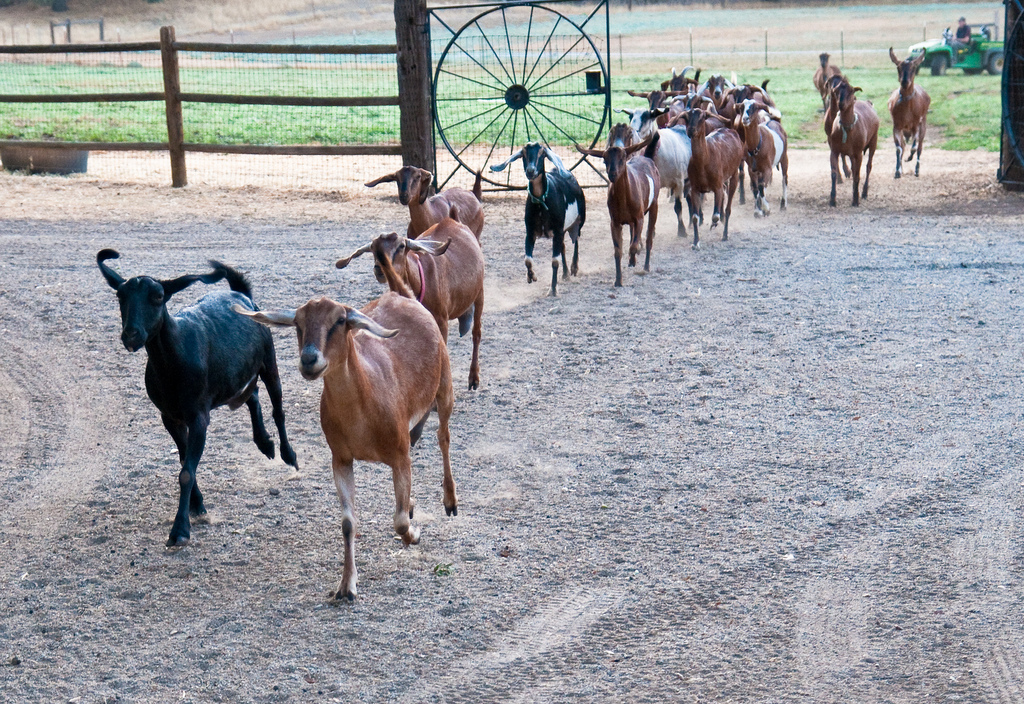
A TRIP of goats — from Icelandic thrypa, “flock,”? or a corruption of tribe? Photo: Dan Harper

Lipton encourages the reader to join a game, coming up with new collective nouns. The groups that tickled my fancy the most were the medical professions (a joint of osteopaths) and music (a pound of pianists, a bridge of lyricists). Not to mention a load of diapers or a twaddle of public speakers.

Some terms are so familiar we don’t see them as collective terms, as in Shakespeare’s a comedy of errors and a sea of troubles (from Hamlet). The book of Hebrews gives us cloud of witnesses. Does that joggle you linguistically like it does me?

The greatest challenge facing me is that of identification. Before I learn the collective terms [murmuration, charm, exaltation, murder, unkindness and dule] I need to learn to distinguish starlings, finches, larks, crows, ravens and doves.

A GIGGLE of girls

A GIGGLE of girls

Sister Bernadette’s Barking Dog

DSC_8942My husband, home sick from work, was fixing to fascinate me with stories about locks at the hospital. My responses cycled between “Hmmm” “Oh?” “yeah” and “wow.” He shook his head in exasperation and complained, “I’m trying to impress you and you aren’t responding!”

“Babe,” I lifted my head and made eye contact. “I have three pages left of this book.”

“Oh?” he said. “What are you reading?”

“Sister Bernadette’s Barking Dog … a book about diagramming sentences.”

We dissolved into laughter at the absurdity of diagramming edging out locksmithing.

When I was a student, I was not gripped by grammar. Caron, my camp friend, used to amuse herself by counting the spelling and grammar mistakes in my letters. The fun flattened when the error count declined to three or four. I still stumble over less and fewer, lay and lie, hopefully and I hope.

Kitty Burns Florey is a fun look back. Moderately fun. To those who suffered through grammar, it has about the same nostalgic power as a teeter-totter has to two chunksters in their fifties. (Have you noticed that teeter-totters disappeared from playgrounds? Hmmm?)

Relax! Florey’s acerbic tone spices up this bland subject. She calls Eats, Shoots & Leavesa “popular scold-fest.” I enjoyed her prose and reveled in her side notes.

The fact is that a lot of people don’t need diagramming or anything else: they pick up grammar and syntax effortlessly through their reading—which, in the case of most competent users of words, ranges from extensive to fanatical. The language sticks to them like cat hair to black trousers, and they do things correctly without knowing why.

I learned details about words, a bonus she couldn’t resist throwing in. (When Kitty isn’t writing books, she is a copy editor.) I learned that enormity means a very great wickedness, not a very large hugeness. Likewise, infinitesimal means endless, not very, very small. She explained that a Lion’s share is 100%, not a majority. Ain’t, don’t you know, exists because we don’t have a contraction for “am not.” So ain’t used with the first person singular (the pronoun I) is technically correct.

My opinion is that English grammar can be taught with more ease and more adhesion through the ear rather than the eye, with vocal chants/songs such as those used in The Shurley Method or Grammar Songs. But, I enjoyed the refresher course on sentence diagramming.
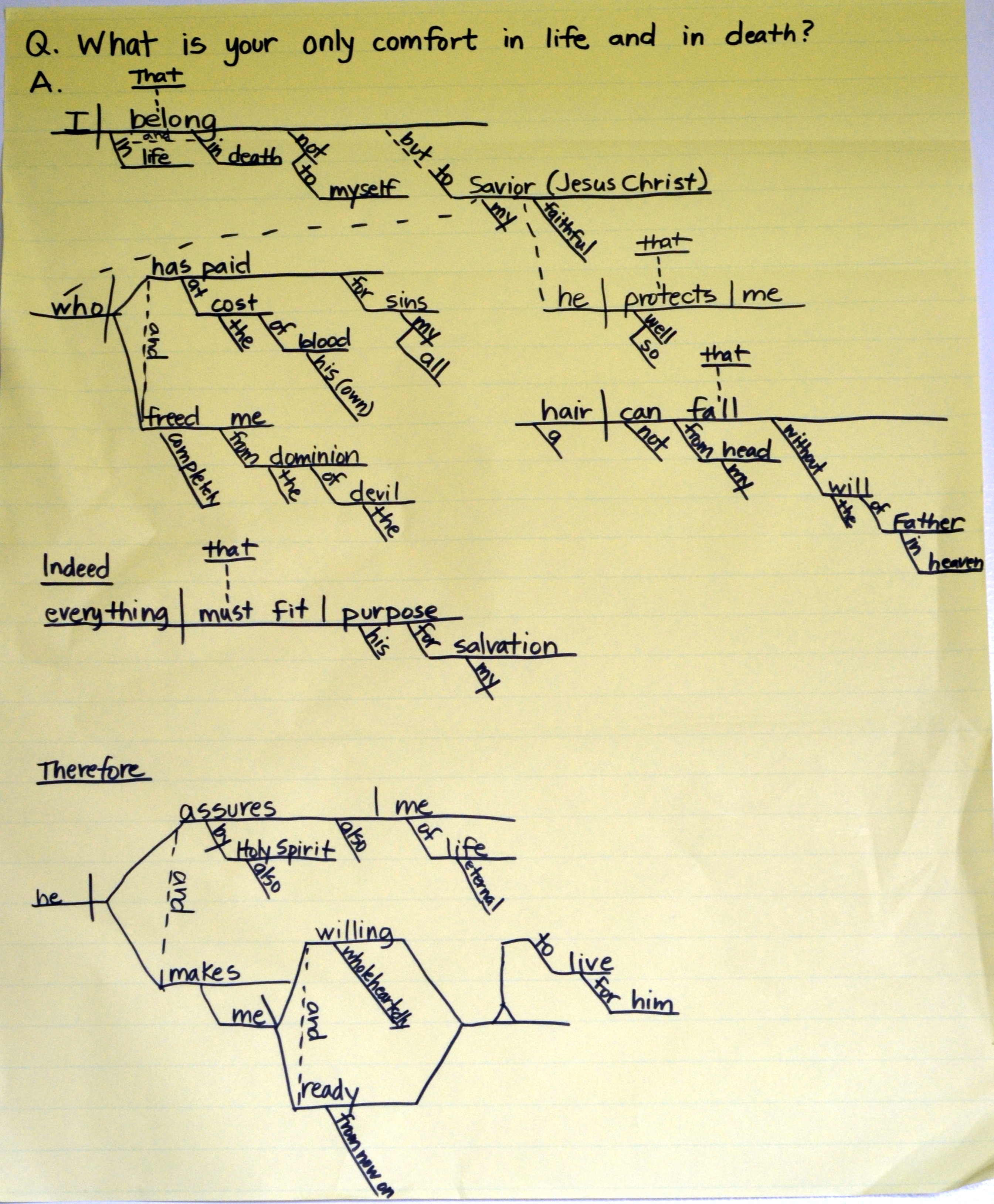
The visual delight of the book are the diagrams of unwieldy sentences by James, Hemingway (whose sentences are normally spare), Fenimore Cooper, Twain, Proust, Oates, Updike, Kerouac, Fitzgerald, Faulkner, Welty and Powell.

I couldn’t resist trying a long sentence myself. Above is the answer to the first question of the Heidelberg Catechism. Corrections are welcome.

Light, Shadows and Downton Abbey

downton-abbey-season-4-9-3{spoiler alert}

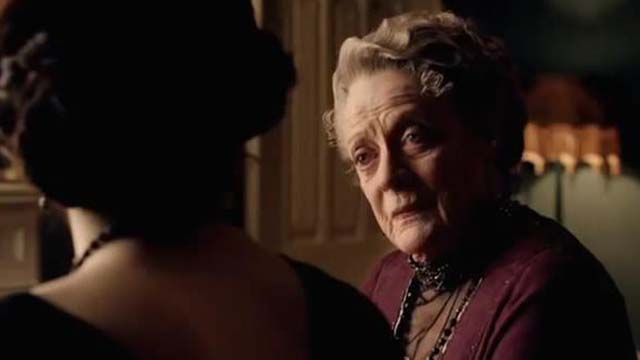
The shadows in the premiere of Season 4 of Downton Abbey are brilliant. Figuratively speaking. As the series opens Downton Abbey is shrouded in darkness with one light on. Repeatedly, key characters are shrouded in black with just one side of the face illumined. Lady Mary. Mrs. Crawley. Mrs. Hughes. Carson. Anna. Molesley.

Lady Mary is numb and unresponsive until, in a conversation with Carson, she crumbles and has a good, cathartic cry. She has been a walking sleeper and now she awakes. The next morning the sun rises and color and light explode onto the screen. Birds sing. Flowers are delivered. Mary wears a lavender dress.

The wisdom of age
Mr. Molesley the Elder: In your game, if you want the best you’ve got to be the best and work at it.
Mrs. Hughes: I wonder if you [Mrs. Crawley] would take this man into your home.
The Dowager, straight out of Deuteronomy: You have a straightforward choice before you. You must choose either death of life.  (While Mary’s choice is obvious, the Dowager’s words also apply to Edith.)

Most poignant: Lord Grantham pontificates, The price of great love is great misery when one of you dies. Softly, Branson replies: I know.

Loss of nobility: Lord Grantham. Remember how decent he was in Season 1? What bugs me is how he cloaks his desire to hold power in paternal concern for Mary. What delights me is how transparent he is to Lady Grantham and the Dowager. The way they lovingly hold him accountable is his salvation.

Love the mercy: Mercy flows through the storyline.
Griggs receives large dollops from Mrs. Huges, Mrs. Crawley, and, finally, from Carson. Moseley can’t see the mercy of Downton keeping him on six months after Matthew’s death. He despairs, but the Dowager shows mercy to him, even Edith, dear Anna, and especially Bates.
Mrs. Hughes sacrifices to help Mrs. Patmore.
Mrs. Patmore’s generous gesture to Daisy.

Love the justice: Nanny West gets her comeuppance. She’s such a minor character that we’ll forget her in a few weeks, but it was s-w-e-e-t to see her go.

Interfering: happy outcomes from the various interferences of the Dowager, Mrs. Hughes, and Bates. Not so good from Rose or from Barrow. It’s such a great quote, but I don’t agree with Violets words: It’s the job of grandmothers to interfere.

Bates and Anna: Will they replace Matthew and Mary as the happily married couple?  Bates had some tender lines: You stayed young. And Why should I be social when I have you?

Strength through service: Lady Mary and Mrs. Crawley were both told that they had strength in them. But they didn’t believe it until it they were of service to someone else. Grief is so inward. Necessarily so. Healing comes through kind service to others.

New phrase: ‘All Sir Garnet’ means everything is as it should be, from the reputation of Sir Garnet Wolseley (1833-1913), Field Marshall in British Army, for efficiency.

10 Quotes I Copied

DSC_1936You could call my method of reading and copying quotes in my journal cumbersome…and you would be correct. It slows me down, my reading gets ahead of my copying, I end up going through each book twice. Say what you’re thinking: inefficient!

But I can’t articulate the joy that I get from reliving the delight in a well-turned phrase or a clearly expressed thought when I go back through my journal. It brings back the memory of the experience of reading that book. At the top of some pages there is a date and a short description of where I am when I am copying, i.e. 5-13-13, day after Mother’s Day, at the river with Scott, Dad and Mom. Or on the plane to Raleigh-Durham, 11-8-13.

My husband is patient with my quirkiness, but he scratches his head and asks, “What am I supposed to do with these journals if you die before I do?” You know, I don’t care! They have proved their value to me here and now. Here, in chronological order of copying into my journal, are ten great quotes of 2013.

1. In his solitude he can sunder and besmirch the fellowship, or he can strengthen and hallow it. Every act of self-control of the Christian is also a service to the fellowship.
— Diietrich Bonhoeffer, Life Together

2. Distillation is selection, and selection, as I am hardly the first to affirm, is the essence of writing history. It is the cardinal process of composition, the most difficult, the most delicate, the most fraught with error as art. Ability to distinguish what is significant from what is insignificant is sine qua non. Failure to do so means that the point of the story, not to mention the reader’s interest, becomes lost in a morass of undifferentiated matter. What it requires is simply the courage and self-confidence to make choices and, above all, to leave things out. — Barbara Tuchman in Practicing History

3. Seed biscuits and milk! I hated Mrs. Mullet’s seed biscuits the way Saint Paul hated sin. Perhaps even more so. I wanted to clamber up onto the table, and with a sausage on the end of a fork as my sceptor, shout in my best Laurence Olivier voice, “Will no one rid us of the turbulent pastry cook?” — Alan Bradly in The Sweetness at the Bottom of the Pie

4. She was beloved by friends and family for her unique wit perfectly blended with a gift for hospitality and kindness to others.  — Billee Ratzlaff 1926-2013

5.  It is a rare person who isn’t somewhat traumatized by the state of his or her desk. — David Levy in Scrolling Forward

6.  In Africa, you do not view death from the auditorium of life, as a spectator, but from the edge of the stage, waiting only for your cue. You feel perishable, temporary, transient. You feel mortal.  —Peter Godwin in When a Crocodile Eats the Sun

7. There is so much in the world for us all if we only have the eyes to see it, and the heart to love it, and the hand to gather it to ourselves—so much in men and women, so much in art and literature, so much everywhere in which to delight, and for which to be thankful. — Lucy Maud Montgomery in Anne of the Island

8.  Her thoughts were always directed outward toward others, and never inward towards herself. She never in all her life knew an introspective moment. Because of this there was no murky fog of self-consciousness between herself and others. She saw not her own disabilities but them and like unclouded sunshine her warmth and light were theirs without hindrance. No one was ever shy of Peronelle—she did not give them time to be shy. She looked at them, she loved them, and with one leap she had curled herself inside their hearts. — Elizabeth Goudge in Island Magic

9.  Drink your wine. Laugh from your gut. Burden your moments with thankfulness. Be as empty as you can be when that clock winds down. Spend your life. And if time is a river, you may leave a wake.  — N.D. Wilson in Death by Living

10. To sum up, analysis and abstraction are not demons to exorcise, but like the machine, to be mastered, not obeyed. To live amid lax words and dim thoughts more or less translatable into concreteness depletes energy and deadens the joy of life. — Jacques Barzun in From Dawn to Decadence.

15 New Words

DSC_6550

In writing I am seduced by the sound of words and by the interaction of their sound and sense.

— Barbara Tuchman in Practicing History

I read all books—even borrowed ones—with a soft-leaded pencil in my hand. When I come across a word I don’t know I put a √ in the margin. When I copy quotes into my journal, I add the words I’ve learned. I also add to my collection of be– words (beguiled, bewhiskered, betake, etc.), but that’s a story for another day.

Here are a few of my favorite 2013 additions to my treasure chest of words:

taradiddles — lies
shrammed — benumbed with cold
virago — loud, overbearing woman

flibbertigibbet — silly, flighty person
semaphores — visual signaling with flags or light
boulevardier — man who strolls on Paris boulevard

billyho — unimaginable large amount
fortnight — contraction for “fourteen nights”
carnival = carne vale = goodbye meat

aptronymic — suitably named
debouched — to cause to emerge
snuggery — a snug, cozy place

smeddum — spirit, energy, determination
plaint — expression of grief
puling — whining, whimpering, crying plaintively

Song of Joy and Strength

DSC_3580

Creation begins with song. We know this because God asks Job where he was when God laid the foundations of the earth, when the morning stars sang together and all the sons of God shouted for joy.

Singing and joy go together like champagne and bubbles: they are linked in God’s Word, in our response, and particularly in your life, Joy.

Marriage is a song.

Sometimes you will sing in unison, one voice high and one low. Other times you will sing in two-part harmony. The fugue employs different voices expressing the same theme in succession, weaving in and out, finally coming together at the end.

When quarrels come there will be discordant notes, squawks, squeaks and growls. As your arguments mature, they will sound less like a cat landing on a keyboard and more like two strong notes pushing together for resolution. A song without tension would be bland, and ultimately difficult to listen to. Some marriages avoid conflict, moving apart into parallel melodies that aren’t related. The tension of sustained chords comes when notes are close together.  Tension is not bad unless it is unresolved. Think of a four-part Amen, stopping on the AH–.

The time signature determines the rhythm. One of you can’t play a waltz (3/4 time) while the other is marching to the 4/4 beat.  Curt and I tried that this summer: it led to hiccups, glitches and confusion. Follow Stephen’s lead, secure in the knowledge that different seasons of life will bring new rhythms.

You are starting your life together in a major key. Your wedding will be a minuet: a bright and cheerful celebration. But, in your life, minor keys will come; grief is a part of all of our lives. Your song can reflect glory in both major and minor keys.  Accept the minor key seasons as a gift.

In one of Anthony Trollope’s books, a wife obeys every word her husband says with a treasonous attitude. He is a piece of work, but that’s not the point. She is icy, remote, but, in her mind correct and proper. This illustrates how vital our tone is. Timbre is the musical term for tone color. When Stephen tells you something, you respond “You did?” The tone of these words could communicate scorn, apathy, delight, or shock. May the tone of your marriage be as rich and warm as a cello or a saxophone.

Beautiful music requires practice, discipline and work. When you run across a glitch in a musical piece, you know that is where you need to slow down, understand the notes and repeat it again and again and again and again! There’s not much glamor in practice, but faithful diligence brings rewards.

Do you remember the flash mob videos in a shopping mall? It is always a delight to see a bystander perk up her ears, look around in wonderment and then settle in with a smile to see what happens. People stop talking, they stop walking, they stop shopping and they watch and listen. This is what your marriage will do when you are singing in tune, making a harmonious sound.  Your song will invite others to the Music.

I began with the pairing of singing and joy. Singing and strength is another common coupling. In some cultures, singing is a necessary component of work. Think the chain gangs in O, Brother Where Art Thou?, slave ships, cotton fields. Singing keeps you in sync, it helps you work harder than you thought possible. In Estonia the folk songs liberated the country from communism. Song brings the strength of unity.

Joy, everyone agrees that you are perfectly named. And, your new last name reflects joy and strength.

Song is powerful. It reaches into the nooks and crannies of our souls. It fortifies us; it loosens us up.  It bedazzles our senses; it thrills our spirit; it expresses our worship.
It changes us.

 ~ The Lord is my strength and my song, and He has become my salvation. ~