Beauty Displayed in Death

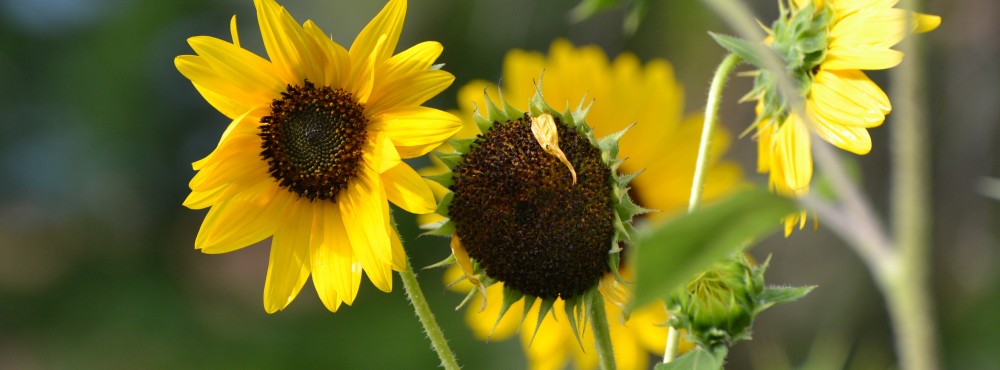
Looking outside, I see thousands of dying leaves;
 my hope is that when I grow old and start to wither away,
 my life will reflect some small portion
 of the beauty
displayed in the death all around us…

…and until then
to live with the hope of resurrection
in that eternal spring
when I go to be with God.

~  our son Carson
commenting on a photo on Facebook

A Holocaust Robinson Crusoe

I stayed up late last night reading The Island on Bird Street in one fell swoop.  Uri Orlev has written an exciting story based on his own experiences as a young Jewish boy in the Warsaw Ghetto.  In writing the book Orlev weaves themes from Robinson Crusoe into this WWII survival story.  After a roundup, Alex has been separated from his father; he waits for him in an abandoned building just inside the border of the Ghetto.

“This house is really not very different from a desert island.  And Alex has to wait in it until his father comes.  But his father does not come back right away and Alex begins to wonder if he ever will.  So he must survive by himself for many months, taking what he needs from other houses the way Robinson Crusoe took what he needed from the wrecks of other ships that were washed up on the beach.”
 ~ from the Introduction

Before his time of hiding, Alex’s mother and father had been preparing him for the unknown future, honing his survival skills. 

~ Whenever you pick a hiding place, always make sure that it has an emergency exit.
~ What counts most is the element of surprise. 
~  Look around you and behind you.  Danger doesn’t only strike from the front.

At one awkward encounter with a Polish looter, Alex offers to tell a joke to the man.  Their laughter diffused the tension.  Alex had remembered his father’s lesson.

~  With the Poles you’ve got to sound confident, even a little bit cheeky. And you’ve got to make them laugh.

Alex’s parents differed on the issue of trust. 

~  If you relate to people with trust and human kindness, they will always help you. (Mother)
~  Be kind but only trust yourself. (Father)

This story is full of courage, ingenuity, humor, resourcefulness, danger, friendship, and risk.  It parted from Robinson Crusoe in one disappointing way:  in his distress, Crusoe poured out his heart to God.  I thought it seemed unrealistic that a Jewish boy–well, any boy– left alone, in daily peril of losing his life, wouldn’t pray once or twice during the ordeal.  God was never once mentioned.

It’s A Corker


corker 

(kôrkər)   n.

  1. One that corks bottles, for example.
  2. Slang. A remarkable or astounding person or thing.

~     ~     ~

For my birthday, my friend Katie and
my brother Danny (with sweet Valeri)
collaborated on a project.
Dan and Val cheerfully drank wine and saved corks.
Katie took saved corks and made a cork board.

All our years together, Curt and I have had a picture board in our kitchen.
Packed full of photos.

Now we have a cork board.

My favorite section below, because…
Dan calls his wife is la Bella.
Sigh.
I love la Bella
If you knew her, you would too.

I have instituted a new plan.
I found when the board is stuffed to the gunnels with pictures
we ended up not seeing anything.
Just like the front of your fridge, right?

So I plan to put a very few pictures up,
change them regularly,
and use the pictures as a reminder to pray
for our friends, especially when we give thanks for dinner.

Isn’t that just about the funnest gift idea?
Thanks KGB, dharperino, and la Bella.

Addendum:  Check comments for dear Katie’s instructions


How To Fold a T-Shirt

Okay, this is ancient in terms of Internet lifespans, but I just found it when I was sweeping the corners of My Documents.  Just in case you missed it the first time around!

English versions now abound but this is the one I first saw, and the Japanese (or is it Chinese?  ack!) adds to the charm.  Our family all had to master this when we first viewed this video.

Why I Am Hopeful

Andy Crouch nails it in this essay,
Why I Am Hopeful,
another blessing of receiving the free weekly newsletter
Books & Culture.
“We often seem incapable of seeing ourselves first as gardeners:
people whose first cultural calling is to keep good
what is, by the common grace of God, already good.
A gardener does not pull out weeds because she hates weeds;
she pulls out weeds because she loves the garden,
and because (hopefully) there are more vegetables or flowers in it than weeds.

This kind of love of the garden
—loving our broken, beautiful cultures
for what they are at their best—
is the precondition, I am coming to believe,
for any serious cultural creativity or influence.

When weeds infest the garden,
the gardener does not take the opportunity
to decry the corruption of the garden as a whole.
She gets patiently, discerningly, to work
keeping the garden good.”

Worried About the Election?

I have had emails from good friends expressing their concern about the election.  One shudders at the thought of Obama’s election and what will happen to the country-alas, the entire world-in the aftermath.  Another asks me about Sarah Palin and any qualms I might have should she accede to the presidency. 

I’m not worried about either one. 

Call me an ostrich, but I’ve done my reading, made my decision, and have firmly set this topic to the side.  How, exactly, will worrying about it change the results?  I firmly believe that God is sovereign over all, including American, British, Peruvian and Zimbabwean elections. (Yikes! Does Peru even hold elections?) So my hope is in the Lord, not in McCain, Obama, or any third party candidate. 

A verse that has impacted my life was part of our family Bible reading the day of my mom’s sudden death.

Trust in Him at all time:
ye people, pour out your heart before Him;
God is a refuge for us.
~ Psalm 62:8

I don’t believe that the solution to our problems will come from a politician, a political party or a government.  I know that the policies of either candidate will have their effect on my personal life, but I’m still choosing to trust God and thank Him for whomever He gives us.

One of the reasons I’m not worked up about this election is that I don’t watch, listen to or read the daily news. (Well, I do read our daily local paper, but, folks, it varies from 8-12 pages in length.) I believe a steady diet of CNN or Fox News or any other network will produce tension, anxiety, restlessness and discontent. 

But to keep it honest, I occasionally read articles and essays online.  It’s not that I’m not interested in current events, cultural trends, editorials or news events.  I just want to think and read about them from a longer perspective than the bites of daily news.

An obscure sentence in a book I read long ago impacted me.

My own dad spent hours reading the newspaper. 
I have often thought how much broader his world would have been if he had read more books.     
   ~ Gladys Hunt in Read for Your Life 

Also key in influencing my thinking: Neil Postman’s fabulous book Amusing Ourselves to Death: Public Discourse in the Age of Show Business, in which he discusses information over-load and how we receive dump-loads of facts which have no relevance to our daily lives.   

I came to realize that the energy and passion I was putting into politics seemed to dissipate into thin air with nothing left to show for it.  I chose to spend time with books–good books–which would nourish my soul and stimulate my mind.

I want to emulate the Proverbs 31 woman:  “She is clothed with strength and dignity; she can laugh at the days to come.” 

Please don’t take this as a slam of news wonks or political junkies.  It is just my apology for not getting worked up over the election.  I welcome dissenting opinions. 


Sabbath Delight

A pocket of time opened up to us yesterday.
My husband, Curt, wanted to explore an unmarked trail
which many locals seemed unaware of.

These falls were a short hike from the trail head.

Seeing deer is common.  Having one pose ten feet from the car was unusual.

A car drive with my man.

Beautiful scenery.

Soundtrack: Joe Cocker’s Greatest Hits

At the end of the day was a meeting of
The Excellent Women’s Book Club.

We discussed Sue Bender’s
Plain and Simple: A Woman’s Journey to the Amish.

It was easy to call the day a delight.
 

Wendell Berry’s Remembering


Do you ever think about how your own, personal context affects your response to a book you have read? 

A book which didn’t interest you ten years ago, before you experienced that particular loss, may completely engage you today.  Conversely, a book which kidnapped you twenty years ago, rendering you incapacitated for all but the most necessary life functions until you finished the book, may produce yawns of indifference if you were to pick it up today.

My context in reading Wendell Berry includes many conversations with friends and family about an agrarian lifestyle and end-of-life medical issues. It most definitely includes The Omnivore’s Dilemma, a book which has had an impact on our family’s thinking.  My point is that I’m in step with some of the messages Berry is delivering, which makes him that more dear to me.

Also, I am so grateful for the order in which I’ve read Wendell Berry’s fiction.  I believe it has made a difference.  I started with That Distant Land: The Collected Stories, which introduced me to the primary residents in Berry’s fictional town of Port William, Kentucky.  I learned the back story of so many families. Reading this first provided the context into which all the other books fit.    

Remembering follows the course of one day in Andy Catlett’s life.  There’s not much action: he takes a walk, he gives a speech, he gets on a plane and comes home.  Interspersed in the narrative are remembrances of the people who formed and molded Andy, contemplations on the twists and turns his life has taken.  As in most everything Berry writes, there is a focus not on what we have gained with technology, but what we have lost.  Farming methods are especially important.

What I love about Wendell Berry’s fiction:

1.  Sense of community.  Berry loves the word “membership” as a sense of people belonging to one another.  No one is done harvesting until everyone’s harvest is in.  Working, joking, relaxing, eating are all communal activities.  There is a connectedness that is often missing in other fiction.  “How long have you been here?” “Seventy-four years.” “But you’re not seventy-four?” “No,” Isaac said, and laughed, “my father is seventy-four.  We came here the year he was born.”  [I think that We is profound.]

2.  Realistic characters.  Berry’s protagonists–strong, masculine men and stalwart women–are never perfect.  Nathan Coulter is a tireless worker, but he is impatient.  Loveable Burley Coulter will charm you, but avoids making commitments.

3.  Descriptions of sex.  Got your attention, eh?  When Wendell Berry writes about sex, it is appropriate, achingly beautiful and sparse.  My single friend pointed this out to me.  “But to know you love somebody, and to feel his desire falling over you like a warm rain, touching you everywhere, is to have a kind of light.”  “He would come to me as my guest, and I would be his welcomer.” “His hand knew her as a man knows his homeland.”  

4. Biblical concepts naturally integrated into prose.  As a pastor’s daughter, I grew up reading and listening to stories which had an obligatory gospel message tacked on to the last chapter.  That is where I stopped reading.  Not because I hated the gospel, but because it was artless.  Berry’s biblical allusions abound, but they are often so subtle I don’t catch them until the second or third reading. “I thought of all the times I’d worked in that field, hurrying to get through, to get to a better place, and it had been there all the time.  I can’t say I’ve always lived by what I learned that day-I wish I had-but I’ve never forgot.” “What?” Andy says.  “That it was there all the time.” “What?” “Redemption,” Mat says, and laughs. “A little flowing stream.”  

5. A sense of place.   This is what most reviewers mention first.  Respect for the land, ties to the land, geography all matter very much to Mr. Berry.  ” In the sweet by and by, We shall meet on that beautiful shore.  We all know what that beautiful shore is.  It is Port William with all its loved ones come home alive.”

6. Turns of phrase.  Wendell Berry is a master wordsmith.  When Andy met his wife to be: “He can see nothing wrong with her.  She has closed entirely the little assayer’s office that he runs in his mind.” “…observing scrupulously the etiquette of strangers”  An airplane engine: “a ludicrous hooferaw of noise and fire”

More of my thoughts on Wendell Berry.
The Guernsey Literary and Potato Peel Pie Society


Whenever I take a trip, I deliberate about which books I should bring.  Which is truly not necessary whenever I’m visiting my family.  Because there are always wonderful books waiting for me there.  This is the book that was waiting for me in Maine.  Like The Thirteenth Tale,  The Guernsey Literary and Potato Peel Pie Society is a book whose author understands the allure of a reading life. 

The Channel Island of Guernsey was occupied by the Germans in WWII.  With no communication with the outside world allowed, a group of neighbors and friends in the closed community found great comfort in reading books together.  The book is epistolary – written as a series of letters between Juliet, a London journalist, and members of the Society, who tell their story after the war.   I found myself going back and checking, reading carefully to catch subtle details and hints.   

The most persuasive words are quotes from the book itself – no spoilers, I promise. 

I don’t want to be married just to be married.  I can’t think of anything lonelier than spending the rest of my life with someone I can’t talk to, or worse, someone I can’t be silent with.  (p. 8) (my emphasis)
That’s what I love about reading:  one tiny thing will interest you in a book, and that tiny thing will lead you onto another book, and another bit there will lead you onto a third book.  It’s geometrically progressive-all with no end in sight, and for no other reason than sheer enjoyment.  (p.11) [Yes!  Word perfect quote.]  

None of us had any experience with literary societies, so we made our own rules:  we took turns speaking about the books we read.  At the start, we tried to be calm and objective, but that soon fell away, and the purpose of the speakers was to goad the listeners into wanting to read the book themselves.  Once two members had read the same book, they could argue, which was our great delight.  We read books, talked books, argued over books, and became dearer and dearer to one another.  Other Islanders asked to join us, and our evenings together became bright, lively times–we could almost forget, now and then, the darkness outside. (p.51)

Spring is nearly here.  I’m almost warm in my puddle of sunshine. (p.98)

Have you ever noticed that when your mind is awakened or drawn to someone new, that person’s name suddenly pops up everywhere you go?  My friend Sophie calls it coincidence and Mr. Simpless, my parson friend, calls it Grace.  (p.116)

This 2008 book is the perfect-for-fall, warm, easy read.  A few evenings of light-but-not-fluffy reading.  If this book were a food it would be a bowl of soup, perhaps butternut squash soup with a sprinkle of nutmeg. Thanks to you, my beloved sister-in-law Kathleen.  What percentage of my reading, I wonder, has been influenced by you? 

Addendum:  I’ve also described this as Huckleberry Pie reading: healthy sweet.