Lila

DSC_3801

Wow. The audio edition read by Maggie Hoffman enshrouded me, made this not merely listening to a book, but an experience. I listened while driving, but when I was home, I found it difficult to do anything beyond listening. Setting the iron upright, drying my hands, leaving clean clothes in the basket, I basked in the cadences.


The writing is spare, the words short. This is a story of abandonment, of survival, of transience. Provision and grace make spattered appearances, but they are layered and torn and patched. Lila finds herself alone but she steadfastly refuses to consider herself needy. The story pivots when she steps into a church on a rainstorm.

Quotes that captured me:

I got shame like a habit, the only thing I feel except when I’m alone.

There was no way to abandon guilt, no decent way to disown it. All the tangles and knots of bitterness and desperation and fear had to be pitied. No, better, grace had to fall over them.

Most of the time she thought she understood things better when she didn’t try. Things happen the way they do. Why was a foolish question. In a song a note follows the one before because it is that song and not another one.

If I were leading a discussion of this book, we would talk about the knife; geraniums; gardens; charity; baptism; adoption; King James language; Psalm 22. And Ezekiel.

I was unmoved when I first read Gilead. What changed my response was hearing the audio. I can still remember what I was doing when I listened perhaps five years ago, it made so deep an impression. Now I want to return to the print book and read it with Lila still fresh in my mind.

10 Things about June

DSC_0368

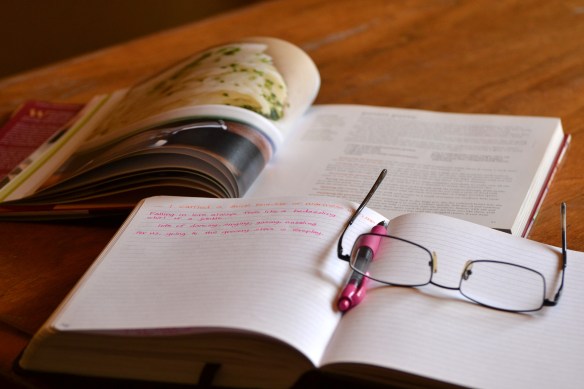
When she saw Reading Cookbooks , Donna at Quiet Life
recommended The Pat Conroy Cookbook to me.

DSC_0359

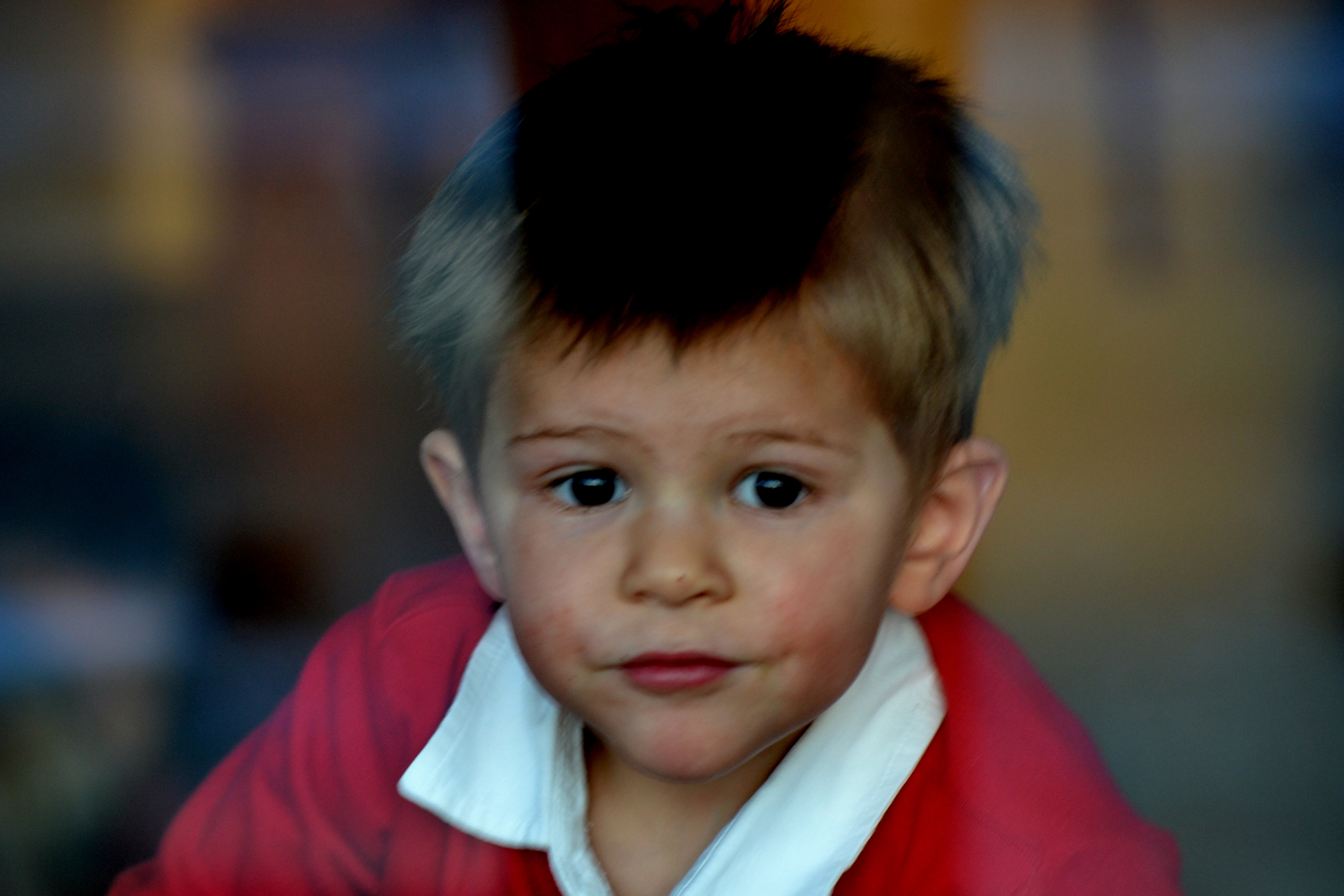
 Her hair is so fine, it won’t stay in line. Her aunt fixed this pixie.


DSC_0371

Hanging plants at my house: a cycle of death and resurrection.
When blossoms are perky, I take a picture.


DSC_0365

 No dimples today. That’s okay.


DSC_0244

 Penstemon: a happy perennial. The bee’s knees.


DSC_0362

How to eat peanut butter and honey with sacramental gladness.


DSC_0384

 Garlic scapes: attractive parabolas


DSC_0380

 Oh, beloved clematis, you always amaze and delight me.


DSC_0290

 My farmer grandson ready for showmanship.

DSC_0315

My young friend with a beguiling smile.

Getting Paid to Read

DSC_0203

I have repeatedly said, I would love to get paid to read!

What I really mean is: I would love to get paid to read whatever I want on my own schedule. Basically, I want a stipend to breathe air.

Because having to read what someone else has chosen is too close to being back in school.

At times the promise of free books has tempted me to consider pursuing review copies from the publisher, but the obligatory nature of reviewing has slapped me on the cheeks and snapped me out of it.

Because of my reputation as a reader, I am often given books to read. People love a book and they want me to love it with them. Which obligates me to read that book. [This is fitting payback, because I’ve been that friend/acquaintance/stranger who pressed unsolicited books into hands with the words You. must. read. this. book.] Don’t get me wrong: I love gift books and I love loaned books. I love the discussions they engender. I just don’t like feeling disloyal to my books which migrate to the bottom of my pile.

Recently, I started following Anne Bogel’s blog Modern Mrs. Darcy. This girl reads for a living. She is fun and welcoming: a literary, book-loving version of The Pioneer Woman.  Anne’s content is beautifully linked to Amazon and I’m sure she gets sweet monthly referral fees. It hit me one day: She gets paid to read!

My next thought was But. She must read newly released books to get Amazon referral fees. You can’t recommend Anthony Trollope (whose books are free on Kindle) and make money. And I am quickly back to contentment. I get to read the books on my shelves, yay!

Anne has a podcast called What Should I Read Next? While I am probably 38% compatible with Anne’s picks, the moment I wait for is when she describes her guest’s reading pattern, based on 3 books loved and 1 book hated. These diagnoses are often Aha! moments; guests use words like uncanny, crazy, I’ve never thought of that before!  It’s as close to book therapy as you get. Here is a sample analysis:

You’ve chosen books about women who had to learn to be strong, because life threw some stuff their way. And they had to rise to the challenge. And they did. And whether the story is written in first person or third, these books show us these women’s lives through their own eyes. We get their side of the story, their version of events, and we, as the reader, have the privilege of walking alongside them as they get a little older and a little wiser and really come into their own.

I have my own What Should I Read Next? dilemma, but not in the way of needing a book recommendation. My question stems from having far too many choices staring at me from my bookshelves. I want to read them all. The job doesn’t pay well, but there are benefits.

5 Cookbooks To Read

DSC_0148

Little did I know, last fall when I read Shauna Niequiest’s Bread and Wine , that soon I would employ one of her coping mechanisms for dealing with grief—reading cookbooks. Without a plot there isn’t story grip, but that works well when it is hard to focus. Shauna’s book is simply a memoir with a few recipes. Besides introducing me to Nigella, I found her thoughts on hospitality and on feasting/fasting helpful.

  Nigella Kitchen is the first full-length cookbook that I read like a novel. Ah, Nigella! This was the best choice for me.  She writes with sparkly and surprising words, tosses in literary allusions, and takes unalloyed pleasure in alliteration. (I was at the stove, pontificating and pottering, occasionally pushing and prodding what was in front of me with a pair of tongs…) Her words are cozy and comforting: those of us who warm our souls by the stove and the solace of stirring. The pictures are sumptuous. This is all the joy of butter pecan ice cream without the calories.

A friend gave me Gluten-Free Girl and the Chef , a gluten-light person (except when I’m not). Two things drew me to Shauna Ahern: her response to a celiac diagnosis—saying ‘yes’ to everything she could eat instead of mourning what she couldn’t— and her deep/high/broad respect for her chef husband. There’s almost too much dancing and kissing and gazing and shopping-is-foreplaying, but I’d rather that than the condescending tone Molly Wizenberg had towards her husband in Delancey.  My cookbook shelf was crowded and I had expected to ‘read and release’ this. The recipes are highbrow, more Julia Child than Pioneer Woman. But I have to make a few, so I’m keeping this one. I love the way Danny and Shauna formatted the recipes.

When How to Cook Without a Book appeared on a bride’s wish list, I did the tightwad cha-cha-cha and read it entirely (after washing my hands) before I gave it to her. Then I repented and bought a copy for myself. Pam Anderson is earnest and straightforward. But this is a book to be read more for education than entertainment. Many good tips, including using won ton wrappers for ravioli.

There is a kind of woman who makes all sorts of people consider her their best friend. That’s Ree Drummond! The Pioneer Woman Cooks welcomes you to her ranch and kitchen and walks you through recipes step-by-step. Rich in photography, in conversational writing, and in wacky humor, this might be the best place to start if you want to read cookbooks like novels, too!

After I’ve consumed these cookbooks, I’ll write another post: 5 More Cookbooks to Read


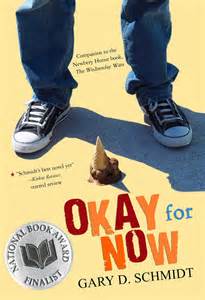
Okay for Now

okay for now

I enjoy persuading adult readers to read well-written young adult books. Gary Schmidt’s  book is one I recommend, perhaps even more for older readers than for a middle schooler. It made me snort with laughter and it turned me into a sobbing, sniffing mess.

Doug Swieteck has a lying, blustering, bullying, abusive father. His mom tries to compensate, neutralizing her husband’s venom to the best of her ability within the strictures of 1960’s mores. Doug’s older brothers are plain mean.

I tried to talk to my father about it. But it was a wrong day. Most days are wrong days.

So convincing is Doug’s voice that I could hear it. “Terrific.” “I hate stupid Marysville.” “You know how that felt?” and Doug’s trademark phrase, “I’m not lying.”

Perhaps we’ve all grown up with someone like Doug, a mixture of bravado and vulnerable. Someone outside the family takes an interest and tries to pull that kid up above his/her circumstances. Doug had his share of tormentors, but also four mentors who invested in him.

There are some things in this world that we cannot fix, and they happen, and it is not our fault, though we still might have to deal with them. There are other things that happen in this world that we can fix. And that is what good teachers like me are for.  — Miss Cowper, English teacher

A few things seduced me. One brother is only identified as “my jerk brother.” He is changed by a horrific situation — converted (not religious) — and Doug begins calling him by his name. It is a subtle but significant clue. The smile motif captured me. Pay attention to the smiles.

I listened to the audio version (5 stars for Lincoln Hoppe’s narration–except he mispronounced  Cowper— it’s Cooper), but was compelled to read the words.

And see the pictures. Doug Swieteck’s doorway to a better life comes through John James Audubon’s bird pictures. (The hefty Birds of America was the first gift I gave my husband after we married.) Each chapter is named after an Audubon bird; the audio experienced is diminished without seeing the prints.

There is a broad ranged of interests represented in this book: Audubon, Apollo 11, the Vietnam War, Jane Eyre, Periodic Table, baseball, and Aaron Copland. There is drama, devastation, and unexpected grace. I loved the book. Would a young teen love it?

Chronological 2015 Reading List

DSC_0389

It is a good rule, after reading a new book, never to allow yourself another new one till you have read an old one in between. If that is too much for you, you should at least read one old one to every three new ones. — C.S. Lewis

The rewards of deep reading (reading several books on the same subject or by the same author) are plentiful: synthesis, comprehension, analysis. Or just the possibility of remembering the main point. Reading widely pays well, too. The stab of joy, the searing beauty of synchronicity! When I read Book G and it revisits something I read in Book B with no obvious connection between the two? Oh, man. It gets my voice in the high treble range and sets my fingers aflutter.

I thought it would be fun to classify my reading list for 2015 chronologically by publication date. I like old books, yes. But I also have been guilty of reverse-snobbery, where I lift my nose a few centimeters and declare that I’m not all that interested in modern writing. Blech! (autocorrect wanted to change that to belch; that works, too!) As you can see, I’ve overcome that weakness, haha!

2011-2015 (30 books)

Reclaiming Conversation     Sherry Turkle
Come Rain or Come Shine     Jan Karon
Bread and Wine     Shauna Niequist
Earthen Vessels     Matthew Lee Anderson
Being Mortal     Atul Gawande
Fierce Convictions     Karen Swallow Prior
As Chimney Sweepers Come to Dust     Alan Bradley
Landfalls     Naomi Williams
The Wright Brothers     David McCullough
All the Light We Cannot See     Anthony Doerr
Gutenberg’s Apprentice   Alix Christie
Nigellissima     Nigella Lawson
Among the Janeites     Deborah Yaffe
Wheat Belly     William Davis
Every Good Endeavor     Timothy Keller
Coolidge    Amity Shlaes
The Book of Strange New Things     Michel Faber
The Green Ember     S.D. Smith
Food: A Love Story     Jim Gaffigan
Dad Is Fat     Jim Gaffigan
God Made All of Me    Justin Holcomb
No Higher Honour     Condoleezza Rice
The Forgotten Founding Father     Joshua Kendall
Delancey     Molly Wizenberg
Lit! The Christian Guide to Reading Books     Tony Reinke
The Curious Case of the Copper Corpse     Alan Bradley
The Every-Other-Day-Diet     Krista Varady
Tsura     Heather Anastasiu
House of Stone     Heather Anastasiu
One Good Dish     David Tanis

Naturally, since I myself am a writer, I do not wish the ordinary reader to read no modern books. — C.S. Lewis

2000-2010 (24 books)

In the Midst of Life     Jennifer Worth
The Midwife     Jennifer Worth
Waiting for Snow in Havana     Carlos Eire
The River of Doubt     Candice Millard
Mudhouse Sabbath     Lauren Winner
Complications     Atul Gawande
Unless It Moves the Human Heart     Roger Rosenblatt
The Importance of Being Seven     Alexander McCall Smith
The Best Day, The Worst Day     Donald Hall
A Personal Odyssey     Thomas Sowell
The Shoebox Bible     Alan Bradley
Sonata for Miriam     Linda Olsson
Better: A Surgeon’s Notes on Performance     Atul Gawande
Shadows of the Workhouse     Jennifer Worth
Inkheart     Cornelia Funke
The Unbearable Lightness of Scones     Alexander McCall Smith
Old Filth     Jane Gardam
The Man in the Wooden Hat     Jane Gardam
How to Read Shakespeare     Nicholas Royle
In Thy Dark Streets Shineth       David McCullough
The House at Riverton     Kate Morton
Not Quite What I Was Planning: Six Word Memoirs     Larry Smith
Widow of the South     Robert Hicks
A Separate Country     Robert Hicks

1990-1999 (7 books)

A Pianist’s Landscape     Carol Montparker
Down the Common     Ann Baer
Poems New and Collected     Wistawa Szymborska
Melodious Accord     Alice Parker
One Year Off     David Elliot Cohen
Girl in Hyacinth Blue     Susan Vreeland
Jeremy: The Tale of An Honest Bunny     Jan Karon

1980-1988 (2 books)

Godric     Frederick Buechner
To School Through the Fields     Alice Taylor

1970-1979  (1 book)

The Brendan Voyage    Tim Severin

1950-1969 (4 books)

A Grief Observed     C.S. Lewis
How Does a Poem Mean?     John Ciardi
On the Beach     Nevil Shute
The Schoolmasters     Leonard Everett Fisher

1900-1949 (7 books)

Orthodoxy     G.K. Chesterton
The Adventures of Sally     P.G. Wodehouse
Pied Piper   Nevil Shute
Anna and the King of Siam     Margaret Landon
I Capture the Castle     Dodie Smith
Mont-Saint-Michel and Chartres     Henry Adams
Jimmy at Gettysburg     Margaret Bigham Beitler

The only palliative is to keep the clean sea breeze of the centuries blowing through our minds, and this can be done only by reading old books. — C.S. Lewis

1800-1899 (4 books)

Doctor Wortle’s School     Anthony Trollope
Sir Henry Hotspur     Anthony Trollope
Henry Heathcote of Gangoil     Anthony Trollope
Luck of the Roaring Camp     Bret Harte

1500-1599 (2 books)

Henry IV, Part I     William Shakespeare
Henry IV, Part 2     William Shakespeare

0- 500 AD (2 books)

On the Incarnation    Athanasius
Marcus Aurelius and his Times     Marcus Aurelius

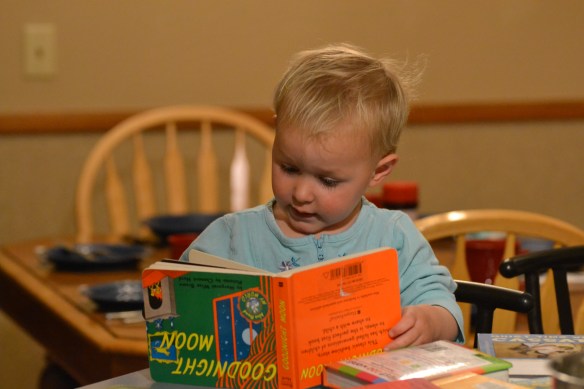
Photograph is my granddaughter, reading Goodnight Moon to me.

Reclaiming Conversation

DSC_4015

Sherry Turkle’s Reclaiming Conversation was one of the most important books I read in 2015. Her book distilled to three sentences:

This is our paradox.
When we are apart: hypervigilance.
When we are together: inattention.

I believe it. Sherry’d make a point and I was a one-woman gospel choir, swaying and amening. “Solitude is important,” she calls and my response is Yes, sister. “Support unitasking and deep reading.” Deeeeeep reading, I sing. “Continuous partial attention is the new normal.” Say it isn’t so, I moan. “Make sacred spaces where no devices intrude.”  Not in the kitchen, not in the bedroom, not even in the car, I harmonize.

What Ms. Turkle did not say, however, has reverberated through my brain. She never framed it this way, but I think we are simply selfish. We have zero tolerance for boredom, for discomfort, for anything unpleasant. We now have devices that we can take refuge in rather than discipline ourselves to wait through the boring bits.

Last May, my niece graduated from a large university in California. I’ve been to a handful of college graduations recently, but I’ve never seen the rudeness that I witnessed that morning. Rudeness I participated in.

A thousand names were called and a thousand graduates walked across the stage to shake the Dean’s hand. People pulled out their phones; some teachers graded papers. I, cough cough, tried to get my seating on Southwest Airlines, even while part of me looked upon myself in astonishment.  My husband assumed the tilted coffin pose and took a nap. This wouldn’t have happened ten years ago.

Conversations take work. Conversations take energy. Conversation require me to reveal myself to my friend.

Some of the wealthiest moments of my life have been three recent reunions with childhood girlfriends. We spend a weekend practically device-free. We don’t watch movies. We talk. We listen. We experience deep, focused conversation. (Once, a friend apologized for keeping her phone nearby. She hadn’t heard from her daughter who was living across the world in a country buffeted by a typhoon!) The time and attention is a treasure, all the more so because of its rarity.

Turkle has two time-honored commands to help us out of this murky mess.

Use your words. (what she told her young daughter)
Look at me when you speak to me. (what Grandma always said)

Come Rain or Come Shine, The Book

I once prayed, Lord, please let Jan Karon live long enough to get Dooley and Lace married. The answer to that prayer was a whelming flood; I started crying on page 32 and sniffed and sobbed my way—punctuated by laughs—to the final page. Redemption, benediction, healing, holy amazement, connection. Reading this brings the satisfaction of resolution, the “two bits” after the “shave and a haircut”.

Weddings are my thing. Joyful solemnity, giving, sharing, joining, celebrating, laughing, crying, hugging, singing, dancing, rejoicing, thanksgiving. I love a good wedding and I’ve been to a few profoundly remarkable ones.

There was joy in the air; you could sniff it as plain as new-cut hay.

The focus of Come Rain or Come Shineis on the month before and the day of The Big Knot. Dooley and Lace want a small, intimate ceremony at Meadowgate Farm. Karon enjoys poking fun at the myth of a ‘simple country wedding.’  There are obstacles and annoyances. There are secrets and surprises. There is the unrelenting pressure of diminishing time to get the place wedding-ready.

DSC_0964The main character is Lace Harper. Her journals reveal her heart, her hopes, her fears, her loves. She wants to find a wedding dress for under $100; she is thankful for the callouses which document her hard work. She wants to get it—this whole starting a new family—right. I appreciated the ways Dooley and Lace honor the memory of Sadie Baxter (benefactor) and Russell Jacks (Dooley’s grandpa) in their wedding. Fun stuff: there is a Pinterest page for Lace Harper’s wedding!

Jan Karon and Wendell Berry are both skilled at portraying a community where giving, helping, and reciprocating are the norm. In their novels they don’t cover up the hurts, the anger, the tensions, the troubles. Weddings can be awkward with family drama. Karon handles the presence of Dooley’s birth mom, Pauline Leeper, in the same room as his siblings with utmost care. There is no easy resolution, no instant reconciliation, just baby steps, tiny beginnings towards the on-ramp to healing.

I connected with this book in many ways. This summer we went to a small, simple country wedding (see picture above) in a pasture. My son and daughter-in-law have a wind storm and fallen trees in their wedding story, too. I know what it is to be gob-smacked by blessings, reduced to silent tears of joy. Live music is the best for dancing the night away. I love the song in the title.

‘Why can’t life always be lived under the stars,’ she said, ‘with great music and family and friends?’

♪♫♪ Come Rain or Come Shine ♪♫♪ is a standard (music by Harold Arlen, lyrics Johnny Mercer) that has been covered by scores of recording artists. I used it ten years ago when I made a PowerPoint slideshow for Curt’s folks’ 50th wedding anniversary. In the course of my work, I listened to B.B. King and Eric Clapton on endless repetition. And I can honestly say, I never tired of it. But there are so many recordings of this song, that I put my listening of them in this post.

This book.

I finished it last night. I started it again this morning.

And Some More Bookish Questions

DSC_0245Sherry at Semicolon posted this fun meme this morning. Here are my answers (today).

1. What propelled your love affair with books — any particular title or a moment?
I grew up in a book-saturated home: books in every room, books in front of every face; never a day without books. Books were not allowed at the dinner table, but most of us tried at one time to hold a compelling book in our lap, under the table, and keep reading. It was inconceivable to grew up a Harper and not love books.

2. Which fictional character would you like to be friends with and why?
Laura Ingalls Wilder was my first fixation and she remains with me, especially at this time of the year. Yesterday, I was making a year’s supply of fire starters (dryer lint stuffed into egg cartons with melted wax poured over it) and thought of Pa and Ma’s preparations for winter. (OK, I missed the word fictional…give me a pass, please?)

DSC_65453. Do you write your name on your books or use bookplates?
All but the best books I read are on a rotation: in the house, read, out of the house. When I write my name I always write it in pencil. I’ve found that the book I love today and think I’ll keep forever might get the boot in ten years.

4. What was your favourite book read this year?
Carol Montparker’s memoir, A Pianist’s Landscape. Here’s a sample. I think an essential mark of an artist is how he or she recovers from a mishap.

5. If you could read in another language, which language would you choose?
Not just one. I’m starting to twitch from the demands of decisions. I’d love to read my father’s Greek New Testament with the cranberry cover. I’d love to read the Latin books on my shelf. I’d swoon if I could read a French book aloud with exquisite pronunciation. And why not Russian? Or Arabic? Or Portuguese?

6. Name a book that made you both laugh and cry.
Jan Karon’s return to Mitford produced loud guffaw-laughs, ugly cries, and everything in between.

7. Share with us your favourite poem.
That f word is making me crazy, even with the charming British spelling. Gerard Manley Hopkins Pied Beauty. Billy Collins The Lanyard . To snort with laughter at his Litany….And you are certainly not the pine-scented air. There is just no way that you are the pine-scented air. There is Wendell Berry’s Manifesto with those last two words: Practice resurrection.

But in this moment, my mind goes to Michelangelo’s LXXIII.

Well-nigh the voyage now is overpast,
And my frail bark, through troubled seas and rude,
Draws near that common haven where at last
Of every action, be it evil or good,
Must due account be rendered. Well I know
How vain will then appear that favoured art,
Sole Idol long and Monarch of my heart,
For all is vain that man desires below.
And now remorseful thoughts the past upbraid,
And fear of twofold death my soul alarms,
That which must come, and that beyond the grave:
Picture and Sculpture lose their feeble charms,
And to that Love Divine I turn for aid,
Who from the Cross extends his arms to save.

I love that old translation, but I have a newer one tucked into the page. Which one do you prefer?

Unburdened by the body’s fierce demands,
And now at last released from my frail boat,
Dear God, I put myself into your hands;

Smooth the rough waves on which my ship must float.

The thorns, the nails, the wounds in both your palms,
The gentleness, the pity on your face—
For great repentance, these have promised grace.
My soul will find salvation in your arms.

And let not justice only fill your eyes,
But mercy too. Oh temper your severe
Judgment with tenderness, relieve my burden.

Let your own blood remove my faults and clear
My guilt, and let your grace so strongly rise
That I am granted an entire pardon.

Please join me and link to your answers (or just write them there) in the comments. If your time is limited, take just one question.

A Lamentation of Abandonment

DSC_0375I’ve no background. I’ve been peeled off my background.
I’ve been attached to another background like a cut-out.

I had never heard of Operation Pedro Pan — 14,000 unaccompanied minors were flown out of Cuba to Miami in 1960-62, dispatched by their parents in order to escape life under a dictator, creating a Cuban Diaspora. Carlos Eire, one of the children, writes about it in his memoir, quoted above, Waiting for Snow in Havana.

I had never heard the phrase “Raj Orphan” — English children born in the outer edges of the British Empire and shipped to England for education around the age of five years—before I read Old Filth.

The displaced orphan, a stock character in literature. One boy raised in Cuba until he was exiled in American at eleven; the other fictional boy, Eddie Feathers (FILTH = Failed in London Try Hong Kong), was born in Malaya—his mother died at his birth—, raised by an native family until he was five, then sent to North Wales to a couple who fostered on the cheap.

Both are compelling stories that snagged me like barbed wire. Both are a lamentation of abandonment. This will sound strange, but negligence of one’s children in order to serve a higher cause is a theme that holds my attention.

DSC_0368Midway through the second chapter of Waiting for SnowI needed to know who constructed such delectable sentences. Ta dah! He is a professor of History and Religious Studies at Yale, specializing in late medieval and early modern Europe. Phrases like the tropical sun knifed through the gaps in the wooden shutters; a Mariana Trench of the soul; and a suit as wrinkled as his soul stirred my appreciation. And this:

I have always inhaled with abandon. The world is so full of wonderful smells. Roasted peanuts. Olives. Popcorn. Bus exhaust. Turpentine. Kerosene. Talcum powder. Gasoline. New tires. Glue. Shoe polish. Bubblegum wrappers. Gunpowder. Thinly sliced potatoes and hot dogs frying in olive oil. When I matured, the strangest things began to emit pleasing fumes too. Freshly baked bread. Single-malt Scotch whiskey. Cigars. Roses. Bordeaux wines. New wallets. New cars. The back of a woman’s knee after a hot bath. Fumes are the fifth dimension, I’m convinced.

He tells the story of going to a boy’s birthday party. The parents, owners of a sugar plantation, put on a lavish extravaganza. Carlos brought a last-minute birthday gift, something taken from the house and quickly wrapped.

A foretaste, I hope, of The Final Judgment, the ultimate party, when we show up bearing crappy gifts and, instead of being tossed out on our ear, to wail and gnash our teeth, are instead overwhelmed with superabundant largesse, with eternal gifts beyond our wildest dreams.

I’ve never been to a Catholic confession, but I confess the same pride:

What a neat little list of sins I had. But I don’t think pride was anywhere on that list, not even in disguise. Just the opposite, in fact: I was so, so proud of the list.

Carlos Eire became my focus. I ordered the second memoir he wrote, Learning to Die in Miami: Confessions of a Refugee Boy. I typed “Carlos Eire” into YouTube and started marathon listening. I added him to my mental list of authors I would unhesitatingly invite over for dinner and conversation. I started to care about Cuba.

Old Filthcarried the weight of sadness, but I viewed it from a distance. There were a few narrative elements that made me grimace and quickly turn the page. Gardam deftly encapsulates the abandonment in one short paragraph when Eddie is five.

“Take this. It was your mother’s.”
“Does Ada [the native girl that raised him] say I can?”
“I say you can. I am your father.”
“You can’t be,” said Edward.
Silence fell and Auntie May’s hands began to shake.
The servants were listening.
“And why not?”
“Because you’ve been here all the time without me.”

Eddie spends his holidays with Jack, a boarding school friend, and is considered a member of Jack’s family; but when they face a crisis their circle closes and Eddie is again excluded.

It turns out that Rudyard Kipling was a Raj Orphan. Now I want to read a RY biography with that perspective in mind. I may or may not read the other two books of Jane Gardam’s Old Filth trilogy.


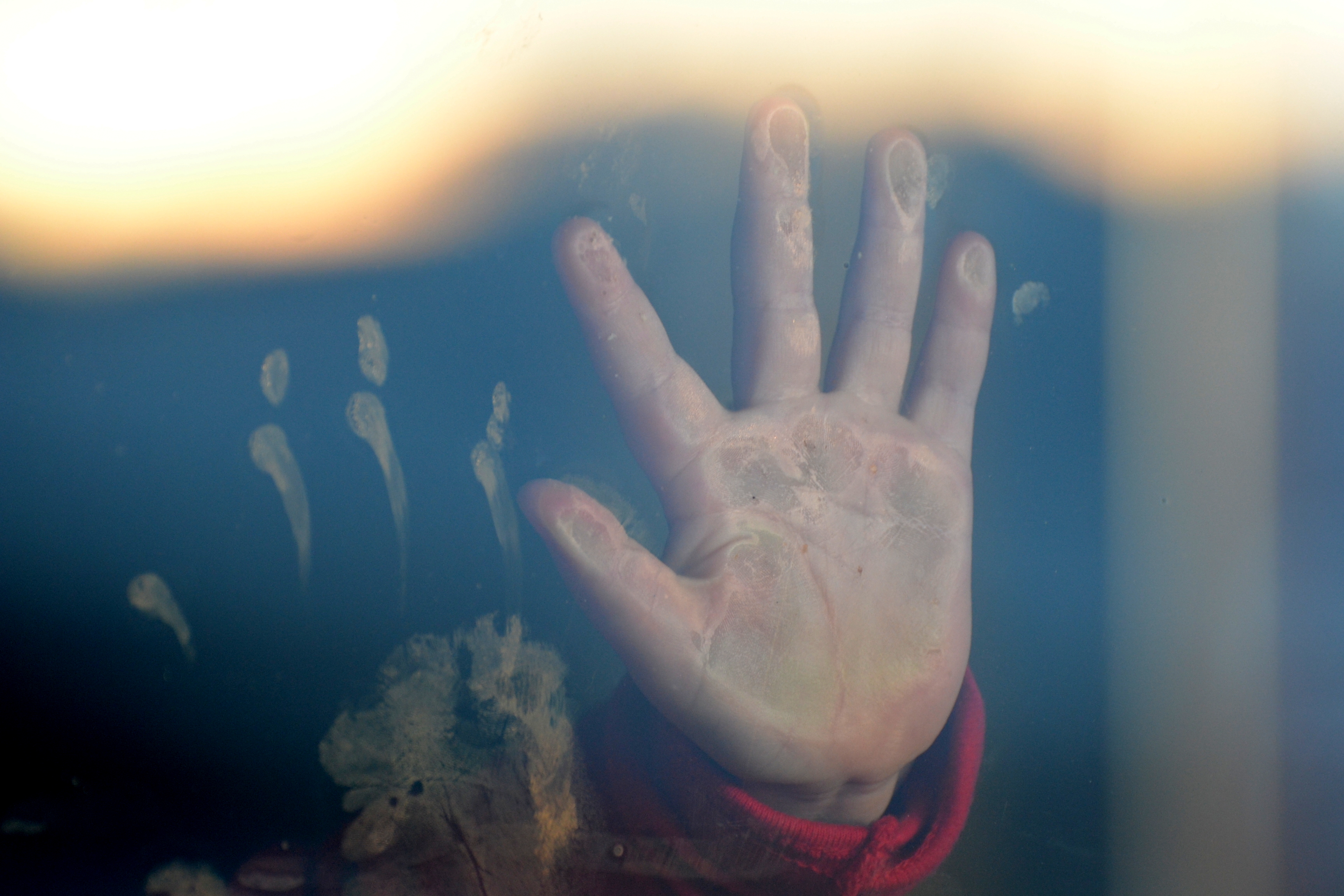
*the well-loved boy in my photo is not orphaned; used with parents’ permission