5 Great Endings, 3 That Didn’t Satisfy

I loved Ivan Doig’s The Whistling Season until I got to the last chapter. The day I finished the book was a grief-stacking day. One grief added to others; and then another. By dinner I was a throat-lumpy, care-worn woman in need of a good gully-washing downpour.

Sitting on the terrace, I explained entire plot structure of Doig’s book and why I was indignant with the ending. My husband is used to these book-spoutings. Curt cocked an eyebrow, and said, “So you wanted it to end in heaven, and instead it ended on earth?”

“But [character x] was flawed and there was no foreshadowing of that. I found it inconsistent. I felt betrayed.” Seriously? Now I’m grieving over a fictional character who misbehaved?

What makes a good ending good? Satisfying? Must every story have a happy ending? Is a fitting resolution believable? How wearisome would be a library filled with happy books, devoid of pain. There is the tyranny of perfect heroes. Often it is the response to the crisis that satisfies or disappoints.

Much to mull over…

Here are some books whose endings satisfied me:

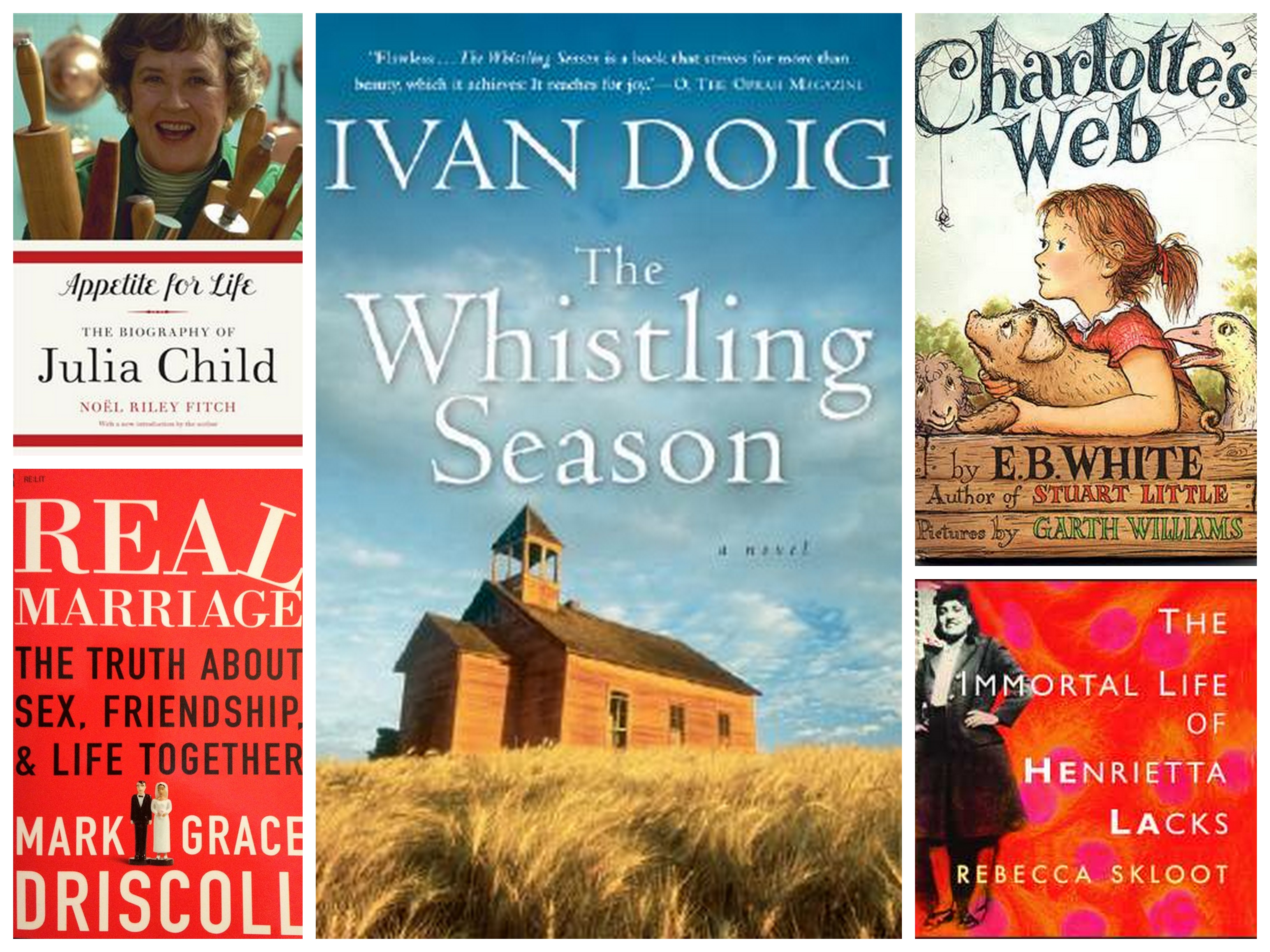
1. Charlotte’s WebAs a child I was appalled that Charlotte died. And I turned my back on the book for decades. I now admire the way E.B. White acknowledges Wilbur’s loss while maintaining his joy. The last paragraph:

Wilbur never forgot Charlotte. Although he loved her children and grandchildren dearly, none of the new spiders ever quite took her place in his heart. She was in a class by herself. It is not often that someone comes along who is a true friend and a good writer. Charlotte was both.

2. Light from HeavenJan Karon concludes the ninth title in the Mitford books. There was a diaspora, a scattering, and each book reattaches one section. I wasn’t sure if Jan Karon would withhold the last piece of the puzzle out or snap it into place. At the end there is an unexpected knock at the door.

His hand trembled as he reached out to grasp the hand that reached for his. There was a kind of spark, something electric, as their palms met, flesh to flesh. “We’ve been expecting you.”

3. Little Britches and Man of the FamilyRalph Moody’s endings are velcroed on my mind, twenty years after I read these books aloud to my boys. The family has come through a crisis; the response of the characters ends the books.

4. Lark Rise to CandlefordFlora Thompson’s Lark Rise does not end happily. So powerful, so unexpected, so taut is the final paragraph. It doesn’t have to be happy. But it is fitting.

5. To Kill a MockingbirdThe books ends on the far side of a catastrophe with Atticus on watch being as decent and dependable as every father should be.

And some not-so-satisfying conclusions. These are not books I disliked; it was the ending that disappointed. It would be easy to fill of list of poorly written books, trite and facile fiction. But I could only think of three books which I liked…until they ended.

1. The Whistling Season Someone said about this one, they “were waiting for the shoe to drop.” It ends with a thirteen year old boy confronting adults and then covering up their past. I didn’t like the boy put in the position of a judge and keeping secrets from his father.

2. The Elegance of the Hedgehog The ending seemed very abrupt. It sideswiped me. I couldn’t get over it. This? Is over, like this? It’s hard to explain without explaining.

3. The Count of Monte CristoI never liked that the the Count sails into the horizon at the end. More abruptness.

What endings have bothered you? Which ones were a masterpiece, and why?
Pause for Tea

DSC_3929

This is my new favorite way to make iced tea.
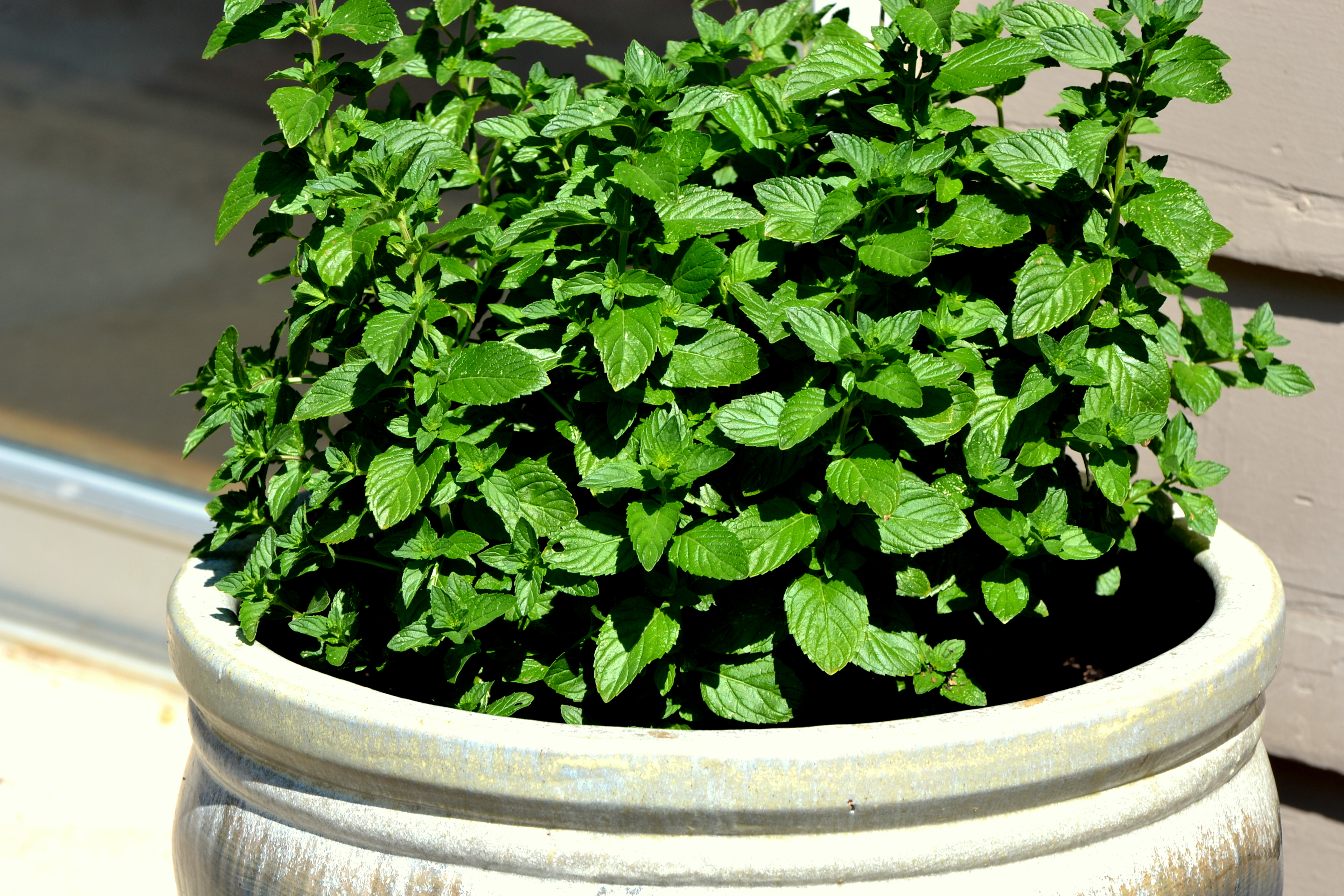
It begins by planting some mint by my back door.
My daughter-in-law cautioned me to keep it in a pot.

DSC_3932

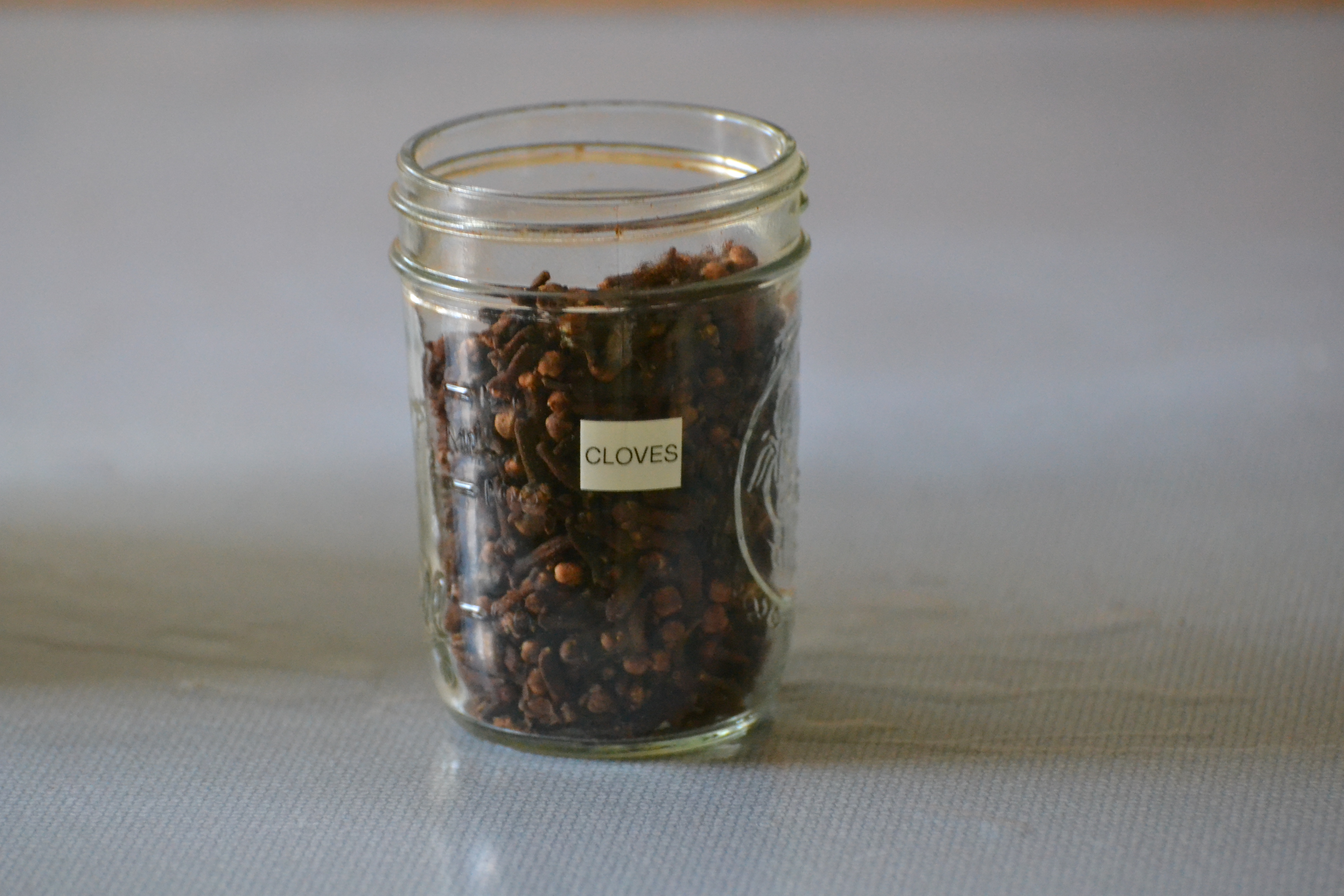
It also involves a handful of cloves.

DSC_3921

This jar holds 1/2 gallon. I put 8 regular tea bags or 3 family-sized bags in the jar,
along with a sprig of mint, and a handful of cloves.
Lipton is not my favorite tea, but I found some in my cupboard
and one of my life’s mottos is Use It Up!

DSC_3931

Pour a quart of boiling water into jar. Let it sit for 15 minutes.
It will look as dark as coffee.
Remove mint and tea bags (I snag the cloves when I’m drinking the tea.)
Sweeten to your taste (1/4 cup sugar seems perfect to me).
Fill the jar with ice or water, chill, and drink.

Optional: add lemon wedges

Gorging on gorgeous phrases

…capacity for conjecture…
…this barbwire twist of my career…
…clamped to a book…
…a barely audible aria of whistling…
…bridal train of dust…
…a granary of learning…
…a dervish of vocabulary…
…toxin at one end and a tocsin at the other…
…the specter of the inspector…
…lack of budge in budget…
…our impatient patient…
…trying to be harmonic, not philharmonic…

I’m slowing my pace, enjoying the feast.

What’s On Your Nightstand?

What's On Your Nightstand

It’s a tottering, two-pile disaster. But I love nightstands cluttered with books. To take an unread book off the pile just seems clinical and cold. I will get to it…sometime!

My nose is in Ivan Doig’s The Whistling Season, which I liken to a bowl of home-made ice cream on a hot day. I haven’t finished it, and I’ve already ordered a second copy to share with others. I am new to Ivan Doig, but his prose has me promising myself that I will seek out more.  My sister-in-law recommended this, calling Doig “the Wendell Berry of Montana”. Classroom dynamics in a one-room school house will snag anyone interested in education. The private Latin lessons give Doig a chance to explain word origins to the reader in a winsome manner. Yes, yes, and yes.

When I’m doing chores around the house, I’m listening to Noel Riley Fitch’s Appetite for Life: The Biography of Julia Child. I’ve gone on a Julia jag since I saw Julie and Julia. It’s not as good as My Life in France, but it’s a companionable boost to my bi-monthly ironing orgy, but I think the print version wouldn’t keep my interest enough.

Downloads2

My husband and I commute two hours/week, splitting our car time between talking through our schedule, airing our gripes, listening to music, audio magazines or audio books. We started The Immortal Life of Henrietta Lacks, bowled over by the first CD. Soon, I drove 12 hours, finished it, betraying our tacit agreement to share the book. This audio version is dynamic, in my list of ten best audio book performances. Skloot mixes scientific explanation with human interest, a compelling combination.

At the end of the day I was reading aloud to my husband Mark and Grace Driscoll’s book, Real Marriage, but we’ve had a lot of company lately, and have stayed up late talking, falling into bed with no thought of reading. I’ll comment more about it when we’ve finished.

Reading Charlotte’s Web aloud to my 4½ year old grandson in four days reminded me of the C.S. Lewis’ quote:

No book is really worth reading at the age of ten which is not equally – and often far more – worth reading at the age of fifty and beyond.

It was so fun to “get” some of the nuggets E.B. White dropped into the story line. It was a stretch for Noah, his first chapter book. Illustrations on every page would have helped. This classic is definitely worth reading again, whether you have a child by your side or not.

Lark Rise to Candleford

Image

Lark Rise to Candleford is a charming BBC series depicting life in late nineteenth century England. It offers a nostalgic view of a life uncluttered by modern technology and conveniences. It plays the ancient contrast of the agricultural hamlet of Lark Rise versus the merchant town life of Candleford. Visually rich and well written, it is cozy entertainment.

Lark Rise to Candleford is a trilogy written by Flora Thomson, (loosely) the basis of the BBC series. Without a narrative arch, it is a portrait of a culture. Not a novel, it is a memoir written in the third person. The overwhelming motif is change, how current life (1930’s) is so different from the ‘eighties (1880’s).

Watch the series first (how seldom I say that) and let the characters (Laura, ‘Par’, ‘Mar’, Alf, Queenie, Dorcas Lane) and countryside seep into your bones. If your curiosity isn’t piqued by the films you may not stick with the books. Enjoy the trilogy for its own merits. Par and Mar are winsome in the fictionalized movies; it was disappointing to read Flora’s realistic characterizations in the book.

After working in the pure cold air of the fields all day, the men found it comforting to be met by, and wrapped round in, an atmosphere of chimney-smoke and bacon and cabbage cooking; to sink into ‘feyther’s chair’ by the hearth, draw off heavy, mud-caked boots, take the latest baby on their knee and sip strong, sweet tea while ‘our Mum’ dished up the tea-supper.

You will enjoy reading about:
— Victorian privies with a wall hanging ‘Thou God seest me’
— how poor kids moisten mud pies
— outdoor singing during work being the norm
— wisps of mist floating over the ploughed fields
— England’s women all gave a penny for Queen Victoria’s Jubilee
— Laura’s need to read (Waverly, Cranford, Dickens, Trollope, Austen)
— superstitious remedies (black slug for warts, fried mice for bedwetting)
— origin of ‘a pretty kettle of fish’ and ‘journeyman’
— the all-conquering song of the ‘nineties: Ta-ra-ra-BOOM-de-ay!

Books can enliven unfamiliar times and places. Honestly, the end of the nineteenth century seems so far back.

Or is it? Lark Rise is a few years later than Little House in the Big Woods. There are still some living who are only one or two generations removed from pre-WWI times. My grandpa was born in 1889.

If you read through the first book, Lark Rise, you will get to experience one of the best last sentences of a book. The final paragraph is a masterpiece. The magnificent restraint, the absence of foreshadowing until the final word—a gut puncher—makes this book well worth reading. Its potency is in surprise: please don’t peek!

Well Come

DSC_3218I’m in the process of moving my blog, Magistra Mater, from Xanga to WordPress. I devour words, so I’m tickled that the word ‘word’ made it into the name of the platform. My Xanga posts from  2005 – 2013 have migrated. Glory! It’s such a relief to be able to revisit that season of my life.

Hey! I can change my blog name to something with a nicer mouth feel. A Living Pencil.

Mother Theresa is reported to have said, “I am a living pencil in the hand of a living God who is sending a love letter to the world.”

There is much to learn. That’s good: I’m always touting the joys of lifetime learning.

And a growing excitement is incubating about writing more regularly.

Well, come along with me! Welcome!

Pachelbel’s Canon


[This post will alienate most of you, my dear readers. Be warned.]

Two weeks ago I played the piano for dear Anna’s wedding. Anna’s uncle and aunt, extraordinary musicians from Georgia, played violins. We had a sort of impromptu string trio. As we were reviewing music for the prelude, Uncle John, fiddling around, played the familiar phrase that begins Pachelbel’s Canon. I shuddered. Fixing a glare, pointing my index finger, I proclaimed “This will be a Pachelbel Free Wedding!!”

For a moment I rested my face in my hands.

“I’m sorry. It’s just so overdone…”  I barely knew these people and here I was issuing commands.

John grinned. “Why do you think we know it by heart?”

“So you don’t really want to play it?”

“No.” One syllable conveyed his meaning, make no mistake.

I exhaled and sighed at the same time.  “We are on the same side of the river?”

“Oh yes.”


Pachelbel’s Canon in D is the original three chord, twenty-two verse ditty. Exquisite the first seventy-three times you hear it. The seventy-fourth time, however, it loses its charm. Wedding musicians are bone weary of this piece. How many bridesmaids in the world have hesitation-stepped down an aisle to Canon in D? Somewhere beyond twenty-six million is my guess.

It’s time to stop the madness, people. If the bride or groom request Pachelbel, I will gladly (and sweetly!) play Pachelbel. But when I am asked to choose the music, it is good-bye dear Johann, I wish you well.

Back in the day, Paul Stookey’s Wedding Song was the rage. Practically a one note, one chord, monoculture of a song. Pick a note, a low note you like, and sing it three times to the words “There is love.” Then repeat the same note with “There is love.” Three same notes yet again to make sure the audience knows there is love. It finally fell out of favor. It has been a happy twenty-five years since I’ve heard that gem at a wedding.

It’s time to give Pachelbel’s Canon a well-deserved rest. Let our great-grandchildren rediscover it.


John, Rebecca and I played a postlude until the last row of guests were leaving their seats.

“It’s a wrap!” I gratefully smiled. It’s always a relief to not have muffed it up.

In muted tones, with a twinkle in his eye, John played the opening notes of Pachelbel’s Canon.

I just laughed.

Raise Your Joys and Triumphs High


So profound was Anna and Robert’s wedding that I can’t stop pondering its potent magic.

The families supporting and standing behind Robert and Anna are a fortress of fidelity. Three sets of grandparents sojourned to our beautiful Shire to witness the vows. I’m guessing around 150 years of marital faithfulness are represented in their marriages. Winsome, dignified, charming. These gentle folk are who I want to be when I grow up. Their flame is still burning, their love abides, they joyfully treasure each other in the sunset years. Clearly, their children and grandchildren adore them, rendering preference and respect. It was a comfort to move among these well-oiled relationships.


Also behind the bride and groom are delighted parents, grateful to be in this moment, so proud of their child and so pleased with his/her choice. Parents who have worked diligently to arrive at this junction, who rejoice to see maturity and beauty in their children.

Beside Robert and Anna are ten siblings (plus four added by marriage). Their devotion is palpable. Their toasts were deep with emotion involving some long, very throat-lumpish pauses. There’s a shadow of grief—the tiny sorrow of separation and change—the kind of shadow that with its shades highlights the bright joy. You see, these dear ones are cherished and respected. And yet, there was no sense of you-aren’t-good-enough-for-my-sister (daughter, brother, son). 

Robert and Anna are both glorious; a glory that comes from all directions: inward, upward, downward, outward.   


     Photo credit: Rebecca James

Each family’s culture was represented. Many of the Taylor clan wore salwar kurtas to the rehearsal to reflect their Indian heritage. The Hurley appreciation of excellent music was evident with Uncle John and Aunt Rebecca’s violin contributions to the music and in the congregational hymn We Are God’s People, the processional in other Hurley weddings. The Callihan rehearsal dinner had cowboy boots as centerpieces and barbed wire on the serving table. Callihans enjoy dramatic productions: the guys wrote and produced a skit for the evening’s entertainment.


It is deliciously simple and profoundly mysterious, this love between Robert and Anna. Grounded in faith, expressed in humility, bounded by restraint, Christ-centered, other-oriented, staggering in its beauty, strong as death. They are not perfect, but there is an excellence in their love that called for a robust celebration: navy dresses with daffodil yellow shoes, bold bright flowers, Anna’s entrance to For All the Saints, a homily focused on dancing together, a feast of home-made pies, a Father-Daughter led Grand March, Robert and Anna’s first dance to Eric Bibb’s Gratitude, and their departure as we sang the Lutkin Benediction. It was good. It was fitting. It was full of glory.


As Robert and Anna danced the next generation looked on, hopes and dreams germinating.


My account of Robert’s sister’s wedding

Robert’s dad, Wes Callihan, on this wedding


What Is Good?


My husband and I are separating today. I’m headed “up the branch” to celebrate dear Anna’s wedding to Robert. Curt leaves tomorrow for Washington to celebrate dear Lori’s wedding to Gunnar on the same day. These brides are treasures to us: radiant, glorious jewels. I love to witness a wedding with my hand firmly gripped by Curt’s, but I am up to the rim with joy that we can each take part in these concurrent weddings.

When I need only a few minutes of reading material, I often go to Alphabet Juice for a quick fix. On this double celebration week, I was astonished to discover what “good” means.

from root ghedhto unite, join, fit. Other derivatives: together, from the Old English togaedere, from the Germanic gaduri, in a body; gather, from the Old English gad(e)rian, from the Germanic gaduron, to come or bring together.

When we hear the words, “We are gathered here today to witness the joining of two lives,” it will all be good.