15 New Words

DSC_6550

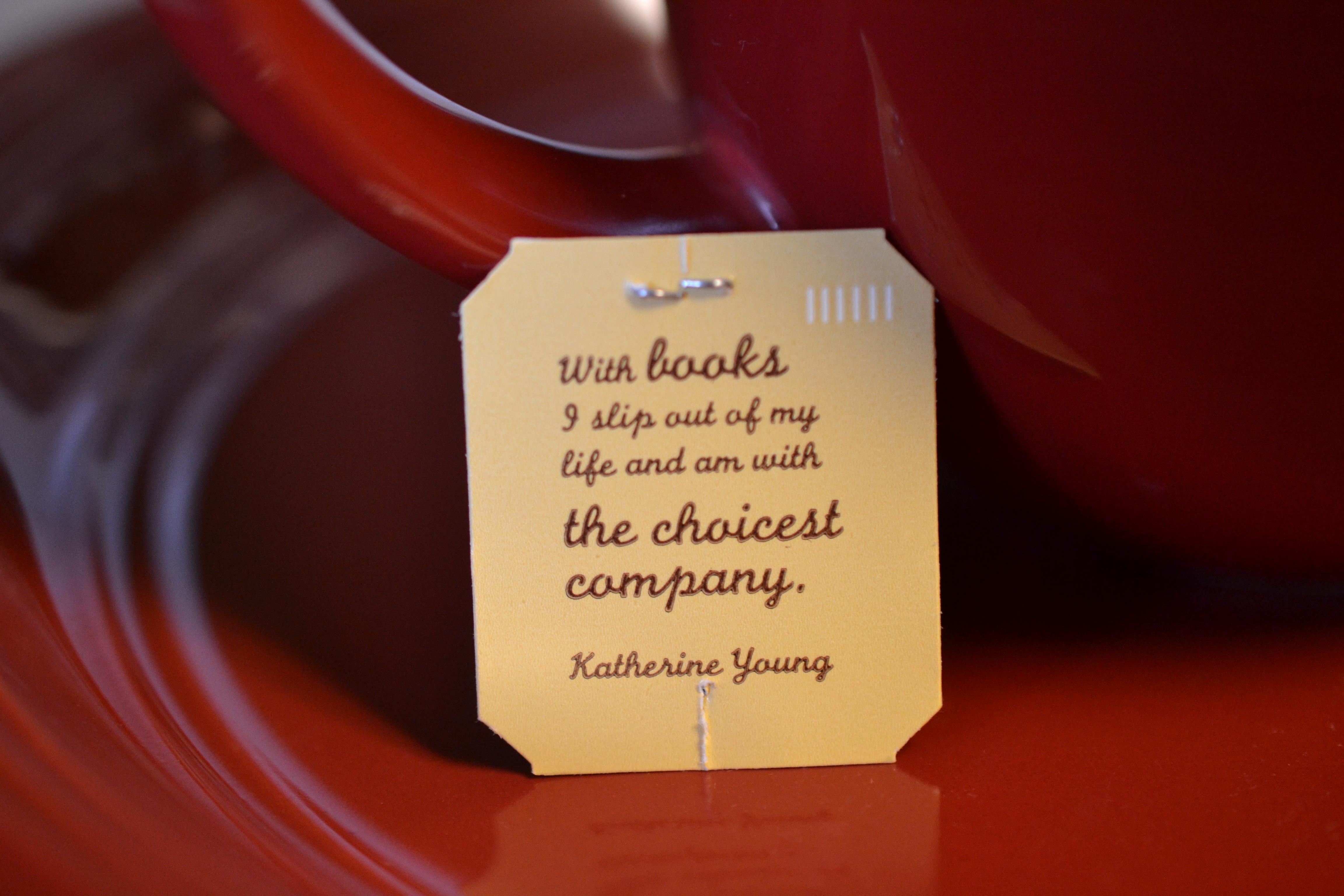
In writing I am seduced by the sound of words and by the interaction of their sound and sense.

— Barbara Tuchman in Practicing History

I read all books—even borrowed ones—with a soft-leaded pencil in my hand. When I come across a word I don’t know I put a √ in the margin. When I copy quotes into my journal, I add the words I’ve learned. I also add to my collection of be– words (beguiled, bewhiskered, betake, etc.), but that’s a story for another day.

Here are a few of my favorite 2013 additions to my treasure chest of words:

taradiddles — lies
shrammed — benumbed with cold
virago — loud, overbearing woman

flibbertigibbet — silly, flighty person
semaphores — visual signaling with flags or light
boulevardier — man who strolls on Paris boulevard

billyho — unimaginable large amount
fortnight — contraction for “fourteen nights”
carnival = carne vale = goodbye meat

aptronymic — suitably named
debouched — to cause to emerge
snuggery — a snug, cozy place

smeddum — spirit, energy, determination
plaint — expression of grief
puling — whining, whimpering, crying plaintively

A Kid’s Book About Venezuela

I bought Roberto’s Trip to the Top because the authors are Katherine Paterson’s husband and son. And I’m happy that I did.

Roberto is a young boy living in Caracas, Venezuela. He is excited to ride up a cable car to the top of a mountain and hike around with his father. The story is told in English with Spanish words sprinkled on each page. An alert reader will understand the Spanish by the context, but there is also a glossary in back.

I like the way the authors present problems in the trip, letting them exist without facile solutions. Roberto’s disappointments are acknowledged, but he has to deal with them. It was refreshing to read about a hike along a risky path without guardrails. I think I like this book because its tone matches my parenting style.

Renalto Arlacao’s illustrations are vivid and engaging.

My only reservation is that I don’t know if the book will hold a child’s interest through multiple readings. It would be fun to quiz a primary child on the Spanish words. What does barrio mean? It is a good book for exposing children to other cultures and a few words of Spanish.

This post contains Amazon affiliate links.

Reading Year in Retrospect

DSC_1833“I am an inveterate browser of people’s bookshelves, always curious to see what other people have been reading, and which books they choose to display. but I am equally curious about the manner in which they array them. Are their books neatly aligned, like the leatherbound books in the Levenger catalog, or do they teeter on the shelf at odd angles?”  — David Levy in Scrolling Forward: Making Sense of Documents in the Digital AgeI love looking back at my reading year, and yet I also shrink from the raised eyebrow of my inner critic. Deciding on categories and distributing my titles in those gives the same thrill that I get in organizing my books. This is my reading year in retrospect.

My own Book of the Year? It’s a tie! N.D. Wilson’s Death by Living: Life Is Meant to Be Spent was both the slowest and most profound read. I read it aloud to my husband a page or even a paragraph at a time. But reading through Jacques Barzun’s From Dawn to Decadence was also deeply satisfying. (confession: I have 60 pages to finish)

Africa
This Rich & Wondrous Earth Linda Burklin (life in boarding school)
When a Crocodile Eats the SunPeter Godwin (living in Zimbabwe)
The Elephant Whisperer: My Life with the Herd in the African Wild Lawrence Anthony (animal conservation)

British
Over the Gate Miss Read (cozy read)
Lark Rise to Candleford(trilogy) Flora Thompson (a portrait of a culture)
Lady Anna Anthony Trollope (novel of a marriage)
Cousin Henry Anthony Trollope (a study of a guilty conscience)
Tyler’s Row Miss Read (not my favorite Miss Read)

Catholic
The World, the Flesh, and Father Smith Bruce Marshall (story of a Scottish Priest)
Father Hilary’s HolidayBruce Marshall (priest gets involved in political intrigue)

Christian
Death by Living N.D. Wilson (memoir/family heritage/travelogue/random thoughts)
Life Together: The Classic Exploration of Faith in Community Dietrich Bonhoeffer (crammed with good stuff)
The Secret Thoughts of an Unlikely Convert Rosaria Butterfield (unusual story)

Culture
From Dawn to Decadence Jacques Barzun (500 years of cultural history, EXCELLENT) Scrolling Forward David Levy (e-book or bound book debate, written a decade ago)

Early American
Rip Van Winkle & Other Stories Washington Irving (some classics improve as we age)

Family
Fit to Burst : Abundance, Mayhem, and the Joys of Motherhood Rachel Jancovik (wise)
Real Marriage Mark and Grace Driscoll (yes and no: all the stats got old)

French
Lest Innocent Blood Be Shed Philip Hallie (5K Jews saved by people of Le Chambon)
The Elegance of the Hedgehog Muriel Barbery (postmodern novel, quotable sections)

History
First Family: Abigail and John Adams Joseph Ellis (very enjoyable read)

Kid Lit
Anne of Green Gables L.M. Montgomery (priceless)
Anne of Avonlea LMM (sad to lose Matthew Cuthbert)
Anne of the Island LMM (away at school)
Anne of Windy Poplars LMM (winning over the Pringles and Katherine Brooke)
Anne’s House of Dreams LMM (early marriage, bereavement)
Anne of Ingleside LMM (a houseful of kids and dear Susan)
Rainbow Valley LMM (add the Meredith kids to the Blythes: delightful)
Rilla of Ingleside LMM (I love Rilla; more Susan; a great view of WWI at home)
Chronicles of Avonlea LMM (12 short stories, Anne is just a cameo)
Further Chronicles of Avonlea LMM (includes a delicious story of a revival meeting)
The Story Girl LMM (she can make a story reciting the multipication tables)
The Golden Road LMM (a hilarious mistaken identity story)
Kilmeny of the Orchard LMM (a mute girl plays the violin)
Emily of New Moon LMM (appeals to all aspiring writers)
Emily Climbs LMM (word lovers will love Emily)
Emily’s Quest LMM (overcoming obstacles to writing)
The Blythes are Quoted LMM (more short stories)
Charlotte’s Web E.B. White, (classic, test-drove with a grandson)
Island Magic Elizabeth Goudge (Guernsey family, classic Goudge)

Memoir/Biography
The Story of the Trapp Family Singers Maria Augusta Trapp (must read for S o M fans)
God’s Arms Around Us William Moule (heart-pounding tale of family in WW2 Philippines)
Thinking in Pictures: My Life with Autism Temple Grandin (she translates autism)
The End of Your Life Book Club Will Schwalbe (terminally ill mom and son read books)
A Little Moule History William Moule (life of a vagabond adventurer)
Appetite for Life Noel Riley Fitch (bio of Julia Child)
The Bookseller of Kabul Asne Seierstad (daily life in Afghanistan)
The Alpine Path LMM (frustrating in its brevity)

Mystery
The Sweetness at the Bottom of the Pie Alan Bradley (I ♥ Flavia de Luce)
Speaking from Among the Bones Alan Bradley (another Flavia book)
Chop Shop Tim Downs (Bug Man is a forensic entomologist)
First the Dead Tim Downs (almost had a heart attack reading this)
Less than Dead Tim Downs (difficulty breathing while reading this thriller)

Plays
Twelfth Night W. Shakespeare (mistaken identities)
The Tempest Shakespeare (full fathom five thy father lies)
The Comedy of Errors Shakespeare (TWO sets of identical twins)

Recovery
Little Black Sheep Ashley Cleveland (the gift of willingness)
Sober Mercies: How Love Caught Up with a Christian Drunk Heather Kopp (story of addiction)

Science
The Immortal Life of Henrietta Lacks Rebecca Skloot (spellbinding story of HeLa cells)

TV Reading (one-night read without substance)
A Lancaster County Christmas Suzanne Woods Fisher (English stranded with Amish)

Travel
Shadow of the Silk Road Colin Thubron (China-Turkey by one of my fave travel writers)
In a Sunburned Country Bill Bryson (winsome writing…mostly)
Stephen Fry in America Stephen Fry (witty, sometimes coarse flyover)
Roads : Driving America’s Great Highways Larry McMurtry (he drives the interstates)

Western
The Whistling Season Ivan Doig (the Wendell Berry of Montana)

What have you been reading?

(This post contains Amazon affiliate links, which allows me to buy perhaps one or two new books a year. But I’m thankful if you decide to buy a book through the links.)

To Those Who Wait

Good things come to those who wait. It’s been a l-o-n-g time.

Redwall is now available in hardback. I never understood why all the other titles in the series could be bought in hardback, but not Redwall.

And this bibliophile, this relaxed-about-dustbunnies but OCD-about-books, the gal who loves sets of books that match… she’s exceedingly glad.

Reading Shakespeare

William-Shakespeare-007After what looked like yet another failed resolution, I’m making way with Shakespeare. In February I mapped out a plan: read one play a month, have all plays read by the end of 2015.

The excellent advice of my literature-loving sister-in-law—read through the entire play in one sitting—eliminated bedtime reading. I would fall asleep before I got through Act 2. The Big Gulp approach made sense to me. Who ever went to a play to watch Act 1 with a notice to come back to Act 2 next Friday?

I pulled out an old trick from my treadmill-reading days: read along with an audio version. The printed words help you listen and the audio helps you focus on the reading. The actors’ inflections grease the rails of comprehension. I could pause the audio to read a footnote, but not get dragged down too much in details.

After this epiphany, since November I’ve read/listened to The Tempest, Love’s Labor Lost, and Twelfth Night. My local library has about a dozen Shakespeare plays on CD; my internet library, using Overdrive, has them all. Even the sonnets. As the kids would say: Booyah!


Babette’s Feast

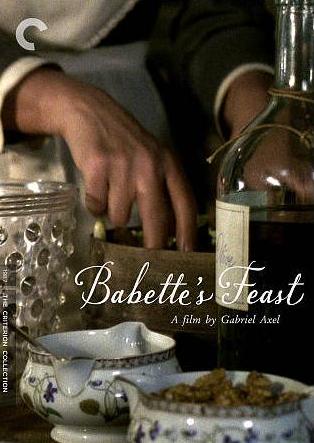
BabetteA year ago I received Babette’s Feastfrom . Yesterday morning, a full ironing basket beckoned. I was in an unhurried mood one needs to watch Babette. After all the shirts were pressed I grabbed some tea and just soaked it in.

A great movie rewards each new viewing. Like many foreign films, the story is acted with subtlety rather than told point-blank in the dialog. But one shouldn’t be fooled by the slow pace. There is humor tucked into pockets of every scene. And irony—rich irony—becomes more evident, and more enjoyable, each time I’ve watched.

Babette’s Feast delivers a blow to gnostic pietism: the belief that worship is divorced from the way we dress, chop wood, sing, balance accounts, do laundry, have sex, eat and drink.The small Jutland community despises the physical—read: body—; only the “spiritual” is valued.

The two sisters, Martina and Philippa, have a heart for good works, but the disgusting bread ale fish stew they bring to shut-ins is a symbol of the impoverished culture in which they live. Their French servant Babette fixes a feast in which every sense is heightened. Her preparations are the pinnacle of the film: simmering soup, sauces, pastries, wine, chocolate. But she also pays close attention of the table setting, the presentation of the food, the order in which it is served.

I had no sympathy for the “dear Pastor” whose control of his daughters excluded the possibility of their getting married. His mocking laughter—I had not noticed it before— as he delivers a “dear John” letter from his daughter exposes him for the shriveled soul that he is.

I’m quite sure now that I didn’t “get” this movie the first time. The extravagance of one fine meal defies logic. As I grow, my appreciation deepens. I see layers upon layers, deeper meanings.

And the juxtapositions! In their paranoia the dinner guests agree to not mention the food. “It will be just as if we never had a sense of taste.” That was a laugh out loud moment! So they sit, silent and suspicious, while the general can’t stop talking about the exquisite dishes he is eating.

The general’s driver sits in the kitchen, watching and eating the same feast in a warm corner. Unlike the general, for whom the food recalls a Paris restaurant in his past, the driver has never before tasted French cuisine. He resides in the background of the movie, but his bright nose and twinkling eyes, his one word benediction: “Good!” is a fitting contrast to the others’ silence.

One distraction: the movie is Danish with English overdubbed. The chasm between the dubbing and the subtitles was hilarious!

I am eager to read Isak Dinesen’s (Karen Blixen’s) short story that is the basis of the film. After a long search, I found a pdf copy of it. It has been twenty-five years since this movie was made. I would love to see a talented filmmaker remake this one.

Figaro, John and Abigail

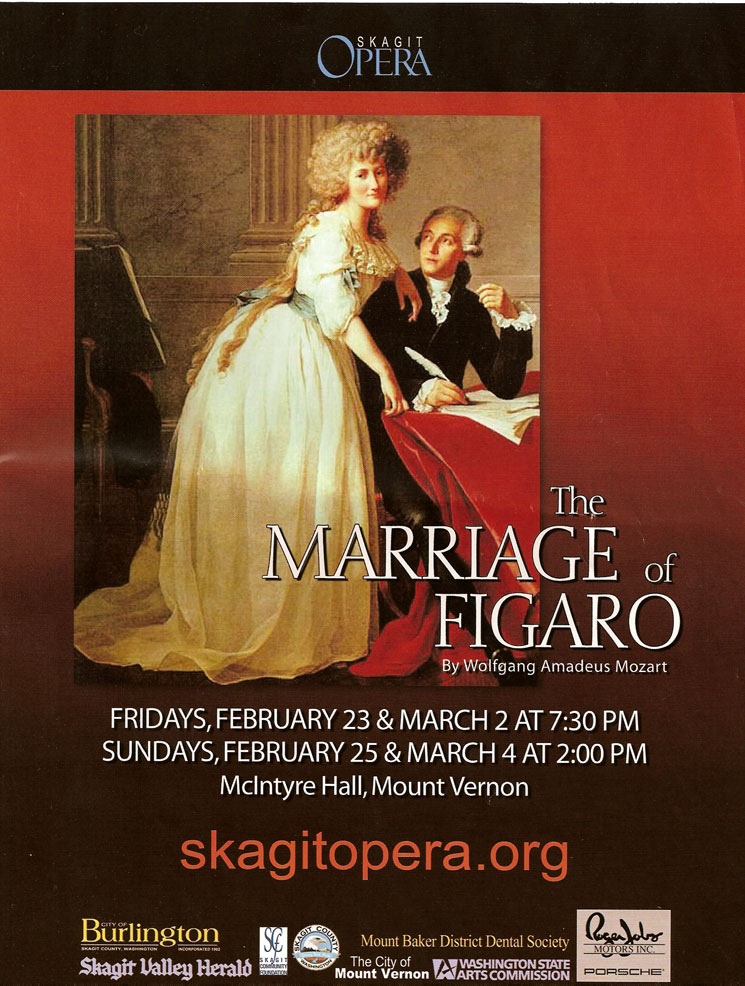
marriage-of-figaro-program Mental Multivitamin calls it synthesis / serendipity / synchronicity. It’s that glorious connection between what you just read/saw/heard and—in an unexpected way—what you are currently reading/seeing/hearing.

The practice of reading (deep and wide) is in effect laying down a swath of Velcro loops. And along comes something that enhances, expands, expatiates on what you already know: those are the Velcro hooks.

That aha! moment brings me great joy. My husband wishes he had written down every hunting experience he’s had since he was seven…for the pleasure of reliving them. I wish I had noted each experience of synthesis / serendipity / synchronicity in my reading life; for there have been many and, alas, my mind grows dim.

::today’s synthesis::

For a year I have been plowing through Jacques Barzun’s From Dawn to Decadence: 500 Years of Western Cultural Life 1500 to the Present. It is demanding and daunting. Twenty years ago I wouldn’t have had the fortitude and background knowledge to pull through. But it is rewarding in the same way that losing thirty pounds is rewarding.

Barzun writes several pages about Beaumarchais, the author of The Marriage of Figaro, artisan, wit, pamphleteer, and secret agent. Have you heard of him? Me, neither. Barzun calls him “the most effective helper of the [American] colonists in their war.” Do you find that an arresting description?

Mozart wrote an opera based on Beaumarchais’ story which challenged the French aristocracy, making Figaro, a valet (or barber), more noble than his master.

:: Pause, Barzun. ::

When I’ve been home alone this week, I have listened to Joseph J. Ellis’ history, First Family: Abigail and John Adams. After a five year separation, Abigail and her daughter Nabby joined John and John Quincy in Paris. The Adams family “attended an early performance of The Marriage of Figaro.”  Hello! I just read about significance of Figaro!! I reveled in the realization that for a time John and Abigail Adams and Mozart were both living and breathing in relative proximity.

::Pause, Abigail and John::

Three weeks ago I visited my friend Lisa in North Carolina. She had been culling books from her shelves and gave me a quaint 1913 book called Opera Synopses. In it I found more information on The Marriage of Figaro ; I learned the story is a direct continuation of Rossini’s opera The Barber of Seville (created by Beaumarchais).

::return to Barzun::

Fascinating! I went back to Barzun’s tome and there it all was: “the man who wrote The Barber of Seville and The Marriage of Figaro before the librettists of Rossini and Mozart gave the two plays another meaning for the musical state.”

I had previously read that sentence, but because I didn’t have any Velcro loops of interest or connection, that fact just bounced off my brain. The synthesis, the recognition, made those words adhere.

So what? Although I am familiar with the overture and several arias, I have never seen the opera. I started to watch it on YouTube this morning, while I wrapped Christmas presents, but quickly realized that three hours of opera wasn’t on the agenda today. And if I’m going to be thorough (cough, cough) I should start by watching The Barber of Seville first.

So little time…

E. Goudge’s Island Magic

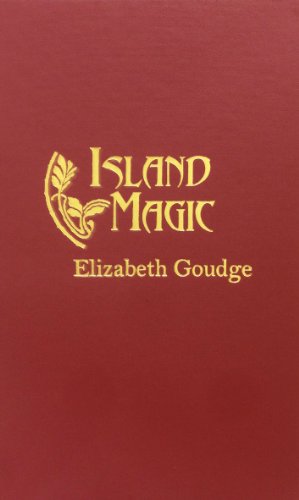
0848813421When Hope at Worthwhile Books reviewed Elizabeth Goudge’s first novel, I wanted to read it.  The setting is St. Pierre, the capital of Guernsey, a channel island between England and France. Island Magic quenches two of my current fascinations: island culture and late 19th century rural life.

André and Rachell du Frocq are barely eeking out a living on a farm called Bon Repos (“Good Rest” or, as I like to translate it, “Sweet Tranquility”), a place that comes with a benediction written on stone outside the farmhouse:

Harbour and good rest to those who enter here,
courage to those who go forth.
Let those who go and those who stay forget not God.

The characters of André, Rachell, their five children, Grandpapa, and the stranger Ranulph— who is taken in after a shipwreck—, are vivid and unique; they linger in my thoughts days after I finished the book. Among the five siblings are a humanitarian, a poet, a failed academic, an adventurer, and a joyspring.

The story is sad and yet not without hope. The children have individual minor tragedies, they also have the confidence and security of being part of a bustling family. The tension resides between husband and wife as they begin to think about conceding failure at farming. The stranger’s assistance is helping the bottom line, but brings more marital conflict.

Typical of Goudge, there is a fairy element in the story. Themes of faith, bitterness, the value of beauty, hard work, service, gratitude, grief and sacrifice make the story shimmer. One point of the plot beggars belief. Of course I can’t identify it without giving away part of the story.

Rarely—and happily— I come across a sentence, with which I can fully relate, and about something I’ve never before seen in literature. Island Magic delivered! This is used to be me!!

How thankful she was for her one great gift—the gift of making her nose bleed at will.

Here is a great Christmas quote:

Christmas Day at Bon Repos was something terrific. The du Frocqs took the whole of December preparing for it and the whole of January recovering from it.

Goudge’s mother was a native of Guernsey; summer visits to the grandparents were part of Goudge’s childhood. Her final thoughts on island living in this book are a bit idealistic, but they reflect some of the necessities of interpersonal relationships in a closed society.

You can’t be an individualist on our Island. There’s so much magic packed into so small a space. With the sea flung round us and holding us so tightly we are all thrown into each other’s arms—souls and seasons and birds and flowers and running water. People understand unity who live on an island. And peace. Unity is such peace.


Alan Bradley and Bill Bryson

Alan Bradley and Bill Bryson

Alan Bradley, left; Bill Bryson, right.

It would have made a great story. If only the facts would cooperate.

Last night I finished listening to Bill Bryson’s book about Australia, In a Sunburned Country. I listened with joy to his elegantly turned phrases, self-deprecatory humor, and characterizations of the people and landscape. His dismay at the treatment of aborigines provoked me to care, too. At times Bryson’s tone veers to the suburbs of crass, and he inserts a few liberal rants, but overall I liked it very much.

As it happens, I also finished Alan Bradley’s latest Flavia de Luce mystery, Speaking from Among the Bones.  Because it’s how I’m wired, I read through the acknowledgments, and there two thirds down the page were these sentences: Family, too, have been there to wave flags and shout encouragement at every way station, and I’d like to especially acknowledge …Bill and Barbara Bryson

What? Bill Bryson in Alan Bradley’s family section? Crazy!  I skipped out of bed to explore this connection. Alas, Bill Bryson, the author, is married to a Cynthia. Bill’s father, William, is married to an Agnes Mary. I can’t detect anything other than coincidence in the names.

My favorite excerpt from Bryson’s book is his description of how he sleeps:

I am not, I regret to say, a discreet and fetching sleeper. Most people when they nod off look as if they could do with a blanket; I look as if I could do with medical attention. I sleep as if injected with a powerful experimental muscle relaxant. My legs fall open in a grotesque come-hither manner; my knuckles brush the floor. Whatever is inside—tongue, uvula, moist bubbles of intestinal air—decides to leak out. From time to time, like one of those nodding-duck toys, my head tips forward to empty a quart or so of viscous drool onto my lap, then falls back to begin loading again with a noise like a toilet cistern filling.

And I snore, hugely and helplessly, like a cartoon character with rubbery flapping lips and prolonged steam-valve-exhalations. For long periods I grow unnaturally still, in a a way that inclines onlookers to exchange glances and lean forward in concern, then dramatically I stiffen and, after a tantalizing pause, begin to bounce and jostle in a series of whole-body spasms of the sort that bring to mind an electric chair when the switch is thrown.. Then I shriek once or twice in a piercing and effeminate manner and wake up to find that all motion within five hundred feet has stopped and all children under the age of eight are clutching their mothers’ hems.

Flavia’s humor is dry, more inclined to make me smile in appreciation than to laugh out loud. And tucked in unexpected places the whiz kid chemist wonders about life.

How odd, I thought: Here were these four great grievers, Father, Dogger, the vicar, and Cynthia Richardson, each locked in his or her own past, unwilling to share a morsel of their anguish, not even with one another.

Was sorrow, in the end, a private thing? A closed container? Something that, like a bucket of water, could be borne only on a single pair of shoulders?


Edit: I received a gracious and funny email from Mr. Bradley confirming that his Bill Bryson is not the American author Bill Bryson.

Comparing L.M. Montgomery

DSC_1607(Katie, another Anne-girl model)

A distinct joy of the reading life is in making connections. Ah, we say, this is like that! This is true of unfamiliar words: we meet and greet; then that new friend appears at someone else’s party. Hey! we exclaim. I know you! It is true also of authors. We chortle—at least I do—when an author is referenced and, instead of shrugging in ignorance, we know that name. Oh joy! Montgomery writes of Dan King in The Story Girl “he had a new Henty book he wanted to finish.” Twenty years ago you wouldn’t’ve known Henty, I remind myself, smiling.

This summer as I’ve read through most of L.M. Montgomery’s fiction, I’ve been thinking about connections.

L.M. Montgomery writes much about the landscape: trees, orchards, the ocean, the light, the color. Two other authors write great descriptions of vastly different geographies. Gene Stratton Porter and Willa Cather.

Rainbow Valley, full of adventures of the Blythe kids and the Meredith kids reminds me of other books revolving around siblings: The Lion, the Witch and the Wardrobe, The Railway Children, and  Meet the Austins.

I’ve been reading books set before the Great War (aka WWI); though I find it hard to articulate, there is something different in the flavor of daily life. A clear-eyed view of rustic simplicity is portrayed both in Maud’s books and in Lark Rise to Candleford.

Emily Starr, in Emily of New Moon, a young writer coming of age—with a supreme desire to be published— reminds me of Jo March in Little Women.

Though Prince Edward Island is almost a character itself in Montgomery’s books, there is a Scotch Presbyterian element that makes me think of Scottish books, particularly O. Douglas’ Penny Plain.

Orphans? Oh, man. There are times, particularly with the Emily books, where the adults were so brutal they were positively Dickensian.

I don’t want to get too obscure (e.g. books set on islands: Anne of Green Gables was like Robinson Crusoe! — wink) but it has been fun to retrieve a few of the random thoughts that wandered around my head while I read through L.M. Montgomery’s books.