Call the Nurse

Combine James Herriot, John McPhee, Seamus Heaney’s poem Digging with a dash of Call the Midwife. Mary J. Macleod moved her family from southern England to become a district nurse on an island twenty miles long in the Inner Hebrides. She, along with a 70-year-old doctor, provided medical care for all the inhabitants in the 1970’s. She writes with a clear-eyed, unsentimental, but affectionate voice.

The book is a series of vignettes: like a gurgling stream it ambles along, making it an satisfying read in pockets of time. Macleod worked (tending elderly, administering daily injections, attending to medical emergencies) with her patients in their homes. She was called at all hours and had to traverse a mountain or be taken by sea in a boat. She cared for people from newborns to octogenarians, many who spoke only Gaelic.

This book taps into three fascinations: island culture, self-sustaining lifestyle, and Scotland. I have been on two islands in Scotland, which is knowledge enough to be dangerously ignorant. To protect the privacy of the inhabitants, Macleod calls her island Papavray. This fired my curiosity, sending me to Google to unsuccessfully tease out the island’s true name.

The best thing? The author wrote her first book (of three now published) in her 80’s. It fuels my hope. Check out her Facebook page.

101_3595

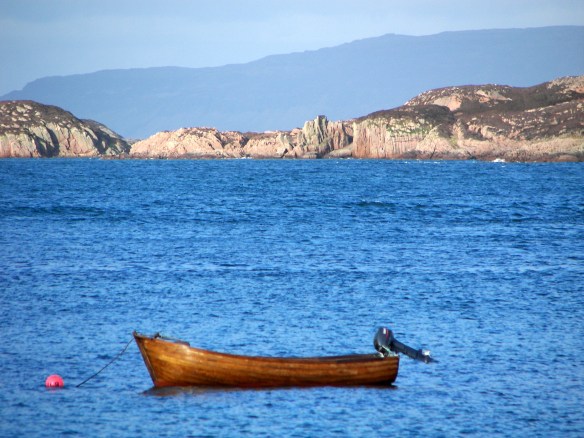
Photo taken from Iona, a small — but important — island on the western coast of Scotland.

The second best thing? This book is $.99 on Kindle today.

Cleaning before Being Cleaned

DSC_0415

There’s something radically new in my life: a young woman comes every other week to clean my house. It’s pretty weird. But I’m getting used to it.

I was telling my husband about a book I was reading,  The End of Your Life Book Club — the story of Mary Anne Schwalbe and her son Will, and the books they read and discussed during her final two years. As I explained their background, I said, Well, they lived three doors down from Julia Child. And Mary Anne worked full-time, back when moms typically didn’t work. But she must have hired a housekeeper because all they did was read on the weekends and you KNOW that someone had to clean toilets.  And Curt, bless his heart, leapt into this opening he had been waiting for to suggest that we hire a house cleaner.

So Jamie comes and I gather scattered books so she is cleaning and not picking up. I work on a deep-cleaning project while she’s here. To me, it’s akin to paying a piano teacher when you mostly need accountability to practice.

But, here’s the thing: the instinct is so strong to clean up myself before I get help. It’s neat to clean (Next to Godliness is my favorite soap from Trader Joe’s) but this is more about self-protection and perhaps some self-deception. I see this tendency in my life in other areas. After I lose 15 pounds, I’ll go to the doctor, I promise myself.

Years ago, I participated in a foot-washing ceremony. A group of women circled their chairs and the friend on the right got on her knees and dipped my feet in a large bowl sudsy with warm soapy water, washed, rubbed, and dried my dirty, stinky feet — a profoundly unforgettable encounter. It struck the same emotional response in each of us. We were happy (happy! happy!) to wash a friend’s feet, but our heart screamed No! when it was our turn to be washed.

Talk about Bone Broth

DSC_1877

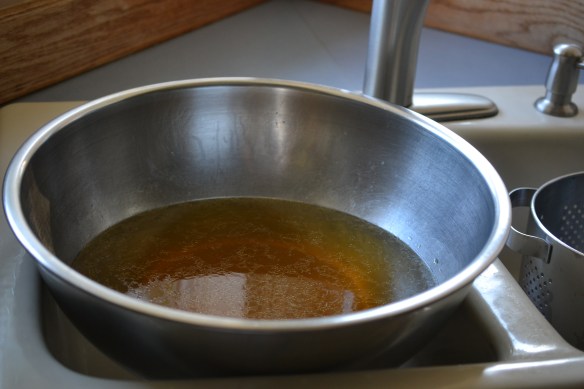
I posted this picture of bone-broth cooling on Facebook and got too  many questions to answer. My husband has been drinking bone broth daily for a few months and has subsequently cut his ibuprofen intake in half (he has been an ibuprofen junkie–for joint pain–for decades). This makes his doctor very happy. And his liver must be happier.

First is bone broth just a frou frou name for stock? I honestly don’t know, but the people instructing me call it bone broth, so I do too.

One other observation. Our attitude toward alternative therapies begins with the question Will it hurt to try this?  If we conclude that the risk is either nonexistent or very low, we’re open to experimentation. Often, it seems, food (the absence of harmful, the addition of helpful) can be the cure for many of our miseries.

There are many recipes on the webs for stock/bone broth. You can make it on the stove top, in a crock pot, or (my preference) in a pressure cooker. I bought the Instant Pot that has seven functions in one appliance. It cost less than I would pay for one appointment with a physician, so that was a no-brainer. As a bonus, it cooks rice beautifully, makes stews in no time at all, can be used as a slow cooker, etc. etc. etc. I have ZERO buyer’s remorse about this purchase. (If you decide to buy and click on my link, you help support this blog, ahem. Thankyou, she whispers.)


My daughter-in-law turned me on to Danielle Walker; her video is very easy to follow.


If you want a book in your hand, I recommend Sally Fallon and Kaayla Daniel’s Nourishing Broth. Dr. Daniel also has many videos on YouTube.


Some practical tips. Whenever we shop at Costco we buy a rotisserie chicken. We save the bones (leg, thigh, wing, carcass). I throw them in the pot with chopped onion, celery and carrot, add a few bay leaves, some salt and pepper and a tiny glug of apple cider vinegar.

I set the cooker for 90 minutes. It takes ~ 1/2 hour to get the pressure up and at least 1/2 hour for the pressure to decrease. What I love about this pot is that it will keep the broth warm for up to 10 hours. So I can safely let it go overnight. I strain the broth and pour it into pint jars, mark the date, and stick them in the freezer. We warm up the broth before we drink it. I use it as a base for soups, sauces, and so on.

I’ve used ham, turkey and beef bones. Bones, unfortunately, are not what I would consider low cost. I would consider $0.50/lb. low cost. Yeah, well. So I try to buy bone-in meats. We recently helped our kids butcher home-grown chickens on their mini-farm. I clamored for the chicken feet. They made the best broth, evah!!   I have a great photo of the chicken feet (guy, they look like hands), but when I posted it on Facebook, it sent a few friends into therapy.

That’s my story! I’d love to hear your responses.

Lila

DSC_3801

Wow. The audio edition read by Maggie Hoffman enshrouded me, made this not merely listening to a book, but an experience. I listened while driving, but when I was home, I found it difficult to do anything beyond listening. Setting the iron upright, drying my hands, leaving clean clothes in the basket, I basked in the cadences.


The writing is spare, the words short. This is a story of abandonment, of survival, of transience. Provision and grace make spattered appearances, but they are layered and torn and patched. Lila finds herself alone but she steadfastly refuses to consider herself needy. The story pivots when she steps into a church on a rainstorm.

Quotes that captured me:

I got shame like a habit, the only thing I feel except when I’m alone.

There was no way to abandon guilt, no decent way to disown it. All the tangles and knots of bitterness and desperation and fear had to be pitied. No, better, grace had to fall over them.

Most of the time she thought she understood things better when she didn’t try. Things happen the way they do. Why was a foolish question. In a song a note follows the one before because it is that song and not another one.

If I were leading a discussion of this book, we would talk about the knife; geraniums; gardens; charity; baptism; adoption; King James language; Psalm 22. And Ezekiel.

I was unmoved when I first read Gilead. What changed my response was hearing the audio. I can still remember what I was doing when I listened perhaps five years ago, it made so deep an impression. Now I want to return to the print book and read it with Lila still fresh in my mind.

10 Things about June

DSC_0368

When she saw Reading Cookbooks , Donna at Quiet Life
recommended The Pat Conroy Cookbook to me.

DSC_0359

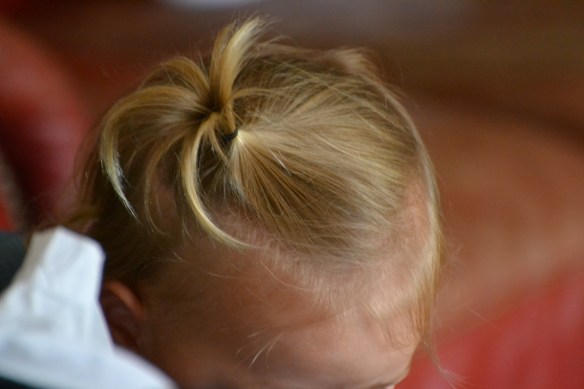
 Her hair is so fine, it won’t stay in line. Her aunt fixed this pixie.


DSC_0371

Hanging plants at my house: a cycle of death and resurrection.
When blossoms are perky, I take a picture.


DSC_0365

 No dimples today. That’s okay.


DSC_0244

 Penstemon: a happy perennial. The bee’s knees.


DSC_0362

How to eat peanut butter and honey with sacramental gladness.


DSC_0384

 Garlic scapes: attractive parabolas


DSC_0380

 Oh, beloved clematis, you always amaze and delight me.


DSC_0290

 My farmer grandson ready for showmanship.

DSC_0315

My young friend with a beguiling smile.

Getting Paid to Read

DSC_0203

I have repeatedly said, I would love to get paid to read!

What I really mean is: I would love to get paid to read whatever I want on my own schedule. Basically, I want a stipend to breathe air.

Because having to read what someone else has chosen is too close to being back in school.

At times the promise of free books has tempted me to consider pursuing review copies from the publisher, but the obligatory nature of reviewing has slapped me on the cheeks and snapped me out of it.

Because of my reputation as a reader, I am often given books to read. People love a book and they want me to love it with them. Which obligates me to read that book. [This is fitting payback, because I’ve been that friend/acquaintance/stranger who pressed unsolicited books into hands with the words You. must. read. this. book.] Don’t get me wrong: I love gift books and I love loaned books. I love the discussions they engender. I just don’t like feeling disloyal to my books which migrate to the bottom of my pile.

Recently, I started following Anne Bogel’s blog Modern Mrs. Darcy. This girl reads for a living. She is fun and welcoming: a literary, book-loving version of The Pioneer Woman.  Anne’s content is beautifully linked to Amazon and I’m sure she gets sweet monthly referral fees. It hit me one day: She gets paid to read!

My next thought was But. She must read newly released books to get Amazon referral fees. You can’t recommend Anthony Trollope (whose books are free on Kindle) and make money. And I am quickly back to contentment. I get to read the books on my shelves, yay!

Anne has a podcast called What Should I Read Next? While I am probably 38% compatible with Anne’s picks, the moment I wait for is when she describes her guest’s reading pattern, based on 3 books loved and 1 book hated. These diagnoses are often Aha! moments; guests use words like uncanny, crazy, I’ve never thought of that before!  It’s as close to book therapy as you get. Here is a sample analysis:

You’ve chosen books about women who had to learn to be strong, because life threw some stuff their way. And they had to rise to the challenge. And they did. And whether the story is written in first person or third, these books show us these women’s lives through their own eyes. We get their side of the story, their version of events, and we, as the reader, have the privilege of walking alongside them as they get a little older and a little wiser and really come into their own.

I have my own What Should I Read Next? dilemma, but not in the way of needing a book recommendation. My question stems from having far too many choices staring at me from my bookshelves. I want to read them all. The job doesn’t pay well, but there are benefits.

We Were So Poor Stories

DSC_0152

I’m tempted to pity my grandkids whose life is bereft of We Were So Poor stories. When such stories are impressionistic paintings from the past, they surely are delicious memories.

A coworker of yore bragged about getting SIX. TEEN. cups of tea from one tea bag. He was so poor.

My friend asked her husband what kind of meals his mom made when he was growing up. He thought and said, We ate a lot of Spanish rice. She asked, What did you have with it?  Just rice. They were so poor.

Before we married our weekly date was splitting a $2.25 plate of chow mein. We were so poor.

After we married our grocery budget was $12 a week. My farmer uncle gave us a few bushels of tomatoes that I canned, Curt put a deer in the freezer, and tuna was on sale at $0.33/can. We were so poor.

A young couple moved to California from the midwest. When their folks sent a dress shirt from Sears for a birthday gift, they quickly exchanged it for cash to feed their babies. They were so poor.

One Christmas, we prepared our boys for a skinny Christmas. We didn’t have money and refused to go into debt to buy toys. That year ::takeabreath:: our boys wrote a note and put it in an envelope with twenty dollars from their savings. We hope this helps. We were so rich.

I’m pretty sure you have some We Were So Poor stories. Won’t you share in the comments?