The Best of My Reading Life: 2016

cropped-dsc_2251.jpg

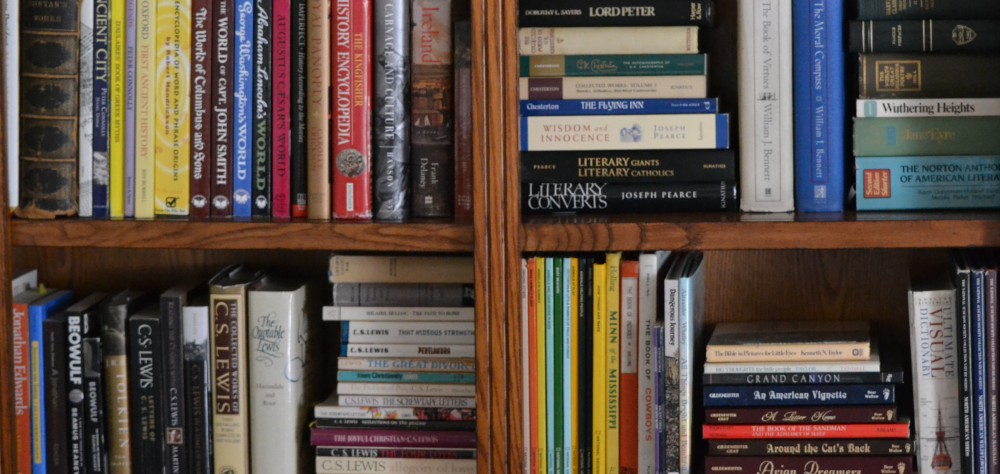
Here are this year’s favorite books in quirky categories, along with sample quotes.

Hello, Again (the second time together)


Books became her friends and there was one for every mood. ATGiB

I love mankind, he said, but I find to my amazement that the more I love mankind as a whole, the less I love man in particular. TBK

Think Tanks (books that made me pause and ponder)


We’re happiest when we’re absorbed in a difficult task, a task that has clear goals and that challenges us not only to exercise our talents but to stretch them. tGC

Work is necessarily toilsome and serves someone else’s interest. That’s why you get paid. SCaS

Franklin could never see chaos without thinking of order. BF

Waiting is the primary recreation of Russia. You could try getting used to it. tFT

DSC_0368

Where Have You Been All My Life? (a book I wish was available years ago)
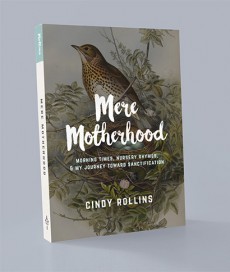
meremotherhood

We spent that midsummer reading A Midsummer Night’s Dream in the backyard, and I will always remember my surprise when the children laughed in the right places. MM

Sweet Comfort (sure, they’re about food, but the prose is delicious)


And, please—enough with the supposed health concerns. I mean, it’s not as though the obesity epidemic was caused by overconsumption of duck legs. NK

It is my most religious belief that a recipe is just a story that ends with a good meal. tPCC

But cooking is a way of paying attention, of really being in this world. When you look closely at a mango and inhale its scent, everything else stops. Life feels rich and easy. G-FG&tC

DSC_0148

Cover Story (the cover drew me in)


In Scotland, one does not ‘mend’ anything or ‘fix’ it in any way. One ‘sorts’ it.
CtN


Core Strengthening (soul-building books)


Over and Over we hear the dissonance of pain resolve into the consonance of joy. MOC

The opposite of a slave is not a free man. It’s a worshiper. TRoG

Upper Story (two memoirs and a history a cut above )


Rome is a broken mirror, the falling strap of a dress, a puzzle of astonishing complexity. It is an iceberg floating below our terrace, all its ballast hidden beneath the surface. FSiR

At Yale, many of my friends had never spent time with a veteran. In other words, I was an anomaly. HE

Fear settled over the men like silt in a tide. DW
DSC_0389

For the Children (for me, too…my husband & I are reading HP series for the first time)


If you want to know what a man’s like, take a good look at how he treats his inferiors, not his equals. HPG0F

Books can ignite fires in your mind, because they carry ideas for kindling, and art for matches. LB&BB

Whatever it means to be friends, taking a black eye for someone has to be in it. WW

(Amazon affiliate links included: thank you!)

Sailing Alone Around the Room

101_6492

In my ideal life, I would keep poetry on my nightstand. In my perfect life, I would read it regularly. Sailing Alone Around the Room  had been ensconced there nine weeks;* when I ran out of renewals I started reading.

Humor, the deep-from-within-the-DNA-funny, permeates this poetry.

The first poem places a neighbor’s dog in a Beethoven symphony,
while the other musicians listen in respectful 
silence to the famous barking dog solo, 
that endless coda that first established
Beethoven as an innovative genius.

The poems centered around music (and their abundance) delighted me.

I swooned reading Sunday Morning with the Sensational Nightingales that spoke of the power of gospel music on the radio to create a minor ascension. I’ve been in the car, I’ve been transported. I could hear the overtones; I became a church lady with a floppy hat and matching pumps calling out, “Yes!”

I was pleased to learn a new form of poetry (I won’t mention the name); I did a search to read more. Then I roared with laughter. The joke’s on me — this is a parody! It was a small consolation that book reviewers and other poets also missed the satire.

Another tickle, this in a title:
Reading an Anthology of Chinese Poems of the Sung Dynasty,
I Pause to Admire the Length and Clarity of Their Titles

Collins always surprises me. He twists words, insisting I see life from a changed perspective.

* How it got there: reading Amor Towles’ Rules of Civility  made me curious to see Walker Evan’s photography. In my library’s poetry section was Something Permanent, Evan’s photography paired with Cynthia Rylant’s poems. While my fingers trailed the bindings, I saw Billy Collins. Like ice cream, there’s always room for Billy Collins.

The title reminds me that I still have Joshua Slocum’s 1900 book, Sailing Alone Around the World, on my To Be Read shelf. And also William F. Buckley’s sailing books. Also unread.

10 Christopher Kimball Quotes

One time my brother gave me ten years of old Cook’s Illustrated magazines. Reading through them was like reliving Dan’s culinary phases. Oh, yeah, remember when he was making sausage?  There’s the artisan bread recipe! Here’s where he learned to make risotto! Adding nutmeg to stroganoff might not have been an original idea…

I used to think my brother was a genius. (Ha ha, bro!) Then I realized he was merely an amazing reader who followed fantastic recipes.

The first thing I did with the magazines was cut out the Flemish-ish art and frame it.

dsc_3113

Because I admire Christopher Kimball’s voice, I recently read through ten years of essays to assay his writing. I immersed myself in them in one week. A very few were ‘meh;’ most had a phrase or thought I copied into my journal.

His overarching theme is one of my own soap boxes, the importance of families eating together, a concept he encapsulates in the word familiar. Here are ten quotes I gleaned.

  1. We lost traditions that had connected us, and in which food played an important role: the social vitality of a meal, for example, as an occasion for families to talk, argue, persuade, or even shout.
  2. On many days, there is more sense to be found in a good recipe for roast chicken than in all the news on the front page of the New York Times.
  3. Today, a whole generation has grown up as a take-out culture. The food is convenient, and some of it is even good, but it has none of the ring of the familiar; it can never be personal enough to become part of our past.
  4. Dinner slows the clock, allowing us a moment to catch our breath, to savor the stillness of the moment; the first taste of a family recipe connecting us instantly to each other, to our past and future.
  5. So many of us today avoid cooking because it is difficult and time-consuming, requiring skill and planning. But it is the blessing of common labor — transforming simple beginnings into rich harvests — that is the great joy of cooking and of any life well lived.
  6. I hate the idea that cooking should be a celebration or a party. Cooking is about putting food on the table night after night, and there isn’t anything glamorous about it.
  7. Over a lifetime, hands become invested with knowledge, if we allow it. The surgeon, the farmer, the gardener, the artist, and the mother all accrue a lifetime of skill in their hands.
  8. Cooks are architects, building a present that is worth remembering, investing time and energy in simple tasks that grow in importance as time passes.
  9. It’s a shame that at the beginning of this new century, the world is watching America and America is watching television.
  10. Cooking isn’t creative, and it isn’t easy. It’s serious, and it’s hard to do well, just as everything worth doing is damn hard.

After I read the last essay, I read a few articles about Christopher Kimball, the man. I was saddened by his divorce, and laughed out loud at this sentence by Alex Halberstadt: “His real difficulty as an evangelist, however, is the one afflicting most multimillionaires who expound publicly on the virtues of simple living.”

As it happens, Kimball has left Cook’s Illustrated to begin a new magazine called Milk Street. Clever name, I thought, wrongly guessing it was an idiom like in tall cotton. Turns out it’s the street where Kimball’s offices are located.

kimball-pic

Last night I started a biography of Benjamin Franklin that a friend wants me to read. When I read that Benjamin was born in a house on Milk Street in Boston, I just laughed. Once again, my reading life has synchronicity, serendipity and sweetness.

The Comfort of Bach

dsc_6856

Q. 1. What is your only comfort in life and in death?
A. 1. That I belong — body and soul, in life and in death —
not to myself but to my faithful Savior, Jesus Christ,
who at the cost of his own blood has fully paid for all my sins
and has completely freed me from the dominion of the devil;
that he protects me so well
that without the will of my Father in heaven
not a hair can fall from my head;
indeed, that everything
must fit his purpose
for my salvation.
Therefore, by His Holy Spirit, he also assures me of eternal life,
and makes me wholeheartedly willing and ready from now on to live for him.
— The opening of the Heidelberg Catechism


When I ordered My Only Comfort on 1.1.16 I had no idea that my sister would die two weeks later. All I knew was that this book scratched two of my favorite itches: the music of Johann Sebastian Bach and the Heidelberg Catechism. Margo’s death and my grief are inextricably knit into my response. A Bachophile, she listened nightly to a ‘Bach’s Variations’ CD as she fell asleep.

There was no way I could simply read this book. I was compelled to listen multiple times to Bach’s chorales, cantatas, and arias while Stapert explained the structure and form, exposed the chiasms, and pointed, whispering See what he did there? I switched from being a reader to becoming a student, immersing — bathing in Bach. I discovered a whole realm of YouTube videos that opened up a kingdom of sublime, profoundly sad, and intensely joyful music.

“Over and over we hear the dissonance of pain resolve into the consonance of joy.”

“The heaven-haunted music I hear in Bach can be found in any of his instrumental genres — suites, sonatas, concertos, fugues — as well as in his church music. But, of course, in his church music, words can lead us to places where there is likely to have been a special intention to try to capture something of what ‘ear has not heard’ and make it audible.”

My current favorite aria is from St. Matthew’s Passion.

The translation for Enbarme dich —
Have mercy, my God, for the sake of my tears!
See here, before you heart and eyes weep bitterly.
Have mercy, my God.

Reading, studying through this book was one of the most profoundly comforting experiences of my life. Bach’s glorious music pierced me, the beauty often leveling me to sobs. But after the leveling was a lifting: it refreshed my spirit.

Hence, I have resolved two things:

1. To read the other four books Calvin Stapert has written. (Haydn, Bach bio, The Messiah and Early Church Music await me.)

2. To systematically listen through Bach’s canon. I’m not sure how I will sort this, but there are too many wonderful pieces I have never heard. Simply working through the cantatas might be a starting point. I don’t care about BMW‘s; it’s BMVs (Bach-Werke-Verzeichnis — a number assigned to each known composition of Bach’s) for me! Do you have any ideas?

I could easily begin again at the beginning of My Only Comfort for a second harvest. I probably won’t right away, but the book will remain on my shelves (the highest compliment I can give these days).

Shop Class as Soulcraft

DSC_2251

Ken Myers at Mars Hill Audio Journal introduced me to Matthew Crawford, calling Shop Class as Soulcraft a hymn to the virtues of what he [Crawford] called manual competence and a lament for the decline of honor accorded to work with one’s hands.

My husband, a former high school shop teacher, captivated from the first page — in which Crawford bemoans the disappearance of shop classes from our common education — insistently interrupted my reading to read aloud a paragraph. Thus, he convinced me to read it myself.

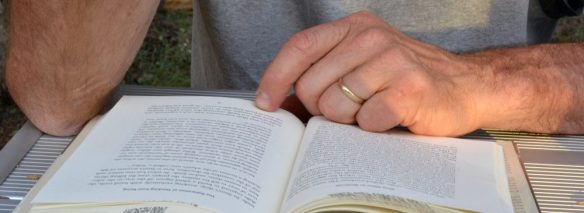
Crawford has a Ph.D. in philosophy from the University of Chicago, but when he’s not writing he makes a living as a motorcycle mechanic. (While this is a rare combination, I know several carpenters who are conversant with Kierkegaard and Heidegger. My husband Curt (see photo below) can wield an ax, weld an axle and read Wendell Berry.)

DSC_8666.JPG

Crawford’s book is part social history, part philosophy, and part memoir. The altitude of some of the metaphysical  musings were beyond my reach but within stretching distance. The history of transition from craftsmanship to assembly line and the degradation of blue collar work was absorbing. His personal ‘education of a gearhead’ was fun and fascinating reading.

Crawford laughs at the cubicle culture with teambuilding activities and speech codes. He urges learning a trade even if you go to college. Reading this book inspires me to pick up a shovel and dig in my garden.

If thinking is bound up with action, then the task of getting an adequate grasp on the world, intellectually, depends on our doing stuff in it. And in fact this is the case: to really know shoelaces, you have to tie shoes.