Meet and Greet

downton-abbey.jpeg1-1280x960

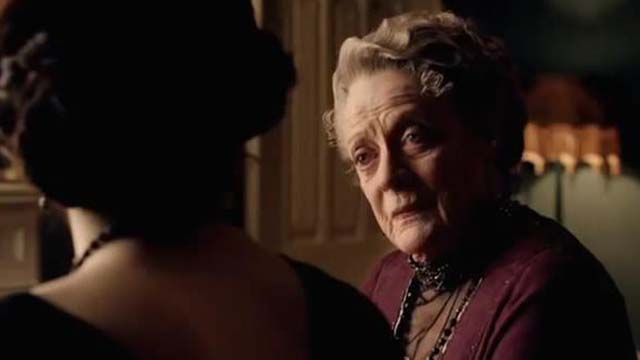
One endearing custom regularly modeled on Downton Abbey is the gathering of the household outside the door to welcome guests. The family members and servants wait as the cars approach the house and the guests disembark.

The quiet formality marks the moment, punctuates the arrival.

I like these manners, I guess, because they are familiar. I have my own house rule: when a scheduled guest arrives I want to be outside my house, focused on my guest’s arrival. I want my posture to say, “this—THIS—is the highlight of my day!” The risotto may need stirring, but that’s unimportant compared to a direct look, a smile, a welcoming hug or handshake.

I’m not as careful about rising when a guest/older person walks into the room; I didn’t grow up with this point of etiquette. But it’s not too late to cultivate it.

Winter Watch

I’m a fan of cozy mysteries. Miss Marple, Brother Cadfael, Mma Ramotswe, Alan Grant, and Flavia de Luce are guaranteed to bring pleasure. Especially if they are read with a steaming pot of tea while sitting on a leather couch with a fire snapping close by.

In Winter Watch, Anita Klumpers has written what I call a cozy-eccentric book. Barley, Wisconsin, is a isolated northern burg where the Justice of the Peace is also the dog catcher and where a few crazies reside. Bernice, a miscreant referred to as the resident killer, is the battiest of them all. After a family member dies, Bernice gets meals and kindness and concerns. And wouldn’t you know, she likes the perks of grief. More relatives mysteriously die. Sympathy can be mighty addicting.

Like Alexander McCall Smith, Klumper weaves humor into the warp and woof of her prose. Blizzards are snowstorms with enthusiasm. A woman was proud to give her son a Biblical name—Tubal—until the nurse told her it sounded like a female medical procedure.

DSC_7902There is comfort—I like a woman who knows her way around an egg—and a passage about joy that is flat out lyrical.

Joy arrived unbidden and unpredicted to pour from heart to fingertips to toes. She held her breath, everytime, to preserve and examine it but it forever danced just out of her grasp and slipped away. Claudia stayed still, focusing, her heart ready to burst. At the last crucial second joy seeped through cracks and crevices of her being until her every extremity and pore rejoiced before the evaporation worked backwards and she sat in the afterglow.

The focal point of the narrative centers on an old watch. The prologue and epilogue added more layers of history regarding the watch. The story line had me eagerly turning the page, and a bit annoyed with life’s beckoning demands when I needed to put the book down.

In short, this is a satisfying and entertaining read.

Loveliness Showing Through the Rubble

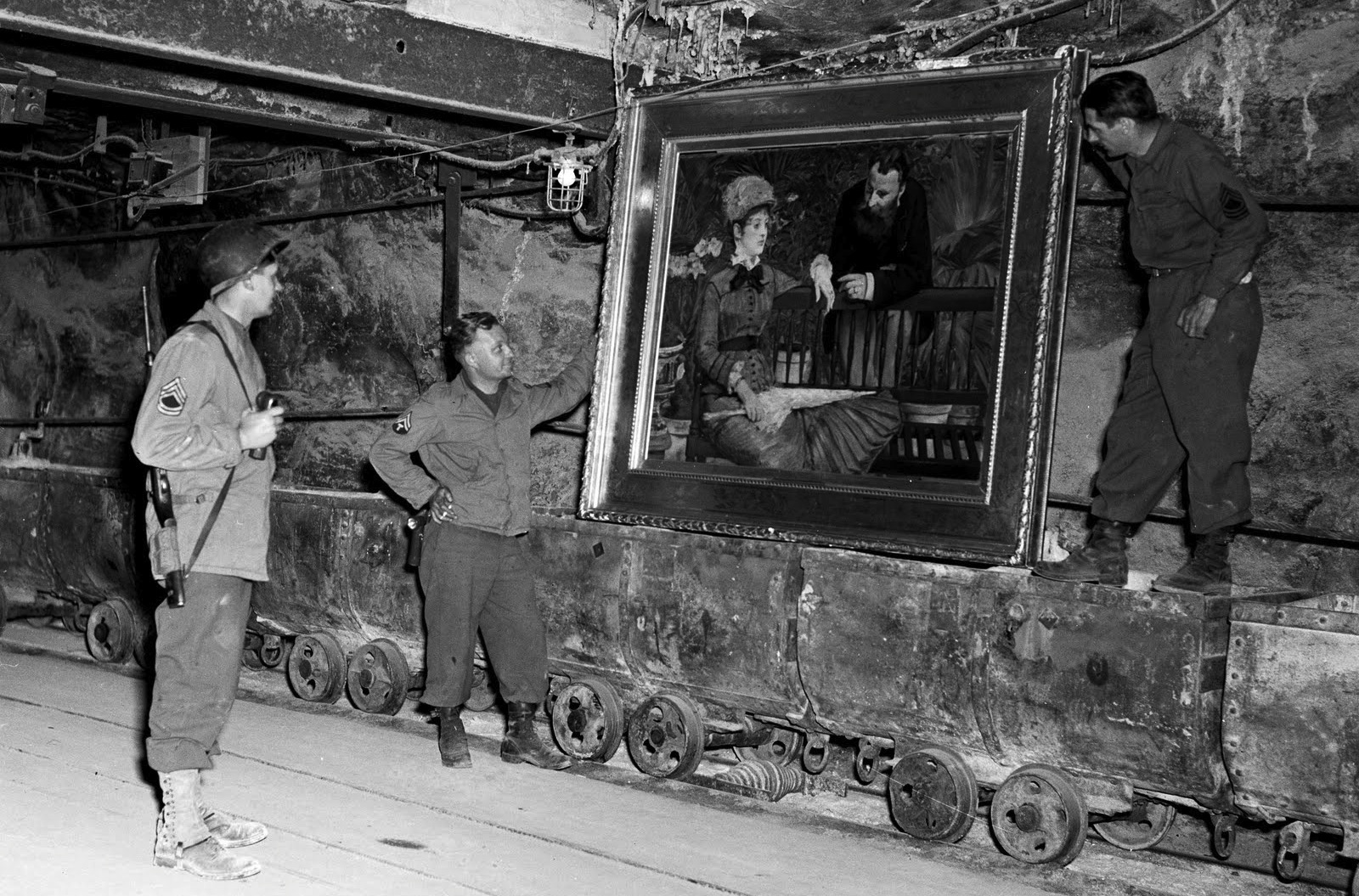
The job of the soldiers who served with the Monuments, Fine Arts, and Archives section of the Allied Forces in WWII was to “mitigate combat damage, primarily to structures—churches, museums, and other important monuments.”

Because Adolf Hitler and Hermann Göring were obsessed with collecting (read: stealing) fine art, the primary job of the MFAA became rooting out hidden caches of art before the Nazis destroyed them in the event of a Nazi defeat.

I found it difficult to engage with the first third of the book, background stories of a large roster. Because they were all working independently— their stories seldom converged—there was too many bits to sift through. It wasn’t until Paris, and the entry of the great heroine Rose Valland, that I found myself gripped by the narrative. From that point, the book is perfectly paced, and the thrill of the chase raised my pulse. It is a cracking good story!

monuments-men^^ can you imagine? ^^

Tucked into the story was a gem—the only one like it— from Capt Walker Hancock.

The eyes have one continual feast. It is late in the spring. Flowering trees are everywhere and the charm of the romantic little towns and the fairy tale castled countryside is enhanced by all this freshness. And in the midst of it all—thousands of homeless foreigners wandering about in pathetic droves, Germans in uniform …. Children who are friendly, older ones who hate you, crimes continually in the foreground of life. Plenty, misery, recriminations, sympathy. All such an exaggerated picture of the man-made way of life in a God-made world. If it all doesn’t prove the necessity of Heaven, I don’t know what it means. I believe that all this loveliness showing through rubble and wreck are just foreshadowings of the joys we were made for.

For fun, the magnificent George Stout, after receiving a package three months late:

It is amazing how the world can change during the life span of a fruitcake.

Because one curious door opens many others, I’m now interested in reading:

Rethinking Winter

photo credit: National Audubon Society

photo credit: National Audubon Society

Ought not
WINTER
in allegorical designs,
rather be represented by
such things that might suggest HOPE
than convey a cold and grim despair?
the withered leaf, the snowflake,
the hedge-bill that cuts and destroys—
Why these?
Why not rather the dear larks for one?
The lark, the bird of the light is there
in the bitter short days.
Put the lark then for winter,
a sign of HOPE,
a certainty of
summer.

…the bud is alive in its sheath;
the green corn under the snow;
the lark twitters as he passes.
Now these to me are the allegory of winter.

— from Out of Doors in February
by Richard Jefferies

Flannery in Janu’ry

Flannery child.Flannery O’Connor, from her childhood home (picture by K. Harper)

I committed myself to reading Flannery O’Connor’s The Complete Stories as part of Books and Movie’s “I’ve Always Meant to Read That” challenge. In the past few years, I’ve acquired everything published by Flannery (except for A Prayer Journal, just released in November). The Challenge gave me a needed push to dive in.

It was more a belly flop than a dive. I collared my young friend Matthew, who counts FOC as one of his favorite authors, and asked him why I should be reading this depressing stuff. His answer:

“Every Christian needs to read O’Connor, to get the pettiness and self-absorption out of their systems.”

And, you know, Flannery grew on me. The later stories made more sense, were more accessible. “More mature,” a lit major would murmur, cigarette dangling between his knuckles.

It has been a baptism by immersion. Two things helped me immensely: I read Brad Gooch’s Flannery: A Life of Flannery O’Connor, which made me sympathetic to her and helped me to see her vision. I borrowed two audio books, A Good Man Is Hard to Find, and Every Thing That Rises Must Converge, which included many of the stories in The Complete Stories. I took 4 mile walks, listening and concentrating. When I had the time, I listened and read along.

No question, the girl was brilliant. I felt kinship with the reviews of her first novel. “They all recognized her power but missed her point.” Here’s an example: In one story, a grandfather is confronted with a woman who claims his grandson ran into her and broke her ankle. He replies, “I don’t know him. I’ve never seen him before.” A clear allusion to Peter denying Christ the night before the crucifixion. Sooooo. What does it mean?

Flannery herself described her stories as odd, disturbing, unconventional. And the irony? With Flannery, irony is a contact sport. Wickedly funny. But it seems her goal was to smack us in the face so we would see ourselves correctly. These stories have much more than entertainment in mind.

Now that I’ve read through The Complete Stories, I’m ready to read through Mystery and Manners: Occasional Prose and The Letters of Flannery O’Connor: The Habit of Being.

I hoped that O’Connor was filmed giving one of her lectures. I didn’t find that, but I found an audio track of her reading one of her most famous stories, “A Good Man Is Hard to Find.” This would give someone a taste of Flannery.

I found it interesting that Flannery substitutes “colored” for the n-word in this reading.

Edith Irvine, Photographer of SF Earthquake

City_Hall(1)Kristiana Gregory’s YA book, Earthquake at Dawn, was my bonus read this month. It is historical fiction at its best: a tragic and fascinating story based on and including primary sources. Through this book I learned about Edith Irvine, an extraordinary photographer. In a mighty strange convergence, Edith, 22, was in a boat about to dock at 5:12 a.m. April 18, when the shaking and quaking of the 1906 Earthquake began.

Gutted_AreaA photojournalist at heart, she went into the city and started to take pictures. She had to be surreptitious, because the city government wanted to minimize both the death toll and the damage. With martial law in effect, Irvine took great risks in documenting the destruction.

Flood_Mansion_California_Street__Mason_StreetA few sentences from a letter written on May 1, 2006 by Mary Exa Atkins Campbell head every chapter.

Streams of people in white and colored garments poured into the streets and for a time we remained, a mourning, groaning, sobbing, wailing, weeping and praying crowd. The most pathetic of all were the poor half-clad women clasping little infants in their arms and begging for mercy.

Produce_areaThe picture of the horses killed by the falling bricks is the most famous photograph of Edith Irvine’s.

Residents_with_Bundled_Possessions_on_Van_Ness_Ave

Martial law went into effect, with no due process regarding crime. Mary Exa, again:

The big fire in the mission [district] was caused by a man and woman who, after being made to put out the first fire they made, built another as soon as the policeman left. He came back, saw what they had done, called them out and shot them dead.

Hordes of people were displaced; they camped out at Golden Gate Park Mary Exa wrote that sixteen little babies were born in the Park the day after the quake and one woman had triplets.

Edith Irvine overwhelmed my imagination. Irvine, CA, is named after her family. I have been slowly browsing the 293 photos in the online collection at Brigham Young University. There are photos of Yosemite, the mining town she grew up in, dams being built, cats, horses, portraits and scenes from everyday life.

Half_Dome_Yosemite (1)All photographs are from the Brigham Young University library. You can see the entire collection online.

Flannery O’Connor and Downton Abbey

101_4129

We hear many complaints about the prevalence of violence in modern fiction, and it is always assumed that this violence is a bad thing and meant to be an end in itself. It is the extreme situation that best reveals what we are essentially, and I believe these are times when writers are more interested in what we are essentially than in the tenor of our daily lives.      — Flannery O’Connor

I am working through Flannery O’Connor’s The Complete Stories this month. The stories aren’t enjoyable and they aren’t light reading. But I trust the folks who have urged me to read her and I get occasional glimpses of the glory that is Flannery.

Clearly, her stories are deep and infused with meaning. O’Connor explains a few things in Mystery and Manners. I came across this quote about violence; it immediately brought to mind the bad thing that happened to Anna in a recent episode of Downton Abbey.

What do you think? I’m mulling this over, differentiating violence in print—where you imagine what happens— and on screen, where an image is deposited in your brain vault.


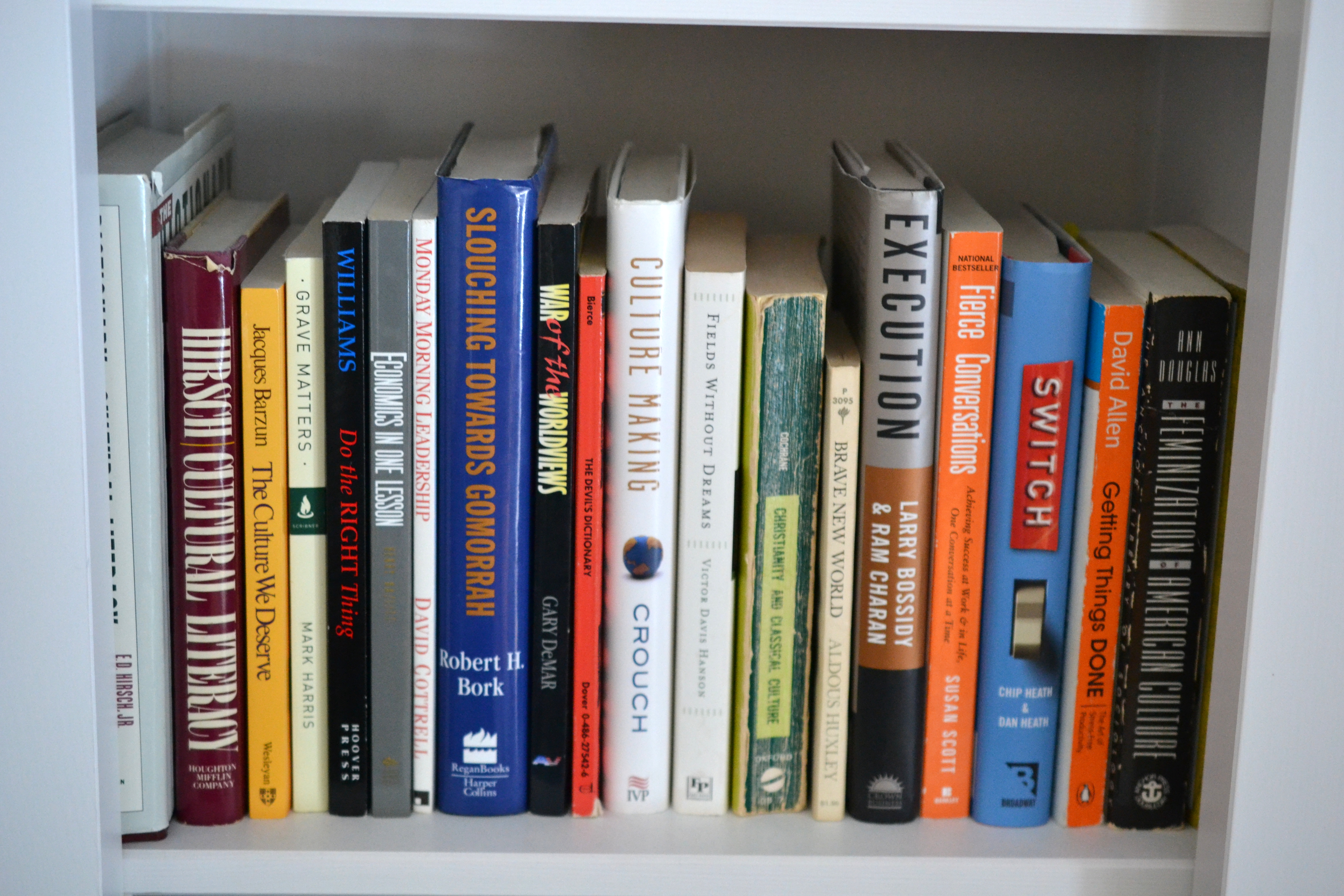
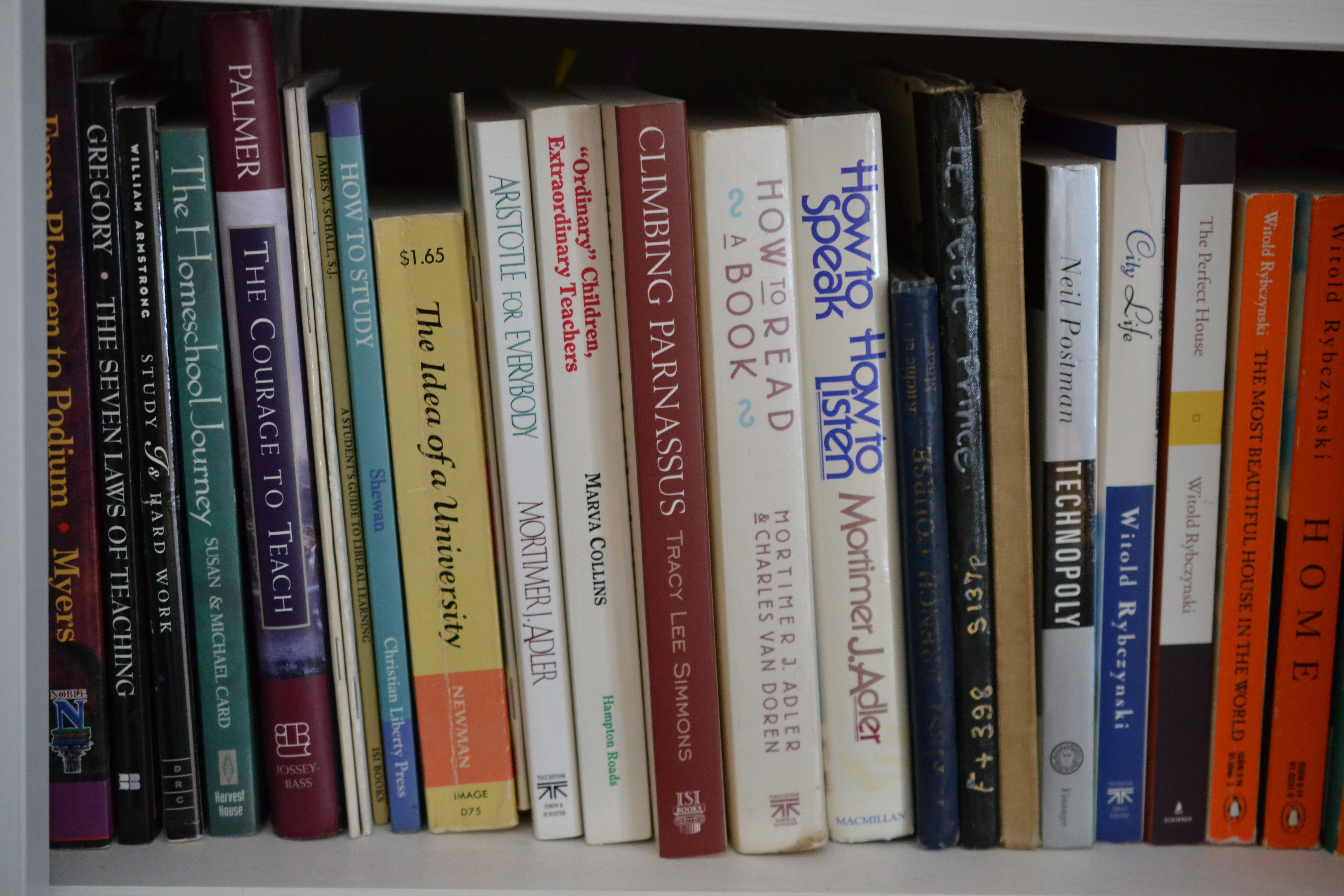
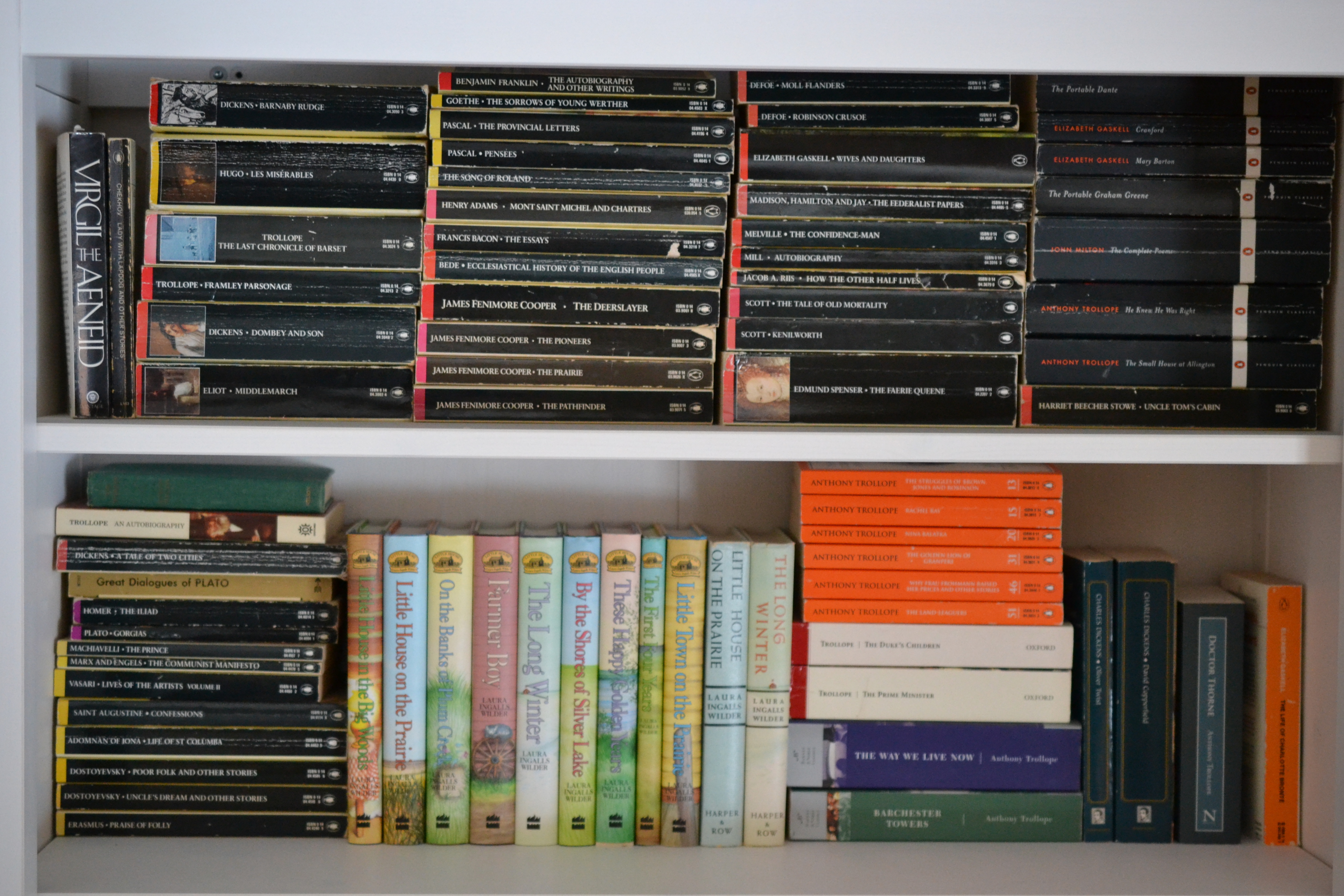
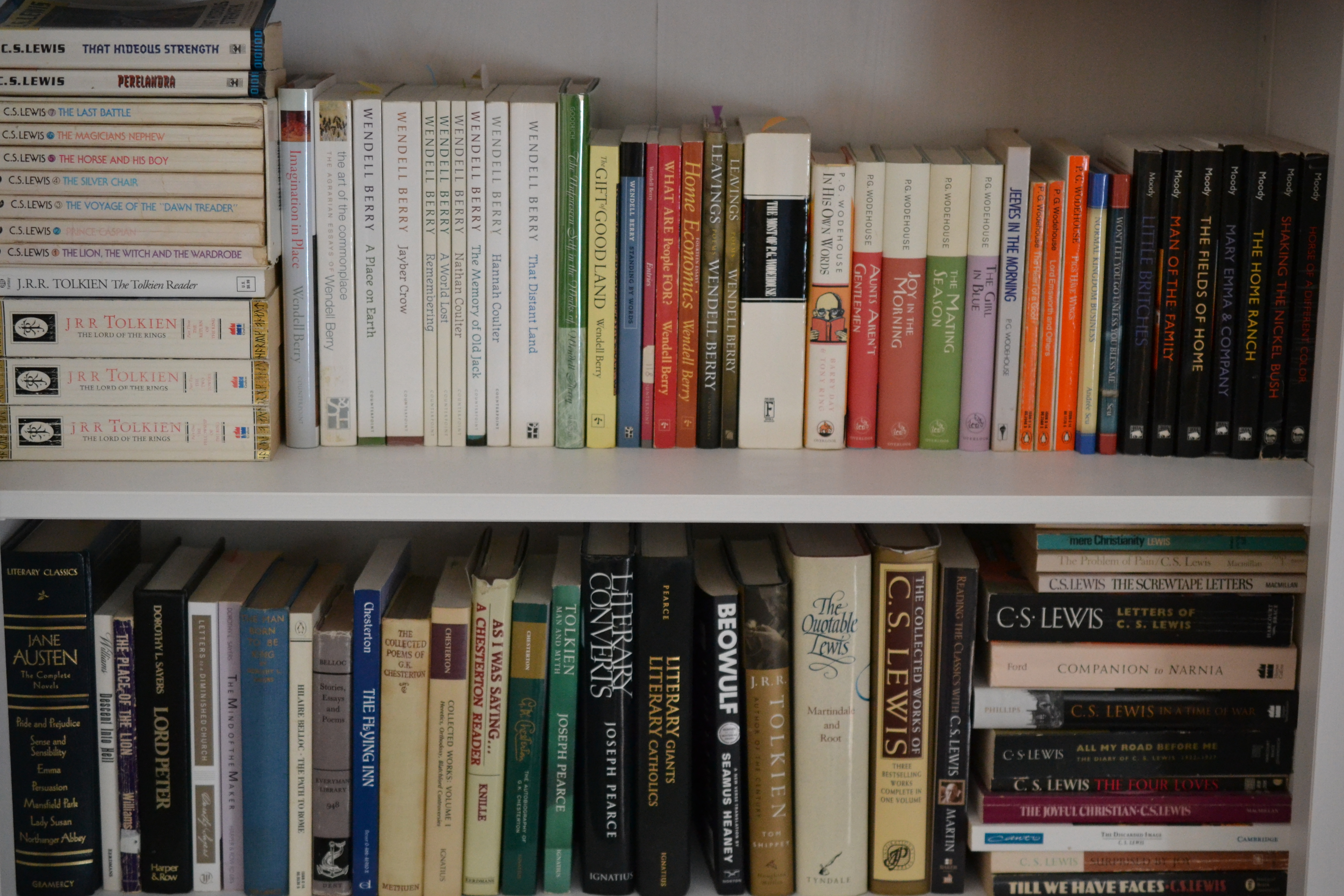
The Bookshelf Project

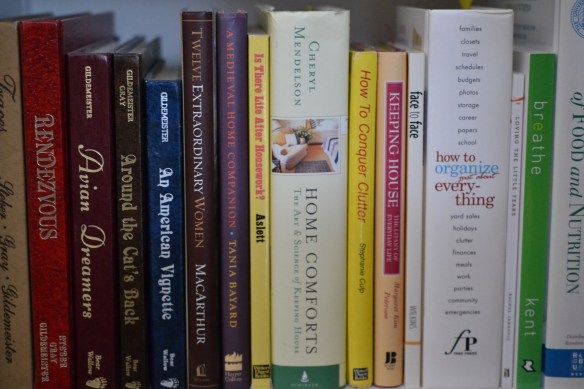
DSC_1834I blame the movie Julie & Julia. Do you know how many times I’ve thought about cooking through every recipe in one of my 46 cookbooks? It messes with my all-or-nothing propensities. So many times, I’m browsing among the books and think: wouldn’t it be fun to read exclusively from this shelf until I’ve read everything?

The all-or-nothing system hasn’t been good to me. Because, you know, the nothing side hits the playground pavement with a bang and the all side is swaying, suspended in the air above the teeter-totter.

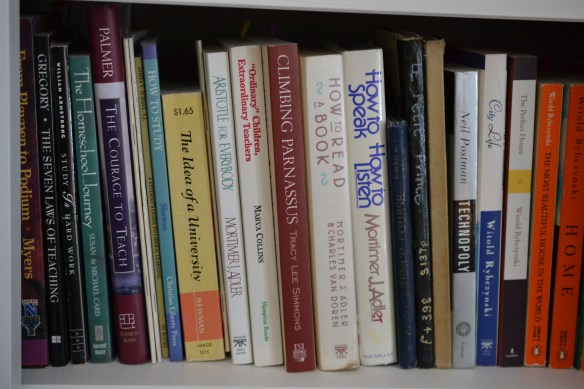
So I made a bargain. I eyed the shelves and did the math. What if? I whispered to myself. Stop! the other me warned. No, this is reasonable, I countered. What if I committed to reading one book from every shelf on the big white bookshelf? There are 30 shelves in total. Subtract three that hold CDs, Audio books, and DVDs. Subtract the one narrow shelf about which I can say, “I’ve read them all.”

26 books from my own shelves. That’s about half of the number of books I read in a year, so it allows room for the books in other rooms in my house, on my Kindle, or yet to be published.

I’m not going to decide which title on each shelf right now. I’m a bit schizophrenic in my reading. When I am mindful of how little time I have left on the earth, I determine to only read the best books. When I think about making room on the shelves, I read the book I want to read, but don’t think I’ll want to keep. And when I don’t want to work, I go for easy reading.

And I won’t shelve a new book, so I can say I read it off my shelves. Dirty pool!

So here’s a glance at my options:

DSC_8173There are two shelves of history. On the top shelf I’m inclined toward The Pity Of War: Explaining World War Ior The Last Lion: Winston Spencer Churchill.

On the lower shelf, it’s an excruciating decision. McCullough’s book on the Brooklyn Bridge, Barbara Tuchman, Stephen Ambrose or Paul Johnson?

DSC_8174Oh, man. Several titles on these two shelves come highly recommended. The Widow of the Southis set in Franklin, TN. I want to read The Monuments Men before the movie comes out this year.

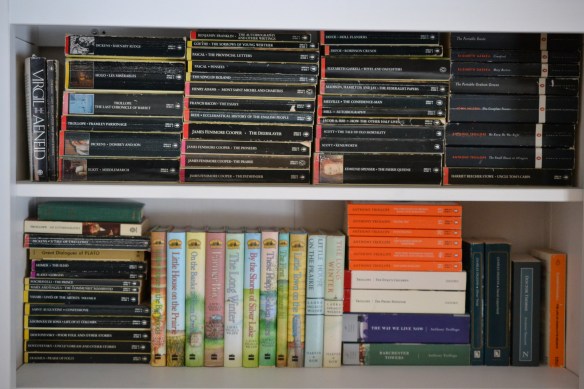
DSC_8175Two sets of Churchill to choose from: I’ve read A History of the English-Speaking Peoples and would like to re-read them. But Edmund Burke  beguiles me.  Three sets sit on the bottom shelf: 13 years of Cook’s Illustrated, a set of Dumas and a set of Dickens.

DSC_8176Short biographies, a collection of collections, and Willa Cather.
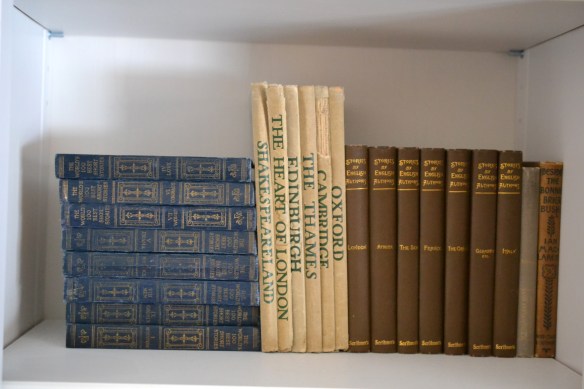
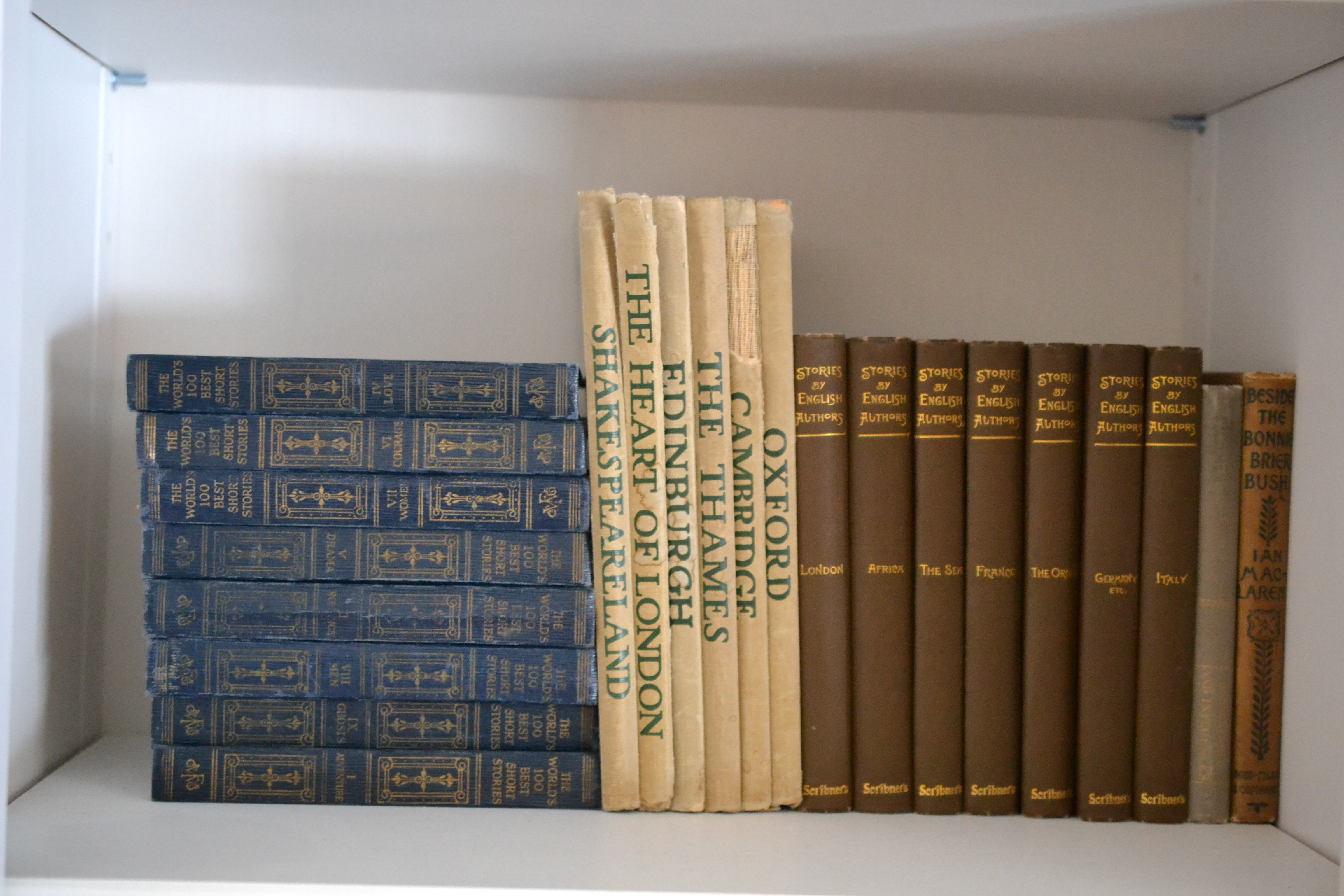
DSC_8177Small books with short stories and gorgeous books about Britain with watercolor plates.

DSC_8178Business and culture.

DSC_8201Classics. My husband and I are enjoying A Study in Scarlet, so we may well continue with more Conan Doyle. But I’ve never read Kimso I may choose Kipling.

DSC_8180Education and Witold Rybczynski.

DSC_8181I insist on reading one science book a year, weak as I am in science. I highly recommend Microbe Huntersand Longitudeif you need your science in narrative form. I think Lives of a Cellis calling my name.

DSC_8182Oh to have room to store my beloved Penguin collection upright! Whoever invented orange covers ought to be shot. I would love to read all those orange Trollopes so I can be done with them.

DSC_8183These two shelves are at the center of my collection. Deep. love.

DSC_8184More groups of authors that I love.

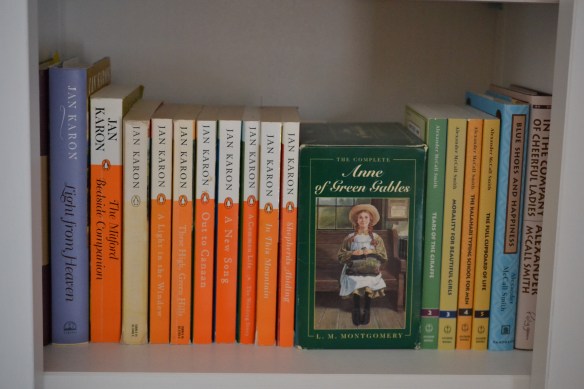
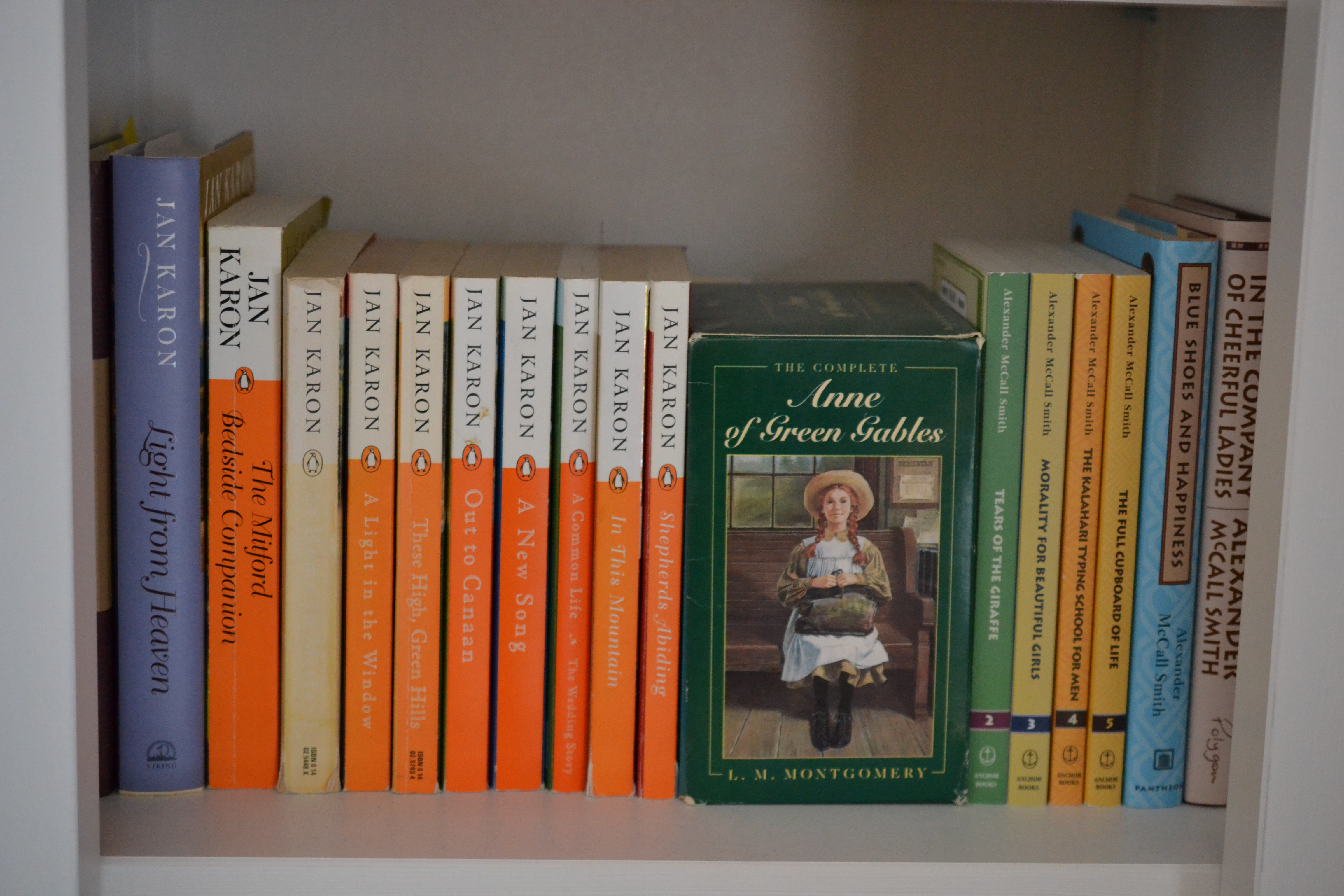
DSC_8185This shelf is a pass on my read-from-my-shelves project. Jan, Anne, and Mma.
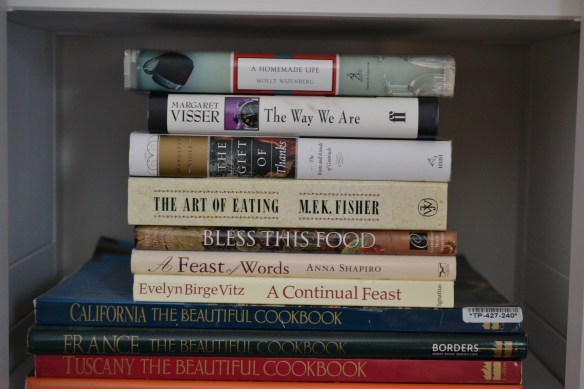
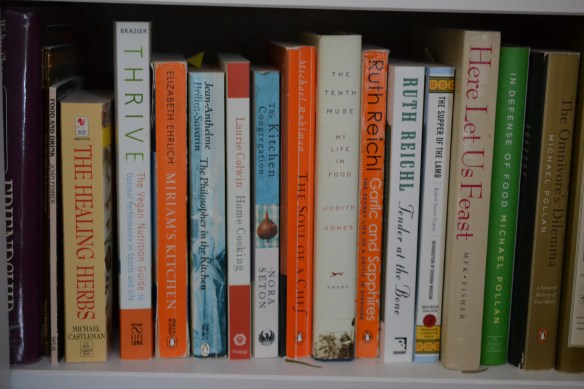
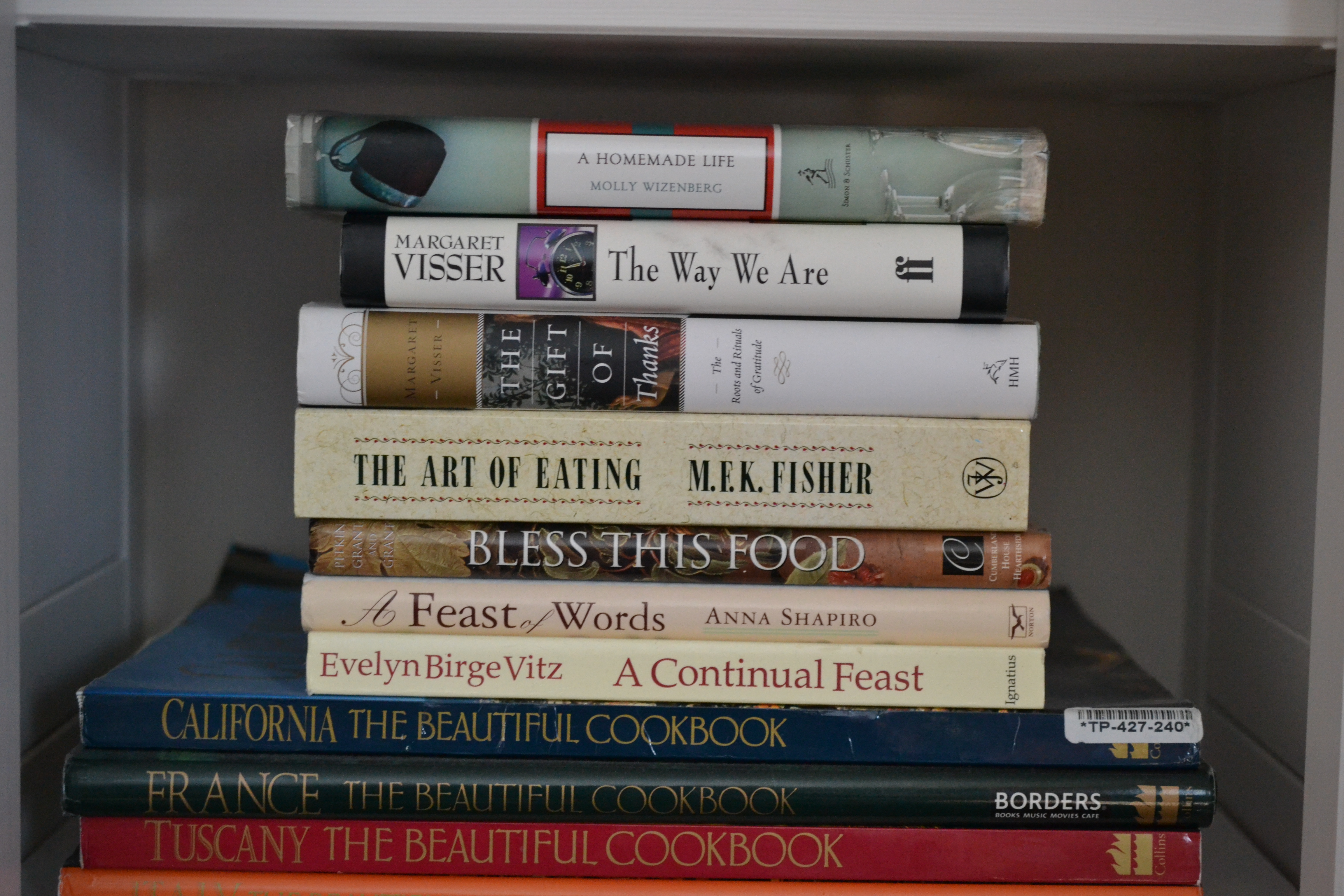
DSC_8186Foodie books!

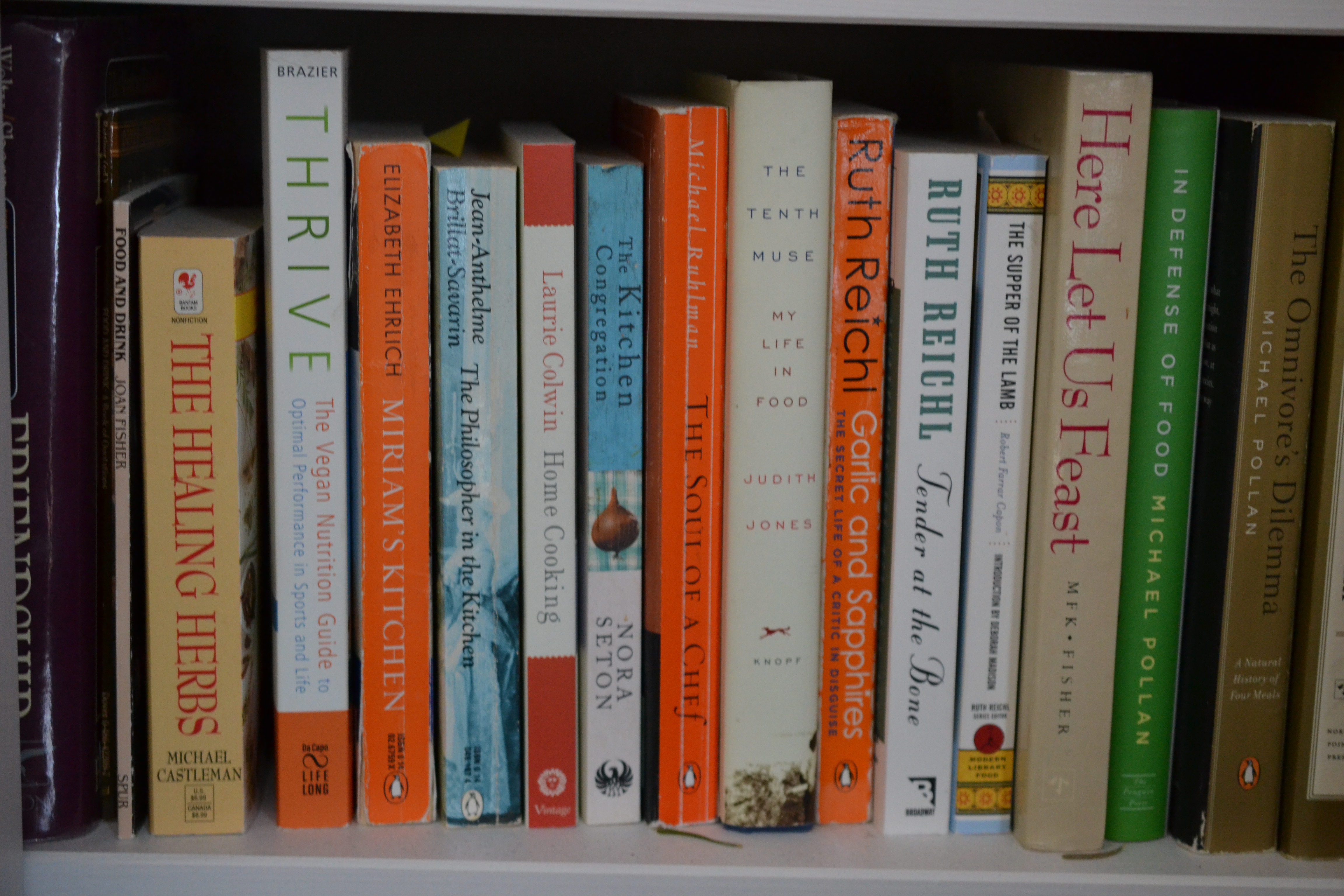
DSC_8187More foodie books.

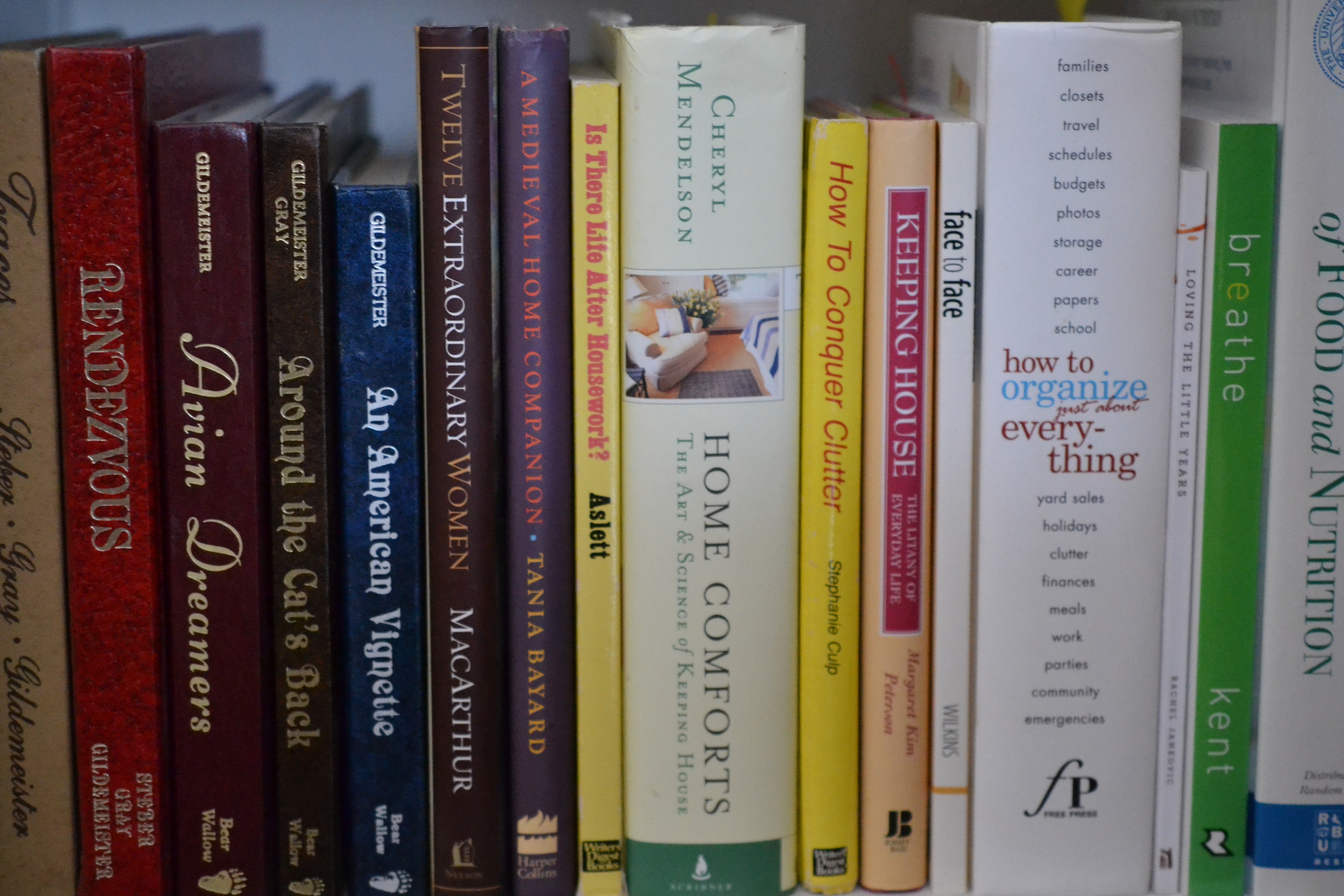
DSC_8194True story: it’s easier for me to read about various methods of eradicating dust bunnies than to bend over and pick up the dust bunny.

DSC_8195Books on writing and books on books. Pure deliciousness.

DSC_8196Music. Poetry.

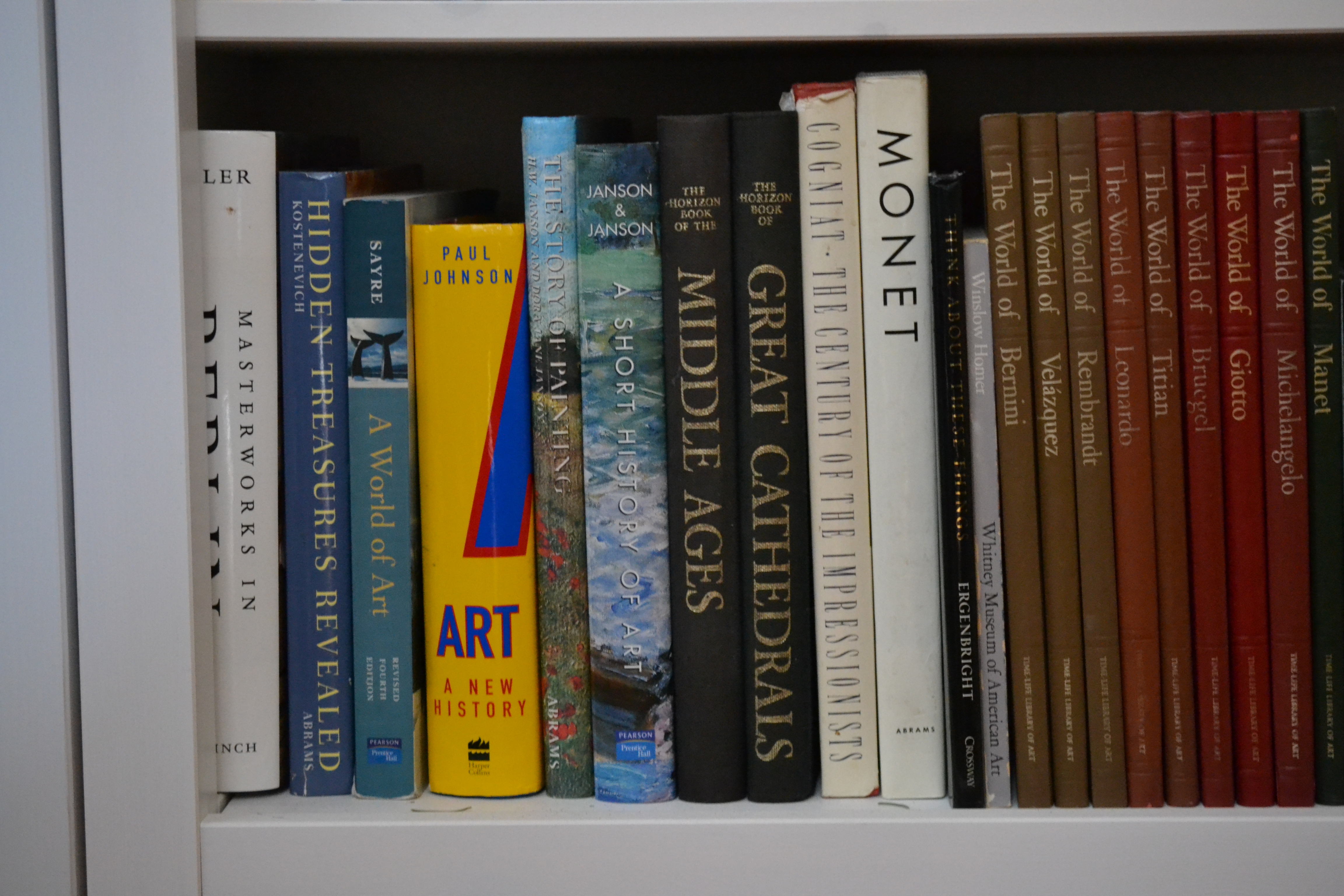
DSC_8198Art.

Children’s books, theology, travel and memoirs have their own bookcases. But they will have to get in line.

Intentional reading: the good life.

Hey! You with the eye for interior design? What would you recommend for the tops of my shelves? I’ve thought about framed photos (in matching frames) but I’m afraid they will make it too busy. Woven baskets? Eclectic collection of pottery/baskets? Empty? Your opinion is welcome.

Light, Shadows and Downton Abbey

downton-abbey-season-4-9-3{spoiler alert}

The shadows in the premiere of Season 4 of Downton Abbey are brilliant. Figuratively speaking. As the series opens Downton Abbey is shrouded in darkness with one light on. Repeatedly, key characters are shrouded in black with just one side of the face illumined. Lady Mary. Mrs. Crawley. Mrs. Hughes. Carson. Anna. Molesley.

Lady Mary is numb and unresponsive until, in a conversation with Carson, she crumbles and has a good, cathartic cry. She has been a walking sleeper and now she awakes. The next morning the sun rises and color and light explode onto the screen. Birds sing. Flowers are delivered. Mary wears a lavender dress.

The wisdom of age
Mr. Molesley the Elder: In your game, if you want the best you’ve got to be the best and work at it.
Mrs. Hughes: I wonder if you [Mrs. Crawley] would take this man into your home.
The Dowager, straight out of Deuteronomy: You have a straightforward choice before you. You must choose either death of life.  (While Mary’s choice is obvious, the Dowager’s words also apply to Edith.)

Most poignant: Lord Grantham pontificates, The price of great love is great misery when one of you dies. Softly, Branson replies: I know.

Loss of nobility: Lord Grantham. Remember how decent he was in Season 1? What bugs me is how he cloaks his desire to hold power in paternal concern for Mary. What delights me is how transparent he is to Lady Grantham and the Dowager. The way they lovingly hold him accountable is his salvation.

Love the mercy: Mercy flows through the storyline.
Griggs receives large dollops from Mrs. Huges, Mrs. Crawley, and, finally, from Carson. Moseley can’t see the mercy of Downton keeping him on six months after Matthew’s death. He despairs, but the Dowager shows mercy to him, even Edith, dear Anna, and especially Bates.
Mrs. Hughes sacrifices to help Mrs. Patmore.
Mrs. Patmore’s generous gesture to Daisy.

Love the justice: Nanny West gets her comeuppance. She’s such a minor character that we’ll forget her in a few weeks, but it was s-w-e-e-t to see her go.

Interfering: happy outcomes from the various interferences of the Dowager, Mrs. Hughes, and Bates. Not so good from Rose or from Barrow. It’s such a great quote, but I don’t agree with Violets words: It’s the job of grandmothers to interfere.

Bates and Anna: Will they replace Matthew and Mary as the happily married couple?  Bates had some tender lines: You stayed young. And Why should I be social when I have you?

Strength through service: Lady Mary and Mrs. Crawley were both told that they had strength in them. But they didn’t believe it until it they were of service to someone else. Grief is so inward. Necessarily so. Healing comes through kind service to others.

New phrase: ‘All Sir Garnet’ means everything is as it should be, from the reputation of Sir Garnet Wolseley (1833-1913), Field Marshall in British Army, for efficiency.

10 Quotes I Copied

DSC_1936You could call my method of reading and copying quotes in my journal cumbersome…and you would be correct. It slows me down, my reading gets ahead of my copying, I end up going through each book twice. Say what you’re thinking: inefficient!

But I can’t articulate the joy that I get from reliving the delight in a well-turned phrase or a clearly expressed thought when I go back through my journal. It brings back the memory of the experience of reading that book. At the top of some pages there is a date and a short description of where I am when I am copying, i.e. 5-13-13, day after Mother’s Day, at the river with Scott, Dad and Mom. Or on the plane to Raleigh-Durham, 11-8-13.

My husband is patient with my quirkiness, but he scratches his head and asks, “What am I supposed to do with these journals if you die before I do?” You know, I don’t care! They have proved their value to me here and now. Here, in chronological order of copying into my journal, are ten great quotes of 2013.

1. In his solitude he can sunder and besmirch the fellowship, or he can strengthen and hallow it. Every act of self-control of the Christian is also a service to the fellowship.
— Diietrich Bonhoeffer, Life Together

2. Distillation is selection, and selection, as I am hardly the first to affirm, is the essence of writing history. It is the cardinal process of composition, the most difficult, the most delicate, the most fraught with error as art. Ability to distinguish what is significant from what is insignificant is sine qua non. Failure to do so means that the point of the story, not to mention the reader’s interest, becomes lost in a morass of undifferentiated matter. What it requires is simply the courage and self-confidence to make choices and, above all, to leave things out. — Barbara Tuchman in Practicing History

3. Seed biscuits and milk! I hated Mrs. Mullet’s seed biscuits the way Saint Paul hated sin. Perhaps even more so. I wanted to clamber up onto the table, and with a sausage on the end of a fork as my sceptor, shout in my best Laurence Olivier voice, “Will no one rid us of the turbulent pastry cook?” — Alan Bradly in The Sweetness at the Bottom of the Pie

4. She was beloved by friends and family for her unique wit perfectly blended with a gift for hospitality and kindness to others.  — Billee Ratzlaff 1926-2013

5.  It is a rare person who isn’t somewhat traumatized by the state of his or her desk. — David Levy in Scrolling Forward

6.  In Africa, you do not view death from the auditorium of life, as a spectator, but from the edge of the stage, waiting only for your cue. You feel perishable, temporary, transient. You feel mortal.  —Peter Godwin in When a Crocodile Eats the Sun

7. There is so much in the world for us all if we only have the eyes to see it, and the heart to love it, and the hand to gather it to ourselves—so much in men and women, so much in art and literature, so much everywhere in which to delight, and for which to be thankful. — Lucy Maud Montgomery in Anne of the Island

8.  Her thoughts were always directed outward toward others, and never inward towards herself. She never in all her life knew an introspective moment. Because of this there was no murky fog of self-consciousness between herself and others. She saw not her own disabilities but them and like unclouded sunshine her warmth and light were theirs without hindrance. No one was ever shy of Peronelle—she did not give them time to be shy. She looked at them, she loved them, and with one leap she had curled herself inside their hearts. — Elizabeth Goudge in Island Magic

9.  Drink your wine. Laugh from your gut. Burden your moments with thankfulness. Be as empty as you can be when that clock winds down. Spend your life. And if time is a river, you may leave a wake.  — N.D. Wilson in Death by Living

10. To sum up, analysis and abstraction are not demons to exorcise, but like the machine, to be mastered, not obeyed. To live amid lax words and dim thoughts more or less translatable into concreteness depletes energy and deadens the joy of life. — Jacques Barzun in From Dawn to Decadence.