Playing the Moldovans at Tennis

ChisinauKircheSoborulAdormiriiMaiciDomnului2Orthodox church in Chișinău, Moldova (Photo: Wikimedia Commons)


So. Tell me what you know about Moldova, eh? Tucked between Romania and Ukraine, the former Soviet country of Moldova is the least-visited country in Europe.

I confess my interest in Moldova had been nonexistent. During a marathon phone call with one of my brothers, he tossed out a random recommendation. “I think you’d like Playing the Moldovans at Tennis,” he said. “It’s about an English guy who bets he can beat the entire Moldovan national football team one by one…playing tennis.”

Sure. Let me write down the title.

[Sidebar: I’ve long wanted to write about reading as an expression of love. If my sibling, or child, or in-law asks me to read a book, I say yes! Unless it is The Silmarillion, in which case I started; alas, I could not finish. I believe it is so valuable to have shared experiences; when you are long-distance, reading and discussing the same book bridges a gap. Reading a book a dear one loves can help you understand each other better. And spending the time to read what he/she recommends is an investment in the relationship.]

Warmth, I was learning, was a luxury commodity in Moldova.

It is quirky. The bet is so eccentric, a limp pretext for a trip to Moldova. But the travel bit is what I appreciated the most. Tony stays with a family, sees life from the inside. It is cold. It is drab. It is dispassionate. It is grim.

People came into this bar to abolish drinks. No passing of the time of day, not even a nod which acknowledged the presence of anyone else; simply a quick fix and then out again. Nurse, give me something to deaden the pain.

When he first visited in 1998 there wasn’t enough money to keep streetlights lit. So people walked the streets in the dark. Tony realizes that stuff he takes for granted in England—being warm and fed—are not givens in Moldova. The transition to independence was not easy. His host family is kind, warm, and helpful.

‘You have to remember,’ she’d said rather poetically, ‘that for more than half a century we have been like caged birds. Now the cage is open we don’t know how to fly.’

I would have enjoyed this book and would recommend it if the tone wasn’t so coarse (f-bombs, body humor, locker-room bawdiness). Tony made a full-length movie of the book, available on YouTube. I’ve only watched 20 minutes, but it might be worth a look.

The Saturday Big Tent Wedding Party

Public_transport_in_Gaborone(Public transportation in Gaborone, Botswana – photo Wikimedia Commons)

Alexander McCall Smith did a good thing when he crafted the character of Mma Precious Ramotswe. In each book, she is consistently the kind, traditional, perceptive, tender-hearted, contented woman I’ve come to regard as my friend.

And yet, he doesn’t filter out all the unsavory aspects of Botswana life. In this 12th book of the No. 1 Ladies Detective series, we see a young mother who treats her children with utter indifference, cattle killed, a menacing man and a cowed woman.

I recently finished The Saturday Big Tent Wedding Party, the twelfth book. I’m reading them out of order, according to library availability.
The title of the first chapter is The Memory of Lost Things; could it be an allusion to Proust?

As with every book in this series, I care about Mma Ramotswe’s culture ten times more than whatever mystery needs to be solved. There’s a dig at mobile phones, complainers, fathers who don’t take responsibility for their children. On the plus side is Mma’s abiding love for her late father and for her ‘late’ tiny white van, her compassion for those who suffer, the poetry of night sounds, her gratitude for Mr. J.L.B. Matekoni, her encouragement to an undeserving recipient, and the joy of an abundant wedding feast.

There is a tender moment between two bereaved women. I have a late baby, Mma. It is a long time ago. ~ I have a late child too, Mma. McCall Smith understands the permanence of grief. Almost every book has a small reference to the baby Mma Ramotswe lost.

In the end Grace Makutsi marries Phuti Radiphuti, which means she will never have to ride in public transportation again, and she can indulge her love of loud shoes. The wedding doesn’t have the prominence that the title gives it, but that’s OK.

Here is a quote to whet your appetite.

Nowadays, people are always thinking of getting somewhere—they travelled around far more, rushing from here to there and then back again. She would never let her life go that way; she would always take the time to drink tea, to look at the sky, and to talk. What else was there to do? Make money? Why? Did money bring any greater happiness than that furnished by a well-made cup of red bush tea and a moment or two with a good friend? She thought not. 230


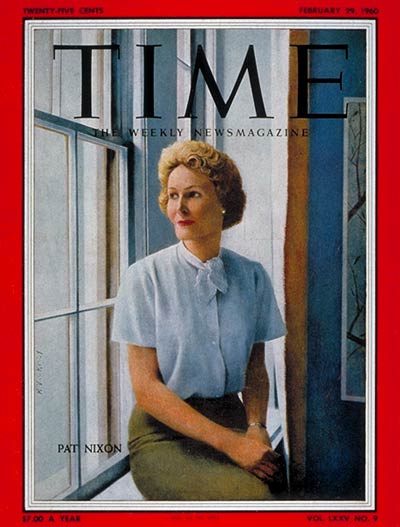
Pat Nixon

Pat-NixonAfter I finished Going Home To Glory, by David and Julie Eisenhower, (see Revisiting Eisenhower) I decided to read Julie Nixon Eisenhower’s biography of her mother, Pat Nixon: The Untold Story.

I learned a lot reading this book, first of all respect for Pat Nixon. “Overcoming adversity” is such an exhausted cliché. But how does one describe the circumstances wherein a girl—13 years old—nurses and loses her mother to cancer, then in the space of five years nurses and buries her dad; works full time to help one, then another brother go to college; enters USC at age 22 and graduates cum laude three years later after working multiple jobs?

Here’s what impressed me about Pat:

♥ Her family adored her. Her brothers, her husband, her daughters, her sons-in-law, her grandchildren. That is a major accomplishment when you have lived life in the public eye and needed to be absent from family often. Yes, this is a sympathetic biography.

♥ She reached out to people. Her default mode with crowds was to shake hands, look in the eyes: connect. It’s one thing to connect with supporters, but she pursued detractors and protesters, often disarming them with a smile. She was a cool cucumber in life-threatening situations.

♥ Discipline and duty directed her steps. Campaigning is grueling: sometimes three solo appearances during the day and an evening with her husband. Entertaining dignitaries non-stop. She never shrank from what needed to be done.

♥ She sought *and found* beauty. Flowers, colors, fashion, design.

♥ She traveled to all fifty states and over fifty countries of the world.

♥ She read. In her later years, sometimes five substantial books a week.

♥ She was a creative grandma. She played “shoe store” with her granddaughter. They lined *all* of Pat’s shoes up; her granddaughter was the sales person and Pat would ‘shop’ and try on shoes. Oh, how I want to do this with my Aria when she’s older.

♥ Her signature phrase was “Onward and upward.”

I found Pat Nixon’s funeral online…and watched the whole thing. One of the earlier songs was Vaughn Williams’ For All the Saints, a song I decided at age 17 I wanted at my funeral. Billy Graham spoke about death, describing it as five things:
— a coronation
— a cessation from labor
— a departure
— a transition, and
— an exodus or “going out”

I’m glad I read this. When I finish a book that catches my imagination, there are more books I ‘need’ to read. This is my life. Even though it smacks of voyeurism, Pat and Dick: The Nixons, An Intimate Portrait of a Marriage is a book I’m interested in reading, based on recently released love letters.
The Boys in the Boat

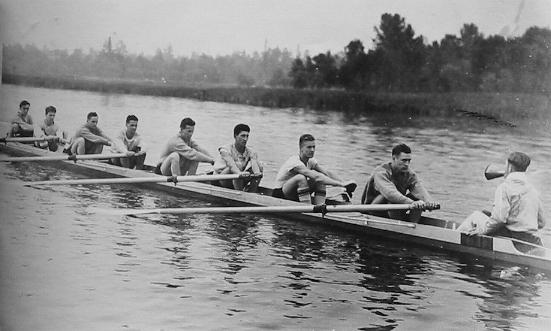
1936-team-on-waterThe Boys in the Boat consumed me while I consumed it. I blew dry my thick mop on the low setting so I could read more of it each morning. For a two week stretch I managed to work the book into every casual conversation.

In short, the book is about rowing, about the University of Washington crew who took the gold at the 1936 OIympics. Daniel James Brown tells the story with skill, weaving the personal and team history of the crew, the craft of boat building, the Nazi propaganda guru, Leni Riefenstahl, together in so spell-binding a way that, even though you know the outcome of the final race, you have to turn the page to find out.

Certain elements of the story were bound to draw me in: Nazi Germany, a motherless child, boating, work ethic, craftsmanship, athleticism. But what captured me the most was the harmony, the heartfelt cooperation, required between the boys in the boat. If you don’t like some fellow in the boat, Joe, you have to learn to like him. The combination of humility and confidence, requisite to a good crew, fascinated me. My husband has built and rowed several duck hunting scull boats in his time. By default (and by interest—his nightly question is ‘what are you reading?’) Curt gets the first feedback from my reading. But there was no way I could simply tell him about the chapter on the art of boat building. I read it aloud and reveled in his comments and appreciation.

Reading in the age of YouTube means that the scenes recreated on page are available to watch on a screen. This short book trailer shows the stunning end of the Olympic finals. (I’m glad that I saw this after I read the book; knowing the back story helped me appreciate the significance that is hard to grasp in the few seconds of the footage.) What a thrill!

As I read I bumped into “old friends”: The Suzzallo Library, Grand Coulee Dam, Fritz Kreisler(how does a world-class violinist get into a book on crew?), Louis Zamperini of Unbroken fame, and Hugh Laurie. Yeah, that Hugh Laurie! If you loved Unbroken, odds are you will like The Boys in the Boat.

It’s called “swing.” It only happens when all eight oarsmen are rowing in such perfect unison that no single action by any one is out of synch with those of all the others. It’s not just that the oars enter and leave the water at precisely the same instant. Sixteen arms must begin to pull, sixteen knees must begin to fold and unfold, eight bodies must begin to slide forward and backward, eight backs must bend and straighten all at once. Each minute action—each subtle turning of wrists—must be mirrored exactly by each oarsmen, from one end of the boat to the other.  160

The Minor Adjustment Beauty Salon

mma1When I first read The No. 1 Ladies’ Detective Agency, I chirped with evangelistic fervor about the series. But, a few disappointing books cooled that impulse to the point that I quit reading the last three books in this series.

A library hold came available so I read the books out of order. But the 14th book The Minor Adjustment Beauty Salon has rekindled my love for the traditionally built Mma Ramotswe and and her quirky assistant, Mma Makutsi. This book might appear to be about a newborn baby, but on every level it is about friendship, about rearranging a relationship that expands from business to personal. Mma Ramotswe and Mma Makutsi remind me of Marilla Cuthbert and Rachel Lynde in Anne of Green Gables.

Any book by Alexander McCall Smith will have his trademark humor. There were three snort-and-holler moments in this book. I don’t want to give them away, but prepare yourself for horse laughs.

Only to the extent that they reveal human nature do I care about the solving of mysteries in this book. No. I read for the gentle wisdom, the poignant words of Mma Ramotswe. She thinks, she ponders, she reflects. Death, sunlight, music, change, marriage, the pace of life, beauty, differences between men and women. And she truly loves Botswana. It’s so refreshing.

I don’t like Mr. J.L.B. Matekoni’s two mechanic apprentices: Charlie and Fanwell. Their characters are a waste of print. But I was surprised at Charlie’s response to the baby. He admires it, he wants to hold it; his cooing amuses and puzzles the women.

I want to highlight two passages whose beauty astonished me. One is a foot washing scene. Mma Ramotswe visits Mma Makutsi at her new home (she married Phuti Radiphuti) after a heavy rain. Her car gets stuck; she exits the car barefoot and walks through the mud to the front door.

Sidenote: only once have I participated in a foot washing ceremony. It was at a church retreat. The women gathered in a room and each one washed the feet of the person next to them. I felt humble shyness, willing to wash someone else’s feet but reluctant to have a friend wash my feet. It was emotional. It was potent. It was unforgettable.

“Let me wash them, Mma,” she said. “You sit there, I’ll wash your feet for you.”
Mma Ramotswe felt the warm embrace of the water and the slippery caress of the soap. The intimacy of the situation impressed itself upon her; that an old friend—and that was how she looked at Mma Makutsi—should do this for you was strangely moving.

And this short note on reconciliation:

And with that, she felt that most exquisite, and regrettably rare, of pleasures—that of welcoming back one who has left your life. We cannot do that with late people, Mma Ramotswe thought, much as we would love to be able to do so, but we can do it with the living.

Five solid stars and kudos to Alexander McCall Smith.

An Exaltation of Larks

     Photo Credit: Dan  Harper (my brother!)

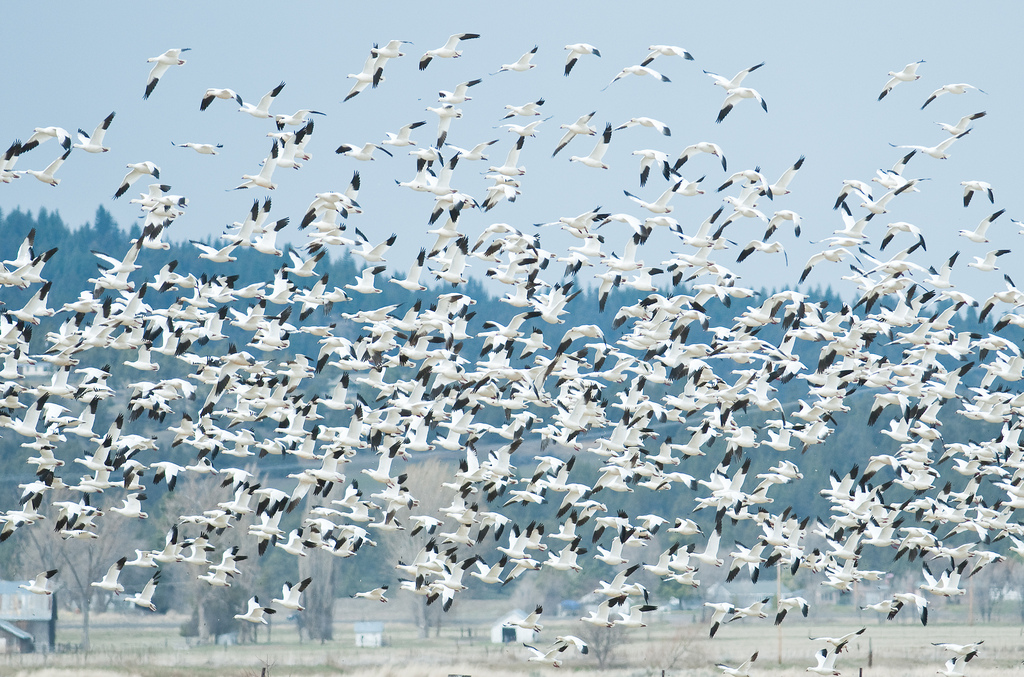
In flight, a group of geese is a SKEIN. On water, a GAGGLE of geese.  Photo Credit: Dan Harper

Initially, I misjudged James Lipton’s quirky and curious book, An Exaltation of Larks, missing the playful and fanciful element. When I read that a group of elk is called a gang, I felt only unalloyed disgust. Perhaps among flabby academicians, elk are referred to as gangs. But, I live among muscular mountain men who would laugh in derision at that term. Or fix you with a questioning stare. We sometimes take ourselves too seriously, precious.

This book didn’t grab me until I started from the beginning.

The dedication: For my mother, Betty Lipton, who showed me the way to words. (Swoon. I want my kids to say that some day.)

A CLUSTER of housecats.

A CLUSTER of housecats. Photo Credit: Dan Harper

I loved the Preface best, packed with collectable, copy-worthy quotes.

The heart and soul of this book is the concern that our language, one of our most precious natural resources, is also a dwindling one that deserves at least as much protection as our woodlands, wetlands and whooping cranes.

And this from Elizabeth Drew:

Language is like soil. However rich, it is subject to erosion, and its fertility is constantly threatened by uses that exhaust its vitality. It needs constant re-invigoration if it is not to become arid and sterile. Poetry is one great source of the maintenance and renewal of language.

This is the sort of book that fits well in a bathroom. Read a page, put it down.

Photo Credit: Dan Harper

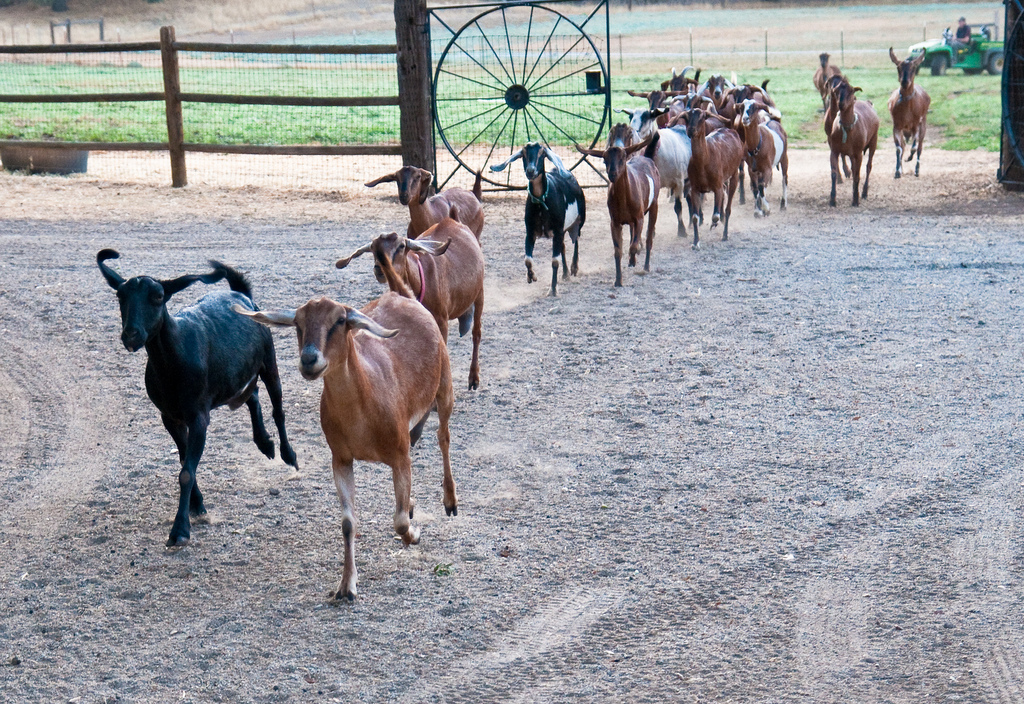
A TRIP of goats — from Icelandic thrypa, “flock,”? or a corruption of tribe? Photo: Dan Harper

Lipton encourages the reader to join a game, coming up with new collective nouns. The groups that tickled my fancy the most were the medical professions (a joint of osteopaths) and music (a pound of pianists, a bridge of lyricists). Not to mention a load of diapers or a twaddle of public speakers.

Some terms are so familiar we don’t see them as collective terms, as in Shakespeare’s a comedy of errors and a sea of troubles (from Hamlet). The book of Hebrews gives us cloud of witnesses. Does that joggle you linguistically like it does me?

The greatest challenge facing me is that of identification. Before I learn the collective terms [murmuration, charm, exaltation, murder, unkindness and dule] I need to learn to distinguish starlings, finches, larks, crows, ravens and doves.

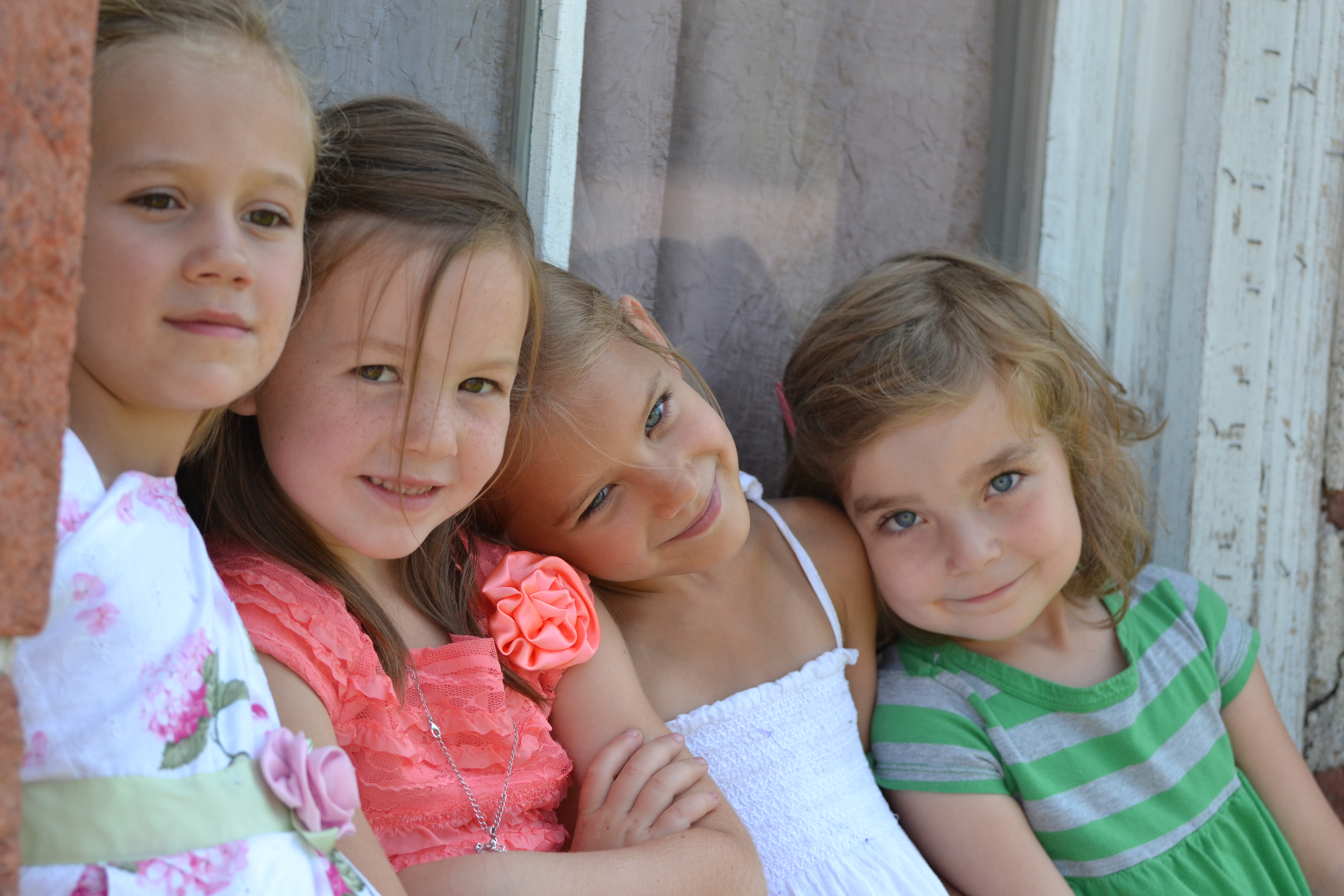
A GIGGLE of girls

A GIGGLE of girls

Ode to Toe

DSC_1693A month ago, I broke my toe.
The one most dinky, my little left pinkie.

It made me *YOWL!* tilt back and howl,
The searing pain refused to wane.

The toe, it grew, turned black and blue,
Those near it blushed like a tattoo.

But hey! today—this sumptuous day—
My husband-coach, who knows my way,
Mapped out ONE mile for my assay.

“And then,” he warned, brooking no scorn,
“Put it on ice.” I did. But, yikes!
This coldness is not paradise.

I’m not inclined to sittin’ and mopin’,
Just glad to take some ibuprofen.
The dried-off toe is elevated,
May healing thus be accelerated.

Thank you for hearing my tale of woe.
I hope you will be quick to know
The main moral, most apropos:
Try never, NEVER, to break your toe.

Revisiting Eisenhower

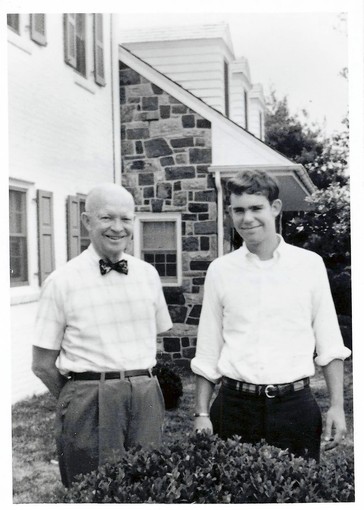
"Going Home to Glory"In 2011 I read and reviewed Volume 1 of Stephen Ambrose’s magnum opus, a biography of Eisenhower. I finally took up Eisenhower Volume II: The President, which chronicles the two terms of Ike’s presidency (1953-1961) and his retirement years.

I found the book dense and too full of details that were difficult to absorb. I plodded, rewarded by many curiosities: Eisenhower’s valet, Sgt. Moaney, dressed him. Everyday. Most of his custom-made suits were gifts; he seldom wore a suit more than twice! Mamie spent most of the day in bed, watching soap operas and attending to her correspondence.

Peace and Prosperity is how Ike wanted his tenure to be remembered. He got us out of Korea and had six consecutive balanced budgets. I find it ironic that the former five-star general continually slashed defense spending to the howls of the Joint Chiefs of Staff. The Interstate Highway system and soil conservation—paying farmers to take land out of production—were two highlights of Ike’s domestic policies. Eisenhower, not wanting to antagonize southern politicians he relied on, failed to assist the civil rights movement.

In 1955 the world had two Germany’s, two Korea’s, two Vietnam’s, and two China’s. The greatest fear during these Cold War years was the growth of communism. I’ve always wondered when and why foreign aid began. It started with Ike’s insistence that America’s prosperity wouldn’t last if other countries didn’t also prosper.  More to the point, if Third World countries went Communist, their raw materials would not be available to the U.S.

I learned about the Dulles brothers: Foster Dulles, for whom the D.C. airport is named, was Secretary of State and his brother Allen Dulles, who was the head of the CIA. The poor author had to constantly differentiate which Dulles was referenced.

A few things surprised me. Eisenhower’s cabinet urged him several times to solve a situation by dropping a nuclear bomb. It seems they did not grasp the consequences of such an action. Ike resisted each time. I was also amazed that  Kennedy and Johnson both consulted Eisenhower several times. Think about that: can you imagine President Obama asking President Bush for help?

While my interest was still warm, I decided to read David and Julie Eisenhower’s biography, Going Home To Glory, eager to read a grandson’s personal perspective. This book is more accessible, shorter, easier to grasp, more fun to read. David blends family stories with historical analysis. It is affectionate without being obeisant.

I once asked Mamie if Granddad’s compulsive restlessness, his habit of maintaining company around the clock, revealed a weakness, perhaps a fear of being alone, or a nonexistent inner life….My question unanswered, I asked her if she felt she had really known Dwight Eisenhower. She paused. “I’m not sure anyone did.”

My friend’s father was a friend of Ike’s. We have visited about his friendship with Eisenhower, Ray sharing how excited Ike was about shooting a hole-in-one, how he reenacted the shot in the telling of it. It was delightful, then, to read about this achievement in both books. Ike called it “the thrill of a lifetime,” which, when you consider Eisenhower’s life, is saying something.

I want to close this long post with two DDE quotes I find prescient and throw in a recipe he concocted.

When the federal government begins to fund education, he argued, educational institutions will find they cannot live without the assistance they receive. Then, he added with dark emphasis, the government eventually tells the educators what to do. Whether for good purposes or evil purposes, Eisenhower continued, the ability to control education has the potential to be used to promote mind control and that should be enough to recommend against letting any such thing take root.


Eisenhower’s Barbeque Sauce
1/4 cup butter
1 no. 2 can tomatoes, sieved (2 cups)
1/4 cup vinegar
1 T sugar
1 T paprika
1 small onion, finely chopped
2 tsp salt
2 tsp chili powder
1 1/2 tsp Worcestershire
1/4 tsp Tabasco
1 tsp black pepper

Mix and simmer 15 minutes. Use for basting meat or chicken, and serve as sauce for it as well.

Letter from Eisenhower to grandson, David, 1966:
Too many of us are allowing too much authority and responsibility for our lives to become concentrated in Washington. I think it is just as important to develop enthusiasm for the election of a proper city council, a county board of commissioners, or statewide governor and legislature as it is to get the right man in the Presidency. Indeed, if we had better and stronger government at lower levels we would do much to reduce the risk that one day we are going to be governed by an entrenched and organized bureaucracy.

Mom, Migration, and Graduation

Nellie young

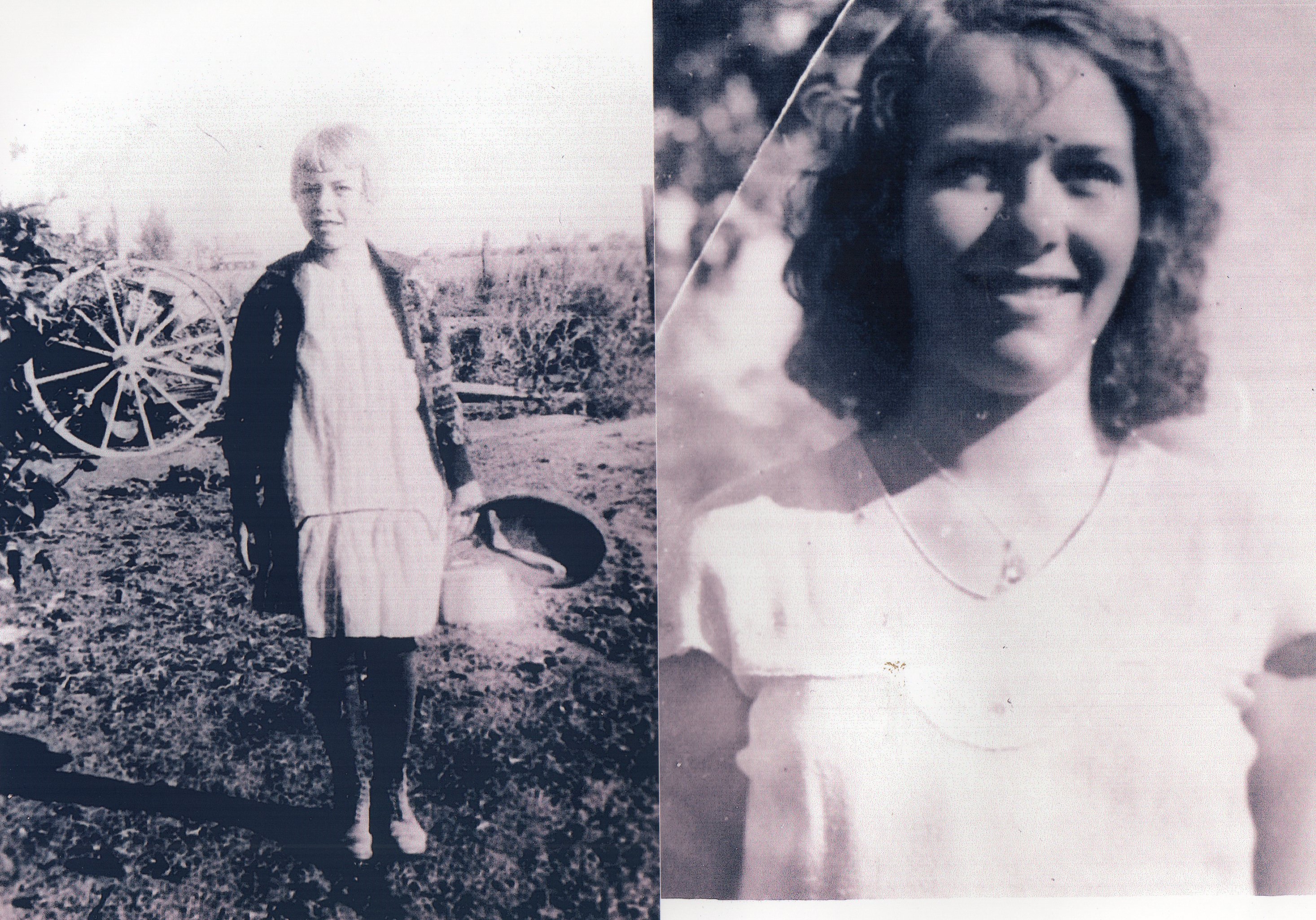
Mom was raised in Wapato, Washington, in a farming family in a farming community. Her father, a widower with two sons, married a much younger woman who had immigrated to America from the Netherlands. They had two daughters and three sons. Mom was the oldest.

Hers was a life of rising early, milking cows, doing chores, watching siblings, weeding gardens, canning produce, cleaning up. Evidently it was also a life of reading and studying. After she graduated from high school, she studied one year at Biola (Bible Institute of Los Angeles).

She wanted to transfer to a recently established college in Dayton, Tennessee, named after William Jennings Bryan. She was offered a car ride across the country—before the interstate highway system—, so she decided to check it out. Her mom was doubtful. She wondered how Nellie would pay for tuition and books? The admissions director had the same question, asking her what skills she had. “I know how to milk cows,” Mom offered. It just so happened that the college had cows but lacked knowledgeable milkers. So she was hired. She earned money ironing and eked out a degree with academic distinction.

She also met my dad, whom she called “Johnny.”  She wrote in his yearbook: “Labs, water fights, Gutenburg trips, Sun. Piano playing, Street meetings, Dr. Gregg, or reading together, I’ve enjoyed it all and been blessed by it. He has been extra good to us, hasn’t He? Ps 103 — Nellie. I Cor 15:58

It’s a wonder to me that Mom started in the Yakima Valley of Washington and ended in Lombard, IL, two states over from Ohio, where her father began his life. And I, raised in Lombard, settled a few hours south from where she lived.

I’m gobsmacked that this quiet girl took it upon herself to ride halfway across the nation to go to an unknown college. I hitched a ride with friends to go to one year of Bible school in Los Angeles. My plan was to establish residency and go to UCLA. I never stepped on the campus, frozen with fear. If I had but asked, a dozen people would have been willing to help me navigate both the mass transit and the admissions process.

So Mom migrated, milked her way through school, and graduated. She never knew that her oldest son became both a scholar and a dairy farmer. I imagine a conversation today between her and David, her intelligent questions and thoughtful replies. She would chuckle and sigh, “Farming sure has changed.”

Mom left her mark at Bryan. Reading her senior yearbook, I find these benedictions:

Your life has been a blessing and joy to us. — Eugene Rosenau

I’m unable to tell you what your daily work has meant in my life! — Cleo Graham

I’ll never forget what a friend in need you were. Knowing you has really enriched my life. —Dorothy Borror

I’ll never forget your beautiful smiles. — Delbert Baker

Thanks for letting me sleep in your bed overnights-even if there were stones in it! I could never tell you what a blessing you’ve been to me this year. I really enjoyed my frequent visits to your rooms. — Miriam Levengood

Years later, I’ve been told, Mom was in the throes of a nursing baby, dirty diapers, hungry toddlers, and active preschoolers. My dad arrived home, scooped up a child, and asked the most pressing question on his mind: “Did you study your Greek today?”

Yesterday, on the (46th!) anniversary of her death, I talked to my husband about my mom. A sob caught in my throat, and I admitted, “I still miss her.” He nodded and said, “One day you’ll never have to miss her again.”

Sister Monica Joan’s Books

sistermonicajoan

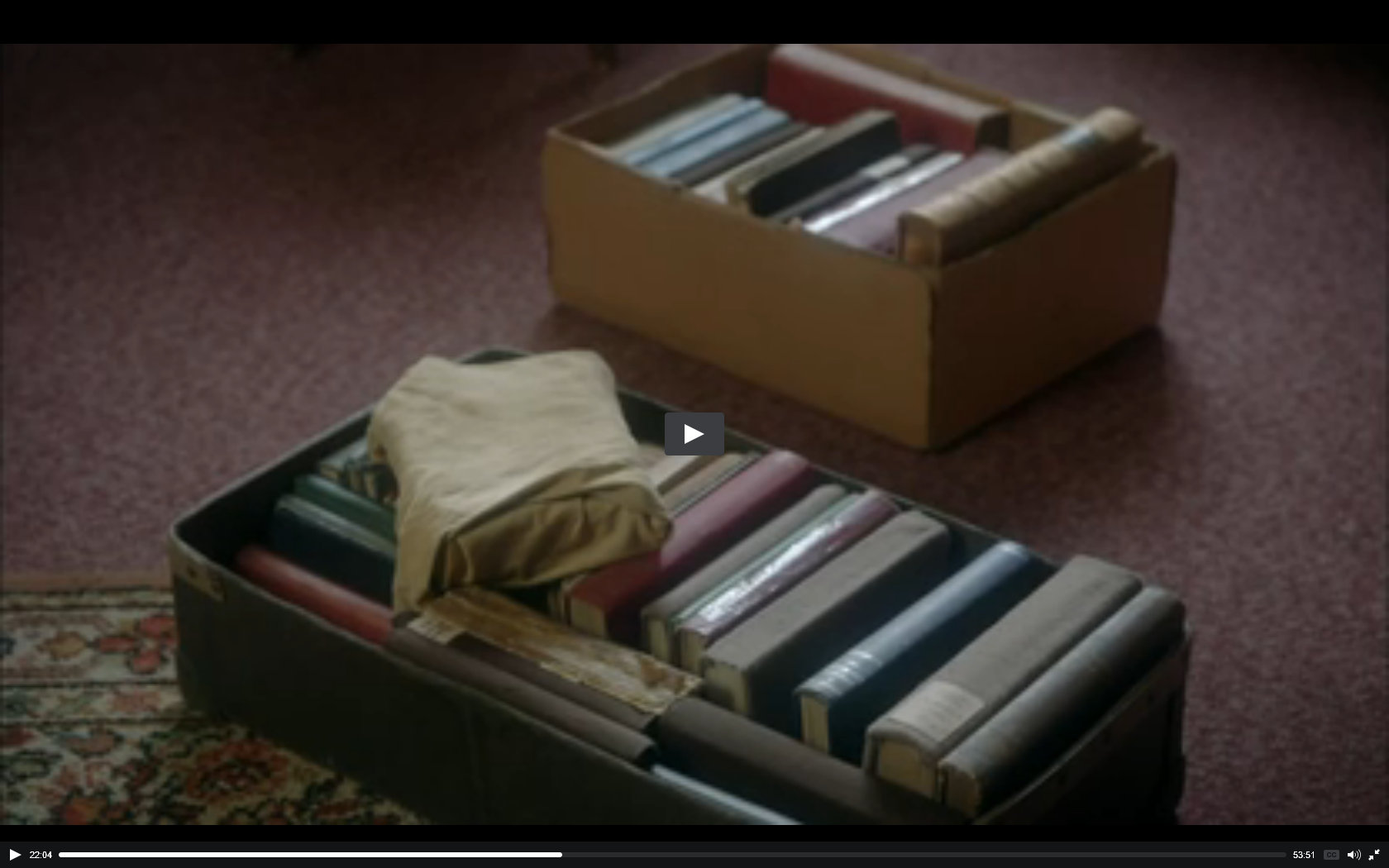
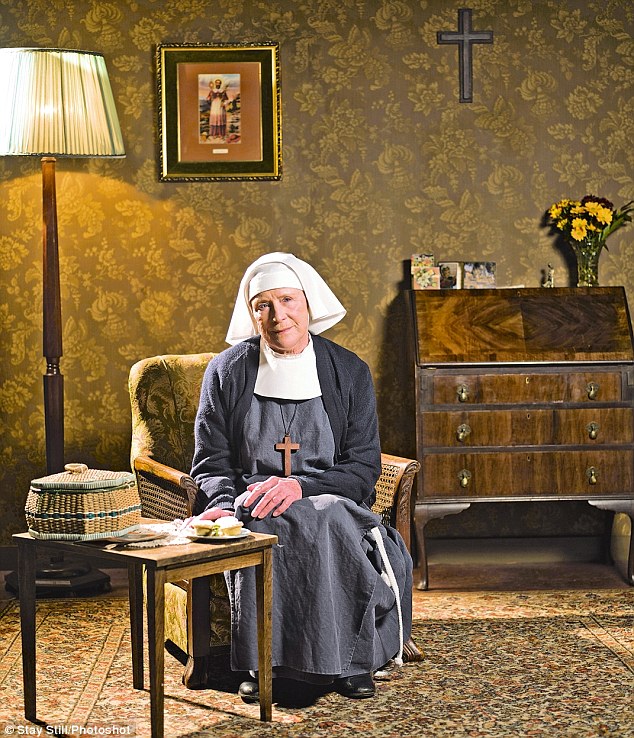
Catching up on the new season of Call the Midwife, I was captured by Sister Monica Joan’s compulsion to get her books in order. The Nonnatus House moves to a new location; she is fixated on her boxes of hardbound books, her board and brick shelves. And I watch with abounding empathy.  I. get. her.

I snort when she says, “I have put Plato here, next to Mr. Freud, so they can be companions in their ignorance.”

Like Violet, the Dowager Countess of Downton Abbey, Sister Monica Joan gets the best lines. The community of Nonnatus House are patient and proprietary as SMJ toggles between dementia and a sound mind.

In a moment full of poignancy, Sister Monica Joan admits, “Sister, I cannot deny that my memory is in need of — — refreshment.”

Fullscreen capture 4242014 61237 PMThis exchange had me talking aloud to the computer screen:

Sister Monica Joan: I am not brought down now!
I am well….and filled with purpose.
[
Yes, I cheer. Yes! Yes! Yes! Organizing bookshelves is replete with purpose!]

Sister Evangelina: I can see that.
Never been a reader, always a doer.
Books passed me by when I was young
.
[It’s not too late, I plead with a character on a TV show.
I know I could find a good book for you to read.]

Sister Monica Joan: Oh, books have been my friends!
I do not intend to forget what they have taught me
.
[No, I nod, we can’t forget. Well, we try hard not to forget.]

Fullscreen capture 4242014 61455 PMSister Monica Joan, I love you.

(I conducted a long and fruitless search for pictures from that scene, and settled on a few screen shots.)

The most economical deal I found ($5.87) on the books (which we—the royal we—must read) is Tales from a Midwife: True Stories of the East End in the 1950s, which binds the three books (992 pages!) by Jennifer Worth about midwifery together. I purchased mine from a UK seller and received it in seven days.

I’m highly interested in Jennifer Worth’s book about end-of-life care.