

My Grief Will Not Stop the Green

DSC_9186Parting with a View

I don’t reproach the spring
for starting up again.
I can’t blame it
for doing what it must
year after year.

I know that my grief
will not stop the green.
The grass blade may bend
but only in the wind.

It doesn’t pain me to see
that clumps of alders above the water
have something to rustle with again.

I take note of the fact
that the shore of a certain lake
is still—as if you were living—
as lovely as before.

DSC_3750I don’t resent
the view for its vista
of a sun-dazzled bay.

I am even able to imagine
some non-us
sitting at this minute
on a fallen birch trunk.

I respect their right
to whisper, laugh,
and lapse into happy silence.

I can even allow
that they are bound by love
and that he holds her
with a living arm.

DSC_2792Something freshly birdish
starts rustling in the reeds.
I sincerely want them to hear it.

I don’t require changes from the surf,
now diligent, now sluggish,
obeying not me.

I expect nothing
from the depths near the woods,
first emerald, then sapphire, than black.

DSC_2445
There’s one thing I won’t agree to:
my own return.
The privilege of presence
I give it up.

I survived you by enough,
and only by enough,
to contemplate from afar.

— Wislawa Szymborska
Translated from Polish by Stanislaw Baranczak and Clare Cavanagh
from Poems New and Collected

Three dear friends of mine are approaching the one-year mark of grief,
the dreadful day they went from wife to widow in a moment.
They came immediately to mind as I pondered this poem.

A Wreath for Emmett Till

emmetttillThis squeezed all the breath out of my soul. Horror. Sorrow from Emmett’s lynching. Beauty—so sharp it stings—of the words woven so we remember Emmett Till.

Emmett Louis Till (1941-1955) was a Chicago boy visiting relatives in Mississippi. Believing that he whistled at a white woman, two men took him from his uncle’s house and murdered him. Mutilated him. The alleged murderers were found ‘not guilty’  but those ‘innocent’ men openly explained how they killed Emmett months after the trial. Emmett’s mother, Mamie, became an activist for civil rights.

Marilyn Nelson’s poem is a heroic crown of sonnets. A sonnet is a fourteen-line rhyming poem. A crown of sonnets links each sonnet together: the last line of the preceding sonnet is the first line of the next sonnet. A heroic crown has fourteen sonnets followed by a fifteenth, made up of the first lines of the first fourteen. This for a boy whose years were fourteen.

Nelson writes:

The strict form became a kind of insulation, a way of protecting myself from the intense pain of the subject matter, and a way to allow the Muse to determine what the poem would say.

The poem is a masterpiece of form, a crown that circles around to the beginning. It is a gruesome subject, but we must bear witness to atrocity. Notes in the back explain what Nelson had in mind with each sonnet, pointing out allusions. This, dear reader, is not obscure poetry. Here is the final sonnet, an acrostic collection of fourteen first lines.

Rosemary for remembrance, Shakespeare wrote.
If I could forget, believe me, I would.
Pierced by the screams of a shortened childhood,

Emmett Till’s name still catches in my throat.
Mamie’s one child, a body thrown to bloat,
Mutilated boy martyr. If I could
Erase the memory of Emmett’s victimhood,
The memory of monsters … That bleak thought
Tears through the patchwork drapery of dreams.
Let me gather spring flowers for a wreath:
Trillium, apple blossoms, Queen Anne’s lace,
Indian pipe, bloodroot, white as moonbeams,
Like the full moon, which smiled calmly on his death,
Like his gouged eye, which watched boots kick his face.

There is an idea, an ancient idea, that flowers represent ideas. If you’ve read or seen Hamlet, you’ll remember Ophelia’s line, “There’s rosemary, that’s for remembrance.” My sister-in-law and I were talking about this last month; she told me that she often puts some rosemary in a note of condolence. The wreath is woven not only with words, but with flowers as tropes.

Someone—bless you!—recommended Marilyn Nelson’s book, Carver: a life in poems, which I got from the library. I read a third of the way through, stopped and bought the book. The same with Emmett Till: a library book on my Kindle, but I needed to own it. I now anticipate reading all Nelson’s books. Along with Wendell Berry and Billy Collins, Marilyn Nelson is in my list of favorite living poets.

Pat Nixon

Pat-NixonAfter I finished Going Home To Glory, by David and Julie Eisenhower, (see Revisiting Eisenhower) I decided to read Julie Nixon Eisenhower’s biography of her mother, Pat Nixon: The Untold Story.

I learned a lot reading this book, first of all respect for Pat Nixon. “Overcoming adversity” is such an exhausted cliché. But how does one describe the circumstances wherein a girl—13 years old—nurses and loses her mother to cancer, then in the space of five years nurses and buries her dad; works full time to help one, then another brother go to college; enters USC at age 22 and graduates cum laude three years later after working multiple jobs?

Here’s what impressed me about Pat:

♥ Her family adored her. Her brothers, her husband, her daughters, her sons-in-law, her grandchildren. That is a major accomplishment when you have lived life in the public eye and needed to be absent from family often. Yes, this is a sympathetic biography.

♥ She reached out to people. Her default mode with crowds was to shake hands, look in the eyes: connect. It’s one thing to connect with supporters, but she pursued detractors and protesters, often disarming them with a smile. She was a cool cucumber in life-threatening situations.

♥ Discipline and duty directed her steps. Campaigning is grueling: sometimes three solo appearances during the day and an evening with her husband. Entertaining dignitaries non-stop. She never shrank from what needed to be done.

♥ She sought *and found* beauty. Flowers, colors, fashion, design.

♥ She traveled to all fifty states and over fifty countries of the world.

♥ She read. In her later years, sometimes five substantial books a week.

♥ She was a creative grandma. She played “shoe store” with her granddaughter. They lined *all* of Pat’s shoes up; her granddaughter was the sales person and Pat would ‘shop’ and try on shoes. Oh, how I want to do this with my Aria when she’s older.

♥ Her signature phrase was “Onward and upward.”

I found Pat Nixon’s funeral online…and watched the whole thing. One of the earlier songs was Vaughn Williams’ For All the Saints, a song I decided at age 17 I wanted at my funeral. Billy Graham spoke about death, describing it as five things:
— a coronation
— a cessation from labor
— a departure
— a transition, and
— an exodus or “going out”

I’m glad I read this. When I finish a book that catches my imagination, there are more books I ‘need’ to read. This is my life. Even though it smacks of voyeurism, Pat and Dick: The Nixons, An Intimate Portrait of a Marriage is a book I’m interested in reading, based on recently released love letters.

The Boys in the Boat

1936-team-on-waterThe Boys in the Boat consumed me while I consumed it. I blew dry my thick mop on the low setting so I could read more of it each morning. For a two week stretch I managed to work the book into every casual conversation.

In short, the book is about rowing, about the University of Washington crew who took the gold at the 1936 OIympics. Daniel James Brown tells the story with skill, weaving the personal and team history of the crew, the craft of boat building, the Nazi propaganda guru, Leni Riefenstahl, together in so spell-binding a way that, even though you know the outcome of the final race, you have to turn the page to find out.

Certain elements of the story were bound to draw me in: Nazi Germany, a motherless child, boating, work ethic, craftsmanship, athleticism. But what captured me the most was the harmony, the heartfelt cooperation, required between the boys in the boat. If you don’t like some fellow in the boat, Joe, you have to learn to like him. The combination of humility and confidence, requisite to a good crew, fascinated me. My husband has built and rowed several duck hunting scull boats in his time. By default (and by interest—his nightly question is ‘what are you reading?’) Curt gets the first feedback from my reading. But there was no way I could simply tell him about the chapter on the art of boat building. I read it aloud and reveled in his comments and appreciation.

Reading in the age of YouTube means that the scenes recreated on page are available to watch on a screen. This short book trailer shows the stunning end of the Olympic finals. (I’m glad that I saw this after I read the book; knowing the back story helped me appreciate the significance that is hard to grasp in the few seconds of the footage.) What a thrill!

As I read I bumped into “old friends”: The Suzzallo Library, Grand Coulee Dam, Fritz Kreisler(how does a world-class violinist get into a book on crew?), Louis Zamperini of Unbroken fame, and Hugh Laurie. Yeah, that Hugh Laurie! If you loved Unbroken, odds are you will like The Boys in the Boat.


It’s called “swing.” It only happens when all eight oarsmen are rowing in such perfect unison that no single action by any one is out of synch with those of all the others. It’s not just that the oars enter and leave the water at precisely the same instant. Sixteen arms must begin to pull, sixteen knees must begin to fold and unfold, eight bodies must begin to slide forward and backward, eight backs must bend and straighten all at once. Each minute action—each subtle turning of wrists—must be mirrored exactly by each oarsmen, from one end of the boat to the other.  160

This and That

DSC_8975Perhaps if I can unravel some random thoughts, I might then clean my house.

End-of-life discussion: We recently had a conversation with a group of informed friends which has shoved its way into the front of my thoughts every day since. One book referenced was Jennifer Worth’s (of Call the Midwife fame) memoir In the Midst of Life. I want to blog about it once I’ve corralled my thoughts. Before that talk, my husband and I sat down to each fill out an Advance Directive, thinking we could accomplish this task in twenty minutes. Whoa!! We are different. Those ADs still sit on my desk….

Survivor: We’re having lunch with my mom’s brother, my one remaining uncle, next week. He is sensible to the position he holds, as repository of family lore, and is actively sending me photos and information. He exudes good cheer and laughter, turning a pun, teasing himself, loving life. When we talked on the phone this morning, he was preparing to plant potatoes.

Hunger Games:  Curt’s co-worker really wanted Curt to listen to HG so they could talk about them. In a throwback to the early days of marriage, we have cleaned up the kitchen (or not), turned the lights off, sat on a comfortable chair in our living room, and listened to a few chapters each night.

Later one night, we enumerated the allusions to the Roman Empire. Curt then said one word: Panem. But he thought he was saying: Pan Am.
I, thinking how fun it was to have pillow talk in Latin, replied et circenses.
Huh? a perplexed husband.
Bread and circuses, I expatiated.
What??
You said “bread”, I said “and circuses.” You know! Rome! Entertain the masses.
Babe, I thought the city was Pan Am...like Pan American, or something.
And the laughter from that exchange was propelled me through the week.

Follow the threads and look what you find: I’m slogging through Stephen Ambrose’s Eisenhower Volume II: The President. Confused, I needed to differentiate the Dulles brothers: Foster Dulles—the DC airport is named after him—was Ike’s Secretary of State, and his brother, Allen Dulles, was head of the CIA. I’m forever curious about famous people’s children. Foster Dulles’ son, Avery Dulles, (1918-2008) was a Jesuit priest who has piqued my interest. His farewell “speech” (read by another because of his loss of speech) includes these words:

Suffering and diminishment are not the greatest of evils but are normal ingredients in life, especially in old age. They are to be expected as elements of a full human existence.

Well into my 90th year I have been able to work productively. As I become increasingly paralyzed and unable to speak, I can identify with the many paralytics and mute persons in the Gospels, grateful for the loving and skillful care I receive and for the hope of everlasting life in Christ. If the Lord now calls me to a period of weakness, I know well that his power can be made perfect in infirmity. “Blessed be the name of the Lord!”

Reminders of Mortality

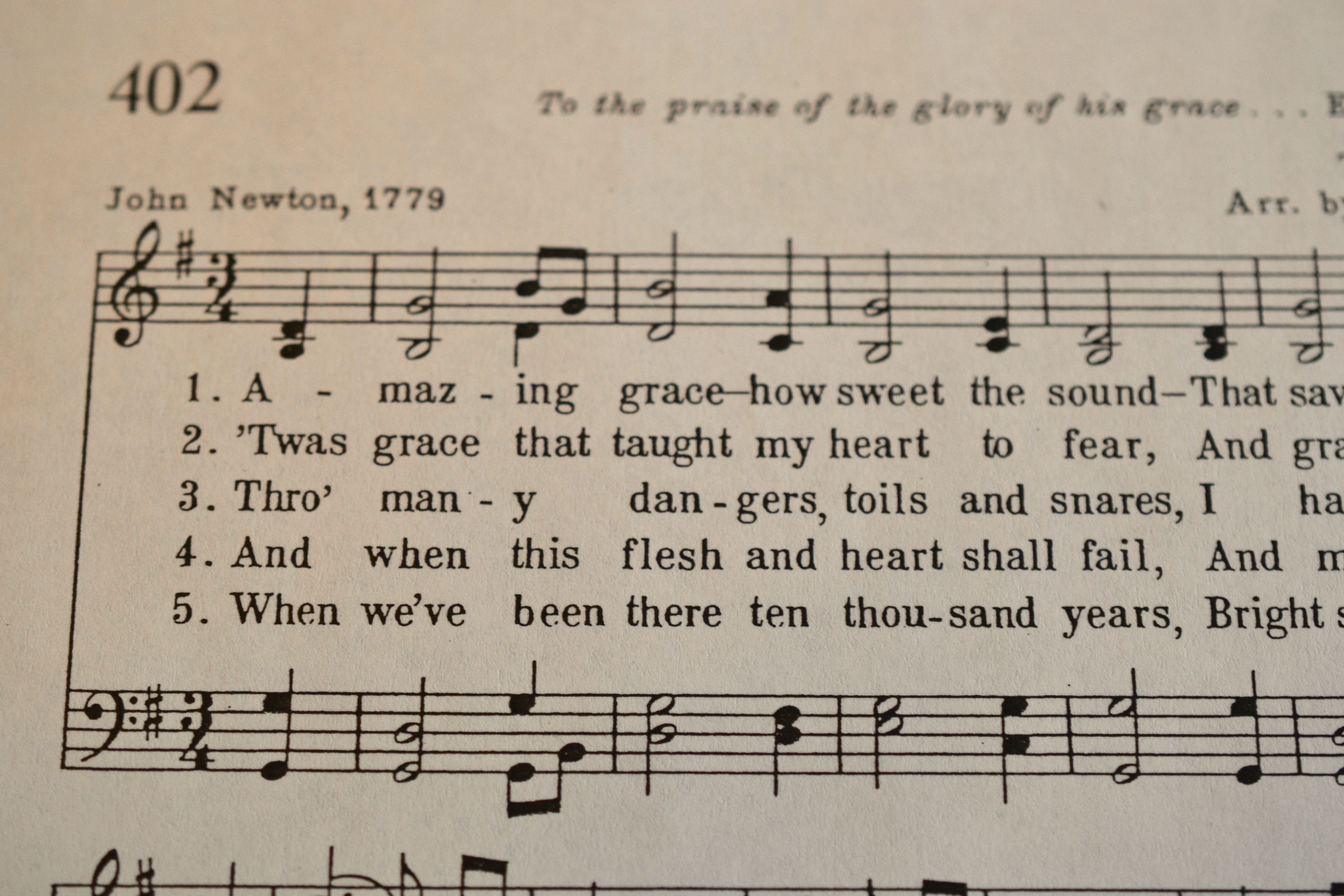
DSC_8672One thing hymns do so well is remind us of our mortality. A lifetime of singing lyrics that regularly refer to death prepares us for that one moment from which we can’t escape.

Yesterday I knew that our friend Dean’s life was hanging in the balance. After a long bout with congestive heart failure, he had had a heart attack. His daughter wrote me that the next 24 hours would be vital. As I sung yesterday’s hymns my heart prayed for Dean and for his family.

And when this flesh and heart shall fail,
And mortal life shall cease,
I shall possess within the veil
A life of joy and peace.  (from Amazing Grace)

Redeeming love has been my theme,
And shall be till I die  (from There Is a Fountain)

Be near when I am dying,
O show my cross to me;
And for my succor flying,
Come, Lord, to set me free:
These eyes, new faith receiving,
From Jesus shall not move;
For he who dies believing
Dies safely, through thy love. (from O Sacred Head)

We arrived home late, after a long day unplugged from technology and plugged into friendships. I checked my messages to find out that Dean had died a few hours before.

Sitting on my desk is a sticky note reminding me to send a card. It says “Dean – Even down to old age.”  Today he is in glory — doesn’t need encouragement.

Even down to old age all my people shall prove
My sovereign, eternal, unchangeable love.
(from How Firm a Foundation)

Motherless Daughters

DSC_8335

By 1996 I was certain sure I had made peace with grief.  Sorrow was a sealed file with the words RESOLVED stamped on the front.  I had been “moving on”, as they say, for decades.

Suddenly, with the stealth of a B-2 bomber, grief pounced and hijacked me.  While I was held hostage, facing my familiar adversary, I had the sense of confusion and disbelief: This cannot be happening to me.  It seemed surreal, disconnected, in short, unbelievable.

It was in that context of confused ongoing mourning that I first read Motherless Daughters.

My mother-in-law wanted to help; she gave me this book with the hesitant hope that it might give me something she herself couldn’t give.  I planted myself in the small bathroom at 10:00 p.m. on a Saturday night and started reading.  By 4:00 a.m. I had finished the book, exhausted, soggy,  numb, and emotionally done-in.

When Hope Edelman wrote about experiences, emotions and situations that I knew firsthand in my soul but had never spoken aloud, it could only be described as cathartic.  Edelman gave me words to articulate the sorrow and, more than anything, helped me to understand the nature of grief.  The first chapter, The Seasons of Grieving, is the best concise summary of grief that I have ever read.

I recently revisited Hope’s narrative.  I was surprised to see statements I’ve been saying so long that I thought they were my very own.  The words of the first chapter are still powerful and continue to resonate in my soul.  Back in 1996, they reassured me that I wasn’t some freak of nature who refused to “get over it.”

Having said that, I found the predominant value of this book much more in its diagnosis than in its therapy.

Quotes to copy:

Like most other families that lose a mother, mine coped as best it could, which meant, essentially, that we avoided all discussion of the loss and pretended to pick up exactly where we’d left off.

“My mother died when I was nineteen,” [Anna] Quindlen wrote. “For a long time, it was all you needed to know about me, a kind of vest-pocket description of my emotional complexion:  ‘Meet you in the lobby in ten minutes–I have long brown hair, am on the short side, have on a red coat, and my mother died when I was nineteen.'”

Ten years ago I was convinced I’d finished mourning my mother.  The truth was, I’d barely begun.

Edelman describes a random incident years after her mother’s death where she is balled up in physical pain, clutching her stomach.  She had thought she had sailed through the five stages of death and moved on.  I had a similar moment when, as if lightening from heaven, I was struck, pierced, skewered, with overwhelming grief.  I thought I was well-adjusted, “normal” and that everything was copacetic.  For no discernable reason (I mean the timing of the episode) I was brought to my knees, in tears, and incapable of articulating anything but deep, deep pain.  I ended up in a seldom-used restroom in our church, gasping for air, howling in anguish.  Someone got my husband and told him to go in and check on me.

Here’s what I’ve learned about grief since then: It’s not linear.  It’s not predictable.  It’s anything but smooth and self-contained.  Someone did us all a grave injustice by first implying that mourning has a distinct beginning, middle, and end.  That’s the stuff of short fiction.  It’s not real life.

Grief goes in cycles, like the seasons, like the moon.  No one is better created to understand this than a woman, whose bodily existence is marked by a monthly rhythm for more than half her life.