Pat Nixon

Pat-NixonAfter I finished Going Home To Glory, by David and Julie Eisenhower, (see Revisiting Eisenhower) I decided to read Julie Nixon Eisenhower’s biography of her mother, Pat Nixon: The Untold Story.

I learned a lot reading this book, first of all respect for Pat Nixon. “Overcoming adversity” is such an exhausted cliché. But how does one describe the circumstances wherein a girl—13 years old—nurses and loses her mother to cancer, then in the space of five years nurses and buries her dad; works full time to help one, then another brother go to college; enters USC at age 22 and graduates cum laude three years later after working multiple jobs?

Here’s what impressed me about Pat:

♥ Her family adored her. Her brothers, her husband, her daughters, her sons-in-law, her grandchildren. That is a major accomplishment when you have lived life in the public eye and needed to be absent from family often. Yes, this is a sympathetic biography.

♥ She reached out to people. Her default mode with crowds was to shake hands, look in the eyes: connect. It’s one thing to connect with supporters, but she pursued detractors and protesters, often disarming them with a smile. She was a cool cucumber in life-threatening situations.

♥ Discipline and duty directed her steps. Campaigning is grueling: sometimes three solo appearances during the day and an evening with her husband. Entertaining dignitaries non-stop. She never shrank from what needed to be done.

♥ She sought *and found* beauty. Flowers, colors, fashion, design.

♥ She traveled to all fifty states and over fifty countries of the world.

♥ She read. In her later years, sometimes five substantial books a week.

♥ She was a creative grandma. She played “shoe store” with her granddaughter. They lined *all* of Pat’s shoes up; her granddaughter was the sales person and Pat would ‘shop’ and try on shoes. Oh, how I want to do this with my Aria when she’s older.

♥ Her signature phrase was “Onward and upward.”

I found Pat Nixon’s funeral online…and watched the whole thing. One of the earlier songs was Vaughn Williams’ For All the Saints, a song I decided at age 17 I wanted at my funeral. Billy Graham spoke about death, describing it as five things:
— a coronation
— a cessation from labor
— a departure
— a transition, and
— an exodus or “going out”

I’m glad I read this. When I finish a book that catches my imagination, there are more books I ‘need’ to read. This is my life. Even though it smacks of voyeurism, Pat and Dick: The Nixons, An Intimate Portrait of a Marriage is a book I’m interested in reading, based on recently released love letters.

The Boys in the Boat

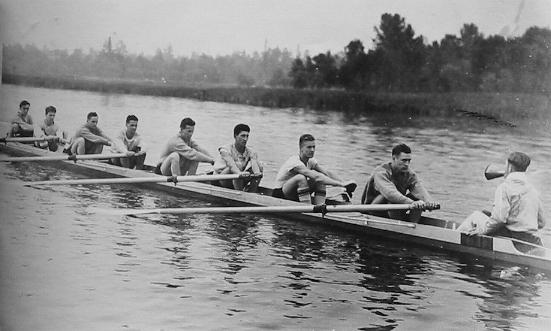
1936-team-on-waterThe Boys in the Boat consumed me while I consumed it. I blew dry my thick mop on the low setting so I could read more of it each morning. For a two week stretch I managed to work the book into every casual conversation.

In short, the book is about rowing, about the University of Washington crew who took the gold at the 1936 OIympics. Daniel James Brown tells the story with skill, weaving the personal and team history of the crew, the craft of boat building, the Nazi propaganda guru, Leni Riefenstahl, together in so spell-binding a way that, even though you know the outcome of the final race, you have to turn the page to find out.

Certain elements of the story were bound to draw me in: Nazi Germany, a motherless child, boating, work ethic, craftsmanship, athleticism. But what captured me the most was the harmony, the heartfelt cooperation, required between the boys in the boat. If you don’t like some fellow in the boat, Joe, you have to learn to like him. The combination of humility and confidence, requisite to a good crew, fascinated me. My husband has built and rowed several duck hunting scull boats in his time. By default (and by interest—his nightly question is ‘what are you reading?’) Curt gets the first feedback from my reading. But there was no way I could simply tell him about the chapter on the art of boat building. I read it aloud and reveled in his comments and appreciation.

Reading in the age of YouTube means that the scenes recreated on page are available to watch on a screen. This short book trailer shows the stunning end of the Olympic finals. (I’m glad that I saw this after I read the book; knowing the back story helped me appreciate the significance that is hard to grasp in the few seconds of the footage.) What a thrill!

As I read I bumped into “old friends”: The Suzzallo Library, Grand Coulee Dam, Fritz Kreisler(how does a world-class violinist get into a book on crew?), Louis Zamperini of Unbroken fame, and Hugh Laurie. Yeah, that Hugh Laurie! If you loved Unbroken, odds are you will like The Boys in the Boat.

It’s called “swing.” It only happens when all eight oarsmen are rowing in such perfect unison that no single action by any one is out of synch with those of all the others. It’s not just that the oars enter and leave the water at precisely the same instant. Sixteen arms must begin to pull, sixteen knees must begin to fold and unfold, eight bodies must begin to slide forward and backward, eight backs must bend and straighten all at once. Each minute action—each subtle turning of wrists—must be mirrored exactly by each oarsmen, from one end of the boat to the other.  160

The Minor Adjustment Beauty Salon

mma1When I first read The No. 1 Ladies’ Detective Agency, I chirped with evangelistic fervor about the series. But, a few disappointing books cooled that impulse to the point that I quit reading the last three books in this series.

A library hold came available so I read the books out of order. But the 14th book The Minor Adjustment Beauty Salon has rekindled my love for the traditionally built Mma Ramotswe and and her quirky assistant, Mma Makutsi. This book might appear to be about a newborn baby, but on every level it is about friendship, about rearranging a relationship that expands from business to personal. Mma Ramotswe and Mma Makutsi remind me of Marilla Cuthbert and Rachel Lynde in Anne of Green Gables.

Any book by Alexander McCall Smith will have his trademark humor. There were three snort-and-holler moments in this book. I don’t want to give them away, but prepare yourself for horse laughs.

Only to the extent that they reveal human nature do I care about the solving of mysteries in this book. No. I read for the gentle wisdom, the poignant words of Mma Ramotswe. She thinks, she ponders, she reflects. Death, sunlight, music, change, marriage, the pace of life, beauty, differences between men and women. And she truly loves Botswana. It’s so refreshing.

I don’t like Mr. J.L.B. Matekoni’s two mechanic apprentices: Charlie and Fanwell. Their characters are a waste of print. But I was surprised at Charlie’s response to the baby. He admires it, he wants to hold it; his cooing amuses and puzzles the women.

I want to highlight two passages whose beauty astonished me. One is a foot washing scene. Mma Ramotswe visits Mma Makutsi at her new home (she married Phuti Radiphuti) after a heavy rain. Her car gets stuck; she exits the car barefoot and walks through the mud to the front door.

Sidenote: only once have I participated in a foot washing ceremony. It was at a church retreat. The women gathered in a room and each one washed the feet of the person next to them. I felt humble shyness, willing to wash someone else’s feet but reluctant to have a friend wash my feet. It was emotional. It was potent. It was unforgettable.

“Let me wash them, Mma,” she said. “You sit there, I’ll wash your feet for you.”
Mma Ramotswe felt the warm embrace of the water and the slippery caress of the soap. The intimacy of the situation impressed itself upon her; that an old friend—and that was how she looked at Mma Makutsi—should do this for you was strangely moving.

And this short note on reconciliation:

And with that, she felt that most exquisite, and regrettably rare, of pleasures—that of welcoming back one who has left your life. We cannot do that with late people, Mma Ramotswe thought, much as we would love to be able to do so, but we can do it with the living.

Five solid stars and kudos to Alexander McCall Smith.

An Exaltation of Larks

     Photo Credit: Dan  Harper (my brother!)

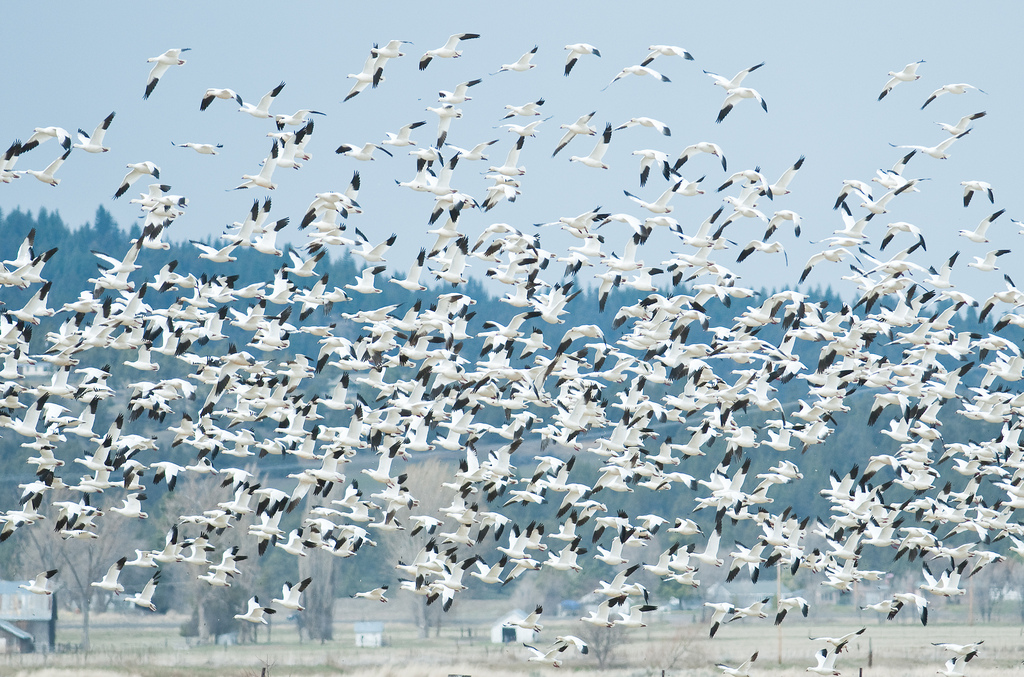
In flight, a group of geese is a SKEIN. On water, a GAGGLE of geese.  Photo Credit: Dan Harper

Initially, I misjudged James Lipton’s quirky and curious book, An Exaltation of Larks, missing the playful and fanciful element. When I read that a group of elk is called a gang, I felt only unalloyed disgust. Perhaps among flabby academicians, elk are referred to as gangs. But, I live among muscular mountain men who would laugh in derision at that term. Or fix you with a questioning stare. We sometimes take ourselves too seriously, precious.

This book didn’t grab me until I started from the beginning.

The dedication: For my mother, Betty Lipton, who showed me the way to words. (Swoon. I want my kids to say that some day.)

A CLUSTER of housecats.

A CLUSTER of housecats. Photo Credit: Dan Harper

I loved the Preface best, packed with collectable, copy-worthy quotes.

The heart and soul of this book is the concern that our language, one of our most precious natural resources, is also a dwindling one that deserves at least as much protection as our woodlands, wetlands and whooping cranes.

And this from Elizabeth Drew:

Language is like soil. However rich, it is subject to erosion, and its fertility is constantly threatened by uses that exhaust its vitality. It needs constant re-invigoration if it is not to become arid and sterile. Poetry is one great source of the maintenance and renewal of language.

This is the sort of book that fits well in a bathroom. Read a page, put it down.

Photo Credit: Dan Harper

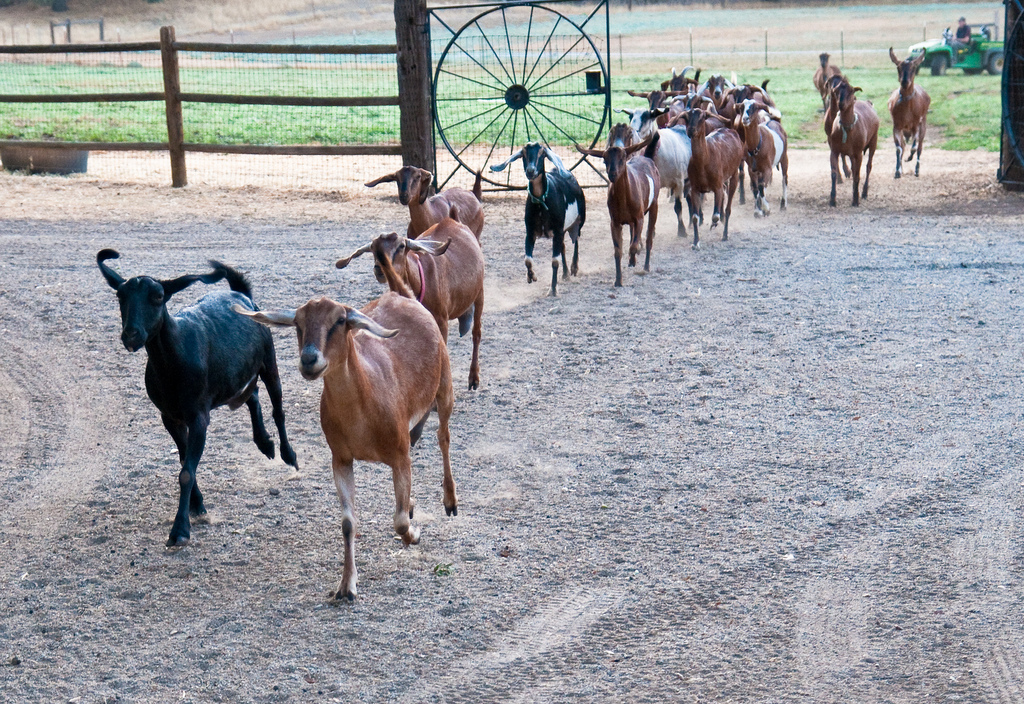
A TRIP of goats — from Icelandic thrypa, “flock,”? or a corruption of tribe? Photo: Dan Harper

Lipton encourages the reader to join a game, coming up with new collective nouns. The groups that tickled my fancy the most were the medical professions (a joint of osteopaths) and music (a pound of pianists, a bridge of lyricists). Not to mention a load of diapers or a twaddle of public speakers.

Some terms are so familiar we don’t see them as collective terms, as in Shakespeare’s a comedy of errors and a sea of troubles (from Hamlet). The book of Hebrews gives us cloud of witnesses. Does that joggle you linguistically like it does me?

The greatest challenge facing me is that of identification. Before I learn the collective terms [murmuration, charm, exaltation, murder, unkindness and dule] I need to learn to distinguish starlings, finches, larks, crows, ravens and doves.

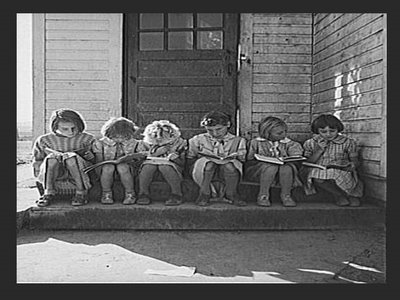
A GIGGLE of girls

A GIGGLE of girls

Revisiting Eisenhower

"Going Home to Glory"In 2011 I read and reviewed Volume 1 of Stephen Ambrose’s magnum opus, a biography of Eisenhower. I finally took up Eisenhower Volume II: The President, which chronicles the two terms of Ike’s presidency (1953-1961) and his retirement years.

I found the book dense and too full of details that were difficult to absorb. I plodded, rewarded by many curiosities: Eisenhower’s valet, Sgt. Moaney, dressed him. Everyday. Most of his custom-made suits were gifts; he seldom wore a suit more than twice! Mamie spent most of the day in bed, watching soap operas and attending to her correspondence.

Peace and Prosperity is how Ike wanted his tenure to be remembered. He got us out of Korea and had six consecutive balanced budgets. I find it ironic that the former five-star general continually slashed defense spending to the howls of the Joint Chiefs of Staff. The Interstate Highway system and soil conservation—paying farmers to take land out of production—were two highlights of Ike’s domestic policies. Eisenhower, not wanting to antagonize southern politicians he relied on, failed to assist the civil rights movement.

In 1955 the world had two Germany’s, two Korea’s, two Vietnam’s, and two China’s. The greatest fear during these Cold War years was the growth of communism. I’ve always wondered when and why foreign aid began. It started with Ike’s insistence that America’s prosperity wouldn’t last if other countries didn’t also prosper.  More to the point, if Third World countries went Communist, their raw materials would not be available to the U.S.

I learned about the Dulles brothers: Foster Dulles, for whom the D.C. airport is named, was Secretary of State and his brother Allen Dulles, who was the head of the CIA. The poor author had to constantly differentiate which Dulles was referenced.

A few things surprised me. Eisenhower’s cabinet urged him several times to solve a situation by dropping a nuclear bomb. It seems they did not grasp the consequences of such an action. Ike resisted each time. I was also amazed that  Kennedy and Johnson both consulted Eisenhower several times. Think about that: can you imagine President Obama asking President Bush for help?

While my interest was still warm, I decided to read David and Julie Eisenhower’s biography, Going Home To Glory, eager to read a grandson’s personal perspective. This book is more accessible, shorter, easier to grasp, more fun to read. David blends family stories with historical analysis. It is affectionate without being obeisant.

I once asked Mamie if Granddad’s compulsive restlessness, his habit of maintaining company around the clock, revealed a weakness, perhaps a fear of being alone, or a nonexistent inner life….My question unanswered, I asked her if she felt she had really known Dwight Eisenhower. She paused. “I’m not sure anyone did.”

My friend’s father was a friend of Ike’s. We have visited about his friendship with Eisenhower, Ray sharing how excited Ike was about shooting a hole-in-one, how he reenacted the shot in the telling of it. It was delightful, then, to read about this achievement in both books. Ike called it “the thrill of a lifetime,” which, when you consider Eisenhower’s life, is saying something.

I want to close this long post with two DDE quotes I find prescient and throw in a recipe he concocted.

When the federal government begins to fund education, he argued, educational institutions will find they cannot live without the assistance they receive. Then, he added with dark emphasis, the government eventually tells the educators what to do. Whether for good purposes or evil purposes, Eisenhower continued, the ability to control education has the potential to be used to promote mind control and that should be enough to recommend against letting any such thing take root.


Eisenhower’s Barbeque Sauce
1/4 cup butter
1 no. 2 can tomatoes, sieved (2 cups)
1/4 cup vinegar
1 T sugar
1 T paprika
1 small onion, finely chopped
2 tsp salt
2 tsp chili powder
1 1/2 tsp Worcestershire
1/4 tsp Tabasco
1 tsp black pepper

Mix and simmer 15 minutes. Use for basting meat or chicken, and serve as sauce for it as well.

Letter from Eisenhower to grandson, David, 1966:
Too many of us are allowing too much authority and responsibility for our lives to become concentrated in Washington. I think it is just as important to develop enthusiasm for the election of a proper city council, a county board of commissioners, or statewide governor and legislature as it is to get the right man in the Presidency. Indeed, if we had better and stronger government at lower levels we would do much to reduce the risk that one day we are going to be governed by an entrenched and organized bureaucracy.


Aesop’s Fables

reading on the porchAm I reading the same Aesop’s Fables? I wondered if anyone else found them dreadful and boring and even pointless. But, at Goodreads, people are flinging five stars to and fro.

I enjoyed the familiar fables, and a few were funny. Like The Bald Knight.

The Bald Knight
A certain knight, who wore a wig to conceal his baldness, was out hunting one day. A sudden gust of wind carried away his wig, and showed his bald pate. His friends all laughed heartily at the odd figure he made, but the old fellow, so far from being put out, laughed as heartily as any of them. “Is it any wonder,” said he, “that another man’s hair shouldn’t keep on my head when my own wouldn’t stay there?”

Here is what I mean by pointless. The Fox and the Lion in its entirety:

The Fox and the Lion
The first time the Fox saw the Lion, he nearly died with fright. The next time, he gathered sufficient courage to have a good stare. The third time, he went boldly up to the Lion, and commenced a familiar conversation with him.

Immediately after the Lion and the Mouse fable—you know, the mouse cuts the cords and frees the Lion— comes The Fatal Courtship, which made me chortle unkindly. I can’t imagine reading this to a child for a bedtime story, can you?

The Fatal Courtship
It is said that the Mouse spoken of in the last Fable was so emboldened by the offers of friendship made to him by the Lion in return for his assistance, that he asked for the hand of his daughter in marriage. The Lion, amused at the request, good-humoredly told the Mouse he should plead his own cause, and called the young Lioness to come to him. She, bounding forward heedlessly, did not see her little lover, who was running to meet her, and one of her paws falling upon him, he was crushed to pieces.


I fear that the problem is with me instead of with Aesop, since these fables have been loved since the 6th century B.C.

Sister Bernadette’s Barking Dog

DSC_8942My husband, home sick from work, was fixing to fascinate me with stories about locks at the hospital. My responses cycled between “Hmmm” “Oh?” “yeah” and “wow.” He shook his head in exasperation and complained, “I’m trying to impress you and you aren’t responding!”

“Babe,” I lifted my head and made eye contact. “I have three pages left of this book.”

“Oh?” he said. “What are you reading?”

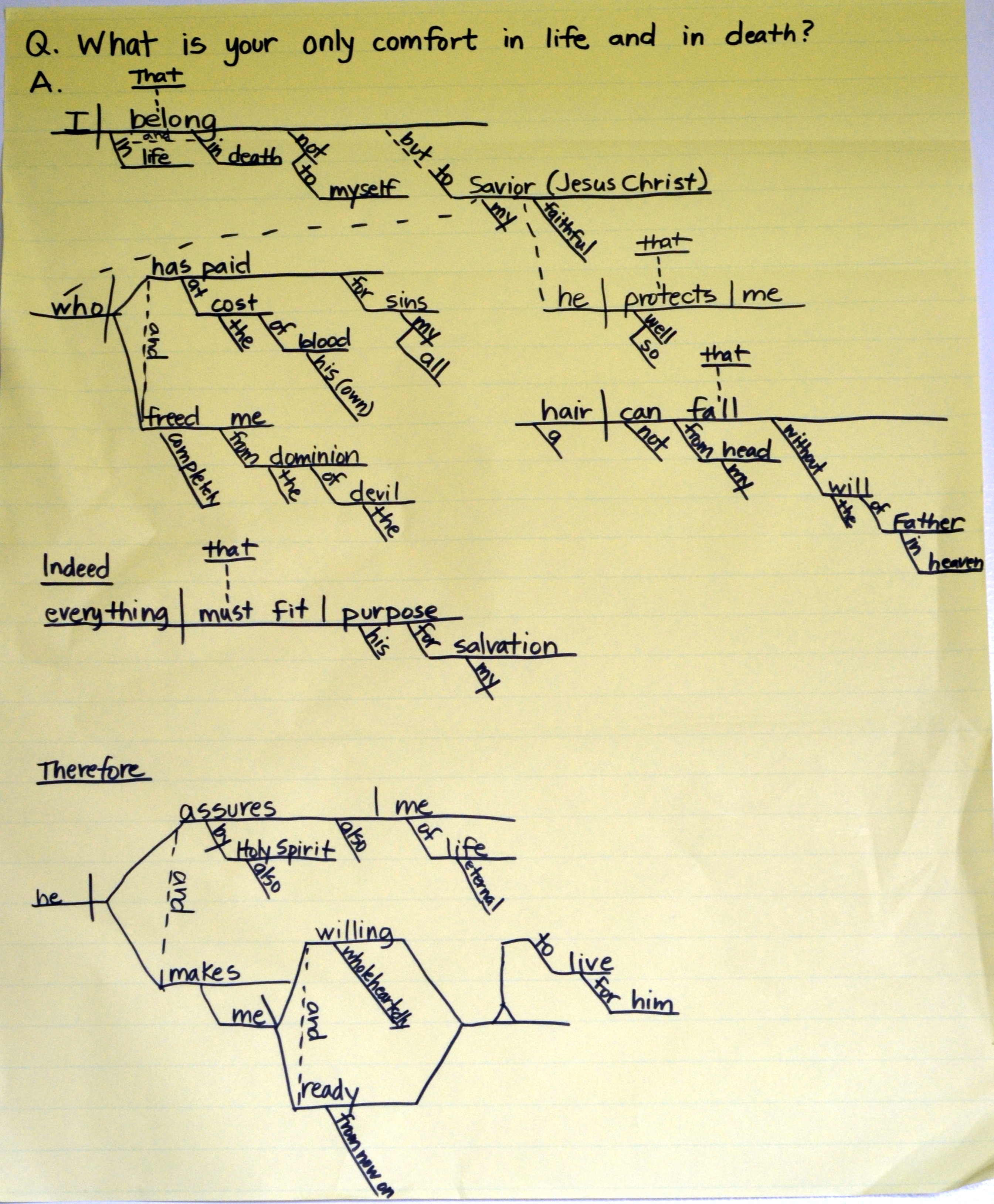
“Sister Bernadette’s Barking Dog … a book about diagramming sentences.”

We dissolved into laughter at the absurdity of diagramming edging out locksmithing.

When I was a student, I was not gripped by grammar. Caron, my camp friend, used to amuse herself by counting the spelling and grammar mistakes in my letters. The fun flattened when the error count declined to three or four. I still stumble over less and fewer, lay and lie, hopefully and I hope.

Kitty Burns Florey is a fun look back. Moderately fun. To those who suffered through grammar, it has about the same nostalgic power as a teeter-totter has to two chunksters in their fifties. (Have you noticed that teeter-totters disappeared from playgrounds? Hmmm?)

Relax! Florey’s acerbic tone spices up this bland subject. She calls Eats, Shoots & Leavesa “popular scold-fest.” I enjoyed her prose and reveled in her side notes.

The fact is that a lot of people don’t need diagramming or anything else: they pick up grammar and syntax effortlessly through their reading—which, in the case of most competent users of words, ranges from extensive to fanatical. The language sticks to them like cat hair to black trousers, and they do things correctly without knowing why.

I learned details about words, a bonus she couldn’t resist throwing in. (When Kitty isn’t writing books, she is a copy editor.) I learned that enormity means a very great wickedness, not a very large hugeness. Likewise, infinitesimal means endless, not very, very small. She explained that a Lion’s share is 100%, not a majority. Ain’t, don’t you know, exists because we don’t have a contraction for “am not.” So ain’t used with the first person singular (the pronoun I) is technically correct.

My opinion is that English grammar can be taught with more ease and more adhesion through the ear rather than the eye, with vocal chants/songs such as those used in The Shurley Method or Grammar Songs. But, I enjoyed the refresher course on sentence diagramming.

The visual delight of the book are the diagrams of unwieldy sentences by James, Hemingway (whose sentences are normally spare), Fenimore Cooper, Twain, Proust, Oates, Updike, Kerouac, Fitzgerald, Faulkner, Welty and Powell.

I couldn’t resist trying a long sentence myself. Above is the answer to the first question of the Heidelberg Catechism. Corrections are welcome.

England, Goudge, the Eliots

101_4570Elizabeth Goudge’s Eliot Family Trilogy?

First, it is English: paragraphs of appreciative comments on the comfort of tea; gallons of hot tea consumed; nine variations of rain—slanting, gentle, white, solid, gloomy, light, windy, misty, sparkly; logs added to warming fires; imaginative children; a country vicar; the pronoun ‘one’ put to good use (Eustace—dreadful name! One thinks at once of a parson’s dog-collar); ditto for the adverb ‘rather’ and the adjective ‘dreadful’ (Ben says it’s dreadful. They’re trying to do a telescoped version of ‘The Wind in the Willows’, and it won’t telescope.)

Then, it is Elizabeth Goudge. I find Goudge in a category of her own. She is spiritual, at times mystical, fantastical (Faerie, but just in cameo appearances), romantic in the sense of the woods being infused with symbolism, almost medieval.

But her characters deal with modern problems that most authors of her genre would avoid. One man falls in love (inexcusably, I’d say: one must recognize boundaries) with the wife of one of his relatives. This complex relationship is the focus of her first book, but isn’t completely resolved until the third. Goudge’s parents have favorite children. Some of the marriages lack love. One character’s violent past is haunting.

There is a strong sense of place. Damerosehay, a large eighteenth century house purchased by the Grandmother, home base for the Eliot family, is the focus of book one. The Herb of Grace—a Pilgrim’s Inn, where sojourners stay on pilgrimage to a sacred place—is more ancient, with deep history in its walls. George and Nadine’s restoration of this Inn is the focus of the second book. The third book adds Lavender Cottage, a small place where Margaret and Lucilla can retire.

Her themes resonate with me: determined contentedness; work as a sacramental offering; the mystery of small joys; beauty indoors and outdoors, interior and exterior; the inscrutable connection between twins; aging, grandparenting, and above all else, relinquishment.

“Relinquish.” It was a good word. It suggested not the tearing away of treasures but the willing and graceful sacrifice of them.     The Bird in the Tree

The twins mimic a blend of The Wind in the Willows, medieval crusaders, and pirates:

“Scrooge, scrabble and scratch.” repeated Jerry. “For the glory of God, my hearties. For the glory of God.” Pilgrim’s Inn

Hilary, wounded in the first world war, is stable, sensible, lovable.

Nevertheless, the tea was what he wanted. Heat, he thought, there’s nothing like it. All the best symbols have to do with light and fire and warmth. The Heart of the Family

Hendrickson has recently reissued the trilogy.
            

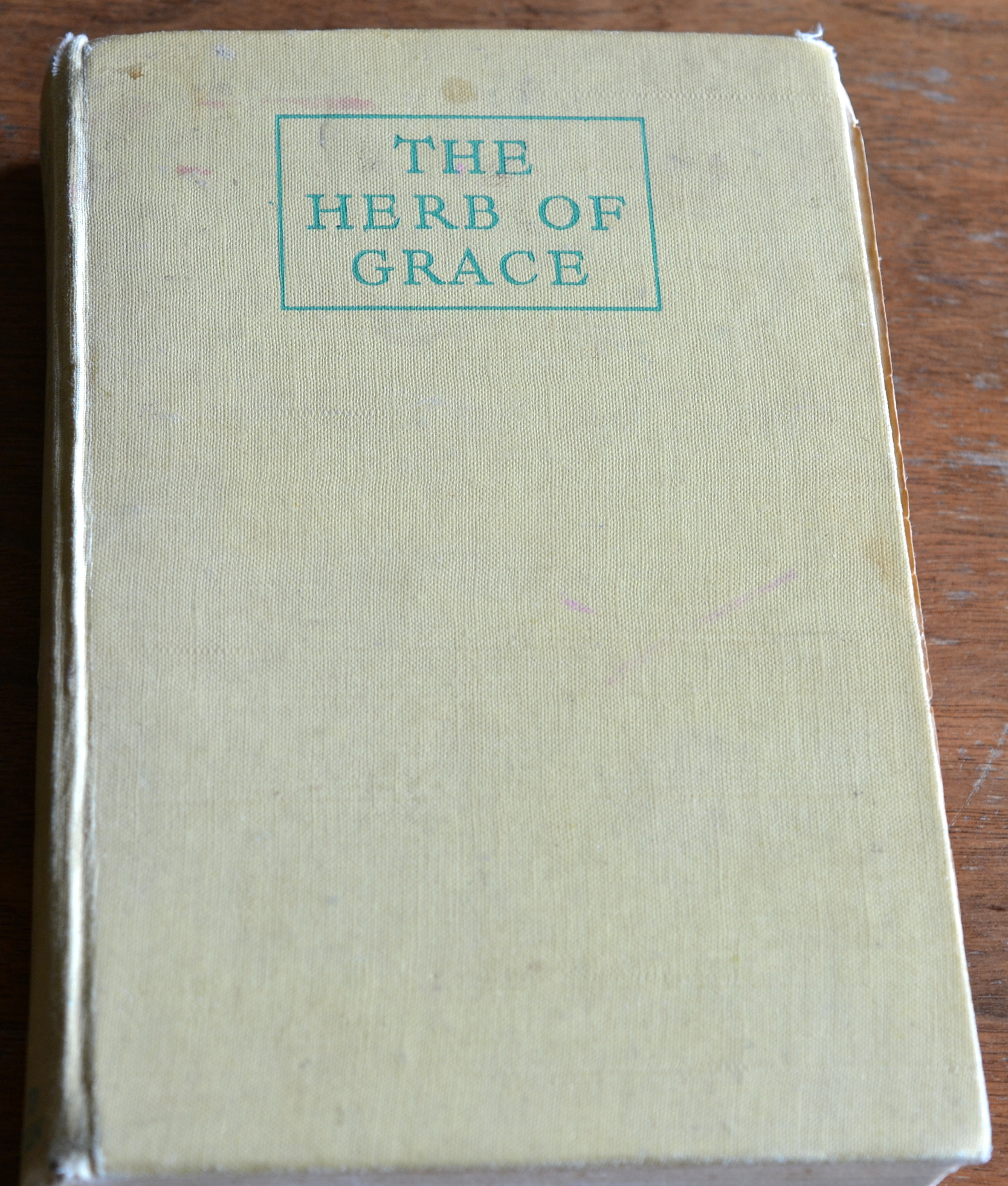
I took the top photograph at Shere, a picturesque English village. While I was in England, I darted into used bookshops looking for treasures. It is thence I found a first edition of The Herb of Grace (the English title for Pilgrim’s Inn), my favorite of the three books. I’d like to give away this book that has given me much pleasure. (It’s the first time I’ve used this widget. I hope it works.)

a Rafflecopter giveaway Congratulations, Di! You won the Herb of Grace book.

*It occurred to me that my definition of ‘treasure’ might not jive with yours. Here is a picture of the book. It is not a pretty book, but I love the inscription in the front “Jeanette Pound 1950” and I like old hardbacks.

DSC_8686

Winter Watch

I’m a fan of cozy mysteries. Miss Marple, Brother Cadfael, Mma Ramotswe, Alan Grant, and Flavia de Luce are guaranteed to bring pleasure. Especially if they are read with a steaming pot of tea while sitting on a leather couch with a fire snapping close by.

In Winter Watch, Anita Klumpers has written what I call a cozy-eccentric book. Barley, Wisconsin, is a isolated northern burg where the Justice of the Peace is also the dog catcher and where a few crazies reside. Bernice, a miscreant referred to as the resident killer, is the battiest of them all. After a family member dies, Bernice gets meals and kindness and concerns. And wouldn’t you know, she likes the perks of grief. More relatives mysteriously die. Sympathy can be mighty addicting.

Like Alexander McCall Smith, Klumper weaves humor into the warp and woof of her prose. Blizzards are snowstorms with enthusiasm. A woman was proud to give her son a Biblical name—Tubal—until the nurse told her it sounded like a female medical procedure.

DSC_7902There is comfort—I like a woman who knows her way around an egg—and a passage about joy that is flat out lyrical.

Joy arrived unbidden and unpredicted to pour from heart to fingertips to toes. She held her breath, everytime, to preserve and examine it but it forever danced just out of her grasp and slipped away. Claudia stayed still, focusing, her heart ready to burst. At the last crucial second joy seeped through cracks and crevices of her being until her every extremity and pore rejoiced before the evaporation worked backwards and she sat in the afterglow.

The focal point of the narrative centers on an old watch. The prologue and epilogue added more layers of history regarding the watch. The story line had me eagerly turning the page, and a bit annoyed with life’s beckoning demands when I needed to put the book down.

In short, this is a satisfying and entertaining read.

Loveliness Showing Through the Rubble

The job of the soldiers who served with the Monuments, Fine Arts, and Archives section of the Allied Forces in WWII was to “mitigate combat damage, primarily to structures—churches, museums, and other important monuments.”
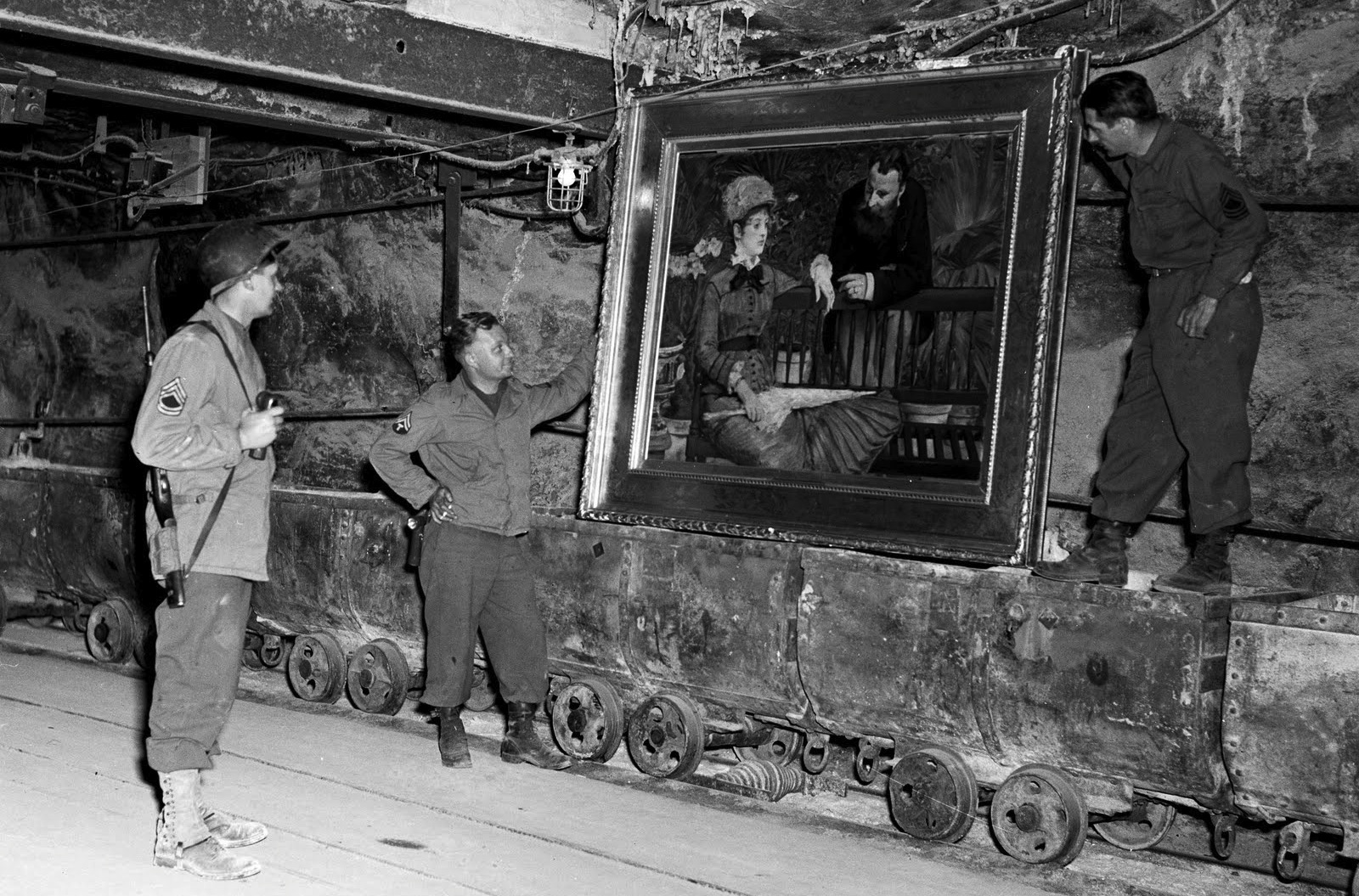
Because Adolf Hitler and Hermann Göring were obsessed with collecting (read: stealing) fine art, the primary job of the MFAA became rooting out hidden caches of art before the Nazis destroyed them in the event of a Nazi defeat.

I found it difficult to engage with the first third of the book, background stories of a large roster. Because they were all working independently— their stories seldom converged—there was too many bits to sift through. It wasn’t until Paris, and the entry of the great heroine Rose Valland, that I found myself gripped by the narrative. From that point, the book is perfectly paced, and the thrill of the chase raised my pulse. It is a cracking good story!

monuments-men^^ can you imagine? ^^

Tucked into the story was a gem—the only one like it— from Capt Walker Hancock.

The eyes have one continual feast. It is late in the spring. Flowering trees are everywhere and the charm of the romantic little towns and the fairy tale castled countryside is enhanced by all this freshness. And in the midst of it all—thousands of homeless foreigners wandering about in pathetic droves, Germans in uniform …. Children who are friendly, older ones who hate you, crimes continually in the foreground of life. Plenty, misery, recriminations, sympathy. All such an exaggerated picture of the man-made way of life in a God-made world. If it all doesn’t prove the necessity of Heaven, I don’t know what it means. I believe that all this loveliness showing through rubble and wreck are just foreshadowings of the joys we were made for.

For fun, the magnificent George Stout, after receiving a package three months late:

It is amazing how the world can change during the life span of a fruitcake.

Because one curious door opens many others, I’m now interested in reading: