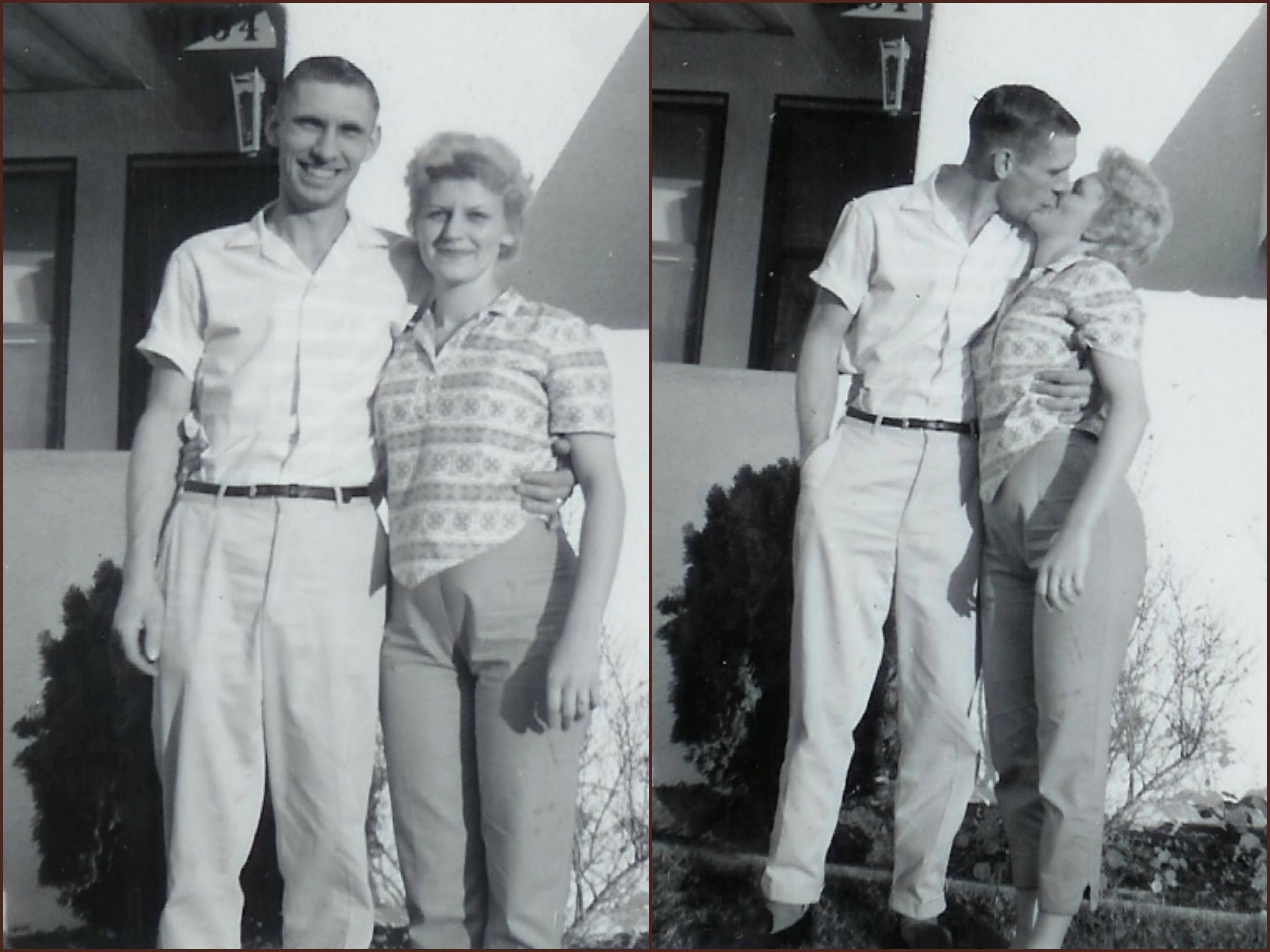
Celebrating sixty years of ‘I do’.
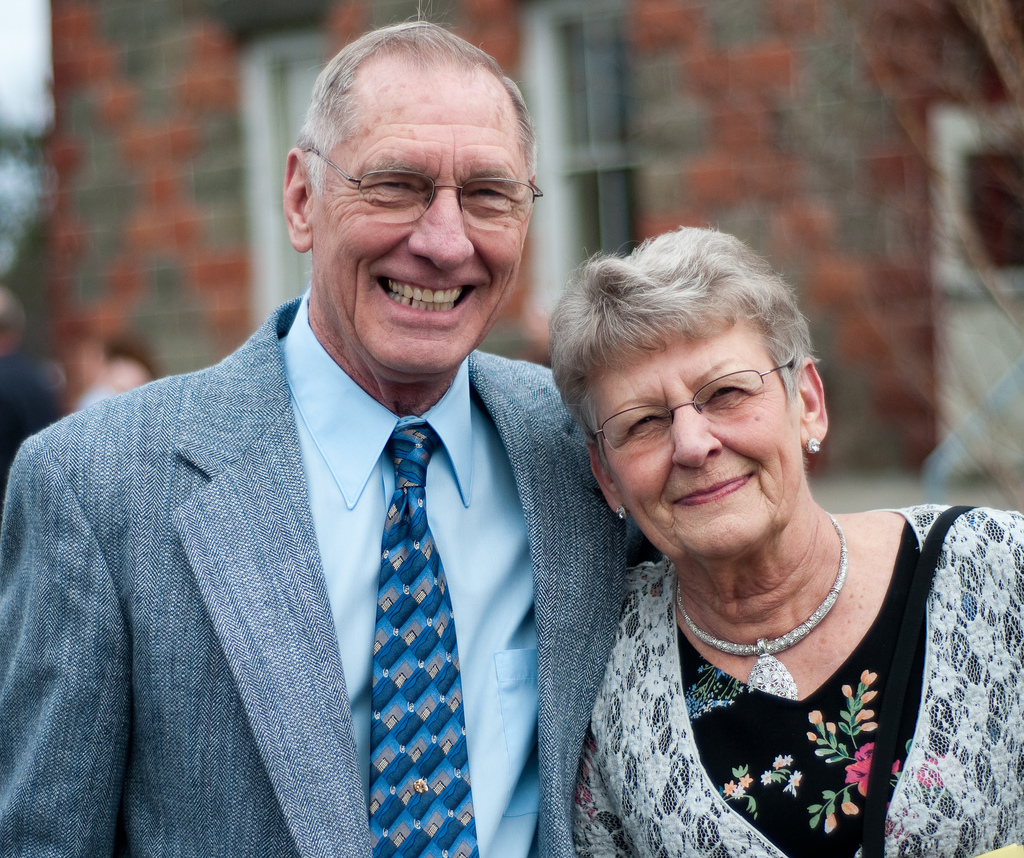
Celebrating sixty years of ‘I do’.
 Sherry at Semicolon posted this fun meme this morning. Here are my answers (today).
1. What propelled your love affair with books — any particular title or a moment?
I grew up in a book-saturated home: books in every room, books in front of every face; never a day without books. Books were not allowed at the dinner table, but most of us tried at one time to hold a compelling book in our lap, under the table, and keep reading. It was inconceivable to grew up a Harper and not love books.
2. Which fictional character would you like to be friends with and why?
Laura Ingalls Wilder was my first fixation and she remains with me, especially at this time of the year. Yesterday, I was making a year’s supply of fire starters (dryer lint stuffed into egg cartons with melted wax poured over it) and thought of Pa and Ma’s preparations for winter. (OK, I missed the word fictional…give me a pass, please?)
 3. Do you write your name on your books or use bookplates?
All but the best books I read are on a rotation: in the house, read, out of the house. When I write my name I always write it in pencil. I’ve found that the book I love today and think I’ll keep forever might get the boot in ten years.
4. What was your favourite book read this year?

5. If you could read in another language, which language would you choose?
Not just one. I’m starting to twitch from the demands of decisions. I’d love to read my father’s Greek New Testament with the cranberry cover. I’d love to read the Latin books on my shelf. I’d swoon if I could read a French book aloud with exquisite pronunciation. And why not Russian? Or Arabic? Or Portuguese?
6. Name a book that made you both laugh and cry.

7. Share with us your favourite poem.
That f word is making me crazy, even with the charming British spelling. Gerard Manley Hopkins Pied Beauty. Billy Collins The Lanyard . To snort with laughter at his Litany….And you are certainly not the pine-scented air. There is just no way that you are the pine-scented air. There is Wendell Berry’s Manifesto with those last two words: Practice resurrection.
But in this moment, my mind goes to Michelangelo’s LXXIII.
Well-nigh the voyage now is overpast,
And my frail bark, through troubled seas and rude,
Draws near that common haven where at last
Of every action, be it evil or good,
Must due account be rendered. Well I know
How vain will then appear that favoured art,
Sole Idol long and Monarch of my heart,
For all is vain that man desires below.
And now remorseful thoughts the past upbraid,
And fear of twofold death my soul alarms,
That which must come, and that beyond the grave:
Picture and Sculpture lose their feeble charms,
And to that Love Divine I turn for aid,
Who from the Cross extends his arms to save.
I love that old translation, but I have a newer one tucked into the page. Which one do you prefer?
Unburdened by the body’s fierce demands,
And now at last released from my frail boat,
Dear God, I put myself into your hands;Smooth the rough waves on which my ship must float.
The thorns, the nails, the wounds in both your palms,
The gentleness, the pity on your face—
For great repentance, these have promised grace.
My soul will find salvation in your arms.And let not justice only fill your eyes,
But mercy too. Oh temper your severe
Judgment with tenderness, relieve my burden.Let your own blood remove my faults and clear
My guilt, and let your grace so strongly rise
That I am granted an entire pardon.
Please join me and link to your answers (or just write them there) in the comments. If your time is limited, take just one question.
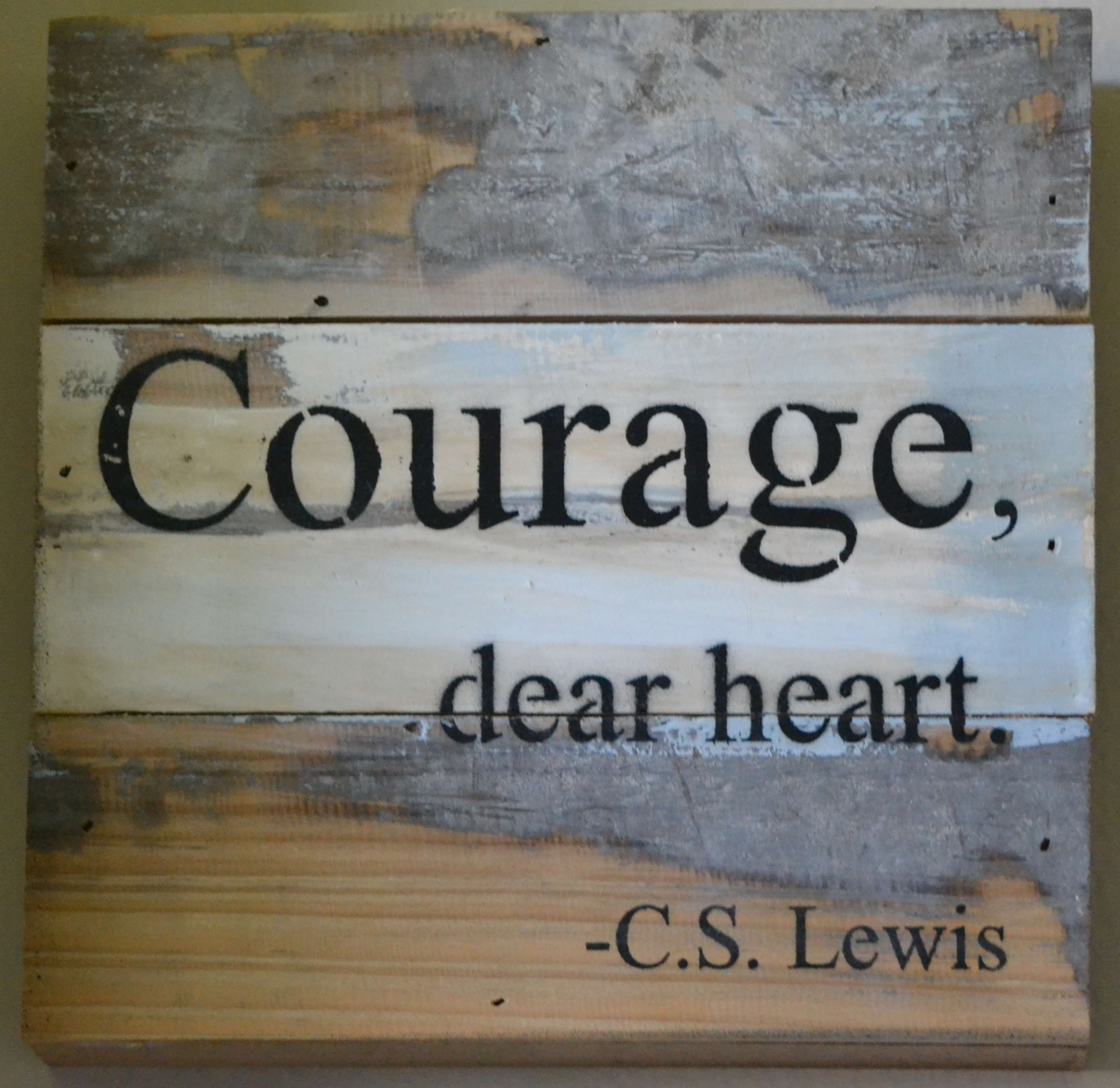 Our home is the kind where nail holes in the wall are sacred. I normally change a picture—or even a paint color—about once a score. Score, you’ll recall, is the second word in the Gettysburg address.
And now, in the space of one month, I have three new views. This shocks me…and confuses friends for whom a total room makeover occurs with every new season. The kind of interior decorators who develop a facial twitch if everything in their house is the same for six months.
The Courage, dear heart is eye level next to the mirror in the bathroom. Befitting, eh? I love looking at this while I prepare for the day ahead. My husband uses this phrase to gently tease me. As in, (me–>) “I can’t figure out how to get the gray scuff marks out of the sink.” (him–>) “Courage, dear heart.”
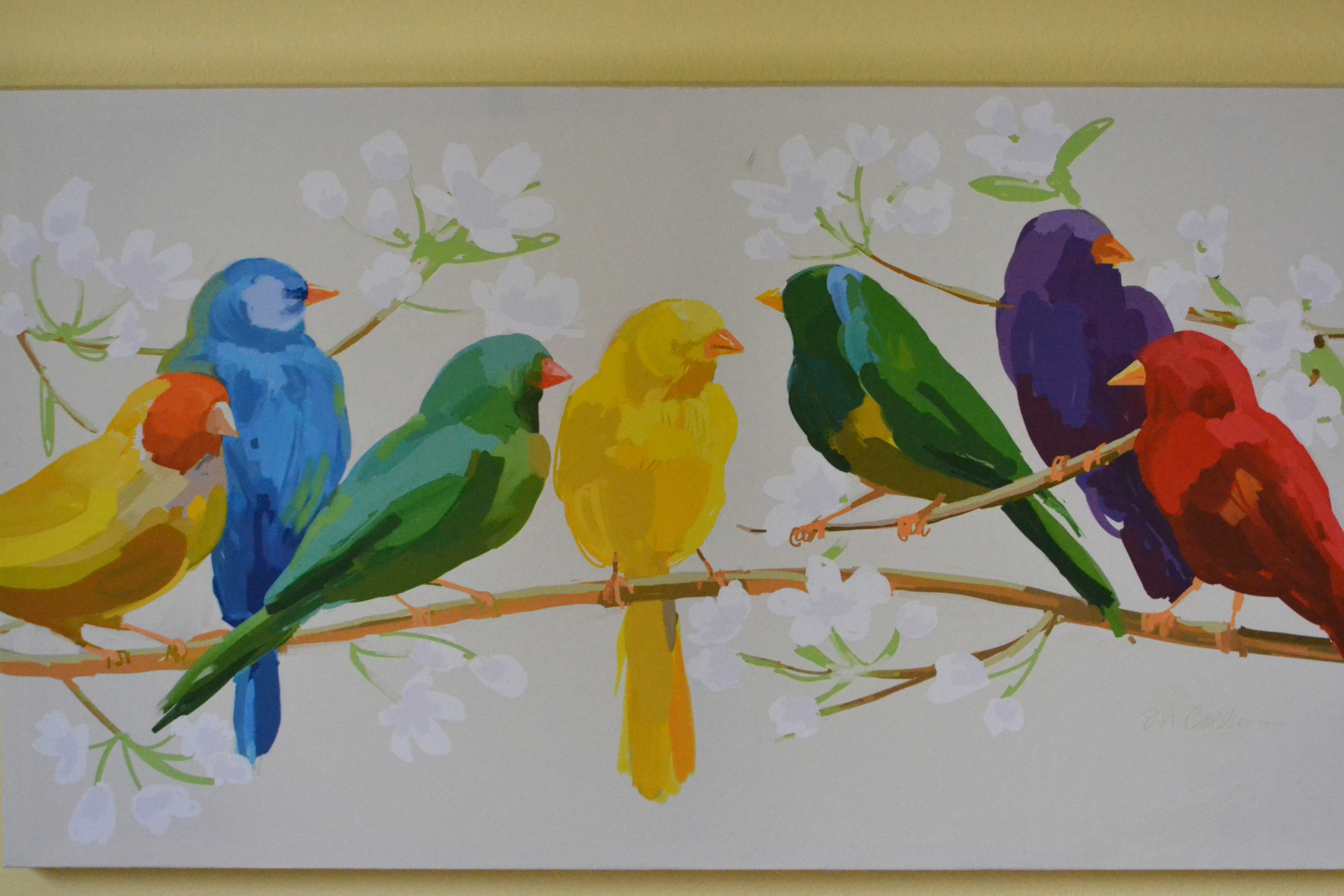 I saw these colorful creatures at The Potter’s House, a local store that sells hand-thrown bowls and plates and mugs. A store perched on the other end of the spectrum from WalMart. My go-to store for gifts. I couldn’t resist the whimsy. Curt calls it, “Till We Have Faces.” I wake up with the birds every morning; they make me sing.
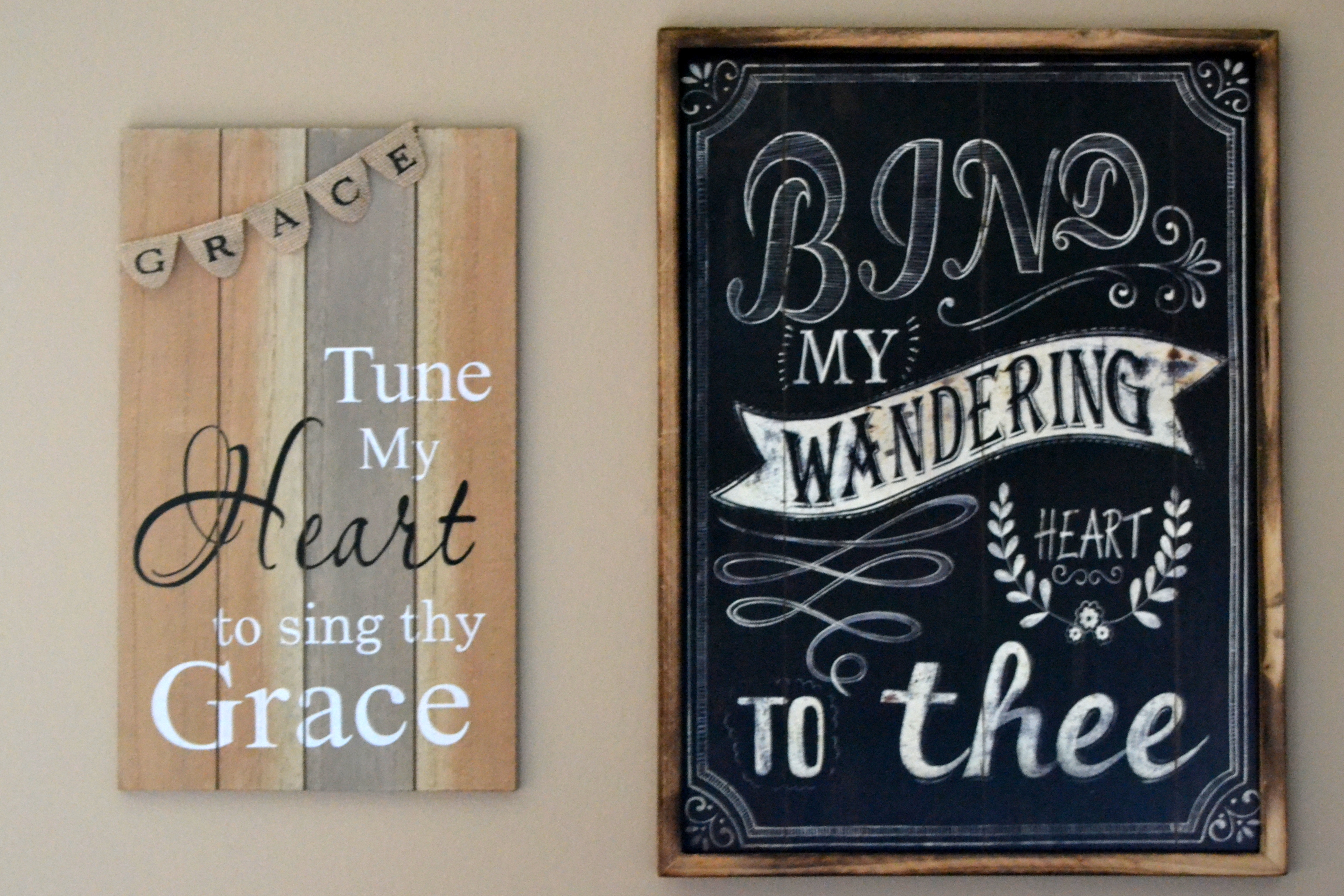 My friend Faith gave me Bind my wandering heart to thee knowing the phrase came from my favorite hymn, Come Thou Fount of Every Blessing. I propped this on top of my piano, testing the location before I pounded a (sacred) nail in the wall. This week I was in the midst of a talkfest in the aisle of a store when Tune my heart leaned into my peripheral vision. And now they both sing to me in my kitchen while I make dinners or type on the computer. I love the pairing.
Beauty and serendipity washed and rinsed me again. ♫♪♫ Strength for today and bright hope for tomorrow ♫♪♫.
From Alexander, the grammarian, [I learned] to refrain from faultfinding, and not in a reproachful way to chide those who uttered any barbarous or incorrect or strange-sounding expression; but tactfully to introduce the very expression which they ought to have used, in the course of an answer or assent or inquiry about the thing, not about the word; or by some other suitable suggestion.
— Marcus Aurelius
The timeline of my grammar life could be summed up in a few words: apathetic → indifferent → learned-through-teaching → pompous donkey → repellant sheriff → quieter → still learning manners.
There was a time in my life, alas, when I would not hesitate to correct your grammar, nay, when I would swoop down and pounce upon your words as an eagle dives for a fish. There was a time when I approved of scoldfests written by grammar purists.
There was a time, cough cough, when I publicly corrected my son in the middle of a toast at a wedding reception. Indeed, it’s true! But here’s the deal. He said, speaking to his brother-in-law (groom) and sister-in-law (bride), that “my mom should probably get a finder’s fee since two marriages happened because of her Grammar Class: First me and Jessie got married and now you two.” I could only stand up and say, “JESSIE AND I” … and the crowd roared with laughter. If it had been a art class or a science class I would never have said a peep!
I pray those times are behind me. I hope I’ve learned that people are more precious than words. There is a time to refrain from faultfinding.
 It was near St. Patrick’s Day. I typed “Irish sacred music” in the search engine. And I discovered Cork Sacred Harp. My husband Curt was on medical leave and we sat entranced for hours watching videos on YouTube. And now it’s become a daily habit to listen and sing along to our favorites a capella singing from Ireland.

Listen: The music is often fugal. This means that there are the melody lines enter in a staggered fashion, braiding tunes until all parts sing together. Here’s a good example, a hymn tune we regularly sing to a different text:
Why has this music captured me? I think it is the clean—yes, even sharp—edges of rhythm. It’s that the majority of the songs are in minor keys. It’s the full sound of people singing with gusto. If I had a gun to my head and had to say my favorite hymn (a funny thought experiment) I would say Come Thou Fount. Here it is to the tune I Will Rise.
I don’t like every one of the videos listed under CorkSacredHarp, but I’ve “liked” my favorites and then watch that “liked” playlist daily. I don’t get weary of them. Here is a list of my favorites. The title is name of the tune.
146 Hallelujah – might be the best known Sacred Harp song
63 Coronation – All Hail the Power. The frail woman in the inner square: priceless
30t Love Divine – Tollie Lee is the most lively, engaging leader
350 Nativity – Another example of fugal singing, one we love to sing at my church
128 Promised Land – I love Shirley! I am bound for the Promised Land.
45t New Britain – Amazing Grace done Sacred Harp style
569b Sacred Throne – I grew up singing this tune to Alas, and did my Savior bleed?
59 Holy Manna – Eimear and Sadhbh are my favorites. The song, too.
547 Granville – This gripping lament was written in 1986 by Judy Hauff
344 Rainbow – We sing this “as is” except for the solfege at the beginning.
148 Jefferson – You will never hear Glorious Things of Thee Are Spoken the same again 457 Wayfaring Stranger – Another familiar song with glorious harmony
117 Babylon Is Fallen – Oh. my. I wake up with this song on my lips.
448b The Grieved Soul – What is that that casts thee down? A song for depression.
I suspect that 95% of my dear readers will not enjoy, explore, pursue this music; there is no accounting for taste. But I know there are a few of you who will become as fixated as I have become. You will lose of day of productivity soaking this music into your system. Someone said Sacred Harp is a capella Heavy Metal. (I copied it from a website in German!) This metal is embedded in me.
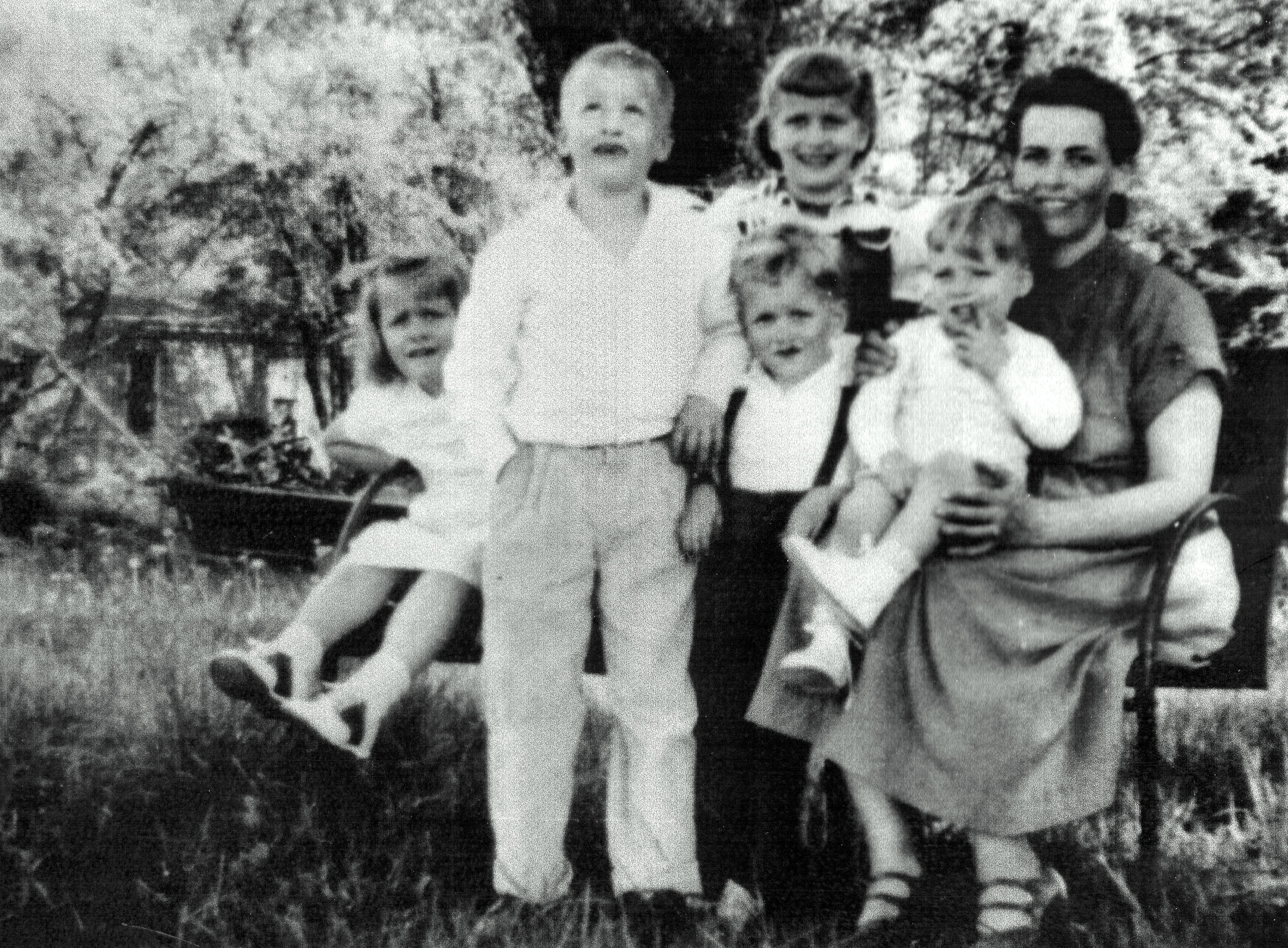 Five Seven. An unforgettable date. We may not remember Three Twenty-Three (her birthday). I don’t even know her wedding date (the year was 1945). But this day, oh I know Five Seven. The calendar starts fomenting emotions around the third or fourth.
I revisit my last goodbye as I trotted towards the car, facing forward out the front door, head turned on the final step as I sing-songed my farewell: ♪♫♪ Bye Mom! ♪♫♪ I see my father waiting for me at the edge of the school grounds, and I hear the deadly quiet when we entered the house.
Last night when I read about Kara Tippett’s family’s first event without her I burst into sobs. Have you followed Kara’s story? Her shimmering grace, her honest struggle, her big love. I look at her kids and I know a small piece of their story. The oldest girl, who will mother her siblings the rest of her life. The girl and boy in the middle whose grief might get overlooked, who will consider their dad’s cares. The youngest girl, the focus of concern for all, the girl who turned six this week.
Although Five Seven can never be the second Sunday in May, it is always in the suburbs of Mother’s Day. Sorrow scoots over and makes room for gratitude. For too many, the grief of Mother’s Day is the ache of having had a mom who couldn’t or wouldn’t, but clearly didn’t express love and kindness. Their focus is on breaking the chain of affliction, expunging the critical words, watching others to figure out how to be a good mom.
I learned the goodness and kindness of God through Mom. Sure, she taught us and corrected us; but she sang while she laundered, she cheerfully plowed through sandwich-making every school day morning, she wrapped her long arms around us, she prayed. What didn’t she do? She never gossiped, she didn’t complain, she didn’t worry, she didn’t fear. Sometimes she sighed, and I know she groaned. But she lived a simple, authentic life, a small life really, that influenced many for good. And she loved me, this I know. To know your mom’s love is a gift of unfathomable magnitude.
Thank you, Mom. I love you.
Nellie Arlene Stover Harper
3/23/1920 — 5/7/1968
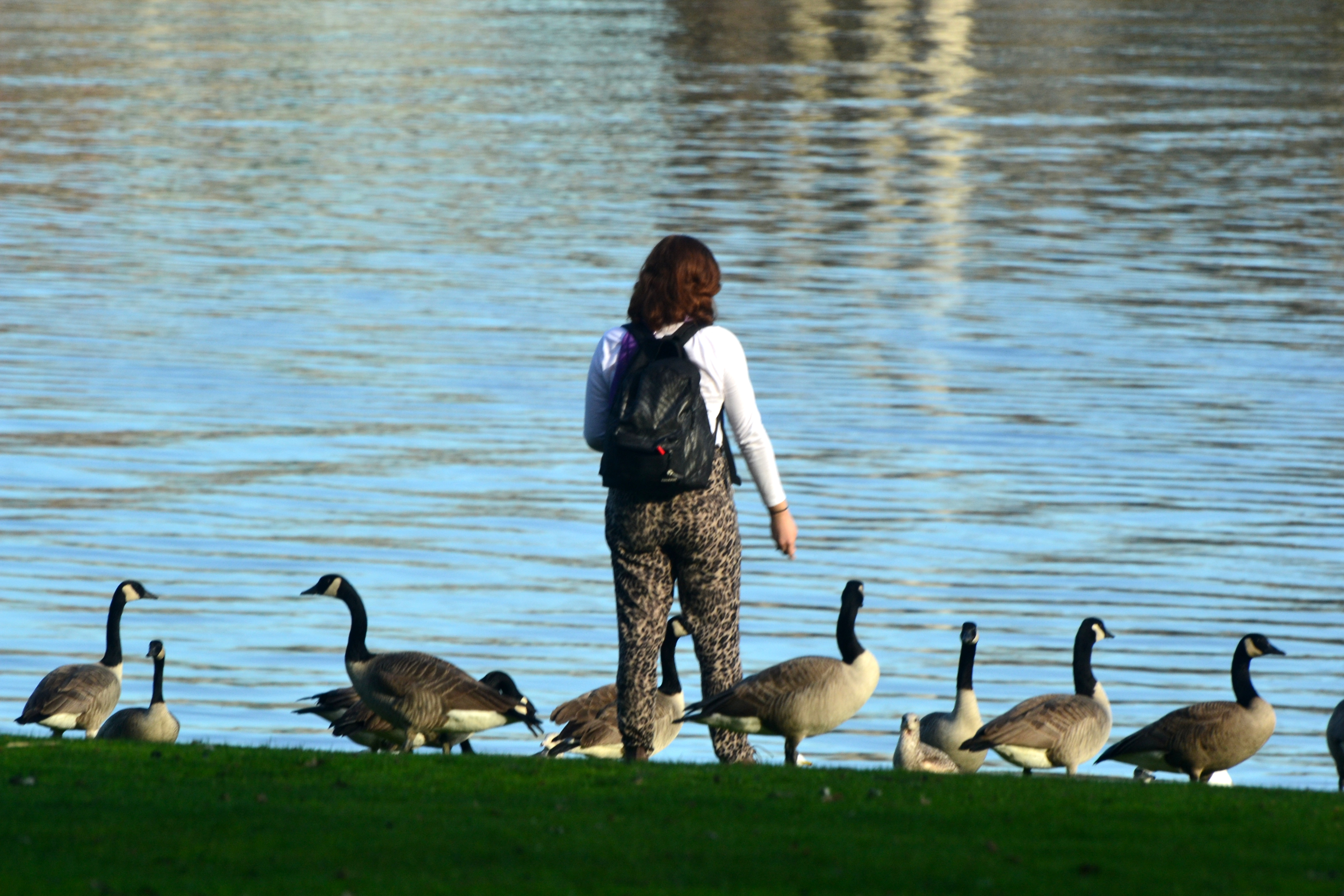 Life is in the little things. I’ve been thinking about the kindness of strangers, thankful for recent encounters with folks I’ll never see again.
:: :: ::
I was trudging up Morgan Lake Road. When cars drove by I was embarrassed by the trudginess of my heavy gait but incapable of looking like a normal person walking up a steepish hill. Then this truck passed me and the driver stuck his/her hand out the window with a thumbs up. What did it cost her/him to do that? Nothing. What that small gesture did for my spirits? Reinvigorated them. Thank you, stranger.
:: :: ::
Last month my husband had surgery in Portland. We arrived at the hospital at 5:00 a.m., departed at 5:00 p.m. My job was to drive us home. All that was required was to cross the Willamette River, merge onto a familiar interstate highway, and drive four hours. No biggie except it was Friday night rush hour.
As we entered the bridge, I hugged the far right lane so I could take the first exit on the other side. Towards the middle of the bridge I saw the sign that indicated a left exit. I had about 200 yards to negotiate three lane changes. The one rule I remember from Driver’s Ed is: Never change lanes on a bridge. Ha!
An excellent city driver is neither timid nor aggressive. I was both. I put my left blinker on, punched the accelerator and slammed on the brakes. Husband and I both yelling. Go! Not now! Watch out! It was not the finest moment of our marriage. I kept in mind how much a collision would hurt Curt. Lord, help! was the all I could pray.
Somehow, three drivers gave me space and I took the exit with one car length of grace. The gorgeous generosity of people I will never know. Thank you, three strangers.
Have you received kindness from strangers lately?
 It is my favorite cozy: snuggled in with a grandson, listening to him read. When Noah sounded out the word “before” we took a detour.
Oh, I love be- words; I actually collect them, I said.
You do?
Yes, let me show you!
I grabbed my journal. I am burdened with an insatiable urge to show-and-tell.
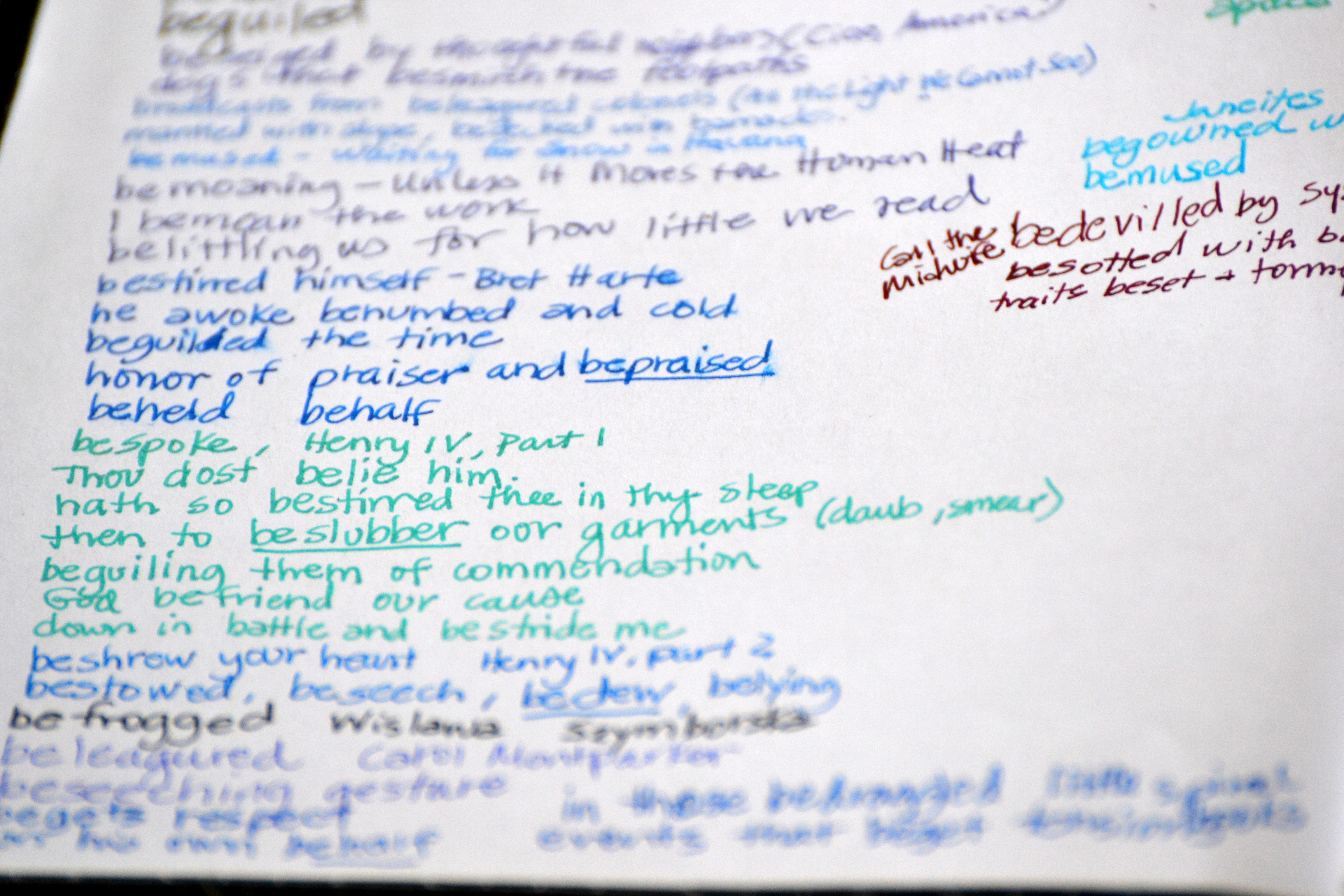 Be- words delight me, I explained. So when I spot one, I write it down.
Later, when all the rest of the house was napping, I watched Noah cut and paste. He decided to make a little booklet. Well, now. Here’s something even I could help with. We could make you a be- book, I shamelessly suggested.
 He started scanning every Bob Book in his possession, not the best place to find vintage words. But he found a few! I didn’t quibble about words that began with be that weren’t the prefix be- e.g. Benjamin, best, bend. One has to start somewhere.
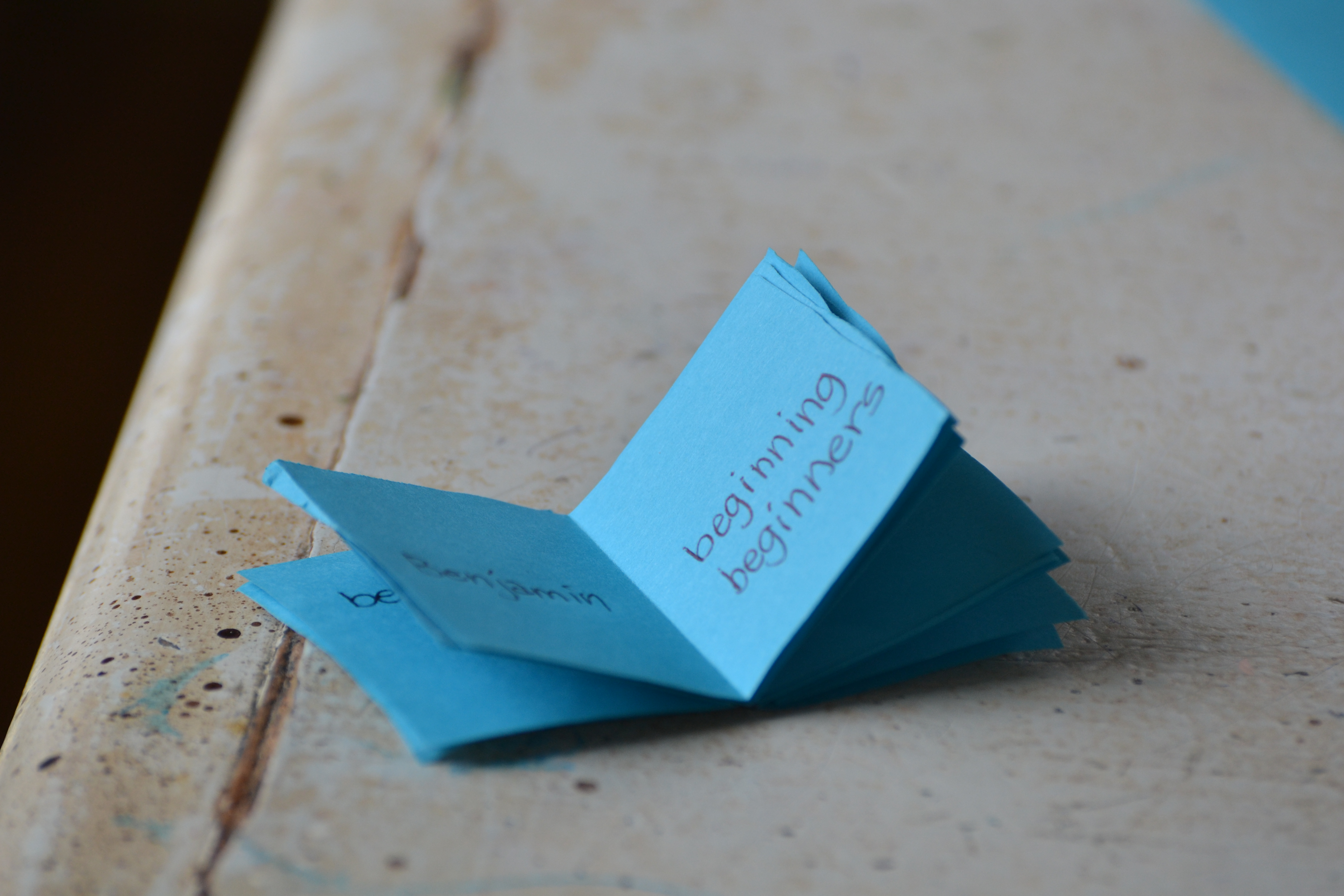 When Noah loaded up to go to Safeway with Papa, he grabbed his book and a pen in case he found some more be- words. They found themselves in the beer section (a word he missed!) when Noah backed up into a stack of whiskey. It’s what they call in literature a destabilizing event. Curt threw out his hands trying to steady the waving bottles, mentally calculating the cost of this quick trip to the store. Fortunately, none fell.
But, suddenly, Noah is sitting on the floor with his book in front of him, writing down “Beam.” Few lessons could be found in a more unlikely location.
 The next day Noah told Aunt Lindsey about his book. The first words out of his mouth were, Well, I love be- words. Like boat and baseball and balance? she asked. No, b-e- words like before and below. His younger brother Levi chimed in, I love be- words, too! What is your favorite? she asked him. Begin! What is your favorite? she asked me. I looked at her, a vibrant newlywed, and smiled. Beloved.
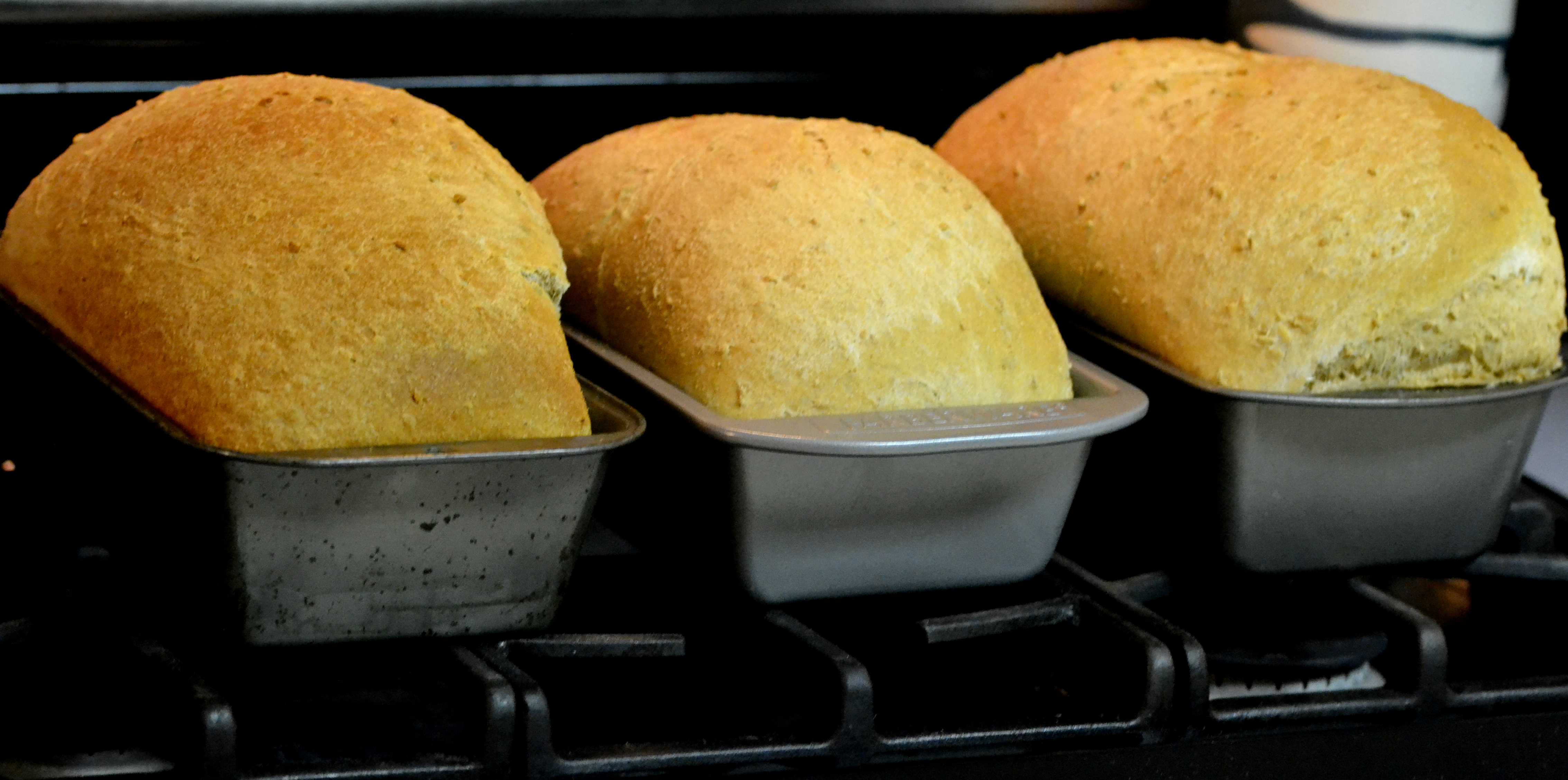 The smallest detail changed my mind. The height of wheat plants.
Genetic strains have been induced to increase yield per acre. The average yield on a modern North American farm is more than tenfold greater than farms of a century ago. Such enormous strides in yield have required drastic changes in genetic code, including reducing the proud “amber waves of grain” of yesteryear to the rigid, eighteen-inch-tall high-production “dwarf” wheat of today. (Davis)
The problem with increasing the yield was that the head of the wheat plant got so heavy, that the stalk broke. I live in grain-growing country. I have seen, but had never noticed, how low the wheat plants are.
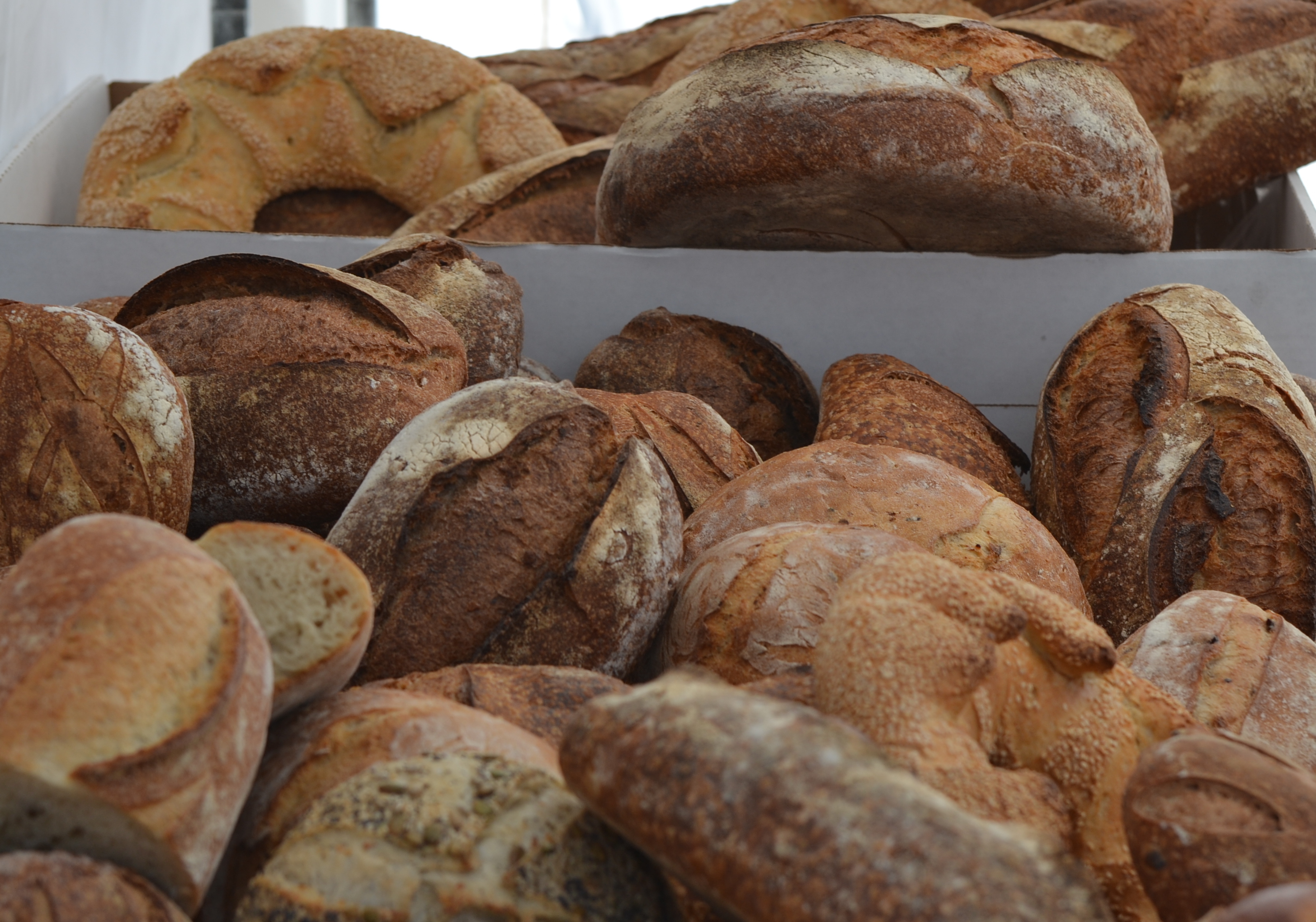 Why I never expected to go GF
Our married life began in Humboldt County, California, a mecca for hippie homemade-granola types. We ground our wheat, fried soy burger patties, ate carob, drank kefir, sweetened with honey and seasoned with tamari. There were no cans in our cupboards. (Our food righteousness was suffocating.)
Whole wheat was our banner. We’ve since relinquished (and later revisited) some of our hippie food, but we never abandoned whole grains. I embraced baking our daily bread. I’ve taught a baker’s dozen how to make loaves of bread, persuaded several to buy a wheat grinder. After the decade of teenage boys, in which I shredded six bread machines, we bought a Bosch mixer that has proven itself a great dough maker.
But it goes far deeper. I am a Christian; I regard the Bible as a holy book. Phrases like Bread of Life, eat this bread, bread and wine, bread from heaven, consecrated bread have nourished my soul. Why would Jesus say, “I am the Bread of Life” if bread is bad for you? Bread is as daily as it gets.
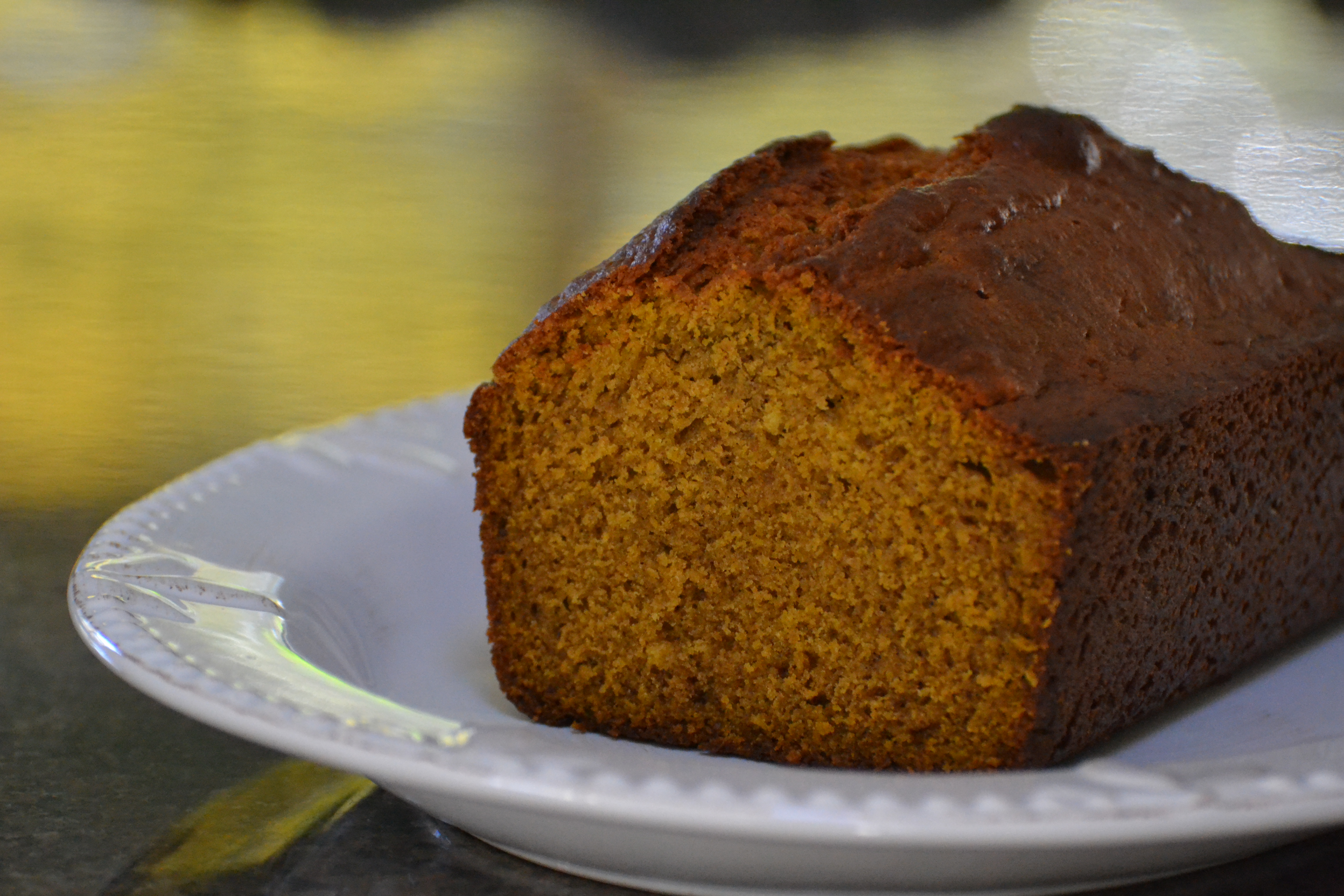 A house in Maine
Last summer we stayed a week in a house at Maine. I love scanning bookshelves, gauging compatibility with the owners. There it was, Wheat Belly
I decided to do an experiment. I stopped eating wheat for a few days. And I felt good. I stopped eating wheat for a few weeks. And I felt great. Very scientific experiment, don’t you know. So scientific that I reintroduced wheat into my diet. And I felt achy all over. People like me with their anecdotal twaddle drive scientists bonkers. But there it is.
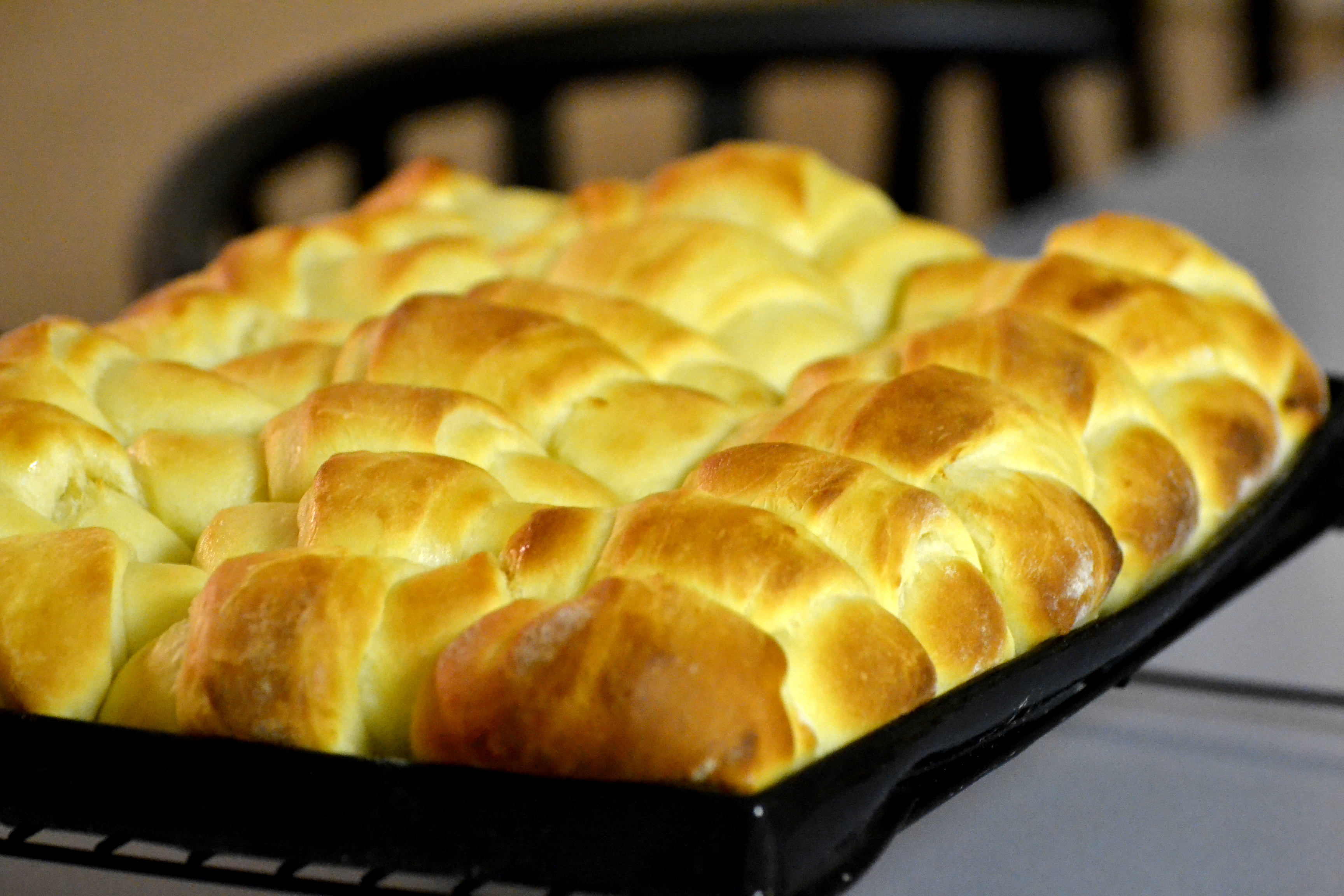 This one thing I know
My family medical history is grim. I have been dodging diabetes for a decade. I have a fasting blood glucose test drawn annually and I attend to my numbers. I keep (figuratively) running, and cancer keeps (literally) chasing me. If/when a doctor looks me in the eyes and says, “Carol, you have cancer” I can imagine being sad, but I cannot imagine being surprised.
One way that I try to keep diabetes and cancer behind me is by eating foods low on the glycemic index. It’s good to cut back on sweets, but it is helpful to know that flour is my sugar, that modern wheat quickly converts into high blood sugar. Whole wheat bread has a glycemic index of 72 (glucose = 100), higher than ice cream or Coke (Harvard Health Publications, HMS).
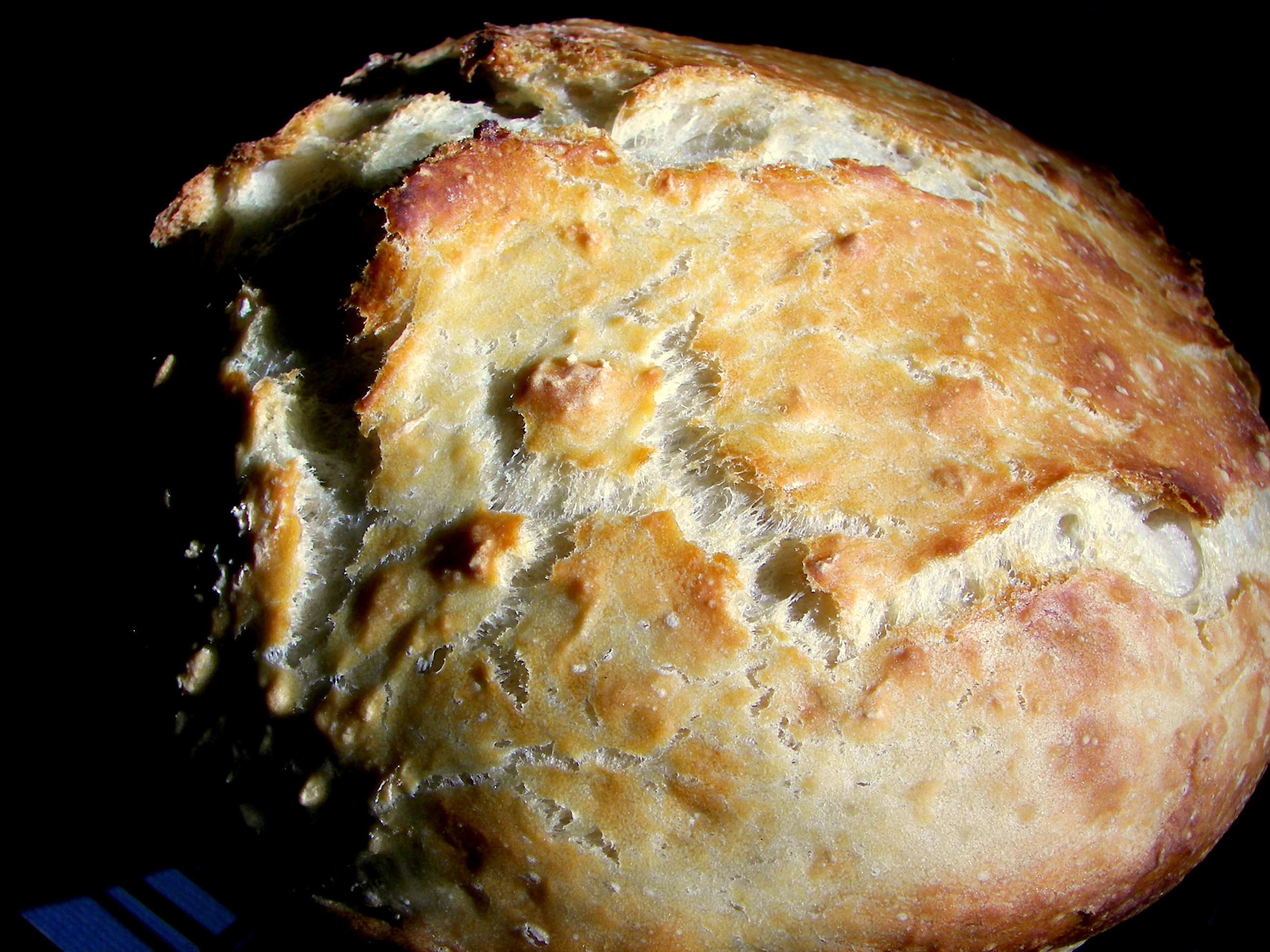 In everything give thanks
I could never reconcile a gluten-free diet with the biblical injunction to “Eat this bread.” I believe we were created to eat bread, but tinkering with wheat has made it unhealthy for people who are insulin resistant and leptin resistant. My husband can eat bread every day. I still grind wheat and still make bread for him.
I understand that I haven’t been diagnosed with a “food allergy.” I just know I feel better when I don’t eat gluten. And I control about 90% of what I am served. When I visit a friend and she serves me a sandwich, I eat it with gratitude. In my case, the laws of hospitality trump my preferences. And the laws of thanksgiving cover it all.
One argument remains for eating bread. It is delicious! Nothing excels the smells of bread. Oh, how I look forward to weekly communion and the yummy amazing bite of bread. I chew and remember and swallow.
If you are interested in pursuing this topic further, I recommend you read Grain Brain: The Surprising Truth about Wheat, Carbs, and Sugar–Your Brain’s Silent Killers
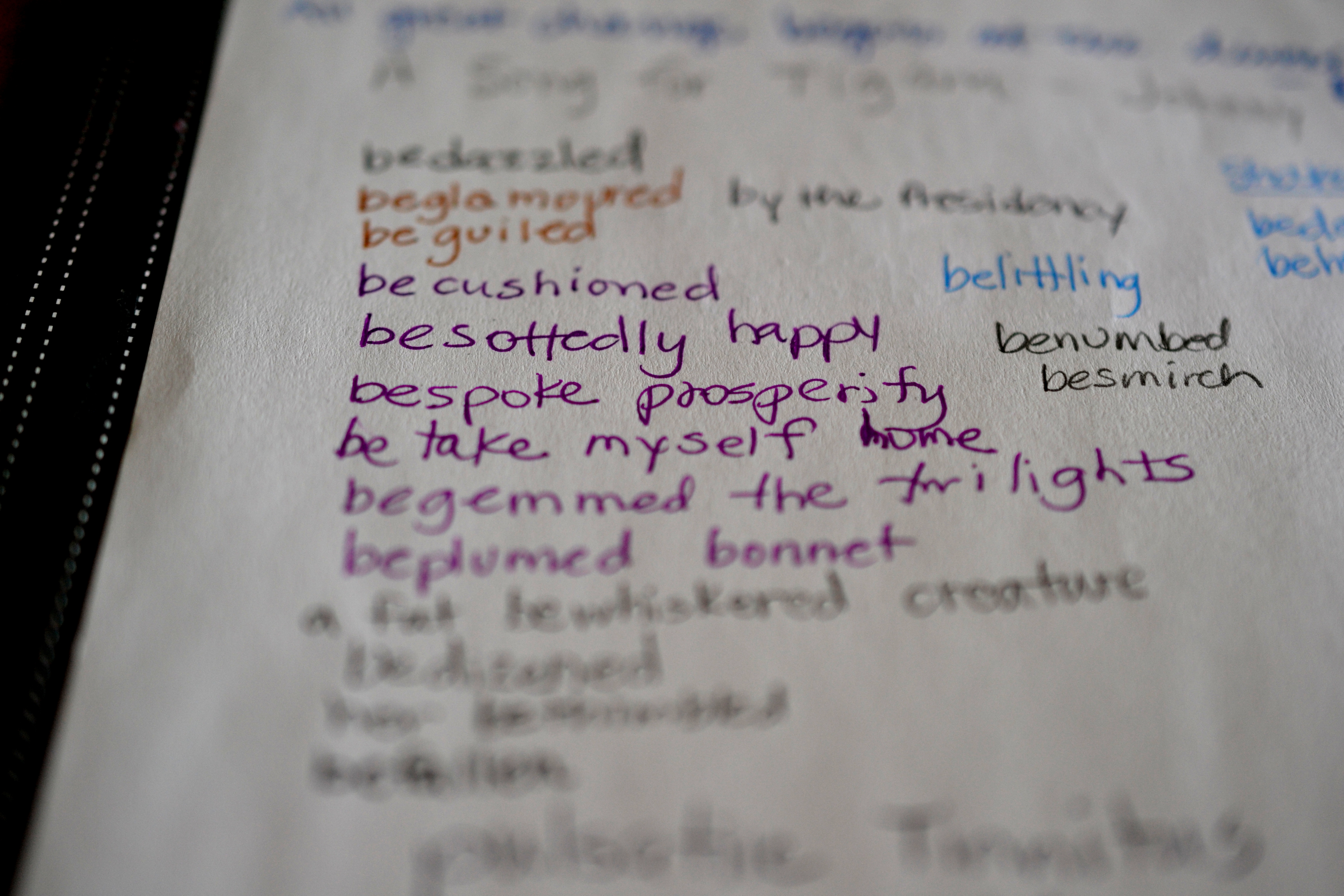 Besotted: adj. strongly infatuated.
I do this odd thing for the sheer joy of it. I collect be-prefix words.
All year long, while I read, I stop and copy words to the front
page of my journal. When the journal is full, I look at my
beribboned and bejeweled treasury.
Just in case there is someone else like me, I try to use be-words
in my writing, to bestow on them the joy I’ve betaken.
On an especially good day, I might make up a new be- word.
Now, I am fond of other prefixes.
Enfold, endear, enlivened, encourage…
I might start a new page in the back for en- words.
What does the “be-” do?
It means thoroughly, completely, to make.
It adds intensity.
When I looked it up, I discovered a new be- word:
bethwacked, “to thrash soundly.”
(imagine my hands and fingers flying in excitement)
Two be-prefix words are so common, we almost don’t see them.
Beloved. Greatly loved. More loved than loved.
Become. More than come; to come to be.
What about betray?
Add be- to the Latin tradere,
from trans – “across” + dare – “to give.”
Last year I was beguiled by —
behither (George Herbert)
befogged (Nora Waln)
bedraggled (D.E. Stevenson)
benumbed (Kathleen Norris)
beholden (Anthropologie line)
betokened (L.M. Montgomery)
bespectacled (Leo Marks)
bedecking (Jan Karon)
becalmed (Stewart O’Nan)
setbacks which bedevil modern life (Alain deBotton)
unbeknownst (Joanna Cannan)
bewail (Wendell Berry)
courageous and befitting (?)
bewigged (Elizabeth Goudge)
becalmed (Arabian Nights)
One of my favorites:
befriend, to cause to be friends.


 A Living Pencil