
Another Bathroom on the Right Moment

DSC_8589

Last night I was singing—sort of humming with words—Shocking Blue’s Venus.

I’m your Venus, I’m your fire, your joy, desire.

A demi-smile appeared on my man’s face. He said, Babe, it’s

I’m your Venus, I’m your fire, and your desire.

Nah, I responded. An encapsulated moment of eye contact. Full grin on the man. You wanna bet? So I Binged (Bing—as a verb—doesn’t compare with Google’s oomph, does it?) it. And the definitive lyrics are:

I’m your Venus, I’m your fire, at your desire.

We were both wrong, but I’m sticking with joy.

These moments of lyric confusion and clarification are so delicious I hope they continue to the end of my days. Just last year I realized America’s song was about Ventura Highway. I thought it was a command: Venture a highway. Go forth, young man! Funny thing, I lived an hour from Ventura, CA, when I was singing it wrong.

Before that I learned there’s a bad moon on the rise.
There’s a bathroom on the right is so much more helpful.

My friend thought Tom Petty’s solid declaration: And I won’t back down was the somewhat tepid And I walked back down.

Life is laughter.

What lyrics have you misheard?

20 Feet from Stardom

20FeetFromStardom Backup singers are like ghost writers. The invisibles.

20 Feet From Stardom tells the story of some of the legendary backup singers you’ve never heard of. It’s a poignant story, told with bursts of beguiling harmonies, of the different mindset of the backup singer who goes for the blend and the lead singer who basks in individuality. And the near impossibility to move from the back to front and center.
Where did the backup singers come from? Most of them were pastor’s daughters who grew up singing melodies, harmonies, and call-and-response, in church. Music was their oxygen. They didn’t require written music; they could hear the chords in their head and make magical tones singing together.

A few quotes:

Stay cool.
Stay humble.
Stay beautiful.
Do the work.
— Merry Clayton

It’s more than leaning on your talent. You gotta be disciplined. You gotta get up in the morning.
— Tata Vega

Real musicians—there’s a spiritual component to what they do that’s got nothing to do with worldly success. Their music is much more an inner journey. Any other success is just cream on the cake. There’s this idea that you can go on American Idol and suddenly become a star; but you may bypass the spiritual work you have to do to get there. And if you bypass that, our success will be wafer thin.

— Sting

Fun catch: Ashley Cleveland, my walking partner (by me listening to her CDs, we’ve never met) has a cameo appearance at 87:14.

Meet and Greet Redux

DSC_5237After writing about the sweet ceremony of greeting guests on Downton Abbey, I read this opening paragraph of Elizabeth Goudge’s The Bird in the Tree.

Visitors to Dameroeshay, had they but known it, could have told just how much the children liked them by the particular spot at which they were met upon arrival.

If the visitor was definitely disliked, the children paid no attention to him until Ellen had forcibly thrust them into their best clothes and pushed them through the drawing-room door about the hour of five; when they extended limp paws in salutation, replied in polite monosyllables to inquiries as to their well-being, and then stood in a depressed row staring at the carpet, beautiful to behold but no more alive than three Della Robbia cherubs modelled out of plaster.

If, on the other hand, they tolerated the visitor, they would go so far as to meet him at the front door and ask if he had brought them anything.

If they liked him they would go to the gate at the end of the wood and wave encouragingly as he came towards them.

But if they loved him, if he was one of the inner circle, they would go right through the village, taking the dogs with them, and along the coast road to the corner by the cornfield, and when they saw the beloved approaching they would yell like all the fiends of hell let loose for the afternoon.

Meet and Greet

downton-abbey.jpeg1-1280x960

One endearing custom regularly modeled on Downton Abbey is the gathering of the household outside the door to welcome guests. The family members and servants wait as the cars approach the house and the guests disembark.

The quiet formality marks the moment, punctuates the arrival.

I like these manners, I guess, because they are familiar. I have my own house rule: when a scheduled guest arrives I want to be outside my house, focused on my guest’s arrival. I want my posture to say, “this—THIS—is the highlight of my day!” The risotto may need stirring, but that’s unimportant compared to a direct look, a smile, a welcoming hug or handshake.

I’m not as careful about rising when a guest/older person walks into the room; I didn’t grow up with this point of etiquette. But it’s not too late to cultivate it.

Winter Watch

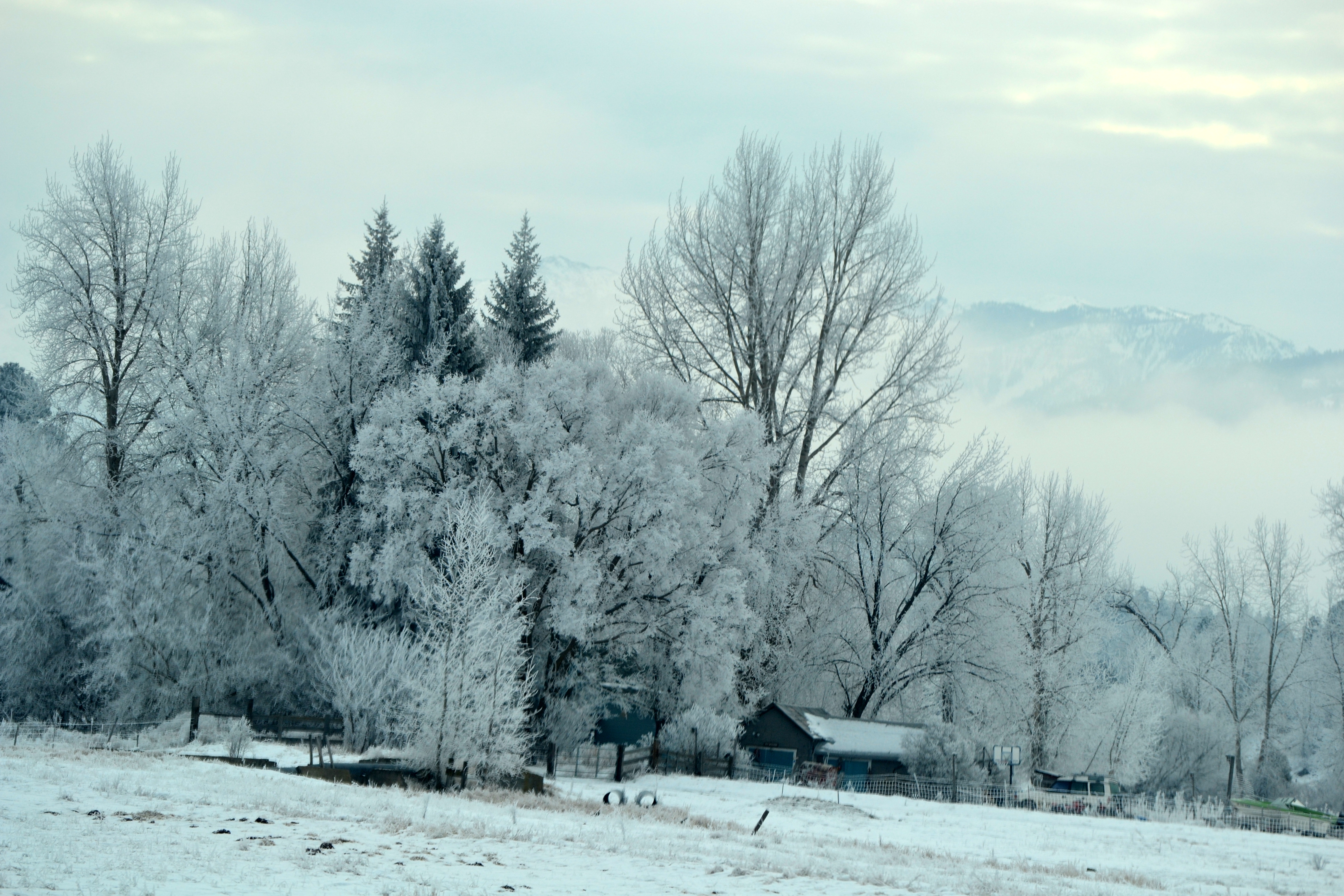
I’m a fan of cozy mysteries. Miss Marple, Brother Cadfael, Mma Ramotswe, Alan Grant, and Flavia de Luce are guaranteed to bring pleasure. Especially if they are read with a steaming pot of tea while sitting on a leather couch with a fire snapping close by.

In Winter Watch, Anita Klumpers has written what I call a cozy-eccentric book. Barley, Wisconsin, is a isolated northern burg where the Justice of the Peace is also the dog catcher and where a few crazies reside. Bernice, a miscreant referred to as the resident killer, is the battiest of them all. After a family member dies, Bernice gets meals and kindness and concerns. And wouldn’t you know, she likes the perks of grief. More relatives mysteriously die. Sympathy can be mighty addicting.
Like Alexander McCall Smith, Klumper weaves humor into the warp and woof of her prose. Blizzards are snowstorms with enthusiasm. A woman was proud to give her son a Biblical name—Tubal—until the nurse told her it sounded like a female medical procedure.

DSC_7902There is comfort—I like a woman who knows her way around an egg—and a passage about joy that is flat out lyrical.

Joy arrived unbidden and unpredicted to pour from heart to fingertips to toes. She held her breath, everytime, to preserve and examine it but it forever danced just out of her grasp and slipped away. Claudia stayed still, focusing, her heart ready to burst. At the last crucial second joy seeped through cracks and crevices of her being until her every extremity and pore rejoiced before the evaporation worked backwards and she sat in the afterglow.

The focal point of the narrative centers on an old watch. The prologue and epilogue added more layers of history regarding the watch. The story line had me eagerly turning the page, and a bit annoyed with life’s beckoning demands when I needed to put the book down.

In short, this is a satisfying and entertaining read.

Loveliness Showing Through the Rubble

The job of the soldiers who served with the Monuments, Fine Arts, and Archives section of the Allied Forces in WWII was to “mitigate combat damage, primarily to structures—churches, museums, and other important monuments.”
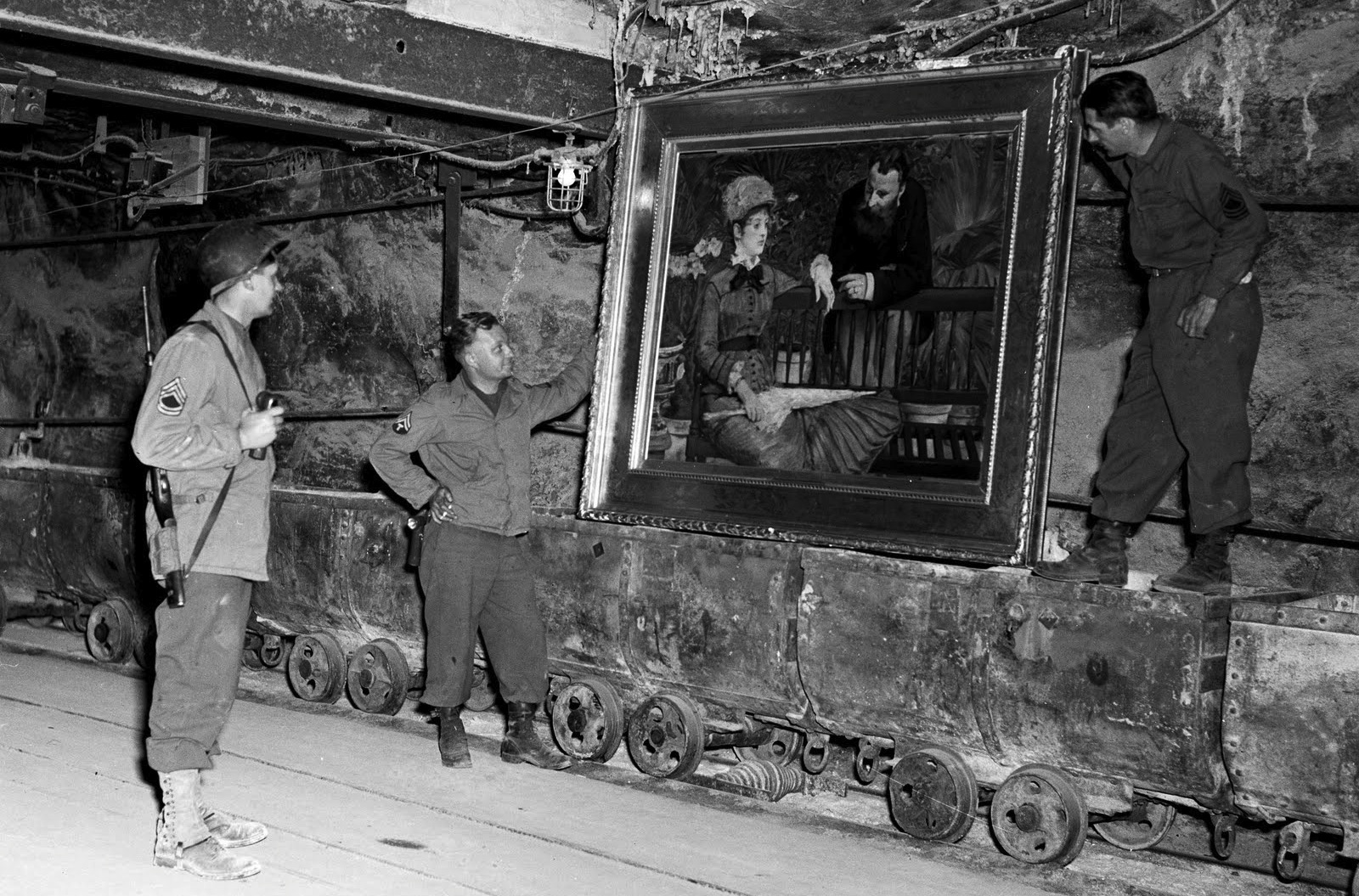
Because Adolf Hitler and Hermann Göring were obsessed with collecting (read: stealing) fine art, the primary job of the MFAA became rooting out hidden caches of art before the Nazis destroyed them in the event of a Nazi defeat.

I found it difficult to engage with the first third of the book, background stories of a large roster. Because they were all working independently— their stories seldom converged—there was too many bits to sift through. It wasn’t until Paris, and the entry of the great heroine Rose Valland, that I found myself gripped by the narrative. From that point, the book is perfectly paced, and the thrill of the chase raised my pulse. It is a cracking good story!

monuments-men^^ can you imagine? ^^

Tucked into the story was a gem—the only one like it— from Capt Walker Hancock.

The eyes have one continual feast. It is late in the spring. Flowering trees are everywhere and the charm of the romantic little towns and the fairy tale castled countryside is enhanced by all this freshness. And in the midst of it all—thousands of homeless foreigners wandering about in pathetic droves, Germans in uniform …. Children who are friendly, older ones who hate you, crimes continually in the foreground of life. Plenty, misery, recriminations, sympathy. All such an exaggerated picture of the man-made way of life in a God-made world. If it all doesn’t prove the necessity of Heaven, I don’t know what it means. I believe that all this loveliness showing through rubble and wreck are just foreshadowings of the joys we were made for.

For fun, the magnificent George Stout, after receiving a package three months late:

It is amazing how the world can change during the life span of a fruitcake.

Because one curious door opens many others, I’m now interested in reading:

Rethinking Winter

photo credit: National Audubon Society

photo credit: National Audubon Society

Ought not
WINTER
in allegorical designs,
rather be represented by
such things that might suggest HOPE
than convey a cold and grim despair?
the withered leaf, the snowflake,
the hedge-bill that cuts and destroys—
Why these?
Why not rather the dear larks for one?
The lark, the bird of the light is there
in the bitter short days.
Put the lark then for winter,
a sign of HOPE,
a certainty of
summer.

…the bud is alive in its sheath;
the green corn under the snow;
the lark twitters as he passes.
Now these to me are the allegory of winter.

— from Out of Doors in February
by Richard Jefferies